Bible Fearfully and Wonderfully Made: Your Identity in God
Bible Fearfully and Wonderfully Made: Your Identity in God
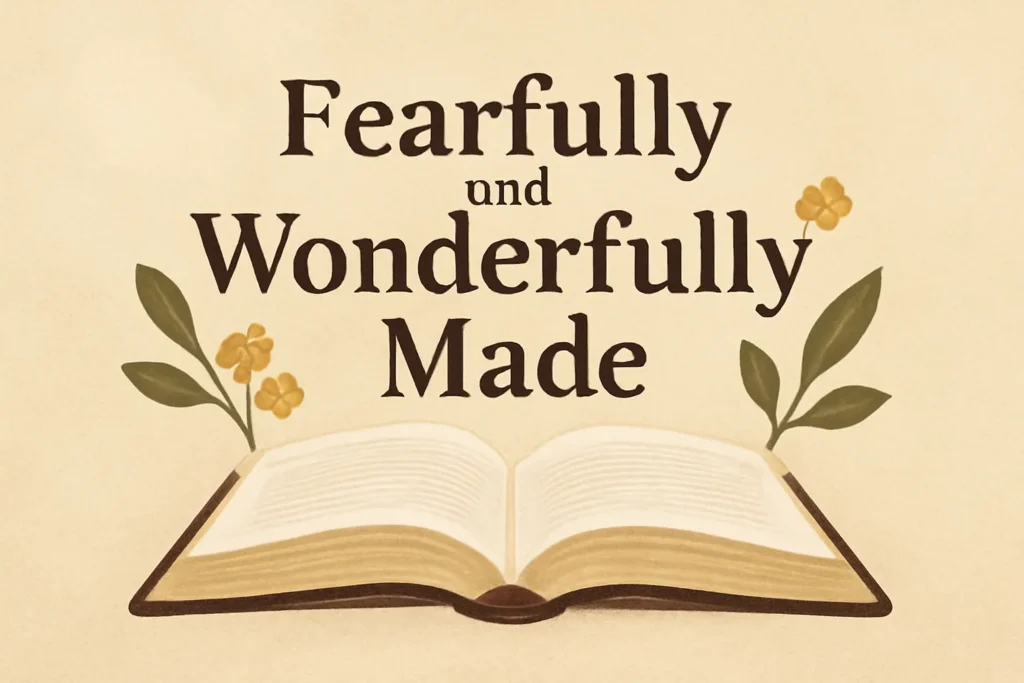
In the biblical narrative, your identity is not a random byproduct of life’s experiences but a purposeful creation rooted in God’s design. The phrase often cited—“fearfully and wonderfully made”—speaks to a deep spiritual truth about who you are, how you were formed, and the inherent dignity that comes from being loved by the Creator. This article explores what it means to be fearfully and wonderfully made in a biblical sense, how that truth shapes your sense of self, and practical ways to live out this identity in daily life.
Understanding the phrase: Fearfully and Wonderfully Made
To grasp the full meaning, it helps to consider the two adjectives separately and then in concert. The phrase is most commonly associated with Psalm 139, a passage that poetically describes intimate knowledge, divine presence, and intentional formation. When we say your identity is fearfully and wonderfully made, we are affirming not just physical creation but a spiritual-design statement: you were crafted with purpose, care, and worth.
What does “fearfully” convey?
The word fearfully here does not imply fragility or terror in the sense of being scared of God. Rather, it carries a sense of awe, reverence, and respect for the Creator’s power and wisdom in your design. Several ideas lie behind this term:
Awe and reverence for the magnitude of God’s work in forming you.
Respect for divine authority as the One who knits together your inward parts and knows you intimately.
Responsibility to steward the life and body entrusted to you with care and humility.
What does “wonderfully” convey?
The term wonderfully emphasizes beauty, intricacy, and goodness. It points to the remarkable craft of your design—details that show intention and excellence. Reflections on wonderful creation include:
Intricate design in how you are fearfully made—down to the smallest parts and moments of your life.
Goodness and artistry in the way God has formed emotions, thoughts, talents, and purpose.
Value and significance placed on every person, since the Creator has prepared a unique contribution for you to offer the world.
When these two ideas are married—fearful reverence and wondrous workmanship—the biblical statement declares, not a distant abstract truth but a personal invitation: you are known, cherished, and intended by God. This is the bedrock of your identity as a child of God and an agent of His grace in the world.
What the Bible teaches about identity
Identity in the biblical sense is multifaceted. It includes being created in the image of God, being redeemed through Christ, and being called to live out love and service in community. The refrain across Scripture is that each person matters profoundly to God, and that significance is tied to relationship with the Creator.
In the New Testament, the Christian understands identity not only as created beings but as redeemed ones—the people whom Christ has rescued and adopted. Passages such as Ephesians 2:10 remind us that we are God’s workmanship, created for good works that God prepared in advance. This is a precise complement to the Old Testament idea of being fearfully and wonderfully made: God forms, redeems, and re-forms us into something new for His mission.
Body, belonging, and temple language
Passages like 1 Corinthians 6:19–20 describe the body as a temple of the Holy Spirit. The idea of the body being a sacred space is not about vanity but about care, integrity, and dedication to living in ways that honor God. In this framing, being fearfully and wonderfully made becomes a call to steward our bodies and lives as gifts designed for purpose and community.
Crafted with intent: The image of God in you
When the Bible asserts that we are created in the image of God, it points to an intentional design. You are not an accident of evolution or a product of chance but a deliberate expression of divine intention. This truth has several practical implications for how you think about yourself and interact with others.
Dignity: Your life has inherent value because you reflect something of the Creator’s nature.
Purpose: God designed you with particular gifts, passions, and vocations to contribute to the world.
Relational capacity: Being made in God’s image includes a call to live in harmony, love, and justice with others.
Identity continuity: Your identity is not conditioned by circumstances alone; it is anchored in God’s unwavering character.
In practical terms, this means your self-concept should be grounded in how God sees you, not primarily in social comparison, success metrics, or external appearance. Choosing to rest in the truth of your created-to-communicate-with-God identity helps you resist cultural pressures that define worth by performance or beauty alone.
Another layer of this truth is the idea of being woven together by God. Psalm 139 describes you as being knit together in your mother’s womb, which evokes a sense of meticulous care and intimate attention. That imagery invites readers to reflect on the delicate craftsmanship of life—physical, mental, emotional, and spiritual stitching that culminates in a person capable of love, courage, and resilience.
Your identity in God: Personal application
Knowing that you are fearfully and wonderfully made is a starting point; living in light of that truth is the ongoing journey. Here are ways to translate biblical identity into everyday life, with emphasis on practical steps that reinforce your sense of purpose and assurance.
Affirm your worth daily: Begin or end each day by reminding yourself that you are made in the image of God and loved unconditionally.
Affectionate self-talk: Replace self-criticism with language that honors God’s craftsmanship. For example, when you notice a flaw, frame it as a place God can grow you rather than a verdict on your value.
Elemental identity anchors:
Identity in Christ: You are beloved, chosen, redeemed.
Identity as a steward: You are entrusted with talents, time, and resources.
Identity in community: You belong to a family of believers called to serve.
Guard your specialness with humility: Recognize your gifts but avoid pride by staying connected to God’s supremacy and grace.
Reject dehumanizing comparisons: Social media and modern culture often push comparison; counter with gratitude and a focus on living out your unique design.
Develop your gifts for others: Your talents are not for self-promotion alone but to bless neighbors, churches, and communities.
In addition to these practices, consider how your daily routine can reflect the truth of being fearfully and wonderfully made. For example, you can integrate moments of reflection about God’s design into your morning routine or prayer life, allowing your sense of identity to become a stable anchor amid life’s storms.
Many people ask, “What is my vocation? What does God want me to do with my life?” The biblical answer is that vocation begins with knowing who you are in God and then offering your gifts in service. Your role—whether in family, work, ministry, or volunteerism—flows out of your identity. When you approach life from the foundation of being created and loved by God, your work and relationships gain a deeper sense of meaning and resilience.
Ultimately, your identity is not primarily about what you do but about whose you are. The healing and hope you find in God’s design enable you to face challenges with courage and to extend grace to others, reflecting the divine pattern of love and mercy.
Living out being fearfully and wonderfully made
Being fearfully and wonderfully made is not a theoretical statement but a calling to live out a reality that shapes character, choices, and community life. Here are several areas where this identity can be lived out in concrete ways.
In relationships: Treat others as people bearing God’s image; practice listening, empathy, and forgiveness as acts of honoring the Creator.
In work and creativity: Use your talents to contribute goods, services, or art that blesses others and mirrors God’s goodness.
In suffering and weakness: Trust in God’s sustaining power; see weakness as an opportunity for divine strength to be shown through you.
In community and service: Build up neighbors, advocate for justice, and participate in community healing as a reflection of being made for relationship.
In self-care and stewardship: Honor your body, mind, and spirit as temple resources that God has given you to steward carefully.
A practical way to cultivate this living truth is to practice what could be called a daily “identity check.” Briefly ask: Who am I in God today? How can I reflect His design in my words, actions, and attitudes? This simplification keeps you anchored in the core truth that you are more than your circumstances, more than your achievements, and more than your flaws—because you are valued by God’s design.
In moments of failure or fear, recall the phrases fearfully made and wonderfully made, and remember that God’s intent remains intact even when life feels uncertain. This perspective provides resilience, hope, and a compass for moral decision-making.
Common misconceptions about being fearfully and wonderfully made
Many well-meaning people misunderstand or over-simplify the biblical claim about being fearfully and wonderfully made. Clarifying these common misconceptions helps you ground your identity in Scripture rather than cultural clichés.
It’s vanity: Some interpret this truth as endorsing narcissism. In Scripture, the proper response is humility before God, gratitude for God’s workmanship, and service to others.
It denies weakness: Being created well does not deny human frailty or the need for grace. God’s strength often shines through weakness (2 Corinthians 12:9-10).
It’s only about outward appearance: The biblical phrase encompasses inward parts (Psalm 139), mental faculties, emotions, and spiritual life, not merely looks.
It erases responsibility: Knowing you are valued by God enhances responsibility, not excuses. It invites you to steward your life with integrity and purpose.
It guarantees comfort: God’s design includes seasons of struggle and growth; being made in His image does not guarantee a painless life, but it does provide a compelling foundation for hope and endurance.
Practical practices to embrace your God-given identity
Putting theory into practice is essential. The following actions help you embody the truth that you are fearfully and wonderfully made and that your identity is anchored in God’s love and purpose.
Study and meditate on key scriptures: Regularly read Psalm 139, Genesis 1, and passages about being God’s workmanship. Reflect on phrases like image of God, wisdom and counsel, and kingdom living.
Journal around identity themes: Write about how you see God’s design in your talents, relationships, and callings. Note how your understanding shifts through prayer and community feedback.
Practice gratitude and praise: Start or end your day with gratitude for God’s craftsmanship. Praise reinforces truth and counters negative self-talk.
Seek healthy community: Surround yourself with people who affirm your God-given identity and challenge you to live consistently with it.
Serve others: Use your gifts to bless those around you. Service aligns your daily life with the reality that you are created for love and impact.
Each of these practices reinforces the conviction that you are fearfully and wonderfully made—a person of value, with a unique role in God’s story. Over time, these habits change not just how you view yourself but how you interact with others, work, and worship.
To broaden semantic breadth, it can be helpful to connect the core idea to various biblical expressions that convey related truths. Here are some phrases, verses, and concepts that echo or enrich the sense of being fearfully and wonderfully made:
Knitted together in Psalm 139:13: “For you created my inmost being; you knit me together in my mother’s womb.”
Our maker and our Father language highlighting God as the designer and provider of every aspect of life (Genesis 1, Psalm 100).
Temple of the Holy Spirit in 1 Corinthians 6:19–20: our bodies as sacred dwelling places for God’s presence.
Breath of life from Genesis 2:7, which emphasizes the intimate and living nature of human identity given by God.
Created in Christ Jesus for good works in Ephesians 2:10, which links identity to vocation in a cosmic sense—our design is oriented toward love and service.
One body, many members (1 Corinthians 12)—diversity within community reflects God’s creative unity and purposeful design in each person.
These cross-references reinforce the central idea: being fearfully and wonderfully made is a comprehensive claim about who you are, how you were formed, and why you exist. It integrates creation, fall, redemption, and restoration into a coherent narrative about identity that is resilient, hopeful, and transformative.
Conclusion: Embracing your divine design
In sum, the biblical claim that you are fearfully and wonderfully made is both a profound theological truth and a practical guide for living. It affirms your value as a person created in God’s image, redeemed by Christ, and empowered by the Spirit to bear God’s likeness in a broken world. The phrase invites you to stand in reverent awe of God’s craftsmanship, to treasure your own life as a precious gift, and to channel your gifts toward the flourishing of others.
As you continue to grow into your identity, remember these enduring truths:
You are not an afterthought but a deliberate act of divine design.
Your worth is rooted in being made in God’s image, not in external measures of success.
Your purpose unfolds as you live out your gifts in service and love.
Reality includes weakness, pain, and learning—but God’s grace sustains you through it all, confirming that you are fearfully and wonderfully made in every season.
May this understanding shape how you view yourself, interact with others, and pursue a life that honors God. When you wake each day, let the truth that you are crafted by God, valued by God, and placed in God’s family guide your thoughts, decisions, and actions. Your identity—rooted in God’s design—offers a steady compass, a hopeful horizon, and a compelling invitation to live with courage, grace, and purpose.








Leave a Reply