Bible Passage About Talents: Lessons from the Parable of the Talents
Bible Passage About Talents: Lessons from the Parable of the Talents
The Parable of the Talents is one of the most enduring stories in the Christian canon about what it means to steward the gifts we are given. While the wording varies slightly across translations, the core message remains consistent: people are responsible for wisely using the resources, opportunities, and abilities entrusted to them, not merely for personal gain but for the expansion of God's kingdom. This article surveys the biblical passages about talents, with attention to historical context, interpretive breadth, and practical application for readers today.
Introduction: Why the Parable of the Talents Still Speaks
Across centuries and cultures, readers have asked: What does it mean to be faithful with what I have? The parable answers with a narrative about a master who entrusts his property to servants, each according to his ability, and then returns to settle accounts. The story probes motives, risk, opportunity, and accountability, while also offering a window into God’s character—generous, discerning, and purposeful. In exploring the biblical talental imagery, we encounter several layers of meaning: economic stewardship, moral responsibility, and the invitation to participate in God’s redemptive work in the world.
What is the Parable of the Talents?
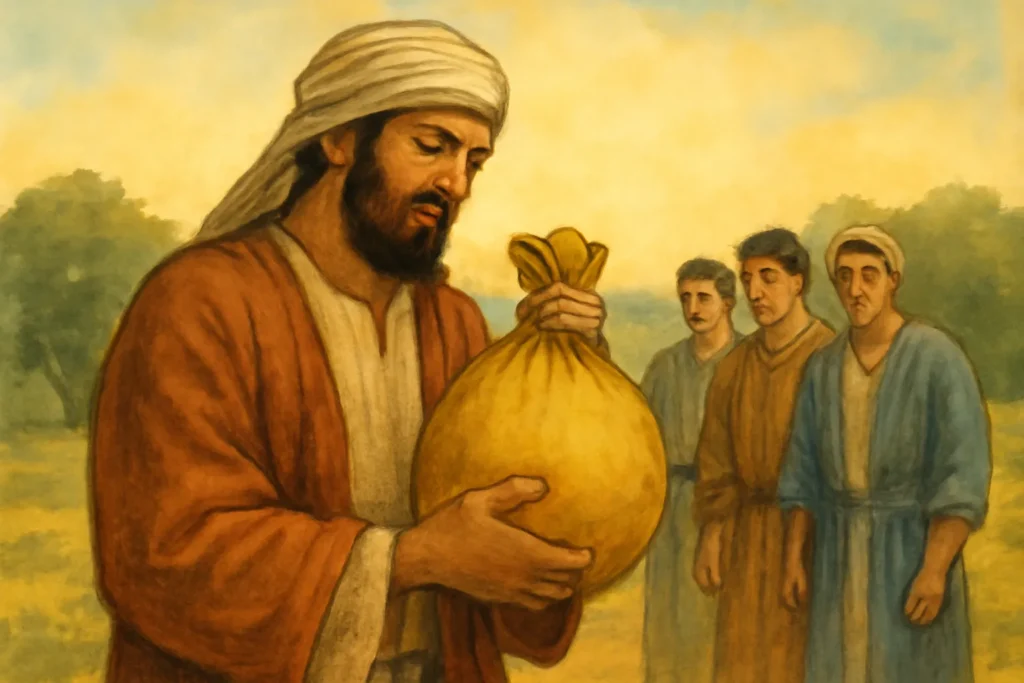
In the most cited form, the tale appears in the Gospel of Matthew as part of Jesus’ teachings about the final judgment and the kingdom of heaven. The master distributes talents, an ancient unit of currency representing substantial wealth, to three servants before a journey. He gives one servant five talents, another two, and a third one talent.
Upon the master’s return, two servants report that they have multiplied what they were given, while the third, driven by fear, hides the talent and returns only the original amount. The master commends the first two for their faithful diligence and condemns the one who did nothing with what was entrusted to him. The closing line emphasizes that the same measure by which we judge will be used in return—“well done, good and faithful servant; you have been faithful over a little, I will set you over much”—is a call to enduring, transformative stewardship.
A related version exists in the Gospel of Luke, where the currency is a mina (a different monetary unit), and the narrative emphasizes another set of characters and circumstances. The Luke passage is often read in close concert with Matthew to appreciate how Jesus teaches about investment, risk, and accountability. The twin accounts broaden the semantic range of the term talents to include gifts, abilities, opportunities, and responsibilities that God entrusts to human beings.
Definitions: Talent, Mina, and the Language of Stewardship
Understanding the terms helps illuminate the larger lessons. A talent in ancient times was a substantial sum of money, not merely a natural gift or skill. Depending on the historical estimate, a talent could represent many years’ wages for a laborer. A mina in Luke’s account is smaller than a talent but equally meaningful within a parable about stewardship and accountability. The emphasis in both accounts is less about the exact amount and more about the conviction that what is entrusted to a person is to be managed with care and purpose.
Talent as wealth and opportunity: The master’s motive in entrusting wealth is to see growth and prudent risk-taking that honors the master’s reign and purposes.
Minas as indicators of responsibility: In Luke’s version, the amount mirrors varied degrees of responsibility based on ability and circumstance.
Investment and risk as spiritual disciplines: The acts of trading and increasing what was given become exercises in faith, courage, and wisdom.
Accountability as a governing principle: When the master returns, he assesses how well the entrusted resources were stewarded.
Historical and Cultural Context
To appreciate the parable, it helps to situate it within the first-century Near Eastern and Greco-Roman world. Economic life often revolved around kinship networks, patronage, and trust-based transactions. A servant might receive a sum of wealth to manage on behalf of a household. The master’s departure and return reflect a common storytelling device in ancient literature: testing character through a voyage, long absence, or turning point. The moral weight of the parable is less about financial acumen and more about the integrity of stewardship—how a person handles responsibility in the absence and presence of the one who entrusted the resources.
In many communities of faith, the parable also serves as a lens for discussing stewardship of time, talent, and treasure. The cultural assumption behind the parable is that all good things ultimately belong to God, and human beings are caretakers charged with growing and safeguarding those resources in ways that honor the divine purpose. The parable’s economy is spiritual as well as material, inviting readers to consider how their life’s work—whether in family, church, vocation, or public service—advances the values of justice, mercy, and the flourishing of others.
Main Characters and Symbols
The master: Represents authority, resource-giving, and accountability. The master’s departure signals a period of absence during which the servants must apply wisdom and courage.
The servants: Embodiments of responsibility, possibility, and risk tolerance. Each servant’s response reveals his or her character and trustworthiness.
Talents and minas: Symbols of opportunity, skill, influence, and financial capacity. They stand for all that God entrusts—abilities, time, relationships, platforms, and resources—for ongoing cultivation.
The return and accounting: The moment of reckoning when the faithful are rewarded and the faithless are corrected. This moment underlines moral accountability before God.
Verse Analysis: Key Passages and Their Meanings
While the exact wording varies by translation, the core ideas are consistent across primary texts. Consider the Matthew 25 narrative’s structure: entrustment, multiplication, fear-based concealment, and eventual judgment. A few distilled ideas from these verses include:
Entrustment: The master gives according to ability, signaling a personalized assessment of potential and trustworthiness.
Growth: The faithful servants actively engage the resources, pursuing growth rather than mere preservation.
Accountability: The return of the master is a formal moment of reckoning; wasted opportunity is punished, while diligent effort is commended.
Fear versus faith: The decision to hide the talent out of fear reveals a paralysis that the parable critiques, urging readers to choose faith-informed action over fear-based withdrawal.
In Luke’s parallel account, the emphasis shifts toward a more dynamic set of responses among several stewards, highlighting how ability and opportunity interact with risk-taking and humble service. Although the monetary units differ, both narratives converge on a single question: what kind of steward will you be when entrusted with something valuable?
The Gospel writers use different illustrations to press the same theological point. In Matthew, the talent is a large sum, expressing the potential for significant growth but also demanding serious responsibility. In Luke, the mina is a smaller unit, yet the moral task remains: use what you have wisely in service of the kingdom, without excuses or timidity.
Beyond the monetary vocabulary, the two parables illuminate related concepts:
Different scales, same expectation: Whether five, two, or one talent, the expectation is faithful use and expansion where possible.
Judgment of motive: It is not only the outcome that matters but the posture of the heart—whether one acts out of love, courage, and fidelity, or out of fear and inertia.
Authority and mercy: The master’s responses reveal a nuance: merciful toward diligence, corrective toward inaction, and instructive toward prudent risk-taking.
Theological Lessons and Core Themes
Several themes emerge consistently across biblical interpretation of the talents passages. These themes offer a framework for personal reflection and communal life in faith communities.
Stewardship as vocation: Human beings are not owners but stewards of what belongs to God. The parable invites a conscious, ongoing discernment about how to steward time, creativity, finances, relationships, and influence.
Growth as a spiritual discipline: Just as the servants are expected to multiply what they receive, believers are called to seek growth in every realm that can honor God and bless others.
Accountability before God: The return of the master signals a final accounting. This is a reminder that life’s investments are ultimately measured by fidelity to God’s purposes rather than human standards alone.
Courage to take risks: The commendation of the first two servants rests on their willingness to engage with risk in light of trust in the master’s generosity.
Fear and faith: Fear can paralyze action and obscure opportunity; faith, informed by love and wisdom, can transform potential into real progress.
Generosity and scale: The master’s distribution, while based on ability, reflects a generous approach that invites greater responsibility rather than mere legal compliance.
Practical Implications for Believers
How might readers translate these ancient narratives into modern practice? The following practical applications are designed to be adaptable to different life contexts—church leadership, family life, or personal vocation.
Assess and align gifts: Begin with an honest inventory of talents, time, and resources. How do your gifts intersect with the needs around you—at church, in your workplace, or in your community?
Set wise, measurable goals: Rather than vague ambitions, set concrete goals that reflect faith-filled risk-taking and responsible stewardship. For example, a ministry might aim to multiply volunteer engagement by a specific percentage over a season.
Invest in growth avenues: Invest in skills, relationships, and opportunities that expand impact, whether through education, mentorship, or collaborative projects.
Embrace accountability structures: Seek feedback and accountability partners who can provide wise counsel and honest evaluation, helping you stay faithful in the long term.
Practice faithful risk: When prudence and compassion permit, choose actions that extend benevolence and justice, even if outcomes are uncertain.
Balance courage with wisdom: Bold steps should be tempered by discernment—prayerful reflection, consultation with peers, and alignment with core values.
Measure success by faithfulness, not just results: The parable rewards faithful effort and prudent stewardship; the ultimate measure is fidelity to God’s purposes, not solely the visible growth of assets.
Not a call to greed: The parable does not advocate reckless accumulation or exploitation. It foregrounds responsibility, generosity, and justice, urging stewardship that aligns with God’s character.
Not a guarantee of success: Growth is not guaranteed for every endeavor; rather, the emphasis is on faithful effort in response to entrusted resources.
Not merely about money: While money is a central symbol, the broader message includes gifts, time, opportunities, and relationships that require wise use for the common good.
Not a one-size-fits-all mandate: The parable recognizes varying abilities and circumstances. Faithful stewardship may look different in different contexts, but the core posture remains: active trust and responsible action.
Modern Applications: Church, Work, and Family Life
In today’s world, the parable of the talents resonates in several practical domains:
Church leadership: Churches often face decisions about resource allocation, mission funding, and outreach programs. The parable can inform governance models that emphasize accountability, transparency, and strategic risk-taking that serves the marginalized.
Work and entrepreneurship: For professionals and entrepreneurs, the parable invites reflection on how to steward time, networks, ideas, and capital with ethical intent and collaborative spirit.
Education and mentorship: Mentors can model generous leadership by investing in the next generation, multiplying gifts through teaching, coaching, and resilience-building.
Family life: Parents and guardians can view household resources as entrusted by God, shaping decisions about time, money, and values that cultivate character and care for others.
Social justice and service: Stewardship extends to communities in need. The parable challenges believers to use their spheres of influence to advance justice, mercy, and repair where there is harm or disparity.
Questions and Reflections
Use these prompts for personal study or group discussion to deepen understanding and application of the parables:
What are my core gifts and opportunities that God has entrusted to me right now?
How do I discern when to take a risk and when to practice restraint with the resources I steward?
In what ways can I collaborate with others to multiply impact without compromising ethical standards or core values?
How does the idea of accountability shape my daily decisions, both big and small?
What fears hold me back from using my gifts fully, and how can I address them in a faithful way?
For readers seeking broader semantic breadth, exploring other biblical texts that echo stewardship and growth can be enlightening. Consider these related passages and themes:
The Parable of the Rich Fool (Luke 12:16-21): A contrast in which abundance leads to anxiety about security rather than generosity and wise planning.
The Sermon on the Mount (Matthew 6:19-21; Luke 12:33-34): Teachings about treasures in heaven and the use of earthly resources for divine purposes.
The Good Stewardship Narrative in 1 Peter 4:10-11: Emphasizes using gifts to serve others as good stewards of God’s varied grace.
Parables of Growth and Patience (Mark 4:26-29; Matthew 13:3-9, 18-23): Portray how small, faithful beginnings yield significant fruit over time through God’s enabling.
By looking at these connected texts, readers can form a broader, more nuanced view of how talents—in the broad sense—function within God’s plan for creation, and how believers are invited to participate in growth, mercy, and justice.
Conclusion: Embracing a Life of Faithful Stewardship
The Bible passage about talents remains a powerful invitation to examine not only how we handle wealth but how we steward every resource entrusted to us—our time, our abilities, our networks, and our influence. The parable challenges us to move beyond fear, to risk for the sake of others, and to cultivate a life that honors the God who gives every good gift. If we heed this call, our small acts of faithful service can become, in God’s economy, powerful contributions to the world’s flourishing and to the coming of God’s kingdom.









Leave a Reply