There is no single universally agreed number of parables in the Bible, because the total changes according to how a parable is defined and how parallel Gospel accounts are counted.
For Jesus’ teaching alone, many Bible references identify about 30 to 40 distinct parables. Some lists contain fewer by combining similar accounts, while others count separate versions or figurative sayings individually. A broader count that includes parables and symbolic stories from the Old and New Testaments can be considerably higher.
Why different Bible counts produce different answers
The word parable does not describe only one kind of story. In biblical usage, it can refer to a short fictional story with a spiritual lesson, a comparison, a proverb, a riddle, an allegory, or an acted symbolic message. The Hebrew word often associated with these forms is mashal, while the Greek New Testament uses parabolē.
That difference matters when someone asks how many parables are in the Bible. One reader may count only stories Jesus explicitly used to teach crowds. Another may include every extended comparison, such as Jesus’ picture of himself as a shepherd or a vine. A third may include Old Testament stories told by prophets to confront kings.
The Gospels also record some of Jesus’ parables in more than one book. The parable of the sower, for example, appears in Matthew 13, Mark 4, and Luke 8. Those are not usually treated as three different parables; they are three Gospel accounts of the same teaching.
Lists also differ over stories with similar themes. The lost sheep appears in Matthew 18 and Luke 15, but the settings and applications are different enough that some lists treat them as distinct presentations. Similarly, Matthew’s account of the talents and Luke’s account of the minas share related ideas but contain different details and usually receive separate entries.
The most dependable short answer: the Bible contains no official numbered list, but Jesus is commonly credited with roughly 30 to 40 distinct parables, depending on the counting method.
Some sources report a total in the low 30s, while others list more than 40. Neither number automatically means the other source is mistaken. The disagreement usually comes from definition, duplication, and classification, not from a disagreement about what the Gospel text says.
How many parables did Jesus tell?
Jesus told the largest and best-known collection of parables in the Bible. The Gospel writers present these stories as a central part of his public teaching, especially when he spoke about the kingdom of God, repentance, mercy, judgment, prayer, stewardship, and the response people give to God.
A practical count places Jesus’ distinct parables at approximately 35, although published lists commonly range from about 30 to 40. The total depends on whether a short comparison counts as a full parable and whether parallel passages are merged.
Several of Jesus’ parables are longer narratives with characters, conflict, and a decisive ending. Examples include the good Samaritan, the prodigal son, the rich fool, the unjust manager, and the laborers in the vineyard.
Others are very brief. Jesus compares the kingdom of heaven to a mustard seed, leaven, hidden treasure, and a pearl of great value. These compact comparisons are clearly parabolic in function, even though they do not have the plot structure of a longer story.
Here are many of the parables most often included in a count of Jesus’ teaching stories:
The sower and the soils — Matthew 13, Mark 4, Luke 8
The weeds among the wheat — Matthew 13
The growing seed — Mark 4
The mustard seed — Matthew 13, Mark 4, Luke 13
The leaven — Matthew 13, Luke 13
The hidden treasure — Matthew 13
The pearl of great value — Matthew 13
The fishing net — Matthew 13
The unforgiving servant — Matthew 18
The workers in the vineyard — Matthew 20
The two sons — Matthew 21
The wicked tenants — Matthew 21, Mark 12, Luke 20
The wedding banquet — Matthew 22
The ten bridesmaids — Matthew 25
The talents — Matthew 25
The sheep and the goats — Matthew 25
The good Samaritan — Luke 10
The rich fool — Luke 12
The barren fig tree — Luke 13
The great banquet — Luke 14
The lost sheep — Matthew 18, Luke 15
The lost coin — Luke 15
The prodigal son — Luke 15
The dishonest manager — Luke 16
The rich man and Lazarus — Luke 16
The persistent widow — Luke 18
The Pharisee and the tax collector — Luke 18
The minas — Luke 19
This list is not a formal biblical numbering system. It shows why people often say that Jesus told around 30 to 40 parables. Some lists add brief images such as the lamp under a basket, the wise and foolish builders, the strong man, or the watchful servants. Other lists classify those sayings as illustrations or comparisons rather than complete parables.
Which parables appear in each Gospel?
Matthew, Mark, and Luke are often called the Synoptic Gospels because they share substantial material and present many of the same events. Their parable collections overlap, but each Gospel also emphasizes particular stories and themes.
Parables in Matthew
Matthew contains a large group of kingdom parables in chapter 13. The sower, weeds, mustard seed, leaven, hidden treasure, pearl, and fishing net all appear there. This concentration gives Matthew a strong emphasis on how people respond to God’s reign and why the kingdom may begin in an apparently small or hidden way.
Matthew also records the unforgiving servant, workers in the vineyard, two sons, wicked tenants, wedding banquet, ten bridesmaids, talents, and sheep and goats. Several of these stories focus on accountability, readiness, forgiveness, and faithful action.
The exact total for Matthew varies because some readers count the wise and foolish builders in Matthew 7, the lamp in Matthew 5, and the faithful servant in Matthew 24 as parables. Others group them with Jesus’ shorter illustrations.
Parables in Mark
Mark contains fewer uniquely preserved parables than Matthew or Luke, but it includes important examples. Mark 4 presents the sower, the lamp, the growing seed, and the mustard seed. The wicked tenants appear later in Mark 12.
Mark often shows Jesus explaining a parable privately to his disciples after speaking publicly. The parables in this Gospel highlight hearing, growth, perception, and the mystery of God’s kingdom. The growing seed is unique to Mark and pictures growth that occurs beyond the farmer’s ability to control or fully explain it.
Parables in Luke
Luke preserves many of the Bible’s most familiar parables, including the good Samaritan, rich fool, barren fig tree, great banquet, lost sheep, lost coin, prodigal son, dishonest manager, rich man and Lazarus, persistent widow, Pharisee and tax collector, and minas.
Luke’s collection frequently addresses mercy toward outsiders, care for the poor, prayer, humility, wealth, and repentance. The good Samaritan answers a question about the meaning of loving one’s neighbor. The prodigal son presents a father’s welcome of a lost child, while the older brother exposes how resentment can exist alongside outward obedience.
Luke also includes brief comparisons that may or may not be counted as formal parables. These include the strong man, the watchful servants, the unfruitful fig tree, and the narrow door. A list that includes these shorter sayings will naturally produce a higher total.
Parables and figurative teaching in John
John is different from the Synoptic Gospels. It does not use the same collection of narrated parables, and the Greek word commonly translated as “parable” is not used in the same way. John instead features extended images and symbolic speeches.
Examples include Jesus as the good shepherd in John 10 and the true vine in John 15. These passages are highly figurative and teach theological truths, but many scholars and Bible teachers do not include them in a count of Jesus’ parables. Counting them is a matter of definition rather than a correction to the Gospel text.
What parables are found outside Jesus’ teaching?
If the question refers to every parable in the Bible, the answer must include stories and symbolic comparisons outside the Gospels. The Old Testament contains several passages that function like parables, even though they may be labeled as allegories, prophetic stories, poems, or sayings in different study resources.
One of the clearest examples is Nathan’s story to David in 2 Samuel 12. Nathan describes a wealthy man taking a poor man’s cherished lamb. David condemns the injustice before learning that the story exposes his own wrongdoing involving Bathsheba and Uriah. The story works as a parable because it leads the listener to make a moral judgment before recognizing himself in the case.
Judges 9 contains Jotham’s fable of the trees seeking a king. The trees ask productive plants to rule over them, and the story warns about destructive leadership and the consequences of choosing a worthless ruler. It is not always included in lists of biblical parables, but it clearly uses a fictional scene to communicate a serious political and moral lesson.
Isaiah 5 presents a song about a carefully tended vineyard that produces bad grapes. The passage then applies the image to Israel and Judah, connecting the vineyard’s failure with injustice and unfaithfulness. Because the passage includes both an image and its interpretation, many readers describe it as a parable-like prophetic message.
Ezekiel uses several extended symbolic stories and images. His descriptions of two eagles and a vine in Ezekiel 17, two sisters in Ezekiel 23, and a boiling cooking pot in Ezekiel 24 communicate judgment through vivid imagery. These passages are often called allegories or symbolic acts, so their inclusion depends on the chosen definition.
The New Testament also contains figurative teaching outside the Gospel parables. Paul uses an allegorical reading of Sarah and Hagar in Galatians 4, while other letters use comparisons and illustrations to explain faith, discipline, spiritual growth, and community life. These passages are usually not added to the standard count of Jesus’ parables.
For that reason, “How many parables are in the Bible?” has two useful answers:
Narrow definition: about 30 to 40 distinct parables told by Jesus.
Broad definition: a larger, uncertain number that includes Old Testament parables, prophetic allegories, symbolic stories, and brief comparisons.
When checking a list, ask what it counts: Jesus’ narrated stories only, every Gospel comparison, or all biblical passages that use symbolic storytelling. The method explains the total.
What Jesus’ parables teach about the kingdom of God
Counting parables is useful, but the number is less significant than the way these stories work. Jesus’ parables invite listeners to examine their assumptions, loyalties, and actions. They often begin with an ordinary scene—farming, fishing, lending, hiring workers, preparing a meal, or managing money—and lead toward a spiritual decision.
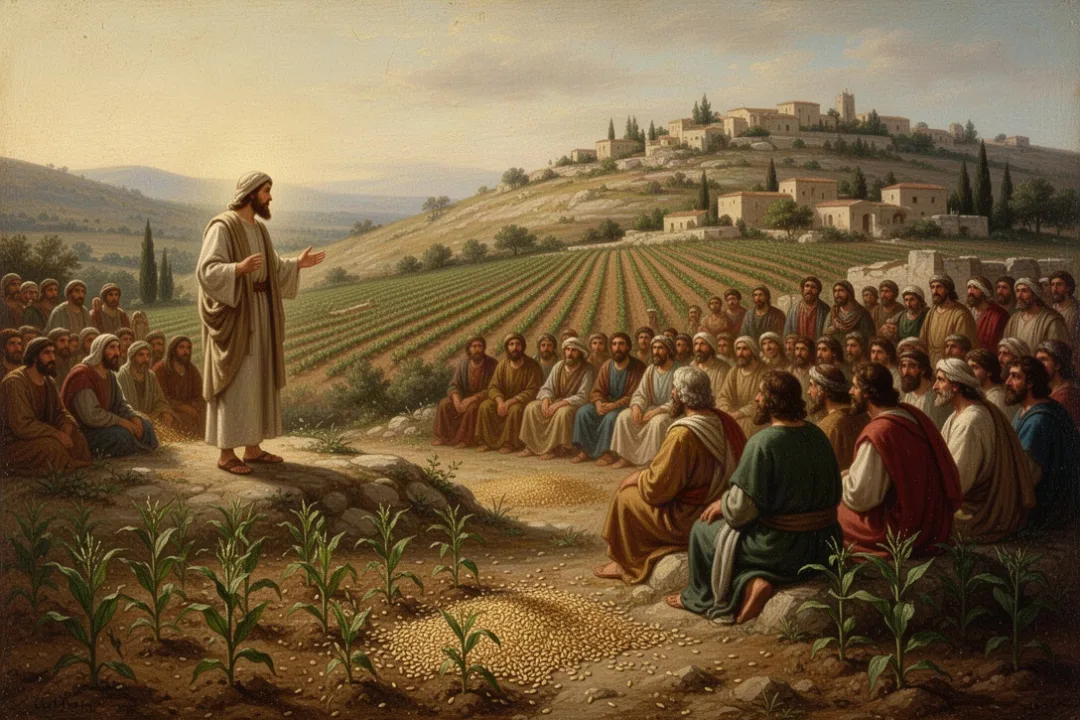
The parable of the sower, found in Matthew 13, Mark 4, and Luke 8, compares responses to God’s message with different kinds of soil. The point is not simply that people hear differently. The explanation connects hearing with endurance, competing concerns, and fruitful obedience.
The mustard seed and leaven emphasize the surprising growth of God’s kingdom. Their small beginnings do not determine their eventual influence. These stories would have challenged expectations that God’s reign must begin with obvious power or public status.
The hidden treasure and pearl of great value present the kingdom as something worth more than everything else. The people in these short stories respond decisively once they recognize the value of what they have found. Their actions illustrate joyful priority and costly commitment.
Several parables focus on mercy. In the good Samaritan, a socially unexpected person becomes the example of neighborly love. In the lost sheep, lost coin, and prodigal son, recovery produces celebration. These stories challenge the instinct to rank people by respectability or to treat a person’s past as the final word.
Other parables warn about judgment and responsibility. The wicked tenants, ten bridesmaids, talents, and sheep and goats all ask what people do with what has been entrusted to them. The stories do not reduce faith to information; they connect belief with readiness, stewardship, compassion, and faithful conduct.
Parables often leave room for reflection rather than explaining every detail. A reader should resist assigning a hidden meaning to every object, number, or character unless the passage itself supplies that interpretation. The main point usually comes through the story’s setting, conflict, reversal, and conclusion.
How to count and study biblical parables accurately
If you need a dependable count for a Bible study, class, or research project, begin by choosing a definition. Decide whether you will include only stories Jesus identifies as parables, all narrated teaching stories, brief comparisons, or Old Testament symbolic passages. Write that rule down before counting.
Next, use a Gospel harmony or a cross-reference Bible to identify parallel accounts. Record the references together rather than counting each appearance as a separate parable. This prevents the same story in Matthew, Mark, and Luke from inflating the total.
A practical process looks like this:
List each candidate passage by book, chapter, and verse.
Group parallel accounts that clearly tell the same story.
Separate distinct versions when the characters, setting, or plot materially differ, as with the talents and minas.
Mark short comparisons separately from longer narrative parables.
State your final counting rule whenever you report the number.
For personal study, reading the surrounding passage is more valuable than memorizing a total. Ask who is listening, what question or conflict prompted the parable, and how the story changes the listener’s perspective. Also notice whether Jesus gives an explanation, as he does with the sower, or leaves the audience to wrestle with the implication.
Pay attention to the audience as well. Some parables address disciples, some challenge religious leaders, and some speak to a broad crowd. The same story can comfort one listener and confront another because the response depends on the person’s posture toward God and neighbor.
Finally, compare translations and study notes carefully without assuming every heading is original to the biblical text. Section titles such as “The parable of the lost son” are editorial additions that help readers locate passages, but they do not establish an official list or number.
The clearest answer remains flexible: Jesus told roughly 30 to 40 distinct parables, while the Bible as a whole contains an uncertain larger number of parables and parable-like passages. The variation is expected because biblical writers use symbolic teaching in several different forms.
Frequently asked questions
What is the most commonly accepted number of parables in the Bible?
There is no universally accepted number. Most Christian reference works identify approximately 30 to 40 distinct parables told by Jesus. A broader count includes Old Testament stories, prophetic allegories, and short comparisons, so the total becomes less precise. When someone gives a specific number, the useful follow-up question is what definition and counting method that number uses.
Are all of Jesus’ parables found in the four Gospels?
The Gospel accounts preserve Jesus’ parables, but they do not all contain the same stories. Matthew, Mark, and Luke share several parables, while each also includes material not found in the others. John emphasizes symbolic images and extended teachings rather than the narrated parables commonly listed in the other three Gospels.
Which Gospel contains the most parables?
Luke is generally recognized for preserving the largest and most distinctive collection of Jesus’ parables. It includes stories such as the good Samaritan, prodigal son, rich fool, persistent widow, and Pharisee and tax collector. Matthew also contains many parables, particularly a concentrated group about the kingdom of heaven in chapter 13.
What is the difference between a parable and an allegory?
A parable is usually a short comparison or story that communicates a central lesson, while an allegory often assigns symbolic meaning across many elements of a narrative. The categories can overlap. Some biblical passages are called parables by one source and allegories or symbolic stories by another, which is one reason total counts vary.










Leave a Reply