Bible Stories About Forgiveness: Parables, Mercy, and Redemption
Forgiveness is a central thread woven through the biblical narrative, linking moments of personal mercy to larger
themes of redemption and reconciliation. Across the Gospels, the Old and New Testaments alike, stories about forgiveness invite readers to consider the divine and human dimensions of mercy, the costs of
grievance, and the liberating power of pardon. This article explores a wide range of biblical examples—especially parables, acts of mercy, and instances of redemption—to show how
forgiveness shapes character, community, and faithfulness.
Parables: Teaching Forgiveness Through Narrative
The Prodigal Son: A Father’s Unconditional Welcome
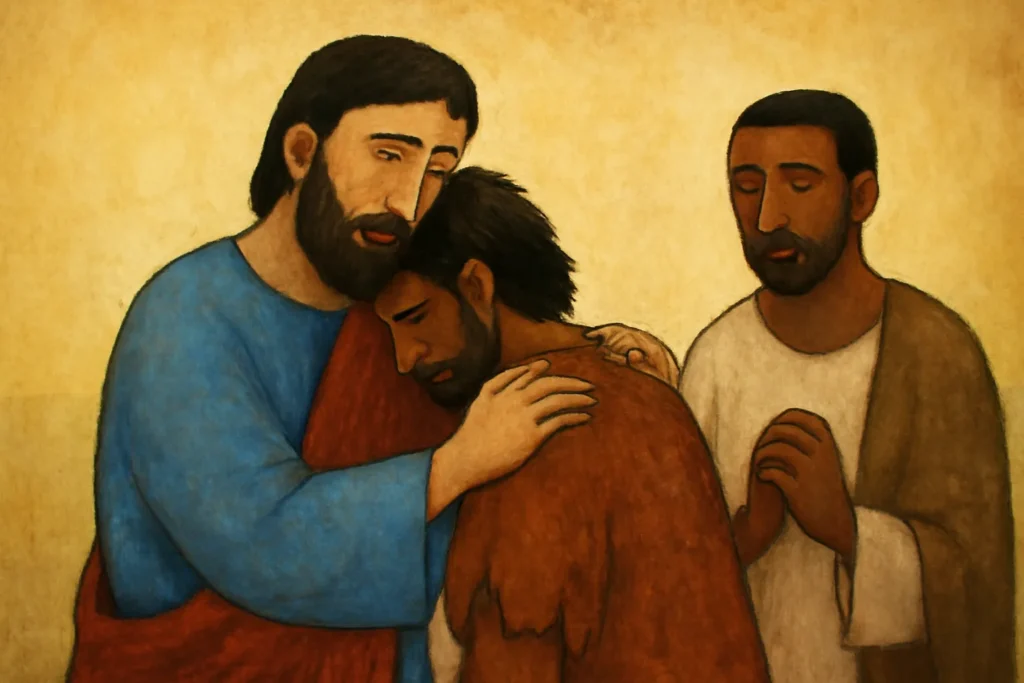
One of Jesus’ best-loved teaching stories is commonly titled the Prodigal Son (Luke 15:11-32). In this parable,
a younger son asks for his portion of the inheritance, wastes it in a distant land, and returns penniless,
hoping to be treated as a hired servant. Instead, his father rushes out to greet him with grace and
celebration. The elder brother, who stayed home and worked hard, represents those who struggle to understand forgiveness that seems to surprise or even offend them. The core message is not simply “come home”
but also “you are welcomed home with open promises.” The father’s response—kissing the returning son, clothing him,
and calling for a feast—embodies the heart of mercy as a communal and relational act. This story
models a generous, reconciliatory forgiveness that restores dignity and continues the family
narrative rather than ending it in judgment.
Within this parables framework, forgiveness is not cheap or one-sided. It is costly in the sense that
it redefines relationships, reclaims worth, and invites both the penitent and the faithful to participate in
healing. It also foregrounds the paradox that mercy is abundant even when merit is limited, teaching readers to
assess forgiveness not by the offense’s severity alone but by the transformative possibility it opens for
reconciliation.
The Unforgiving Servant: A Cautionary Tale about Mercy
In the parable of the Unforgiving Servant (Matthew 18:21-35), Jesus tells of a servant who
is forgiven a massive debt by his master but then refuses to extend a much smaller mercy to a fellow servant.
When the pattern of mercy breaks down, the master revokes mercy and hands the unmerciful servant to be tortured
until he pays back all he owes. This story starkly presents the moral that forgiveness is not just a
private feeling but a social posture that shapes behavior within the community. It warns against harboring
resentment while inviting believers to embody the kind of mercy they themselves have received from God.
The lesson extends beyond a single incident. The parables remind readers that forgiveness
multiplies when practiced openly, while withholding it risks spiritual and relational stagnation. The call is to
mirror divine generosity by releasing others from their debts—seen and unseen—thus cultivating communal peace
and trust.
The Two Debtors: A Lesson in Love and Proportion
Luke 7:41-43 offers a shorter yet powerful narrative often framed as the Two Debtors. In this tale,
a creditor forgives two men a debt—one large, one small. Jesus asks which debtor will love the creditor more.
Simon answers, and Jesus uses the moment to highlight the movement of forgiveness from grace into
gratitude and to reveal how mercy awakens different responses in the heart. The focus is not on the magnitude of
the debt alone but on the response to mercy—the embodiment of repentance, gratitude, and transformed behavior.
John 8:1-11 presents a nuanced moment where Jesus challenges a crowd bent on by
offering a path toward forgiveness and moral restoration. When those who are quick to condemn
the woman point to her alleged sin, Jesus responds with a radical standard: “Let him who is without sin cast the first
stone.” As the accusers depart, Jesus tells the woman to “go and sin no more.” This encounter foregrounds mercy as
a form of truth-telling—addressing sin while refusing to confirm the crowd’s posture of ultimate judgment.
It invites readers to consider how mercy and accountability can coexist in a season of
restoration.
Mercy in Action: How Forgiveness Takes Shape in Real-Life Stories
Joseph and His Brothers: Healing a Family Rift
The story of Joseph, his brothers, and their father Jacob (Genesis 37, 45-50) is a sweeping example of mercy that leads to reconciliation. Betrayed and sold into slavery by his envious brothers, Joseph
rises to power in Egypt. When famine comes, his brothers come seeking relief, not recognizing him as the man who
once endured their deceit. Joseph’s response is striking: he tests them briefly, then reveals himself with
forgiveness and a plan to save their family. “Do not fear,” he says; “you meant evil against me, but God meant it for
good, to bring it about that many people should be kept alive” (Genesis 50:20). The forgiveness Joseph extends
is not forgetfulness but a restoration of relationship grounded in a trust that God’s purposes surpass human
wrongdoing. This story offers a textured portrait of forgiveness that heals a broken lineage
and reestablishes a family’s identity.
David and Mephibosheth: Gracious Remembrance
In 2 Samuel 9, King David seeks to show mercy to Saul’s lineage by inviting Mephibosheth, who is
crippled, to dine at the king’s table and restoring to him a portion of Saul’s former lands. This act of grace
demonstrates that forgiveness and redemption frequently operate on behalf of those
who cannot pay back in kind. David’s kindness toward Mephibosheth echoes the divine pattern of mercy that
privileges the vulnerable and redefines a person’s dignity within the community. Such stories remind readers that mercy is a social act with ongoing implications for justice, land, identity, and access to
fellowship.
The gospel centers on a radical act of forgiveness that surpasses human merit. On the cross, Jesus
prays, “Father, forgive them, for they know not what they do” (Luke 23:34). This prayer embodies the depth of
divine mercy: a forgiveness that does not depend on the offender’s repentance at that moment but on a divine
provision of grace. The crucifixion becomes the defining symbol of redemption for Christians, a
means by which estranged humanity can be reconciled to God and reoriented toward love, justice, and new life. The
cross, then, is not merely a historical event but a paradigmatic act that reshapes how believers understand forgiveness in every relationship—from personal conscience to corporate ethics.
The Thief on the Cross: Forgiveness in a Moment
Luke 23:42-43 offers a striking example of redemption in extremis. The man crucified beside Jesus
asks, “Jesus, remember me when you come into your kingdom.” Jesus replies, “Truly I tell you, today you will be with
me in paradise.” This brief exchange highlights the sufficiency of grace at a moment when human life is at its end.
It demonstrates that forgiveness does not require a lengthy process; it can come as a gracious gift
that redefines a person’s destiny. Yet it also points to a path of faithfulness that must follow the moment of
pardon, inviting the forgiven to live in light of the new reality they have received—an ongoing posture of repentance
and renewal.
Peter’s Denial and Restoration: Reconciliation After Failure
When Peter denies Jesus, a sobering moment of human frailty is laid bare. After the resurrection, Jesus restores
Peter in a conversation recorded in John 21:15-19. The resurrected Christ commissions Peter, guiding him toward
a renewed mission: to “feed my sheep.” This encounter embodies a profound truth about forgiveness and redemption—that failure need not be the final word and that restoration is possible through
sustained relationship, responsibility, and trust in God’s purposes. The exchange emphasizes that true
reconciliation involves both mercy and accountability, inviting a path forward marked by purpose and renewed
partnership in ministry.
Mercy and Confession: Psalms, Prayers, and Teachings on Forgiveness
Psalm 51: A Cry for Mercy and Cleansing
Psalm 51 is a classic template for confession, mercy, and renewal. Written from the perspective of David after his
sin with Bathsheba, the psalm blends humility with bold requests for cleansing, restoration, and a right spirit.
Phrases like “Create in me a clean heart, O God” and “Wash me, and I shall be clean” capture a deep longing for forgiveness that transforms guilt into righteousness. The psalm’s trajectory—from contrition to hope—
models how sincere repentance opens the door to divine redemption and renewed relationship with God.
The Lord’s Prayer: A Model for Forgiving Others
In the Lord’s Prayer, Christians petition God to “forgive us our debts, as we also have forgiven our debtors”
(Matthew 6:12). This petition places personal forgiveness within a relational economy: God’s mercy
toward us becomes a model for how we extend mercy to others. The reciprocity implied here—receiving mercy so we
may extend mercy—underscores a transformative practice. The surrounding verses (Matthew 6:14-15) emphasize that
our own forgiveness is linked to our willingness to forgive others, making mercy not only
a divine gift but a communal discipline that shapes daily interactions.
Forgiveness in Scripture: How These Stories Inform Ethical Living
The biblical witness on forgiveness is not a single admonition but a rich chorus of voices and
scenes. It asks readers to consider:
How to respond when mercy is offered—whether to receive it with gratitude or to respond with gratitude that
leads to transformed action.
How to extend grace to others, even when the offense is serious or ongoing, while still acknowledging the
need for accountability.
How communal life is shaped by the decision to forgive, reconcile, and rebuild trust after injury.
How repentance, mercy, and redemption interact to restore dignity and lay foundations for justice that honors God.
Name the hurt clearly. Acknowledge what happened and how it affected you, while staying open to the possibility
of restoration.
Seek understanding and perspective. Try to see the situation from the other person’s point of view, without
excusing harmful behavior.
Commit to mercy as a daily practice. Choose mercy even when emotions are strong, following the scriptural
patterns of Christ’s mercy toward sinners and saints alike.
Set healthy boundaries. Forgiveness does not require ignoring danger or repeating unhealthy dynamics. Boundaries
protect relationships while enabling trust to be rebuilt where possible.
Invite accountability and reconciliation. When appropriate, involve trusted mediators, pastors, or counselors
to facilitate healing and to foster sustainable reconciliation that honors both parties and the community.
Forgiveness as Healing for the Community
The Bible repeatedly teaches that forgiveness has communal repercussions. When families, churches, and
nations practice mercy, trust can be rebuilt, violence can be reduced, and the wellbeing of the vulnerable can be
strengthened. The biblical pattern suggests that forgiveness is not merely an interior feeling but a public
manifestation of grace that restores relationships, restores dignity, and invites new life. In this sense,
forgiveness becomes a form of redemption that transcends individual pain and contributes to the
flourishing of the whole community.
Common Misconceptions About Forgiveness
As readers encounter these biblical narratives, certain misunderstandings can arise. It is helpful to counter a few
of these with careful distinctions:
Forgiveness is not the same as forgetting. The Bible holds forgiveness as a decision
to release the offender from personal vengeance while often encouraging wise prudence to prevent further harm.
Forgiveness does not always erase consequences. The offender may still face legal or social
consequences; forgiveness is a spiritual and relational disposition that can coexist with accountability.
Forgiveness is not a one-time event but a continual practice. The stories show mercy as a repeated
pattern of generosity that nurtures ongoing relationships and a dignified life for all involved.
Reflection on the Theological Significance
The biblical narratives about forgiveness illuminate the nature of God as merciful, steadfast in love,
and faithful to keep promises even when humanity falters. They reveal a theology in which grace precedes
human merit, where repentance leads to restoration, and where redemption becomes a
shared mission for the community. The stories challenge readers to imitate divine mercy while cultivating a wise and
just life, recognizing that forgiveness can be the doorway to justice that honors the dignity of every person.
Conclusion: The Enduring Power of Forgiveness
Across the parables, narratives of mercy, and accounts of redemption,
the Bible presents forgiveness as a transformative force. It is a gift that reconciles humans to God and to one another,
a discipline that shapes ethical living, and a mission that invites communities to demonstrate compassion in concrete,
everyday ways. Whether through the prodigal's return, the merciful master, the cross, or the steadfast mercy shown to the
weak, these stories point to a hope that transcends brokenness: a world where mercy prevails, where justice is tempered
by grace, and where forgiveness becomes the path to true freedom.
“For if you forgive others their trespasses, your heavenly Father will also forgive you.” This timeless invitation
to imitate mercy remains a compelling call for readers today: to embody forgiveness in word, action, and community.









Leave a Reply