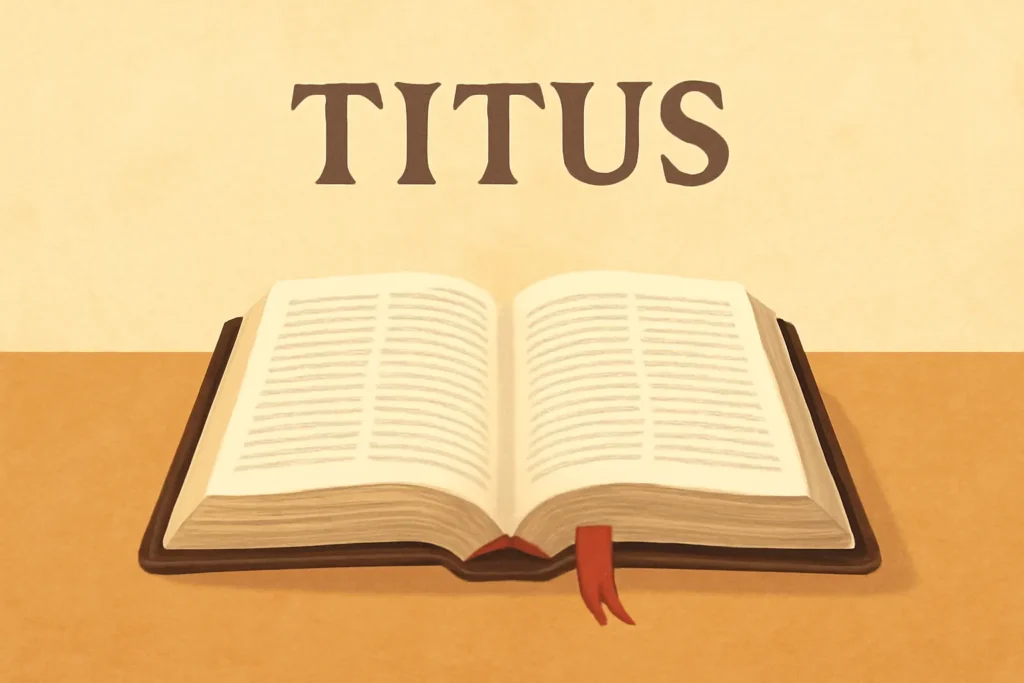
The biblical letter of Titus is a compact, practical guide for how a Christian community should live out the gospel in daily life. Framed as pastoral instruction, this brief Epistle (often grouped with 1 and 2 Timothy as the Pastoral Epistles) speaks with clarity about leadership, sound doctrine, and ethical conduct in a church setting. Although Paul writes to Titus in a specific historical moment—appointing leaders on the island of Crete and addressing the challenges of early Christian communities—the themes and messages of the book have enduring relevance for churches today. This comprehensive overview, or bible Titus summary, explores the major themes, structure, and practical applications found in this letter, highlighting why the book’s guidance remains influential for contemporary Christian life.
Authorship, Audience, and Context
Scholars widely agree that Titus is a Pastoral Epistle written by the Apostle Paul. The recipient, Titus, was a trusted coworker who had co-ministered with Paul during the expansion of the gospel in the Mediterranean world. The letter addresses Titus as he shepherds a church presence on the island of Crete, a place with a mixture of cultural groups and religious currents. The historical context explains Paul’s emphasis on church order, eldership, and Christian conduct as concrete proofs of genuine faith in a broken or morally lax environment.
In this brief letter, Paul does not simply value private belief; he stresses that public testimony and household ethics reveal the authenticity of one’s faith. This makes Titus not only a letter to a single congregation but a blueprint for how local churches should organize themselves, teach sound doctrine, and live out that doctrine in observable ways.
Overall Structure and Outline
Titus has a systematic flow that moves from leadership formation to practical living, with constant reminders to anchor all teaching in grace and Christ-centered truth. A rough outline of the book’s structure helps readers grasp its logic:
Chapter 1: Reminders about elders and the need to confront false teachers
Chapter 2: Instructions to different groups within the church—older men, older women, younger women, young men, and slaves—about living in a way that reflects genuine faith
Chapter 3: The contrast between grace–produced reform and the old fables, with emphasis on humble obedience and doing good works
Across these sections, Titus consistently ties sound doctrine to practical living, underscoring that belief and behavior belong together in the life of a local church.
Key Themes in Titus
Sound Doctrine and Healthy Teaching
One of the central concerns of the letter is the maintenance of sound doctrine. Paul warns against those who distort the gospel or teach
only fragments of truth. In Titus 1:9, he specifies that an elder must be able to give sound doctrine and to refute false teachers. The idea is not merely to accumulate correct beliefs but to shield the community from teachings that misrepresent Christ or distort Christian hope. The phrase sound doctrine appears repeatedly as the anchor for every other instruction in the letter.
Grace as the Foundation for Ethical Living
Across Titus, grace is not a license for loosened morals; rather, it is the grace of God that teaches and empowers believers to live self-controlled, upright, and godly lives in the present age (see Titus 2:11–12). The pastoral aim is to show that the gospel reshapes desires and actions, translating theological truth into tangible virtue.
Church Leadership and Organization
A distinctive feature of Titus is its concrete rules for leadership. Paul outlines qualifications for elders and highlights the crucial role of a church’s governance in preserving the integrity of the gospel. The call to appoint elders in every town (Titus 1:5) emphasizes a structured and trustworthy leadership that can guard the church against both external pressures and internal dissent. The repeated emphasis on integrity, hospitable conduct, and faithful teaching shows that leadership in the early church was intended to model the gospel in everyday life.
Titus goes beyond liturgy and creed to address daily behavior. Instructions to various groups—older men and women, younger men and women, slaves—present a coherent ethic for households and communities. The aim is not mere performance but a transformed life that reveals the beauty and credibility of the gospel in a pluralistic society.
The Handling of False Teachers
Throughout the letter, Paul cautions against false teachers who undermine the church by teaching erroneous doctrines or promoting disruptive behavior. Titus is urged to rebuke and, when necessary, to refuse fellowship with those who persist in harmful teaching. This theme underscores the critical link between doctrinal fidelity and communal health.
Pastoral Instructions: Elders and Leadership
Qualifications for Elders
The centerpiece of Titus 1 is the list of qualifications for elders (overseers) and the expectations for their character and conduct. Paul stresses that leadership in the church must be morally unimpeachable, faithful in family life, hospitable, and able to manage their own households well. The criteria include traits such as blamelessness, being temperate, prudent, respectable, and known for good works. Additionally, elders must be able to defend the truth, ensuring that what the church teaches aligns with the gospel message.
Role of Deacons and Other Leaders
While Titus emphasizes elders as the primary leaders of the local church, the broader ancient church often included other forms of leadership such as deacons and elders’ helpers. Titus does not provide an explicit, exhaustive deaconal list as some later traditions do, but the underlying principle is clear: church leadership should be trustworthy, capable of teaching, and capable of modeling a life of servanthood and integrity. Churches today often translate these principles into criteria for deacons or other ministry teams as they seek to maintain healthy church governance.
Guarding the Flock Against Distortion
Instructed to appoint leaders who model and protect the faith, Titus becomes a practical manual for maintaining communion and doctrine in the face of competing ideas. The leadership structure described or implied in Titus serves to preserve the church’s witness in Crete and, by extension, to offer a template for other communities seeking to steward the gospel faithfully.
Conduct for Various Groups in the Church
Older Men and Older Women
Paul’s guidance for older men and women centers on wisdom, dignity, and the transmission of faith to younger generations. Elderly believers are called to be examples in sound speech, self-control, and steadfast faith. Their conduct serves as a public demonstration of the gospel’s transformative power, and they are encouraged to mentor younger believers with gentleness and patience.
Young people in the church are urged to pursue upright living, discipline, and a life marked by good works that reflect their confession. The modeling of virtue by the younger generation is part of the church’s witness in a culture that often prizes self-indulgence over self-control.
Slaves and Household Ethics
Though the New Testament recognizes the historical reality of slavery, Titus provides guidance about conduct within that social structure, urging slaves to be obedient and to live in a way that honors God. The broader message is that Christian ethics should permeate all relationships, demonstrating integrity, respect, and a commitment to justice and mercy. The emphasis is on the transformed heart producing visible changes in behavior, even in challenging social circumstances.
Household and Community Life
Beyond individual instruction, Titus emphasizes the church as a community where households operate under the authority of Christ. This includes hospitality, generosity, and mutual edification. The aim is to show that the gospel is practical and relevant to everyday life, not confined to private beliefs or abstract theology.
A recurring thread in the bible Titus summary is the danger posed by false teachers who distort the gospel and disrupt church life. Paul instructs Titus to contend for the faith and to take decisive action against those whose teachings lead people astray or create division. The book emphasizes discernment, grounded in sound doctrine, as a key instrument for preserving the church’s unity and witness.
This warning against distortion is not merely about theological trivia; it is about preserving the integrity of the gospel and the safety of the church’s mission. By insisting on doctrinal fidelity paired with ethical living, Titus shows that error in belief inevitably manifests in error in conduct. The healthy alternative is a community that both proclaims the truth and lives it out in love, humility, and service.
Theology in Titus: Core Doctrinal Points
Grace, Regeneration, and Transformation
The theology of Titus centers on grace as the transforming power that brings about regeneration and produces a life aligned with God’s purposes. The epistle makes explicit that grace teaches believers to live in ways that reflect the reality of the gospel—freedom from past patterns and a new way of living that honors Christ.
Justification by Faith and Ethical Consequences
While Titus highlights the importance of living well and doing good works, it does so in alignment with the doctrine that justification by faith is a gift of God. The ethical exhortations flow from a foundational belief in God’s saving work, not from human striving to earn favor. In this sense, good works are the fruit of faith, not the root of salvation.
Titus presents the church as a visible witness that embodies gospel-centered life. The church’s structure, doctrine, and daily conduct are all intended to demonstrate the plausibility and beauty of the Christian faith to a watching world.
Applications for Today: What Titus Teaches Modern Churches
How to Maintain Sound Teaching in Modern Contexts
Contemporary churches can draw from Titus the importance of clear doctrinal boundaries, disciplined teaching, and a robust method for evaluating teaching against the gospel. The practice of regular doctrinal checks, accountability, and ongoing training for leaders helps prevent drift and preserves the integrity of the church’s proclamation.
Lead with Character and Competence
Leadership that mirrors the ideals in Titus—integrity, competence, and humility—serves as a powerful testimony. The letter’s emphasis on personal virtue translates into public trust, which is essential for effective ministry, pastoral care, and mission.
Living Faith That Makes a Difference in the Community
The ethical guidance in Titus is not merely private piety. It is a call to community transformation through concrete actions—hospitality, generosity, and fair, respectful treatment of all people. The reform of personal and family life is presented as an essential component of the church’s mission to love neighbors and demonstrate the gospel’s power to reconcile and renew.
Grace–Led Reform in Challenging Environments
The Crete context may have posed pressures that distracted from gospel fidelity. In today’s diverse settings—urban, rural, multi-ethnic, or online communities—the Titus model encourages believers to rely on grace to navigate conflict, maintain unity, and pursue holiness without falling into legalism or cynicism.
Practical Tools for Readers
Adopt a doctrine-and-life approach: let what you believe be demonstrated in how you live.
Use clear worded guidelines for leadership selection and evaluation.
Encourage mentoring relationships across generations to strengthen faith formation.
Provide regular teaching that equips the church to identify and rebuke false teaching with grace and truth.
Key Verses and Pivotal Passages to Read as a Titus Study
Titus 1:6–9 — Qualifications for elders and the call to guard the flock with sound doctrine.
Titus 2:1 — The call to teach what is in accord with sound doctrine for various age and gender groups within the church.
Titus 2:11–14 — The grace that trains us toward renouncing ungodliness and pursuing godliness; a summary of Christian living anchored in grace.
Titus 3:4–8 — The saving kindness of God and the renewal of life that leads to loving service and good works.
These passages are focal points for understanding the book’s emphasis on leadership, ethics, and the practical outworking of grace in community life.
Frequently Asked Questions About Titus
Why did Paul write Titus to Crete?
Crete faced unique pastoral challenges, including cultural instability and the presence of false teachings. Paul’s instructions were tailored to establishing healthy church governance and teaching that would endure beyond the initial missionary effort.
Is Titus about gender roles?
Titus addresses roles within the context of household and church life, emphasizing the importance of character and sound teaching. It speaks to the responsibilities of different groups within the church and calls for reverent, virtuous living as a witness to the gospel.
How does Titus relate to other pastoral letters?
Titus shares concerns with 1 and 2 Timothy—pastoral leadership, doctrinal fidelity, and Christian living. Together, these letters offer a comprehensive framework for how the church should preserve the truth and practice the gospel in everyday settings.
Conclusion: The Message of Titus for Modern Readers
In this bible Titus summary, the Epistle to Titus emerges as a practical guide for building a healthy church through sound doctrine, robust leadership, and outward good works. The core claim is simple and profound: genuine faith manifests in a life shaped by grace and oriented toward the good of others. By anchoring church life in trustworthy leadership, clear teaching, and ethical action, the book of Titus offers a durable model for communities seeking to honor Christ in a complex world. For modern churches, the letter remains a timely invitation to assess, renew, and embody the gospel in every generation.
Whether you are studying Titus’ summary for personal growth, teaching a youth group, or leading a local congregation, the enduring takeaway is clear: a church that safeguards truth and lives out love will reflect the power and beauty of the gospel to a watching world.








Leave a Reply