Overview: The Bible’s Third Temple and Its Place in History
The idea of a Third Temple occupies a distinctive niche in religious imagination, scholarly study, and political discourse. While Solomon’s Temple and the later Second Temple are historical realities of ancient Israel, the biblical third sanctuary—often envisioned as a future shines-and-restoration that would once again center worship in Jerusalem—is a topic that sits at the intersection of history, prophecy, and contemporary faith. In popular discussion, you may encounter phrases such as the Temple to be rebuilt, Beit HaMikdash, or the holy temple in Zion. This article surveys the threads of history that lead to the concept, explains the prophetic foundations that many scholars and believers cite, and then turns toward how modern communities understand and engage with this topic today.
The purpose of this piece is not to advocate one interpretation over another, but to present a coherent, well-sourced overview of how the Biblical third temple motif has developed, what it has meant in different eras, and why it continues to resonate in the present day. Throughout, terms such as prophecy, eschatology, and messianic expectation appear with varying emphasis depending on denominational or scholarly perspective. In the pages that follow, readers will find a detailed map—from ancient temple worship to modern debates about sovereignty and sacred space—designed to illuminate the topic without assuming a single doctrinal stance.
Historical Background: From Solomon’s Temple to the Second Temple and Beyond
To understand the third temple concept in the Bible, it is essential to revisit the sequence of sanctuaries that shaped Jewish worship in the land of Israel. The biblical narrative centers on a succession of sanctuaries that were believed to house the divine presence during key periods of Israelite history. The two temples most often cited in connection with the third temple motif are:
Solomon’s Temple (the First Temple), established in the 10th century BCE in Jerusalem and regarded as the central place of worship until its destruction by the Babylonians in 586 BCE.
The Second Temple, initially rebuilt around 516 BCE after the exile, later expanded by King Herod the Great in the late first century BCE, and ultimately destroyed in 70 CE by Roman forces.
Solomon’s Temple and Its Legacy
The First Temple represented a uniquely centralized cultic site for the people of Israel. Its architectural plan and sacrificial system, prescribed in the biblical books of Kings and Chronicles, shaped later expectations about what a restored temple might entail. The destruction of this sanctuary marked not only a loss of a physical structure but also a turning point in how Jewish identity and ritual life would be conceptualized in diasporic and later historical settings. For many readers, Solomon’s Temple becomes a benchmark—a standard by which the possibility of a Third Temple is measured.
The Second Temple Period and Herodian Expansion
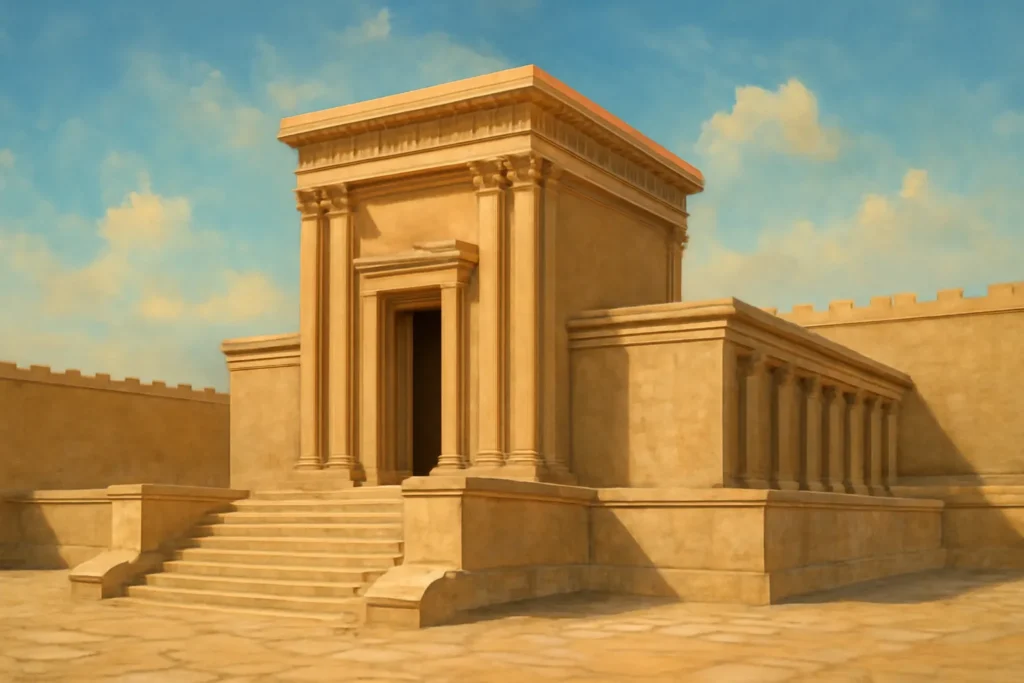
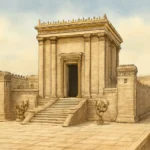
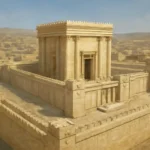
After the Israelites returned from Babylonian exile, a rebuilt temple—the Second Temple—stood on the same site for several centuries. In the late Second Temple period, Herod’s expansion transformed the complex into a monumental structure, reflecting both political ambition and religious devotion. This era produced a wealth of religious literature, rabbinic interpretation, and temple-centered worship that would later influence various eschatological expectations. The destruction of the Second Temple in 70 CE created a lasting historical backdrop for the anticipation of a future sanctuary and, for some, a literal rebuilding that would inaugurate a new era in Jewish faith and public worship.
Prophecy and Scriptural Foundations: The Biblical Case for a Future Sanctuary
The claim that a Third Temple will arise in the future rests on a tapestry of prophetic texts, visionary literature, and interpretive tradition. In many theological systems, future temple prophecy is integrally connected to the restoration of Israel, the coming of a Messiah, and the fulfillment of specific scriptural motifs. The sources cited by proponents of a literal rebuilding are diverse, spanning the Hebrew Bible (Tanakh) and selected New Testament passages that some readers interpret as foreshadowing or supporting a later stage in redemptive history.
Old Testament Promises and Visions
Several key passages are frequently cited in discussions about the biblical third sanctuary:
Ezekiel 40–48 contains an expansive vision of a future temple complex, including detailed measurements and priestly arrangements. For many interpreters, this text presents a concrete plan for a coming sanctuary distinct from both Solomon’s and Herod’s temples, though the interpretation of its immediate historical versus distant-future fulfillment varies.
Daniel 9 speaks of 70 weeks and a timetable related to the rebuilding of the city and temple, a passage that has been read in multiple ways, from historical-already accomplished to eschatological-future.
Zechariah 6:12 mentions a figure called "the Branch" who will build the temple, a verse that has resonated in messianic expectation and in discussions about the temple’s anticipated revival.
It is important to note that Old Testament prophecy is often interpreted through the hermeneutical lens of the reader. Some traditions understand these texts as having a primarily spiritual or symbolic dimension, while others insist on a literal, physical rebuilding on the Temple Mount as part of a forthcoming era. The diversity of interpretations contributes to why the idea of a Third Temple remains a contested and vibrant topic within Jewish and Christian interpretive communities.
New Testament Echoes and Apocalyptic Texts
In the Christian tradition, the New Testament offers passages that are cited in support of, or in tension with, the traditional temple-fulfillment framework. Jesus’ predictions about the destruction of the Jerusalem temple (as recorded in the Gospels) and the apocalyptic imagery in the Book of Revelation have shaped centuries of Christian eschatology. Some readers view the temple motif in Christian literature as fulfilled in Christ himself, who is described in some writings as the fulfillment of the law and the prophets. Others, however, retain a future orientation—seeing that the temple in some form might reappear as part of a broader eschatological chronology.
In discussions about a Third Temple tied to Christian eschatology, important distinctions arise between:
The fulfillment-through-Christology approach, which emphasizes the fulfillment of temple imagery in Jesus’ life, death, and resurrection.
The literal-rebuilding expectation approach, which anticipates a future physical sanctuary and its role in end-time events.
The symbolic or spiritual temple approach, which sees the temple motif as representing the consummation of God’s presence among his people in ways that are not tied to a rebuilt building.
The interpretive variety here is part of why the study of the third sanctuary idea remains dynamic in theological circles. When speaking of a possible future sanctuary, scholars and believers often distinguish between what is foretold in prophetic literature and how such prophecies are understood in light of historical experience, present-day reality, and broader theological commitments.
Modern Relevance: The Third Temple in Contemporary Discourse
In modern times, the concept of the Holy Temple in Jerusalem or a future Third Temple has emerged in a variety of contexts—religious practice, political debate, interfaith dialogue, and academic inquiry. The conversation is complex, shaped by historical memory, geopolitical realities, and diverse religious convictions. This section surveys how the topic is engaged today, the practical questions that arise, and the kinds of debates that are most common when people discuss a potential temple revival in the modern era.
Religious and Theological Interpretations
Across Jewish communities, there is a spectrum of belief regarding whether a literal rebuilding will occur, when it might happen if at all, and what conditions would precede it. Some Judaism traditions place emphasis on the sanctity of the Temple Mount location, the priestly order, and ritual purity requirements, while others focus on the symbolic and ethical dimensions of worship in a modern context. In Christian circles, interpretation varies even more widely, with some groups viewing the temple motif as a crucial sign in salvation history, while others interpret prophecy as fulfilled in spiritual terms or as a future project that should be understood alongside current concerns for peace, justice, and religious freedom.
The concept of a Third Temple thus functions differently depending on doctrinal commitments:
Some see it as a literal architectural project that would restore a specific form of centralized worship in the city’s sacred precincts.
Others view the idea as a theological symbol pointing to God’s ultimate presence among his people, realized in ways not limited to a building.
Still others consider it an important element of eschatological storytelling that helps believers interpret current events in light of ancient promises.
Political Contexts and Interfaith Dimensions
The Temple Mount site in Jerusalem is one of the most sensitive religious spaces in the world. Any discussion of a future rebuilding inevitably touches on issues of sovereignty, security, and interfaith respect. The political implications of a possible third sanctuary on or near the Temple Mount have implications for Israeli policy, Palestinian claims, and the status quo agreements that govern access to holy sites. Within this milieu, scholars and commentators emphasize cautious, respectful discourse and careful distinction between scholarly speculation and policy prescriptions. The religious imagination surrounding the third sanctuary has the power to inspire hope and to provoke controversy, depending on who is presenting the case and for what purpose.
Practices, Preparations, and Contemporary Movements
There are contemporary movements that engage with the concept of a Beit HaMikdash in various ways, ranging from scholarly commissions to ritual preparations and public discourse. Some participants discuss:
The study of temple laws and ritual purity, often in a historical or literary sense rather than as current practice.
The education of priests (kohanim) and Levites in traditional liturgy and temple service, to preserve knowledge that could be relevant in a future temple context.
Architectural or symbolic modeling, exploring how a future sanctuary might be designed with sensitivity to historical precedent while addressing modern safety and accessibility considerations.
Interfaith dialogue initiatives that seek to foster mutual understanding around sacred space and shared heritage, particularly among Jewish, Christian, and Muslim communities with ties to Jerusalem.
Key Topics and Frequently Asked Questions
The conversation about a potential third sanctuary touches on a number of recurring questions. The below list highlights several points of public interest and scholarly inquiry.
What does the Bible mean by a future Third Temple—a literal building, a spiritual reality, or both?
When and how could such a project take place, given historical, political, and religious constraints?
How do different religious traditions interpret prophetic passages about the temple in light of modern events?
What would be the theological implications of a rebuilt sanctuary for ongoing worship and for the identity of faith communities?
What role do ethics, peacemaking, and human rights play in debates about sacred space in Jerusalem?
Architectural and Ritual Considerations: What a Future Sanctuary Might Entail
If discussions about a future sanctuary continue, several architectural and ritual questions arise, even for those who approach the topic as primarily theological or symbolic. While the Second Temple laid down certain ritual prescriptions, a modern project would have to address:
How to maintain access for diverse religious groups while respecting contemporary sovereignty and security concerns.
Whether any form of sacrificial system could be revived, and if so, what boundaries and ethical frameworks would govern such practices.
How to interpret or adapt ancient purity laws in a 21st-century context that emphasizes inclusivity and universal human rights.
Which materials, architectural styles, and ceremonial spaces would most faithfully reflect the historical memory of the sanctuary while ensuring modern safety standards.
Challenges, Controversies, and Ethical Considerations
The prospect of a Third Temple raises numerous challenges that touch on theology, politics, and ethics. Some of the most salient concerns include:
Religious pluralism and the protection of minority rights in a contested holy site.
The risk that temple-related rhetoric could inflame tensions rather than promote constructive dialogue.
Historical memory versus present political realities: balancing reverence for sacred history with the lived experiences of people who dwell in the land today.
Scholarly caution: the danger of conflating symbolic prophecies with concrete political agendas or with modern-day feasibility studies.
Common Myths and Clarifications
In discussions about the third sanctuary, several misconceptions circulate. It is helpful to offer a few clarifications:
Not every discussion of the future temple presumes a rapid or imminent rebuilding; many interpreters treat it as a distant event or as a symbolic stage in a broader redemptive arc.
There is no universal consensus among Jews, Christians, and Muslims about the role such a sanctuary would play or whether it is even a desirable or feasible goal in the modern era.
The term “Third Temple” is not a single, monolithic doctrine but a field of discourse with diverse voices, expectations, and cautions.
Throughout academic texts, sermons, and popular writing, you will encounter a variety of expressions that refer to the same core idea. To keep this discussion precise and readable, here are common variations you may see:
The Third Temple (most direct, widely used variant)
Beit HaMikdash (Hebrew term used in Jewish contexts)
Temple to be rebuilt or future sanctuary
Jerusalem's third sanctuary
Third sanctuary or Beit HaMikdash Shlishi (linguistic variants)
Temple Mount project as a political or religious phrase in some discussions
Spiritual readings might refer to the temple of God within the heart or to a metaphorical temple in Christian interpretive frameworks
The question of whether a literal, physical Beit HaMikdash will rise in the future remains unsettled in many communities, and it is likely to continue to be debated for the foreseeable future. What remains clear is that the biblical Third Temple has never existed as a single, universally agreed-upon blueprint. Rather, it is a concept that has evolved across centuries, shaped by sacred texts, historical experiences, and the hopes and anxieties of people living in different eras.
From a scholarly standpoint, the topic offers rich opportunities to explore how prophetic language is read, how sacred space is imagined, and how religious communities negotiate identity in a world where ancient narratives intersect with contemporary politics. For readers who wish to engage with the subject seriously, it is advisable to approach sources with a critical, historically informed perspective, while remaining mindful of the deep reverence and diverse convictions that surround the temples of Jerusalem.
Whether one emphasizes the historical trajectory of the sanctuaries, the prophetic promises that have fueled anticipation, or the modern relevance of sacred space in a pluralistic world, the narrative of the Third Temple remains a compelling lens on faith, hope, and the power of ancient words to shape present and future lives.



Leave a Reply