Bible Verse About the Woman at the Well: Living Water, Truth, and Mission in John 4
Quick Answer: The bible verse about the woman at the well shows Jesus meeting a real woman with real needs—offering living water, speaking truth, and turning her into a witness. In John 4, her conversation with Christ leads to transformation, renewed worship, and an urgent message to others, “Come, see,” because she recognized Jesus as the Christ.
If you’re looking for hope when life feels complicated, the bible verse about the woman at the well reminds us that Jesus never wastes a moment of our story. At Jacob’s well, He meets her with compassion, then leads her into deeper truth and living water. The scene in John 4 shows grace that reaches us, truth that restores, and mission that follows transformation—not as abstract ideas, but as something the woman experiences firsthand. As you read, notice how her encounter moves from thirst and daily routines to worship in spirit and in truth, and then out into the city with a message that others need to hear. This is more than a Bible story; it’s an invitation to meet Jesus personally and carry His light to those around you.
At a Glance — Verses in This Article
John 4:4-26
John 4:28-29
John 4:34-38
Bible Verses
John 4:4-26 (King James Version)
“And he must needs go through Samaria. Then cometh he to a city of Samaria, which is called Sychar, near to the parcel of ground that Jacob gave to his son Joseph. Now Jacob’s well was there. Jesus therefore, being wearied with his journey, sat thus on the well: and it was about the sixth hour. There cometh a woman of Samaria to draw water: Jesus saith unto her, Give me to drink. (For his disciples were gone away unto the city to buy meat.) Then saith the woman of Samaria unto him, How is it that thou, being a Jew, askest drink of me, which am a woman of Samaria? for the Jews have no dealings with the Samaritans. Jesus answered and said unto her, If thou knewest the gift of God, and who it is that saith to thee, Give me to drink; thou wouldest have asked of him, and he would have given thee living water. The woman saith unto him, Sir, thou hast nothing to draw with, and the well is deep: from whence then hast thou that living water? Art thou greater than our father Jacob, which gave us the well, and drank thereof himself, and his children, and his cattle? Jesus answered and said unto her, Whosoever drinketh of this water shall thirst again: But whosoever drinketh of the water that I shall give him shall never thirst; but the water that I shall give him shall be in him a well of water springing up into everlasting life. The woman saith unto him, Sir, give me this water, that I thirst not, neither come hither to draw. Jesus saith unto her, Go, call thy husband, and come hither. The woman answered and said, I have no husband. Jesus said unto her, Thou hast well said, I have no husband: For thou hast had five husbands; and he whom thou now hast is not thy husband: in that saidst thou truly. The woman saith unto him, Sir, I perceive that thou art a prophet. Our fathers worshipped in this mountain; and ye say, that in Jerusalem is the place where men ought to worship. Jesus saith unto her, Woman, believe me, the hour cometh, when ye shall neither in this mountain, nor yet at Jerusalem, worship the Father. Ye worship ye know not what: we know what we worship: for salvation is of the Jews. But the hour cometh, and now is, when the true worshippers shall worship the Father in spirit and in truth: for the Father seeketh such to worship him. God is a Spirit: and they that worship him must worship him in spirit and in truth. The woman saith unto him, I know that Messias cometh, which is called Christ: when he is come, he will tell us all things. Jesus saith unto her, I that speak unto thee am he.”
This passage captures Jesus’ conversation at the well—living water, truth about her life, and the revelation that He is the Christ.
John 4:28-29 (King James Version)
“The woman then left her waterpot, and went her way into the city, and saith to the men, Come, see a man, which told me all things that ever I did: is not this the Christ?”
After her encounter, the woman immediately becomes a witness, urging others to come and see Jesus because she now believes Him.
“Jesus saith unto them, My meat is to do the will of him that sent me, and to finish his work. Say not ye, There are yet four months, and then cometh harvest? behold, I say unto you, Lift up your eyes, and look on the fields; for they are white already to harvest. And he that reapeth receiveth wages, and gathereth fruit unto life eternal: that both he that soweth and he that reapeth may rejoice together. And herein is that saying true, One soweth, and another reapeth. I sent you to reap that whereon ye bestowed no labour: other men laboured, and ye are entered into their labours.”
Jesus connects His work with harvest and mission, showing that God uses willing hearts to gather fruit into eternal life.
1) Jesus Meets Us in Our Everyday Thirst
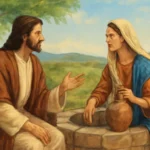
John 4 begins with a simple detail: Jesus is weary, and the moment happens at a well—an ordinary place where people come to draw water. That setting matters because many of us feel like our needs are “daily” and therefore small. Yet Jesus meets the woman right where she is. He asks her, “Give me to drink,” and the conversation opens the door for something deeper than water in a jar. As she responds with questions and skepticism, we see that Jesus doesn’t start with shame—He starts with a conversation.
The woman’s questions reveal her distance: she expects rejection because of cultural divisions (“the Jews have no dealings with the Samaritans”). But Christ’s approach breaks barriers with grace. Then He offers what only He can offer: “living water.” Notice the progression—she moves from thinking about a well that is physically deep, to hearing about water that changes the condition of the soul. Jesus teaches that whoever drinks His water “shall never thirst,” because it becomes “a well of water springing up into everlasting life.”
If you’ve been thirsting for relief, meaning, peace, or acceptance, this is your encouragement: Jesus’ grace addresses the deepest thirst behind your circumstances. He is not intimidated by your background, your questions, or your misunderstandings. He is willing to speak with you, guide you, and give you what your heart truly needs.
2) Truth That Heals: Jesus Sees More Than Your Exterior
The woman’s life is complicated, and Jesus gently—but unmistakably—brings that reality into the light. He tells her to go, call her husband. Her answer (“I have no husband”) becomes a moment of honest recognition. Jesus confirms the truth plainly: she has had five husbands, and the man she now has is not her husband. This is not cruelty; it’s care that leads to freedom.
Many people fear that coming to Christ will expose them without mercy. But in John 4, truth functions like a doorway. When Jesus speaks what is real, the woman’s response changes. She moves from debate to discovery: “I perceive that thou art a prophet.” That shift is significant. It means the conversation wasn’t only about her past; it was also about who Jesus is.
Then her attention grows spiritual: she raises the question of worship—where people “ought to worship.” Jesus corrects the focus from location to reality: salvation and worship belong to the Father, and the hour has come when true worshipers worship “in spirit and in truth.” Jesus also declares that God is a Spirit and those who worship must worship accordingly. In other words, encountering Jesus leads you from performance to presence.
Here’s the comfort: Jesus can handle your honesty. He invites your truth, not to shame you, but to redirect you toward living water and authentic worship.
3) Transformation Always Turns Into Mission
In John 4:28-29, the woman leaves her waterpot. That image is powerful. She doesn’t linger only in reflection; she goes into the city. Her first instinct is to tell others what she has learned: “Come, see a man… which told me all things that ever I did: is not this the Christ?” The “come” of her message is the result of a “meet” she experienced with Jesus.
This is how transformation works in the Bible. It creates urgency. It turns private faith into public invitation. We might expect her to be afraid, but instead she becomes bold. Her testimony is not polished—she simply shares the truth she has encountered.
Then Jesus reinforces the mission mindset when He speaks to His disciples. He says His “meat” is to do God’s will and finish His work. He tells them to “lift up your eyes” and look at the fields: they are already white unto harvest. The harvest metaphor reminds us that God is gathering people now, and the work of the gospel has eternal results.
Jesus also explains that sowing and reaping involve different seasons and different people. He says some laborers have already worked, and others are entering their labor. This means your witness matters even when you didn’t “start” the story. In this passage, the woman becomes part of the harvest—her testimony is a seed of belief others can respond to.
So if you are wondering whether God can use your ordinary life, look at this moment: at a well, Jesus renews a heart and then sends it outward. Faith leads to harvest when we share what we’ve seen.
Daily Ways to Respond to Jesus’ Living Water
Start by bringing your “well” to Jesus—the everyday place where you feel the pull of thirst: busyness, loneliness, habit, anxiety, or emptiness. In prayer, be honest. Ask Him to give you what only He can give: the living water that changes the condition of your soul.
Next, practice worship in spirit and in truth. Don’t wait until you feel “perfect” to seek God. The woman’s story shows that Jesus invites real life into real worship. When you read and pray, aim for sincerity: tell the Father what is true, and ask for the Holy Spirit to align your heart with truth.
Then take one step of mission—small but concrete. The woman’s response in the city wasn’t complicated; she simply invited others: “Come, see.” This week, choose one person (a neighbor, coworker, friend, or family member) and share a brief testimony: how Jesus met you, what He showed you, and why you believe He is the Christ.
Finally, adopt Jesus’ harvest perspective. When you “lift up your eyes,” you begin to notice spiritual opportunities around you: conversations you can start, encouragement you can offer, and prayers you can whisper for others. Remember Jesus’ words about sowing and reaping—your role may be one season of God’s work, and God can still use it for eternal life.
As you do these things, let your daily habits become channels of grace, truth, and invitation—so living water flows outward through your life.
Frequently Asked Questions
What is the woman at the well scripture about?
It centers on Jesus meeting a Samaritan woman at Jacob’s well. He offers living water that brings lasting spiritual satisfaction, speaks truth about her life, and teaches that true worship happens in spirit and in truth. Her encounter then turns into an urgent invitation to others.
How does the John 4 living water passage encourage believers today?
It encourages you that Jesus can address more than surface needs. His “living water” satisfies permanently, and His truth leads to healing instead of condemnation. The passage also shows that when your heart is transformed, you naturally want to point others toward Christ.
What lesson do we learn from Jesus and the Samaritan woman?
Jesus shows that grace breaks barriers and that truth leads to freedom. He meets questions with revelation, redirects worship from location to reality, and turns personal change into public mission. The outcome is belief that spreads beyond the well.
How can I apply the bible story of the woman at the well to my daily life?
Bring your real thirst to Jesus, worship God sincerely in spirit and truth, and take one step of invitation toward someone who needs hope. Look for harvest opportunities in ordinary conversations, trusting God to use your witness for eternal results.
A Short Prayer
Lord Jesus, thank You for meeting me in the places I try to carry alone. Give me living water that never runs dry and teach me to worship You in spirit and in truth. Where I have avoided honesty, help me step into Your grace. Where You have transformed my heart, make me courageous to invite others—“Come and see.” Use my words and life to be part of Your harvest, for the glory of the Father. Amen.
Key Takeaway: The woman at the well shows that when Jesus gives living water, truth heals, worship deepens, and mission begins.