The Woman at the Well's Neighbors: A Watchful Community in John 4
The Woman at the Well's Neighbors: A Watchful Community in John 4
New Testament Women
The Woman at the Well's Neighbors: A Watchful Community in John 4
📅 1st century AD, circa early 1st century · 📜 The specific names of her neighbors are not given in scripture, but collectively they represent a typical Samaritan community involved in social and religious exchanges with the woman.
Woman at the WellJohn 4NeighborsCommunityJesus' Ministry
Many of the Samaritans from that town believed in him because of the woman's testimony, 'He told me all that I ever did.'— John 4:39
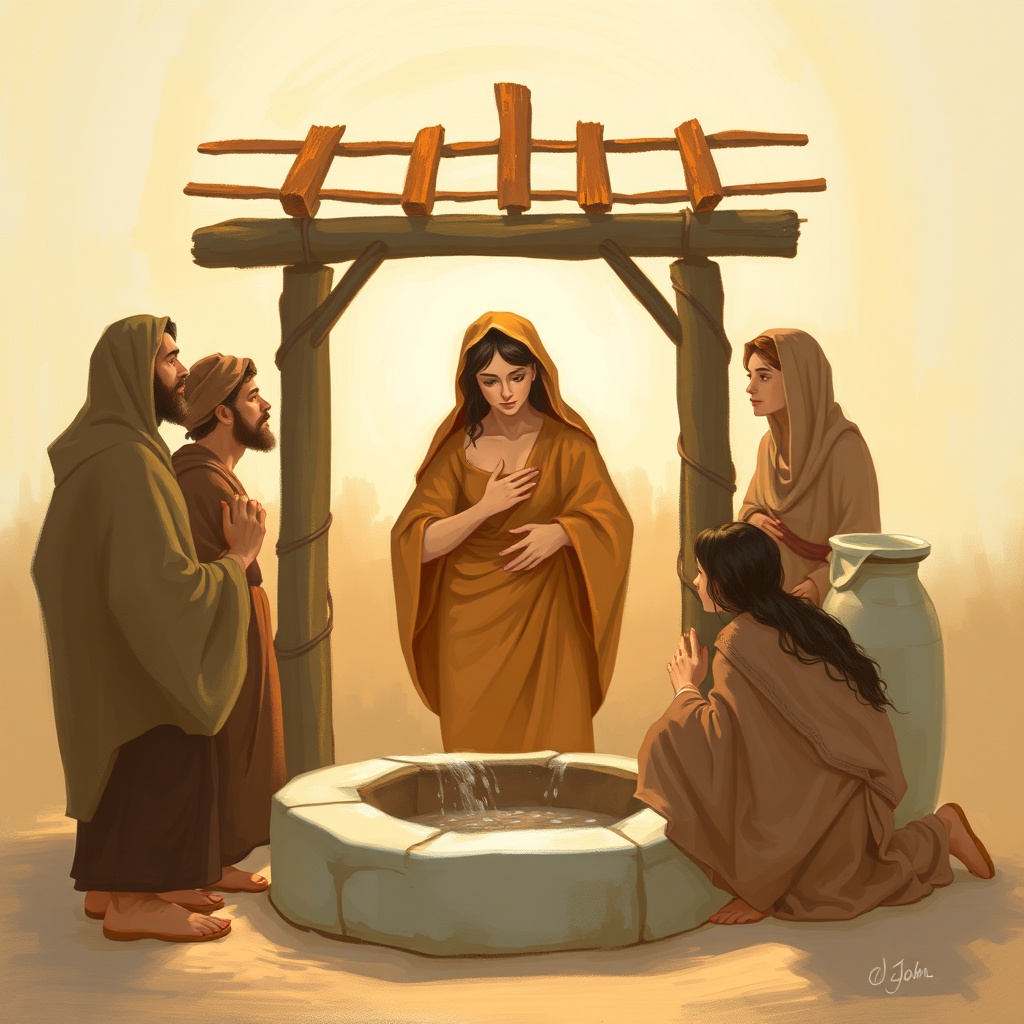
The Neighbors of the Woman at the Well are part of the Samaritan community in Sychar, a village near Jacob’s well. They are indirectly involved in her story, as they are the community she belongs to and from whom she seeks acceptance and understanding. Their societal attitudes shape her experiences of marginalization and acceptance. When she encounters Jesus at the well, her personal transformation sparks curiosity among her neighbors, illustrating a shift from suspicion to faith. The community’s response highlights themes of reconciliation and spiritual awakening. Though not the central figures, her neighbors’ reactions to her change—initial suspicion, curiosity, and eventual acceptance—mirror the broader spiritual message of salvation available to all. They serve as witnesses to her transformation, exemplifying communal impact in faith history.
🏛️ Cultural & Historical Context
In 1st-century Samaritan society, women often held secondary roles with limited social status, especially if they were perceived as social outcasts. Communities were tightly knit, with strong religious and cultural boundaries separating Jews and Samaritans, fostering suspicion and prejudice. Women’s interactions with outsiders were often cautious, yet communal bonds were critical for survival. The woman's encounter at the well, and her neighbors’ reactions, reflect the social dynamics of hospitality, suspicion, and eventual acceptance. This setting underscores the broader cultural milieu where gender and ethnicity impacted individual lives, yet Jesus’ ministry challenged these divisions by emphasizing spiritual kinship and grace beyond societal boundaries.
👨👩👧 Family Connections
While her direct family connections are not detailed, they are part of the Samaritan community that interacts with her and the broader social network of the town.
The neighbors’ interaction with the woman underscores themes of community, transformation, and acceptance in salvation history. Their initial suspicion contrasts with their eventual curiosity and openness to Jesus’ message, illustrating how communities can be transformed through faith. Their involvement highlights the inclusive nature of Jesus’ ministry, reaching beyond social and religious barriers. Her story and her neighbors' reactions demonstrate that salvation is available to all, encouraging believers to embody Christ’s love and acceptance. Additionally, their role reminds us that faith is often nurtured within community, emphasizing the importance of compassion and openness among believers.
📖 Lessons for Today
📖 Lesson 1
Communities can be transformed when individuals open their hearts to truth and acceptance, just as the neighbors’ curiosity led to faith.
Like the Samaritan woman and other biblical women such as Anna or the women at the tomb, her story highlights themes of recognition and faith. While she is not a prominent figure herself, her community's reaction contrasts with women like the Canaanite woman, emphasizing faith beyond societal boundaries. Her story complements narratives of women who, despite social marginalization, become catalysts for faith and community transformation, demonstrating that in God's plan, everyone has a role in spiritual renewal.
📜 Scripture References
Reference
John 4:1-42
❓ Frequently Asked Questions
Who were the neighbors of the Woman at the Well?
The neighbors of the woman in John 4 are the other residents of Sychar, the Samaritan community around Jacob’s well. While their specific identities are not detailed, they represent the broader community affected by her story.
How did her neighbors react to her encounter with Jesus?
Initially, they likely exhibited suspicion or curiosity, as was typical in their society. After hearing her testimony and witnessing the community's growing faith, they responded with acceptance and belief in Jesus.
What is the significance of her neighbors in her spiritual journey?
Their reaction demonstrates the power of community influence in faith transformation. Their eventual acceptance symbolizes how collective belief can be a catalyst for spiritual awakening and reconciliation.
✨ Did You Know?
Despite limited biblical details, archaeological discoveries suggest that locations like Jacob’s well remained central gathering places, emphasizing the importance of well sites as social and spiritual hubs in ancient Samaritan culture. Interestingly, the name 'Sychar' is believed by some scholars to derive from ancient words meaning 'drunkenness' or 'foolishness,' reflecting the complex social dynamics of the area.











Leave a Reply