The verse commonly known as the Great Commission stands at a pivotal point in the gospel narrative and in the life of the church. It is a summons, a prescription, and a vision all at once: “Go therefore and make disciples of all nations, baptizing them in the name of the Father and of the Son and of the Holy Spirit”. This article offers an in‑depth look at Matthew 28:19, exploring its language, historical setting, and the practical implications for faith communities today. We will use variations of the phrase go make disciples to illuminate the breadth of the call, from personal discipleship to global mission, from proclamation to formation, from baptism to obedience.
The Verse in Context
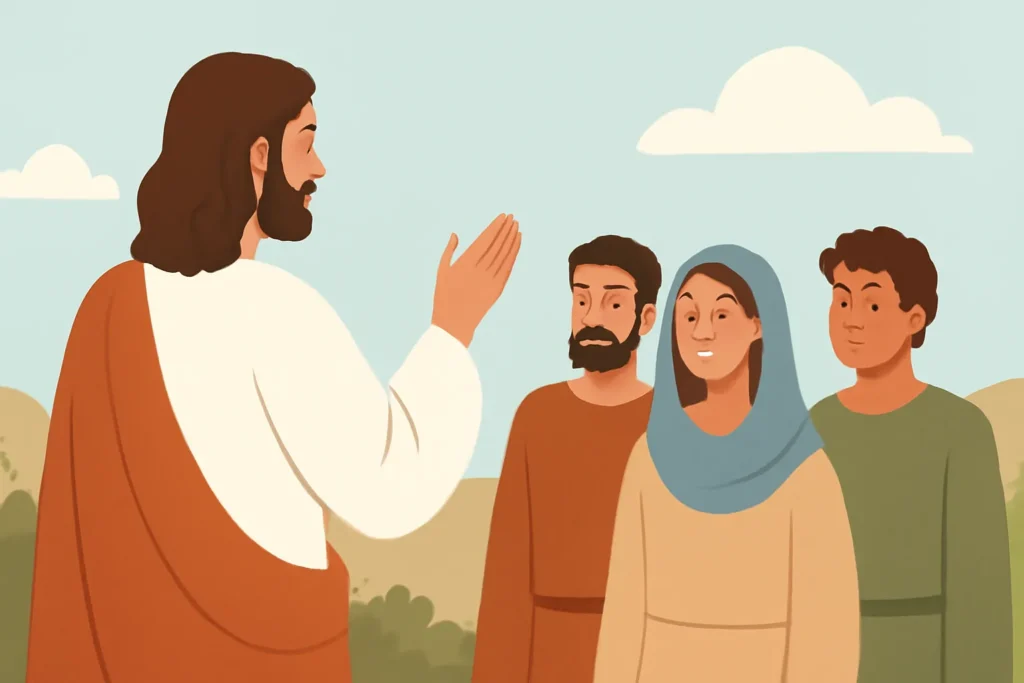
To understand Matthew 28:19, it helps to read it within the surrounding verses. The closing chapter of Matthew’s gospel records a meeting on a mountain in Galilee, where the risen Jesus appears to his followers and presents them with a mandate that transcends time and culture. The commission does not occur in a vacuum; it is embedded in a sequence that begins with worship, moves through doubt, and culminates in commissioning. The immediate verses preceding the command describe worship and doubt among the disciples as they encounter the risen Christ. The command that follows—“Go therefore”—signals both a decisive turning point and a continuous mission for the church.
Scholars often emphasize that the wording carries a two‑part rhythm: a movement outward and a formation inward. The outward movement is provocative: go implies leaving familiar settings and venturing into unfamiliar places. The inward movement is transformative: make disciples entails more than conversion; it involves ongoing nurture, teaching, and growth into a life shaped by Jesus’ teaching. The sentence structure also foregrounds a corporate dimension: the mission is given to the gathered followers, yet it is addressed to the world.
The Core Components of the Commission
Across translations, five core elements stand out as the backbone of the Great Commission. Each element contains significant theological and practical implications for believers and communities today:
Go: the invitation to move outward—spiritually, geographically, and culturally. It is a call to mission, not merely a private faith experience.
Make Disciples: the aim of forming learners and followers who imitate Jesus, trust his words, and live under his authority. Discipleship is holistic, touching belief, practice, and character.
Of All Nations (or “all peoples”): the scope is universal, not limited to a single culture or people group. The gospel is for every ethnicity, language, and history.
Baptizing: the initiation into the community of faith, often understood as public confession of Jesus as Lord and entry into the life of the church through the symbol of water baptism.
Teaching Them to Observe All I Have Commanded: ongoing formation, equipping, and obedience—continuing education in the way of Jesus that leads to transformed living.
The command to “go” is more than a suggestion; it is a directional instruction. It signals a mission mindset that permeates every era of the church. Some of the key dimensions of this missional impulse include:
Proclamation and invitation: The act of going often begins with proclamation—sharing the good news that Jesus is Lord and that his life, death, and resurrection offer forgiveness and new life.
Contextual outreach: The sending process includes understanding other cultures, languages, and life situations so that the message can be communicated in meaningful, respectful ways.
Ecology of witness: Mission is not only about individuals; it is about communities that cultivate a hospitable environment where seekers can explore faith and believers can grow.
What Does “Make Disciples” Mean?
The phrase “make disciples” carries depth beyond a simple conversion tally. It involves:
Learner formation: Discipleship is an ongoing process where a person becomes more like Jesus in loves, loyalties, and actions.
Character formation: The inner life is shaped—values are tested, consciences formed, and a pattern of mercy, justice, and faithfulness emerges.
Community integration: Disciples are formed within a faith community that practices teaching, accountability, and mutual care.
Missional living: Disciples participate in God’s purposes in the world, which includes serving the vulnerable, seeking truth, and pursuing justice, in visible ways.
In practical terms, to make disciples is to invite people into a lifelong apprenticeship under Jesus. It is not simply about converting individuals but about initiating a transforming apprenticeship that continues across generations and cultures—an ever widening circle of learners who submit to the authoritative voice of Christ.
“Of All Nations”: The Universal Scope
The inclusion of “all nations” signals a universal mission that crosses ethnic, linguistic, and geographic boundaries. This aspect has shaped much of Christian history and continues to guide modern ministry strategies. Several implications emerge from the call to reach all peoples:
Cross‑cultural engagement: Effective discipleship involves learning from other cultures, embracing diverse expressions of faith, and avoiding a narrow ethnocentric approach.
Equity in invitation: The gospel does not privilege any single group; it extends hospitality to every person and fulfills a promise of inclusion.
Global partnerships: Churches often collaborate across borders, sharing resources, teaching, and leadership development to equip believers worldwide.
In this sense, the Great Commission provides both a mandate and a rhythm for Christian mission: send, teach, baptize, and sustain a transformative movement that grows as a diverse family of disciples across nations.
The Baptism Clause: Initiation into the Triune Name
The portion “baptizing them in the name of the Father and of the Son and of the Holy Spirit” anchors the Great Commission in Trinitarian faith. Several points deserve close attention:
Public confession: Baptism is typically understood as a public, outward sign of inward faith and allegiance to Christ.
Trinitarian confession: The single plural “name” (in the Greek text) is paired with three persons, underscoring the unity and distinctiveness of the Father, Son, and Holy Spirit.
Identity formation: Baptism is not only about entry into church life but about identification with the Triune God, shaping how believers worship and live.
Different Christian traditions have nuanced practices around baptism, but the central idea remains consistent: initiation into the faith is inseparably linked to partaking in the life and mission of the triune God.
Teaching and Obedience: The Ongoing Discipline of Discipleship
Following baptism, the commission includes “teaching them to observe all that I have commanded you”. This phrase emphasizes that faith is not a momentary decision but a long‑term apprenticeship in Jesus’ way of life. Several dimensions of this ongoing learning process include:
Doctrinal instruction: Foundational beliefs about God, Jesus, salvation, and the Bible are clarified and systematized for understanding and growth.
Ethical formation: Disciples learn to translate belief into behavior—mercy, integrity, justice, and love become visible practices.
Spiritual disciplines: Prayer, worship, Scripture study, and communal life are cultivated as means of grace that sustain growth.
Missionary endurance: Teaching equips believers to persevere in mission, adapting to new contexts while preserving core convictions.
The phrase “observe all I have commanded” implies obedience that is joyful, thoughtful, and sustained. It invites a lived discipleship in which every area of life—work, family, school, recreation—is shaped by allegiance to Christ.
The Triune Formula: Theological Significance
The baptismal formula in Matthew 28:19—the invocation of the Father, the Son, and the Holy Spirit—has been a defining feature of Christian identity for centuries. Theological implications include:
Doctrine of God: The three persons are distinct, yet united in the one Godhead, inviting believers into a robust Trinitarian faith.
Christology and Spiritology: The passage highlights the Son’s role in salvation history and the Spirit’s role in empowering witness and formation.
Church unity and mission: Believers are commissioned into a shared mission carried out in the power and presence of the Triune God.
Variations exist in reception and practice across traditions, especially regarding baptismal formulas in different historical editions of the Bible or in differing liturgical settings. Nevertheless, the core claim remains: the discipleship mission is anchored in the name of the Triune God, inviting Christians into worship, witness, and transformative living.
Historical and Theological Background
Understanding the Great Commission also benefits from a brief look at its historical and theological backdrop:
Post‑resurrection certainty: The commission is given after Jesus’ resurrection, affirming the credibility of the proclamation and the reality of the new creation he inaugurates.
Old Testament echoes: The language of nations and blessing resonates with God’s earlier promises to Abraham and Israel, reframed to include Gentiles and all peoples in God’s redemptive plan.
Early church mission: The early Christian movement rapidly expanded beyond Jerusalem, testing and refining how to “go” and “make disciples” across cultures and languages.
From a theological vantage point, the Great Commission integrates two essential strands: evangelism (proclaiming the good news of Jesus) and discipleship (forming people into the likeness of Christ). The integration ensures that the church does not merely win converts but creates communities that embody the gospel in daily life.
How does Matthew 28:19 translate into concrete practice for today’s churches and believers? Here are several practical rails along which communities often run their discipleship and mission work:
Missional structures: Churches design programs and ministries that intentionally reach outsiders, invite them into relationship, and nurture growth into mature disciples.
Disciple‑making pathways: A clear pathway from inquiry to baptism to membership and ongoing formation helps people see the continuity of the journey.
Teach‑and‑do balance: The instruction in God’s Word must be paired with opportunities to practice faith in service, worship, and community life.
Cross‑cultural awareness: Global awareness and local contextualization help the church engage diverse communities with respect and humility.
In this frame, the Great Commission is not a single act but a sustained lifestyle of faith communities that
pray for and with communities they seek to reach,
build trustworthy relationships,
equip new believers for leadership, and
plant churches and nurture existing ones.
Central to these practices is the belief that the gospel’s reach should be both universal and local—a breadth that respects the dignity of every person while committing to meaningful, contextually sensitive discipleship.
Models of Discipleship in Practice
Across Christian traditions, there are several effective models for living out the Great Commission in daily life. Each model offers insights into how go and make disciples can be realized in diverse contexts:
Personal mentorship: A seasoned believer walks with a newer believer in regular, intimate conversation, prayer, and study. This one‑to‑one relationship often accelerates growth and accountability.
Household discipleship: Families cultivate spiritual formation together, with parents modeling faith for children and raising questions that invite dialogue and practice.
Small groups or cell churches: Small communities foster intimate accountability, shared learning, and mutual care, making obedience to Jesus a collaborative discipline.
Church‑planting and mission teams: In cross‑cultural settings, teams partner with local leaders to establish new communities where discipleship pathways are embedded in daily life and service.
Online and media‑based discipleship: In a digital age, mentorship and teaching extend beyond geographic limitations, allowing for guided study, live interaction, and global reach.
Regardless of the model, the throughline remains consistent: go and make disciples is a call to invite, train, and sustain people as they grow in faith, love, and mission.
Challenges and Contemporary Considerations
Engaging with the Great Commission today raises several important challenges and questions. A few prominent themes include:
Contextualization vs. translation: How can the gospel be communicated in culturally meaningful terms without compromising essential truths?
Power dynamics: Mission work must avoid coercion or cultural dominance, instead prioritizing mutual respect, listening, and shared leadership with local believers.
Social justice and proclamation: Some communities emphasize proclamation alone, while others stress social action as a dimension of discipleship; many traditions seek a robust integration of both.
Measurement ethically: In a results‑driven culture, the church seeks to measure healthy discipleship beyond numeric growth, emphasizing transformed lives and lifelong faithfulness.
These challenges invite humility, continual learning, and collaboration with diverse Christian communities. The Great Commission remains a dynamic calling that adapts to new historical moments while preserving its core aim: to see people become faithful followers of Jesus who worship God, live justly, and participate in God’s mission in the world.
The Great Commission is not an isolated clause; it sits within a web of biblical material about mission, witness, and discipleship. Several related passages illuminate different facets of the same calling:
Mark 16:15‑18 emphasizes preaching the gospel to all creation and signs accompanying believers, highlighting the prophetic and apostolic dimensions of mission.
Luke 24:46‑49 presents Jesus’ instruction that repentance and forgiveness should be proclaimed to all nations, beginning from Jerusalem, tying witness to the scriptural narrative of salvation history.
Acts 1:8 maps the storyline of mission from Jerusalem to Judea, to Samaria, and to the ends of the earth, showing the expansion pattern that the church has tended to follow in history.
John 13‑17 offers Jesus’ teaching about love, unity, and mission, providing a theological frame for how believers are formed and sustained in community as they go forward.
Together, these passages portray a coherent biblical vision: the proclamation of good news, the formation of Christlike disciples, and the ongoing movement of witness through the church across time and place.
Case Studies: Modern Expressions of the Great Commission
Throughout history, Christians and churches have attempted to translate “go and make disciples” into tangible actions. Consider two illustrative case studies that show different avenues of obedience without compromising core principles:
Urban evangelism and discipleship: In fast‑paced city environments, churches leverage mentorship programs, city‑wide outreach events, and partnerships with local nonprofits to introduce people to Jesus, then guide them through a structured discipleship track that includes Bible study, service opportunities, and leadership development.
Rural and remote mission: In rural or remote contexts, mission teams often work with community leaders to address practical needs (education, healthcare, access to clean water) while teaching about Jesus, baptism, and ongoing formation in culturally resonant ways.
These examples illustrate that the Great Commission is adaptable without being diluted. The essential elements—going, discipling, baptizing, and teaching—remain intact even as the methods shift to fit local realities and opportunities.
Conclusion: A Living, Global Faithfulness
In its essence, Matthew 28:19 points beyond a single action to a life of faithful response to God's saving initiative. The call to “go and make disciples” is both personal and communal, both local and global, both declarative and formative. It invites each believer to participate in a movement that spans generations, cultures, and languages, anchored in the confession of the Triune God and lived out in obedience to Jesus’ teaching.
As you reflect on this verse, consider these guiding ideas for personal and communal life:
Identity in mission: See yourself as part of a family on a shared journey of disciple‑making, not as an isolated act of faith.
Strategic gentleness: Approach others with humility, listening first, speaking with clarity, and demonstrating love in practical ways.
Equipping for service: Invest in others—teach, mentor, and empower new leaders who can sustain growth in communities near and far.
Hopeful endurance: Recognize that disciple‑making is a long, ongoing process that bears fruit over time, often in ways that are seen gradually and sometimes unexpectedly.
Ultimately, the Great Commission remains a living invitation: to go forth with courage, to disciple with care, to baptize into a shared life, and to teach to observe Jesus’ words with faithfulness. In doing so, the church participates in God’s mission to redeem and renew all things—the mission that began in the garden, found its fullest expression in Christ, and continues through the empowering presence of the Holy Spirit in every time and place.










Leave a Reply