Disciples Making Disciples Bible Verses: Essential Passages for Multiplying Faithful Followers
Disciples Making Disciples Bible Verses: Essential Passages for Multiplying Faithful Followers
Disciples making disciples is at the very center of biblical mission. Across the pages of Scripture, faithfully the people of God are called not merely to believe, but to reproduce that faith in others. This article surveys Disciples Making Disciples Bible Verses and related phrases—from the Great Commission to practical mentoring patterns—so readers can understand the biblical rationale for multiplication, the essential passages that anchor discipleship, and how to apply these verses in everyday ministry. The aim is to gather verses about disciple-making and present them in a way that is both faithful to the text and useful for teaching, small groups, and leadership training.
Foundations: Why Disciples Making Disciples is Central to Scripture
From the call of the first followers to the closing exhortations of the apostles, the Bible repeatedly frames faith as something that grows beyond the individual to involve others. The intention is not merely for individuals to come to Christ; it is for communities of faith to multiply faithful followers who themselves become workers in the harvest. When we speak of multiplication, we are describing a biblical pattern of leadership development, where mentors equip new learners, who then train the next generation. The core idea—that a disciple becomes a disciple-maker—shapes how communities understand mission, church planting, and spiritual formation.
Scholars often point to the idea that the most effective way to advance the gospel is through relational discipleship, where learning happens in the context of trusted relationships. In practical terms, this means that a disciple-maker intentionally models, teaches, and coaches others in the faith. This is not a single event but a continuing journey that mirrors the organic growth of a plant or the steady cadence of a harvest. When we study disciples making disciples bible verses, we see a constellation of commands, promises, and examples that illuminate how multiplication works in real life.
The Great Commission as Our Primary Blueprint
Among all passages related to discipleship, the Great Commission in Matthew 28 stands as the most explicit mandate to multiply. In the King James Version, the commissioning words include both the mandate to go and the instruction to teach—and to baptize—in a way that creates new members who themselves can be taught to obey. The verses are often quoted in two parts to emphasize the dynamic: proclamation and reproduction.
Key verses from Matthew (public-domain text, KJV)
Matthew 28:19 — “Go ye therefore, and teach all nations, baptizing them in the name of the Father, and of the Son, and of the Holy Ghost.”
Matthew 28:20 — “Teaching them to observe all things whatsoever I have commanded you.”
Together, these lines form a two-part program: first, introduce people to the gospel; then, disciple them so they can live out the commands of Christ and, in turn, train others. In many Christian traditions, this is summarized as make disciples—a shorthand that conveys the broader mandate to reproduce faithful followers who become disciple-makers themselves. When you encounter the phrase disciples making disciples bible verses, you are often encountering this same heartbeat expressed in different biblical genres and contexts.
Matthew 4:19 — “And he saith unto them, Follow me, and I will make you fishers of men.” This early invitation to apprenticeship illustrates the model by which Jesus calls individuals who then become agents of recruitment and transformation.
Matthew 9:37-38 — “The harvest truly is plenteous, but the laborers are few; pray ye therefore the Lord of the harvest, that he would send forth laborers into his harvest.” Prayer for laborers is the spiritual groundwork that enables disciple-making relationships.
Beyond Matthew, the Bible repeatedly describes multiplication through mentoring, training, and sending. In a sense, the Great Commission provides a sweeping framework, and the rest of the New Testament fills in the practical details of how to live it out in churches, mission fields, and households.
Strategic Passages: Verses Emphasizing Teaching, Training, and Reproduction
These passages, while diverse in their immediate context, all point to the central aim of equipping believers who can then equip others. They form a mosaic of disciple-making verses that researchers and pastors use to design training curricula, small-group patterns, and leadership pipelines.
Primary passages and their implications
Matthew 28:19-20 — The explicit call to teach and to baptize is a blueprint for multiplying faithful followers who can observe Jesus’ commands. The implication is not merely conversion but ongoing formation and reproduction.
Mark 16:15-16 — “Preach the gospel to every creature,” and “he that believeth and is baptized shall be saved.” This passage broadens the reach of disciple-making to all nations and all people, highlighting mission as a communal activity that multiplies through belief and baptism as markers of inclusion in the faith family.
Luke 10:2 — “The harvest truly is great, but the laborers are few.” Luke’s gospel invites prayer for more workers and frames every disciple as a potential laborer in the mission field, encouraging believers to become mentors and recruiters of new workers in the gospel.
John 15:8 — “Herein is my Father glorified, that ye bear much fruit; so shall ye be my disciples.” Multiplication is framed as bearing fruit—an indicator of a life that reproduces spiritual offspring.
Acts 1:8 — “But ye shall receive power, after that the Holy Ghost is come upon you: and ye shall be witnesses unto me ... unto the uttermost part of the earth.” This verse anchors the mission in power—an enabling gift for discipleship multiplication across cultures and continents.
2 Timothy 2:2 — “And the things that thou hast heard of me among many witnesses, the same commit thou to faithful men, who shall be able to teach others also.” A template for leadership development and training others to teach, ensuring that doctrine and practice are preserved across generations.
In these disciple-making bible verses, the thread is consistent: mature believers are to invest in others, equipping them to teach, train, and replicate. When you teach a person to obey Jesus, and you model that process faithfully, you set in motion a cycle of mentorship that can become a wave of transformation across churches and communities.
The Model of Jesus: Calling, Sending, and Equipping
Jesus offers a life-on-life template for those who wish to be involved in disciple-making. The pattern is not merely about information transfer; it is about relationship, transformation, and the development of leadership capacity in the next generation of believers. Several features stand out as clearly discerned from Scripture:
Personal invitation—Jesus calls individuals with deliberate intention, not as an audience but as a partnership in mission.
Hands-on apprenticeship—Disciples do life with their teacher, learning through doing, observing, and practice under guided supervision.
Empowerment and sending—A key moment is when disciplers are sent to continue the work (the sending motif is recurring from Luke to Acts).
Multiplication via mentorship—The trained disciple becomes a trainer, creating a line of capable mentors who will train others.
In this sense, the gospel commission can be understood as a discipleship pipeline—a pattern by which the church grows not by numbers alone but by the quality and reach of the leaders who multiply the faith. When we study disciples making disciples bible verses across the Gospels and Acts, we see a consistent emphasis on bringing more learners into the circle of gospel witness, then equipping them to bring in more learners—an ever-expanding harvest.
Transforming the biblical vision into practical, everyday ministry requires clear strategies that align with Scripture. Below are actionable steps that churches and families can adopt to foster a culture of disciple-making.
Identify potential disciple-makers—Look for individuals with teachable hearts, reliable character, and a willingness to invest in others. Leadership development often begins with observers who demonstrate capacity to mentor.
Provide intentional training—Create curricula or materials grounded in the core biblical commands to teach new believers to observe Jesus’ teachings and to reproduce them in others.
Model mentoring relationships—Pair new believers with seasoned disciples for a structured period, emphasizing concrete outcomes such as memorized verses, shared missional activities, and weekly accountability.
Equip with practical tools—Offer study guides, devotional plans, and a simple framework for “teach, practice, observe, and coach,” so each learner can become a teacher in turn.
Create small communities—Small groups provide accountability and safe space to practice leadership while ensuring that teaching is contextualized to real-life situations.
Measure discipleship impact by multiplication—Track not only converts but the number of individuals who are actively mentoring others and developing new leaders.
Some communities emphasize a simple, scalable model: “one-on-one mentorship, one group training, and one in-the-field multiplication.” This approach aims to balance depth (discipleship that forms character and doctrine) with breadth (the capacity to reach more people through more leaders). When articulating disciples making disciples bible verses in a teaching setting, it is helpful to point to the recurring pattern: a learner becomes a teacher who then mentors another learner—creating a ripple effect that spreads across a church or mission field.
Structured mentorship plans that specify weekly check-ins and learning objectives
Scripture memory programs focused on core verses about faith, obedience, and leadership
Mission-centered activities that allow learners to practice evangelism and service while being coached
Public recognition of progress—celebrating those who begin mentoring others
While the call to disciple-making is compelling, several challenges can derail healthy growth. Recognizing these obstacles helps leaders design more effective programs and avoid burnout.
Overprogramming—Trying to do too much at once can overwhelm both mentors and learners. Prioritize a few core disciplines and expand gradually.
Information without transformation—Focusing on head knowledge while neglecting character and practical obedience undermines discipleship. Balance doctrine with practice.
Reliance on personality—Multiplication should not depend on one charismatic leader. Build systems so that leadership and mentoring are reproducible by many.
Lack of accountability—Without safeguards, accountability diminishes. Implement clear follow-up and mutual accountability practices.
Misalignment with local context—Discipleship should be contextualized to the culture and needs of the learners, not imported as a one-size-fits-all model.
Addressing these concerns biblically means leaning on the same passages that inspired the work in the first place—let the discipleship framework be anchored in Scripture and guided by prayerful oversight.
Throughout Scripture, there are moments when individuals model and enact disciple-making in concrete contexts. These case studies provide helpful templates for contemporary practice. Below are a few illustrative examples that align with the themes of disciples making disciples bible verses.
Case study: Peter mentoring John Mark
In the broader New Testament narrative, you can observe a pattern of mentorship where older believers invest in newer ones. While not always described with exhaustive detail, the trajectory implies a relationship dynamic in which a more mature believer guides a less mature one, teaches him to observe Christ’s commands, and helps him reproduce that process with others. This pattern resonates with the exhortations in 2 Timothy 2:2 and the practical emphasis on training faithful men to teach others.
Case study: Paul discipling the younger leaders
The apostle Paul repeatedly pours into younger leaders who then train others. In his letters, he outlines expectations, provides doctrinal instruction, and gives guidance on how to develop teams capable of carrying the gospel forward. The language of “teaching others also” echoes the formal multi-generational approach found in 2 Timothy 2:2 and demonstrates a transferable pattern from mentor to mentees to their own mentees.
Case study: Jesus’ discipleship within a community
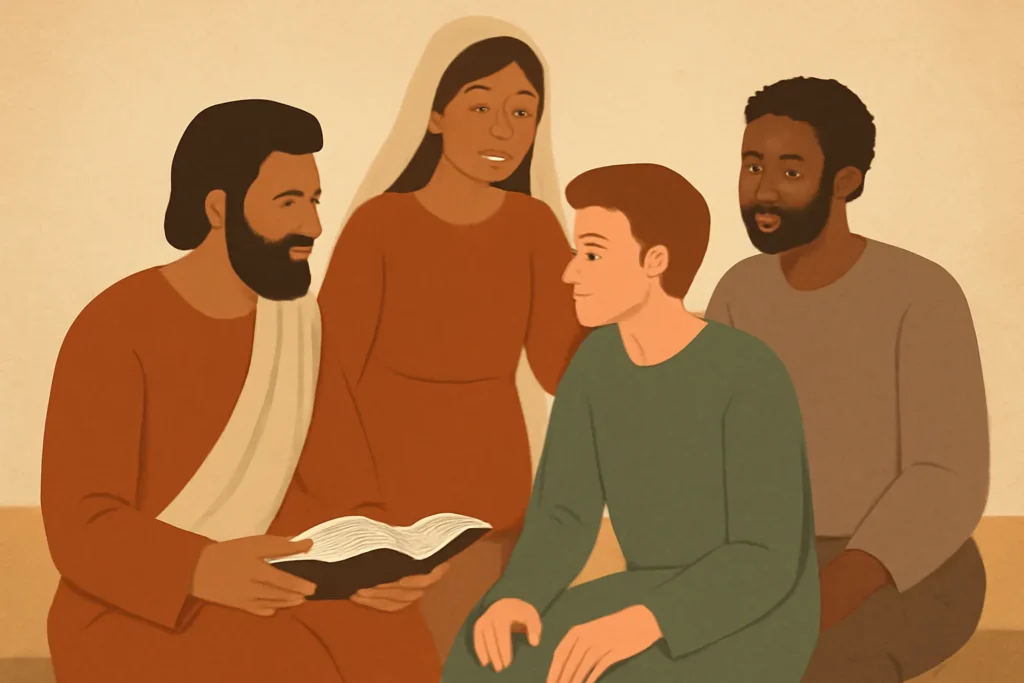
Even the earliest followers of Jesus learned in small-group settings, including hands-on ministry, shared meals, and reflective prayer. The relational dynamics—entrusting tasks, observing outcomes, and giving feedback—offer a practical blueprint for today’s small groups or intimate mentorship circles. This mirrors the core idea behind the Great Commission and reinforces the conviction that disciple-making thrives in relationship-rich environments.
Assessing progress in disciple-making goes beyond counting converts. A biblically grounded metric focuses on reproduction: how many disciples are actively training others, how leadership capacity is expanding, and how the gospel is being integrated into everyday life.
Number of peer mentors who have begun training new learners
Retention and obedience—the degree to which new believers are learning, applying, and passing on the commands of Jesus
Leadership development—a growing pool of mature believers who can lead, teach, and shepherd new communities
Missional impact—the extent to which disciple-makers participate in local and global outreach, not just inside church walls
The biblical standard for success emphasizes enduring fruit and the multiplication of disciplers who can themselves teach others. In practice, this means a measurable shift from a single speaker or a single program to a sustainable ecosystem of mentors, learners, and missionaries who continually reproduce.
Scripture invites believers to trust God with the outcomes of their obedience. The pattern of disciple-making is anchored in God’s own design for growth and stewardship. When believers commit to investing in others, they partner with God in a redemptive process that transcends human estimates of success. A few theological insights emerge from the pages of the Bible:
God’s power works through weakness—Discipleship often happens in modest, relational contexts where dependence on the Spirit is evident.
Transmission of doctrine—Mentors safeguard core beliefs and practices, ensuring the faith is faithfully handed to the next generation.
Relational growth—Genuine discipleship occurs in the space where life together reveals God’s character and purposes.
These reflections support a practical approach: disciples making disciples bible verses are not merely commands to achieve a numerical goal; they point to a faithful way of forming communities that reflect Christ in both doctrine and life.
In the end, the biblical call to disciples make disciples is a call to a living, generational faith. It invites every believer to be part of a larger drama—the ongoing multiplication of faithful followers who, in turn, equip others to live out the gospel with integrity and courage. The most compelling passages for this mission—eternally relevant, practically actionable, and richly biblical—provide a compass for churches, families, and individuals seeking to honor Christ through the growth of others. As you reflect on disciples making disciples bible verses, consider how your own life and leadership can model, teach, and empower others to carry forward the message of Jesus to the ends of the earth. May your efforts contribute to a durable, joyful, and contagious multiplication that multiplies faith, hope, and love in a world in need of the gospel.
For further study, engage with the core verses again in a group setting, exploring not only the words themselves but the relationships and practices that flowed from them in the early church. By grounding practice in Scripture and relying on the Spirit’s guidance, you can cultivate a culture where discipleship is not a program, but a way of life that multiplies faithful followers across generations.









Leave a Reply