Bible Verses All Saints Day: Uplifting Scriptures to Honor the Saints
All Saints Day is a moment in the Christian calendar to remember the faithful who have gone before us, to celebrate their witness, and to find encouragement in Scripture for our own lives. Scripture offers a gracious bridge between the saints who have entered into glory and the living community of believers who continue to walk by faith. This article gathers a broad range of Bible verses—across both testaments and various themes—that speak to honor, remembrance, encouragement, and the enduring hope linked to the saints. You will find direct verses, paraphrased ideas, and practical ideas for how to reflect on All Saints Day in personal devotion, family worship, or congregational remembrance.
The Meaning of All Saints Day in Scripture
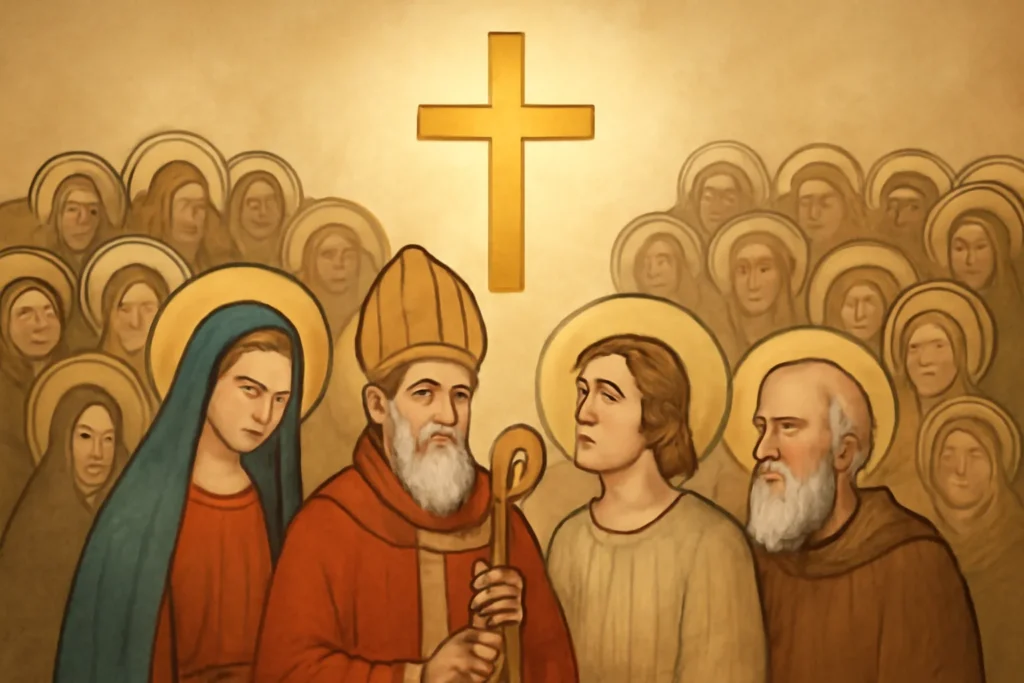
All Saints Day centers on the truth that the people of God are not isolated individuals but part of a larger people—the Communion of Saints. This phrase, drawn from the Bible, describes the fellowship of all believers, living and dead, who are united in Christ. Across Scripture, the concept unfolds in several key ideas:
Unity in Christ: Believers are joined to Christ and to one another, forming a spiritual household (Ephesians 2:19-22).
Distinguished saints: The Scriptures call certain faithful ones “saints” or “holy ones,” treasured as examples of faith and witnesses to God’s power (Psalm 16:3; Romans 1:7).
Heavenly company: The heavenly assembly is described in Revelation and Hebrews as a multitude of faithful unto God, now perfected in glory (Hebrews 12:22-24; Revelation 7:9-14).
Hope beyond the grave: The saints who die in Christ enter rest and reward, while their life and works continue to testify in the present world (Revelation 14:13; 2 Corinthians 5:1-2).
In preparing for All Saints Day, many Christians turn to Scripture to understand what it means to be united with the saints in glory and to draw courage and direction for their own spiritual journey. The following sections offer verses of consolation, exhortation, and praise that are especially fitting for this holy occasion.
Key Verses to Read and Meditate On
Below is a curated selection of verses frequently associated with the saints, the afterlife, and the ongoing witness of faithful believers. For convenience, each item includes a short reflection and a short excerpt from the verse. You can read any of these aloud in a worship service, use them in a devotional booklet for All Saints Day, or place them in a family calendar as daily reminders of the saints’ example.
Hebrews 12:1 — “Wherefore seeing we also are compassed about with so great a cloud of witnesses, let us lay aside every weight, and the sin which doth so easily beset us, and let us run with patience the race that is set before us.” Reflection: The saints who have finished the race inspire us to persevere with endurance, casting off hindrances and fixing our eyes on Jesus.
Revelation 7:9-14 — “After this I beheld, and, lo, a great multitude, which no man could number, of all nations, and kindreds, and people, and tongues, stood before the throne and before the Lamb... These are they which came out of great tribulation, and have washed their robes, and made them white in the blood of the Lamb.” Reflection: A vision of the saints in glory, united in praise, courage, and triumph over suffering.
Hebrews 12:23 — “To the general assembly and church of the firstborn, which are written in heaven, and to God the Judge of all, and to the spirits of just men made perfect.” Reflection: The saints are not distant legends but a real, blessed fellowship whose memory and example strengthen us.
Revelation 14:13 — “Blessed are the dead which die in the Lord from henceforth: Yea, saith the Spirit, that they may rest from their labors; and their works do follow them.” Reflection: Remembrance of the faithful who finish their earthly tasks with honor and glorious reward.
Colossians 1:12 — “Giving thanks unto the Father, which hath made us meet to be partakers of the inheritance of the saints in light.” Reflection: Gratitude for the shared inheritance of all the saints and the light of Christ that guides us.
2 Timothy 4:7-8 — “I have fought a good fight, I have finished my course, I have kept the faith: Henceforth there is laid up for me a crown of righteousness, which the Lord the righteous judge shall give me at that day.” Reflection: A model for steadfast faith and the hope of eternal reward beyond the grave.
1 Thessalonians 4:16-18 — “For the Lord himself shall descend from heaven with a shout, with the voice of the archangel, and with the trump of God: and the dead in Christ shall rise first: Then we which are alive and remain shall be caught up together with them in the clouds, to meet the Lord in the air: and so shall we ever be with the Lord.” Reflection: Comfort and certainty about the destiny of the saints, and a call to console one another with these words.
Ephesians 2:19-21 — “Now therefore ye are no more strangers and foreigners, but fellowcitizens with the saints, and of the household of God; And are built upon the foundation of the apostles and prophets, Jesus Christ himself being the chief corner stone.” Reflection: The church is a shared family of saints across time, united in Christ as a dwelling for God.
1 Peter 1:4 — “To an inheritance incorruptible, and undefiled, and that fadeth not away, reserved in heaven for you.” Reflection: The saints’ reward is secure, not dependent on earthly fame but on the faithfulness of God.
These verses, when read collectively, present a tapestry of the saints in glory, the remembrance of faithful lives, and the hope that sustains believers today. They also help bridge the reverence for those who have died with the responsibility to live by faith in the present day.
How to Read These Verses as a Living Practice on All Saints Day
All Saints Day invites a rhythm of remembrance, worship, and renewal. The following practical ideas show how to incorporate these verses into prayer, study, and worship in a variety of settings—personal, family, and congregational.
Reading plan: Choose 3–5 verses to read aloud in one sitting. Begin with a short prayer, read the verses slowly, listen for a word or phrase that stands out, and reflect on its personal meaning.
Responsive liturgy: In a group setting, a leader can read a verse and invite the congregation to respond with a short line of reflection, such as, “We remember the saints who faith has made perfect.”
Journaling prompts: Write a short paragraph about how a particular saint’s faith challenges you to persevere (e.g., the cloud of witnesses in Hebrews 12:1).
Family devotion: Include a verse about inheritance in light (Colossians 1:12) and discuss how your family can live with hope and charity toward others.
Music and worship: Select hymns and songs that echo the theme of heavenly fellowship, eternal life, and courage in faith; verses can be printed in handouts for congregants to meditate on during the service.
In all these practices, the aim is not to worship the saints themselves but to honor their witness and to reaffirm the central gospel truth: Christ is the mediator, and the faithful are united in him.
How the Saints Are Portrayed in Scripture: A Theological Snapshot
Different traditions describe the saints with nuance, but the through-line is consistent: the faithful who trust in God are both models of godliness and participants in the life of God’s ongoing redemptive work. Here are some thematic summaries drawn from the verses above and related passages:
Saints as witnesses: The “cloud of witnesses” invites believers to run with endurance, seeing the lives of those who have finished their course (Hebrews 12:1).
Saints as the people of God: The church is a household composed of saints and members of the body of Christ, built on the foundation of the apostles (Ephesians 2:19-22; 1 Corinthians 12:12-27).
Saints in glory: The vision of Revelation presents a multitude worshiping God in eternity, a powerful reminder of life beyond the grave (Revelation 7:9-14).
Saints and inheritance: Believers’ inheritance is described as incorruptible and reserved in heaven, highlighting the temporal nature of earthly life in comparison to heavenly promises (1 Peter 1:4; Colossians 1:12).
Christ-centered mediation: Scripture emphasizes Christ as the one mediator between God and humanity, guiding the theological understanding of intercession and worship for the saints (1 Timothy 2:5).
As you study All Saints Day, these themes provide a helpful framework for understanding the balance between honoring memory, celebrating present faith, and pressing forward in hope through Christ.
All Hallows’ Day and Variations in Naming
Across Christian traditions, All Saints Day is known by several names that reflect liturgical and cultural practice. The most common are All Saints’ Day (Western churches) and All Hallows’ Day, with “hallows” meaning saints in older usage. Some traditions observe this day on November 1, while others, such as the Eastern Orthodox Church, may commemorate the saints during different feast days, or celebrate a broader, continuous calendar of saints. The language matters because it signals the breadth of remembrance: from canonized saints to the faithful who lived out their faith privately and publicly. Regardless of the name, the core intention is to honor the witnesses of faith and to be encouraged by their steadfast devotion.
In practical use, you may encounter these terms:
All Saints’ Day (widely observed on November 1 in Western Christianity)
All Hallows’ Day (an older, historical form)
Feast of All Saints or similar liturgical designations
Localized names in various traditions, reflecting cultural practices and calendars
In all cases, the biblical aim remains constant: to reflect on the life of the saints with gratitude, to study their faith as a guide, and to walk by faith in our own daily lives, inspired by the example of those who trusted God in ages past.
To turn the Scriptures above into meaningful practice, consider these concrete devotional ideas. They blend study with prayer, worship, and communal memory, helping individuals and communities grow in reverence and hope.
Memory capsule: Compile a short list of saints (biblical figures, church fathers, or modern believers) whose lives illustrate the verses you are considering. Share a brief story of each person and the lesson their faith teaches today.
Commemorative prayer: Use a prayer format that begins with gratitude for the saints’ faith, acknowledges current personal and communal struggles, and ends with a request for divine strength to persevere (inspired by Hebrews 12:1 and Philippians 4:13).
Verse art or calligraphy: Write one or two key verses on a display card or banner for All Saints Day worship spaces, highlighting phrases like “cloud of witnesses” or “inheritance of the saints.”
Scripture reading with commentary: Read a passage aloud and invite participants to offer a one-sentence reflection on what the passage reveals about the saints and about faith in daily life.
Service or visitation plan: Involve your church or family in visiting a cemetery or memorial space, and read the selected verses while reflecting on the lives represented there, tying them to the hope of resurrection and eternal life.
Common Questions About Bible Verses and All Saints Day
Because All Saints Day sits at the intersection of tradition and Scripture, it’s natural to ask questions about how to understand the verses in context and how to apply them today. Here are a few questions people often ask, with concise answers grounded in biblical study:
Are we praying to the saints on All Saints Day? The biblical position is that there is one mediator between God and man, the Lord Jesus Christ (1 Timothy 2:5). Prayer directed to saints should be reframed as prayers for inspiration from the examples of the saints and for intercession by Christ, not worship of saints (Hebrews 7:25; Romans 8:34).
What does the “cloud of witnesses” mean for today? It is a figurative invitation to learn from the faithful who have gone before us, letting their lives spur us on toward perseverance and godliness (Hebrews 12:1).
Is All Saints Day a Catholic holiday only? While it has particular prominence in Catholic liturgy, many Protestant and Orthodox traditions also honor the saints on this day or at similar times, emphasizing the shared faith of all who belong to Christ.
How should we read Revelation 7:9-14 on this day? It offers a powerful vision of the heavenly chorus and the diversity of the saints who worship God; it invites believers to aspire to that unity and joy in Christ, while remaining mindful of earthly trials (Revelation 7:14-17).
All Saints Day Across Traditions: Ecumenical Reflections
Across Christian denominations, the way All Saints Day is observed may differ, but the underlying theological motifs remain consistent: gratitude for the saints, confidence in God’s promises, and a call to faithful living. In Catholic tradition, the day may be accompanied by liturgical prayers, the commemoration of all the faithful departed, and the veneration of saints. In Protestant circles, it often emphasizes remembrance, gratitude for Christ’s work, and the witness of believers who finished well. In Orthodox practice, the day can be linked with feasts of the saints and a focus on the communion of the living and the dead. The shared biblical core is this: the saints testify to God’s faithfulness, and their example invites us to live in hope, humility, and love.
In every tradition, the verses listed above can serve as anchors for worship and study, helping congregations and families center their celebration on the gospel—Christ, the mediator, and the life of faith that endures to the end.
If you’d like a structured approach to using these verses on All Saints Day, here is simple four-part plan you can adapt for personal use, a family gathering, or a church session:
Opening meditation: Start with Hebrews 12:1, focusing on the idea of a cloud of witnesses and the call to lay aside hindrances. Reflect on personal “weights” that hinder faith and resolve to pursue the race with perseverance.
Glimpse of glory: Read Revelation 7:9-14 and Hebrews 12:23. Meditate on the imagery of the saints in heaven and the reality of life in God’s presence. Allow this vision to fill you with hope and reverence.
Residence in the inheritance: Consider Colossians 1:12 and 1 Peter 1:4. Focus on the inheritance that awaits all the saints and the ways this hope shapes how you live today.
Closing response: End with 2 Timothy 4:7-8 and 1 Thessalonians 4:16-18, committing to persevere in faith and to comfort one another with the truth of Christ’s return and the resurrection of the dead.
This plan helps you move from memory to worship to living faith—an arc well suited for All Saints Day observances, small-group discussions, or personal devotion.
All Saints Day invites both nostalgia and hope: a reverent remembrance of those who have run their race well, and a forward-leaning faith that invites the living to persevere in the face of trials. The biblical verses presented here remind us:
Remembrance sustains faith: When we recall the saints, we not only honor their memory but also draw strength to endure and stay true to Christ’s calling.
Hope is grounded in the gospel: The saints’ ultimate inheritance is in heaven, a reality secured by Christ’s finished work on the cross.
Prayer or intercession has its proper place: The saints are a model of faithful prayer and faithful living, while Christ remains our primary mediator and source of grace.
Wise living follows from memory: Scripture uses memory of the saints to shape present conduct, encouraging acts of mercy, justice, and love toward neighbors.
As you observe All Saints Day, let these scriptures sustain you: read them aloud, hide them in your heart, and let them shape your worship, your family’s conversations, and your approach to daily life. May you find comfort, courage, and renewed faith as you honor the saints and press on in the light of Christ.
Suggested Additional Readings for Spiritual Enrichment
Psalm 116 (trust, gratitude, and the hope of life with God)
Romans 8:31-39 (God’s enduring love for the saints)
Philippians 3:12-14 (straining toward the prize of the heavenly call)
Revelation 21:1-4 (the promise of a new heaven and new earth)
These additional readings extend the themes of remembrance, perseverance, and the glorious future that All Saints Day invites us to contemplate. Whether you approach them in a private study, with a family, or within a church community, they offer a robust basis for honoring the saints with reverent devotion and hopeful faith.







Leave a Reply