Bible Verses About the Shepherd: Scriptures on the Good Shepherd
Throughout the Bible, the image of a shepherd stands as one of the most powerful
and enduring metaphors for God’s character, leadership, and care for his people. From the
ancient songs of the Psalms to the gospel declarations of Jesus as the Good Shepherd,
the shepherd motif threads together themes of guidance, protection, provision, and intimate
relationship between God and his flock. In this article, we explore a wide range of scriptures that
speak to the shepherding vocation—how God or Christ functions as shepherd, how the flock responds, and
what this means for faith, worship, and everyday life.
Old Testament foundations: the shepherd as guide, guardian, and kingly leader
The ancient scriptures frame shepherding as a calling that requires courage, mercy, and
steadfastness. The shepherd tends, protects, and leads sheep through dangers and deserts, mirroring
how God cares for his people. Several key passages ground this image in the life of Israel and in
prophetic anticipation of a future shepherd who would perfectly fulfill the role.
Psalm 23 and the personal trust of a shepherd’s care
Psalm 23:1 "The Lord is my shepherd; I shall not want."
Psalm 23:2 "He maketh me to lie down in green pastures: he leadeth me beside the still waters."
Psalm 23:3 "He restoreth my soul: he leadeth me in the paths of righteousness for his name's sake."
Psalm 23:4 "Yea, though I walk through the valley of the shadow of death, I will fear no evil: for thou art with me; thy rod and thy staff they comfort me."
Psalm 23:6 "Surely goodness and mercy shall follow me all the days of my life: and I will dwell in the house of the Lord forever."
The Psalmist’s language centers on a personal relationship with God as shepherd.
The imagery conveys intimate care, provisioning, safety, and guidance. The shepherd is not distant
or abstract; he is present, calm in danger, and committed to leading the flock into places of safety and
sustenance. This passage has served countless readers as a model for trust in God’s ongoing
provision and protection.
Isaiah’s portrait: the shepherd who tends, gathers, and carries the lambs
Isaiah 40:11 "He tends his flock like a shepherd: he gathers the lambs in his arms, and carries them in his bosom."
In Isaiah, the shepherd motif expands to emphasize tenderness and personal attention. The imagery of
gathering lambs in arms, and carrying them close, speaks to God’s intimate involvement in the fragile
stages of life. Pastoral care becomes a sign of divine compassion, while also pointing
forward to the Messiah who would embody that care in a decisive way.
The prophetic shepherding in Ezekiel and Micah
Ezekiel 34:23-24 "And I will set up over them one shepherd, my servant David, and he shall feed them."
Micah 5:4 "And he shall stand and feed in the strength of the Lord, in the majesty of the name of the Lord his God."
Ezekiel rebukes negligent shepherds and promises a singular shepherd who will care for the flock with
fidelity. This passage foregrounds the moral responsibility of leadership and the divine intention to
establish a trustworthy shepherd over God’s people. Micah echoes the idea that the shepherd’s role is
intertwined with the Lord’s strength and glory, inviting readers to recognize that true shepherding is
rooted in God’s own authority and integrity.
The Davidic and psalmic texture: shepherding as a royal responsibility
Psalm 78:72 "And David shepherded them with integrity of heart, and guided them with skillful hands."
Psalm 95:7 "For he is our God; and we are the people of his pasture, and the sheep of his hand."
The figure of the shepherd is closely connected to leadership that is honest, gentle, and effective.
In Davidic tradition, shepherding becomes a model for kingship—an authority that protects, leads, and serves
the people. Psalm 95 underscores God’s intimate relationship with his people as a flock under the care of a
patient and watching shepherd.
New Testament revelations: Jesus as the Good Shepherd and the living image of God’s care
The arrival of Jesus Christ brings a refined, fulfilled, and relational expression of the shepherd motif.
In the Gospel of John and in the parables of Luke, Jesus is presented not only as a shepherd in
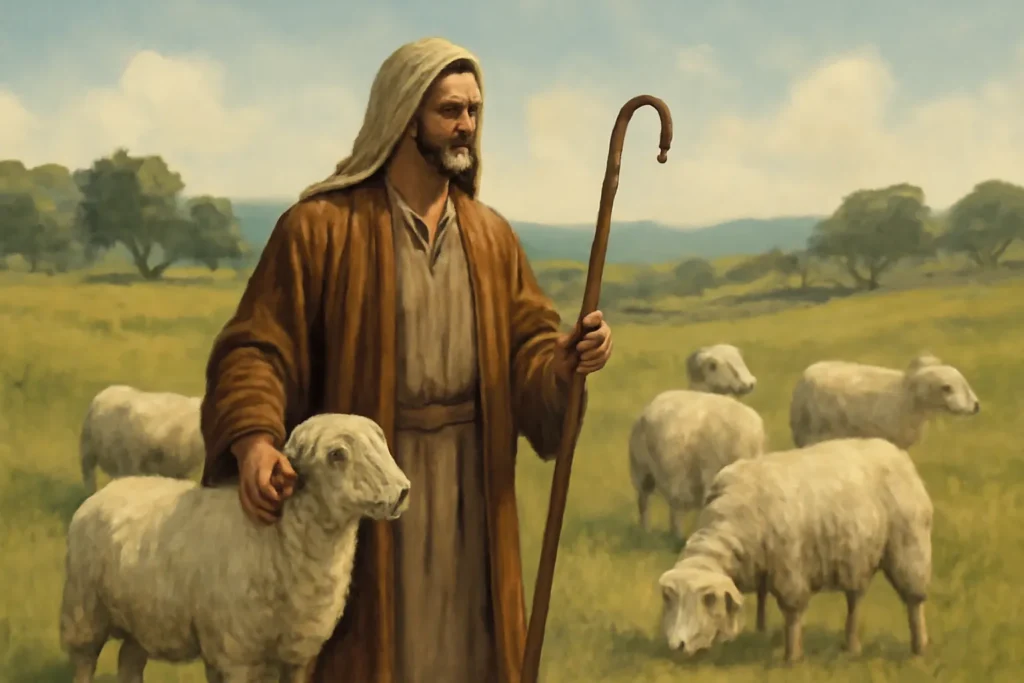
analogy, but as the Good Shepherd who lays down his life for the sheep. The shepherd
image here centers on sacrificial love, personal knowledge of the flock, and a dynamic, ongoing
relationship with those who follow him.
John 10:11 "I am the good shepherd: the good shepherd giveth his life for the sheep."
John 10:14 "I am the good shepherd, and know my sheep, and am known of mine."
These verses declare a identity and mission: the shepherd who loves his sheep so much that he offers
himself for their safety and salvation. The promise of intimate knowledge—the shepherd knowing the sheep
and the sheep recognizing the shepherd’s voice—frames the believer’s relationship with Christ as a living,
personal trust rather than a distant system of rules.
The shepherd’s voice in daily life: hearing and following
John 10:27-28 "My sheep hear my voice, and I know them, and they follow me: And I give unto them eternal life."
The shepherd’s voice represents guidance that leads to safety, life, and security. Followers respond with
trust, obedience, and confidence in the shepherd’s care. The promise of eternal life marks the shepherd’s
role not merely as caregiver in the moment but as the author of lasting, assured relationship with God.
The parables of lost and found: the shepherd’s pursuit of the stray
Luke 15:4-7 "What man of you, having an hundred sheep, if he lose one of them, doth not leave the ninety-nine in the wilderness, and go after that which is lost, until he finds it?"
Luke 15:6 "Rejoice with me; for I have found my sheep which was lost."
Luke’s parable emphasizes the shepherd’s relentless pursuit of the one who has strayed and the joy that
accompanies restoration. The narrative celebrates grace, mercy, and the value of each individual life
within the community of faith.
The apostolic blessing: the Great Shepherd of the sheep
Hebrews 13:20-21 "Now the God of peace, that brought again from the dead our Lord Jesus, that great shepherd of the sheep, through the blood of the everlasting covenant, make you perfect in every good work to do his will."
The epistle connects the earthly ministry of Jesus with the ongoing spiritual care extended to believers.
Christ as the Great Shepherd stands as the definitive leader who sustains the church by faith,
empowering the people to live in accordance with God’s will.
Pastoral leadership and the Chief Shepherd’s appearance
1 Peter 5:4 "And when the chief Shepherd shall appear, ye shall receive a crown of glory that fadeth not away."
Peter’s instruction to elders reframes leadership as service under the directive of a coming
fulfillment—the Chief or Chief Shepherd who will reward faithful shepherds and protect the flock.
The language underscores accountability, humility, and the hope of future vindication and reward for those
who care for the church in the spirit of the shepherd’s calling.
Compassion for crowds: the shepherd’s heart in Jesus’ ministry
Matthew 9:36 "But when he saw the multitudes, he was moved with compassion on them, because they fainted, and were scattered abroad, as sheep having no shepherd."
In Matthew, Jesus’ compassion for the weary and scattered echoes the shepherd’s duty to seek, guide,
and protect. The image widens the scope from an intimate relationship with a few sheep to a concern for
the multitude—demonstrating that shepherding is a public and redemptive work that addresses need on a broad scale.
Theological threads: how the shepherd motif shapes faith and practice
Across the scriptures, the shepherd figure interweaves themes of provision, protection, guidance, and intimate relationship. It invites believers to reflect on
their own response to leadership, their trust in divine care, and their calling to care for others.
Let’s highlight a few core threads that these verses collectively illuminate.
John 10:14 The shepherd knows the sheep; the sheep know the shepherd’s voice.
Luke 15:4-7 The shepherd’s search for the lost one demonstrates intimate value of every life.
Leadership with accountability
Ezekiel 34:23-24 A focus on faithful shepherding and accountability among leaders.
1 Peter 5:4 The Chief Shepherd’s return with reward for faithful service.
For readers today, these threads translate into practical themes: trust in God’s provision, resilience amid
hardship, a personal relationship with Christ, and a willing spirit to serve others as shepherds in a
community—whether as family members, church leaders, teachers, or caregivers in daily life.
Practical reflections: praying with the shepherd in mind
The shepherd imagery invites us to adopt practices of prayer and reflection that align with
God’s shepherding heart. Below are some practical prompts and short prayers that center the
shepherd motif in modern faith life.
Prayers for trust and provision
Prayer 1: "Lord, you are my shepherd; guide me to green pastures and calm waters today."
Prayer 2: "Help me to rest in your provision and to trust your care even when the path is uncertain."
Prayers for protection and courage
Prayer 3: "Protect me with your rod and staff, and give me courage to face danger with faith."
Prayer 4: "Lead me away from wandering, and bring me back to your fold with gentle strength."
Prayers for leadership and service
Prayer 5: "Grant me a shepherd’s heart toward others—to seek the lost, to comfort the faint, to guide with humility."
These prayers foster a posture of dependence on the Great Shepherd while encouraging believers to
reflect his love in their own circles of influence—families, neighborhoods, workplaces, and
churches.
Applications for the life of faith: living out the shepherding call
The shepherd motif is not merely a set of ancient words; it is a lens for everyday discipleship. Here
are several ways readers might apply these verses to modern life.
Pastoral care as a ministry of attention
Be present with others in moments of fear, pain, or confusion—like a shepherd with a flock.
Offer practical help, encouragement, and truth in ways that restore and guide, not in ways that overwhelm or condemn.
Listening for the shepherd’s voice
Grow in spiritual discernment by regular quiet time, scripture meditation, and community counsel.
Seek to hear Christ’s voice in Scripture, prayer, and the wise counsel of mature believers—then follow with trust.
Valuing each member of the flock
Recognize the intrinsic worth of each person in your community, especially those who feel overlooked or forgotten.
Engage with humility, offering leadership that serves rather than dominates.
Hope rooted in the Chief Shepherd’s return
Let the expectation of the Shepherd’s return shape how you live today—prioritizing mercy, justice, and faithful witness.
Across these applications, the central claim remains clear: God’s shepherding care is
manifested in Jesus Christ, who calls people into belonging, safety, and purpose within his flock.
Glossary and quick reference: shepherd language in Scripture
To help readers navigate the shepherd theme, here are quick definitions and cross-references that
often appear in biblical texts:
Shepherd (OT/NT): a guide and guardian of a flock; also a title for leaders and Christ as
the ultimate caretaker.
Flock or sheep: the people under a shepherd’s care.
Pasture and green pastures: places of provision, rest, and renewal.
Voice of the shepherd: a metaphor for intimate communication and guidance.
Good Shepherd: a specific title for Jesus that highlights self-sacrificial love and intimate knowledge of his followers.
From the shepherds who tended flocks in the fields of Israel to the parables that reveal God’s
relentless pursuit of the lost, the biblical shepherd image remains a core way the Bible speaks of
God’s character and Jesus’ mission. As readers engage these verses, they encounter not only abstract
doctrine but a calling to trust, follow, and imitate Christ’s shepherding love in everyday life. In
moments of doubt or danger, the shepherd motif invites believers to remember that they are part of a
larger story in which the Good Shepherd lays down his life for the sheep, guides with gentle authority,
and promises a future fullness of life in the presence of God.
Whether you are studying for personal devotion, preparing a sermon, or seeking language for
thoughtful reflection, the verses about the shepherd offer rich
material. They remind us that God’s care is neither distant nor abstract but personal, reliable,
and eternally oriented toward the good of the flock he loves.










Leave a Reply