Bridegroom Scripture: Key Bible Verses About Christ and the Church
Bridegroom Scripture: Key Bible Verses About Christ and the Church
In Christian thought, the phrase Bridegroom Scripture refers to biblical imagery that casts Christ as the bridegroom and the Church as the bride. This powerful motif appears across both the Old Testament groundwork and the New Testament fulfillment, culminating in the cosmic centerpiece of revelation with the marriage of the Lamb. The bridegroom motif is not merely poetic; it communicates truths about love, covenant, fidelity, sanctification, and the ultimate hope of reunion between God and his people. As you read these passages, you will notice how the imagery blends intimate affection with divine purpose, weaving together worship, ethics, and eschatology in one unified thread.
The bridegroom motif in Scripture has two primary dimensions: an intimate, relational portrayal of God in covenant with his people, and a prophetic anticipation of a future, perfected union. The imagery often emerges through weddings understood within their historical and cultural context—where betrothal (a binding agreement) precedes consummation, and the groom’s return signals consummation and celebration. Over time, this pattern is applied more broadly to Jesus and the Church, transforming a cultural wedding rite into a divine parable about salvation.
Long before the New Testament makes the Christ/church pairing explicit, the Bible lays groundwork that later writers interpret as prophetic foreshadowing. Key strands include:
Hosea and the allegory of marriage as a spiritual indictment and invitation. Hosea 2:19-20 promises a future betrothal: "I will betroth you to me forever; I will betroth you in righteousness and justice, in love and compassion." This language exposes a divine passion and a faithful, longing relationship between God and his people.
Song of Songs (also called Song of Solomon) presents a lyrical, intimate drama of love between spouses. While historically contested as an allegory, many interpreters read it as a profound model of devotion to God and, ultimately, to Christ, who fulfills the longing expressed in human romance.
Isaiah 54:5 declares, "For your Maker is your husband—the Lord Almighty is his name." This verse anchors the idea of covenant love as a divine marriage, with God as the faithful groom who protects and provides for his bride.
Key Verses About Christ and the Church as Bridegroom and Bride
The New Testament crystallizes the bridegroom imagery around Jesus Christ and the Church, reframing Old Testament hints into a clear, theological revelation. The following sections outline the central passages and offer brief reflections on their meaning for believers today.
Ephesians 5:25-27 (and the surrounding context in 5:22-33). This passage anchors the domestic metaphor of marriage to the cosmic plan of Christ and the Church: "Husbands, love your wives, just as Christ loved the church and gave himself up for her to make her holy, cleansing her by the washing with water through the word, and to present her to himself as a radiant church, without stain or wrinkle or any other blemish, but holy and blameless." The bridegroom imagery here emphasizes sacrificial love, holiness, and a mutual, redemptive purpose.
Revelation 19:7-9. In a climactic scene, the heavenly wedding is proclaimed: "Let us rejoice and be glad and give him glory, for the wedding of the Lamb has come, and his bride has made herself ready." The fine linen, bright and clean, stands for the righteous acts of the saints. This passage reveals the fulfillment of the marriage motif in the eschaton and the consummation of all things in the union of Christ and his Bride.
Revelation 21:2, Revelation 21:9-10. The New Jerusalem is described as a bride beautifully prepared for her husband, and an angel invites the apostle John to show him "the Bride, the wife of the Lamb." The city functions as both symbol and symbolized reality—a place where God dwells with humanity in a perfected, eternal relationship.
2 Corinthians 11:2. Paul writes of being a faithful minister to present the Church as "a pure virgin to Christ." The bridal metaphor here conveys the solemn faithfulness of the covenant bond and the sacred responsibility of ministers to nurture purity and devotion.
John 3:29. John the Baptist speaks of the bridegroom and his friend rejoicing at the bridegroom’s voice. This verse frames the joy of the Christian community at the revelation and ministry of Christ, highlighting the intimate connection between Jesus and his people.
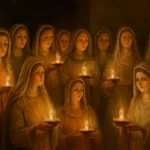
Matthew 25:1-13 (the Parable of the Ten Virgins). Although framed as a parable about preparedness, the bridal imagery—five wise bridesmaids and five foolish ones—underscores the call to readiness for the bridegroom’s return.
Song of Songs 2:16 and related verses. While explicitly a wedding song, the language speaks to a beloved who belongs to the other—“My beloved is mine, and I am his.” Interpreters have seen in this a prefiguration of the mutual longing and exclusive devotion that characterize Christ and the Church.
Isaiah 62:5 (and related prophetic passages). Though not always cited as a direct “bride-of-Christ” verse, the imagery of God rejoicing over Zion as a bridegroom rejoices over his bride reinforces the theme of covenant fidelity and intimate companionship.
Revelation 22:17—"The Spirit and the Bride say, Come!" This verse captures an ongoing, communal invitation and a shared longing between God and his people, signaling the continued, lived reality of the bridegroom relationship.
The New Testament sharpens the concept by identifying Jesus explicitly as the bridegroom and the Church as the bride in a way that transforms a cultural wedding metaphor into a theological program for Christian life. Here are some key themes that emerge in the New Testament:
Christ as the bridegroom. The gospels and epistles present Jesus as the one whom the Church awaits with longing, trust, and fidelity. His life, death, and resurrection enact the covenant promise in a tangible, salvific way.
The Church as the Bride. The Church is the community prepared for union with Christ. This is not a mere metaphor but a call to holiness, mission, and intimate worship that culminates in the eschatological wedding feast.
The mystery of the union. Paul’s statement in Ephesians 5:32—"This is a profound mystery: I am talking about Christ and the church"—signals that the bridegroom-bride relationship conveys deep, divine truths about how God relates to his people and how his people relate to him.
Ethical and liturgical implications. The bridegroom imagery shapes Christian ethics (self-giving love, purity, devotion) and liturgy (worship that anticipates the wedding feast of the Lamb). It grounds hope in a future reality while calling for faithful living in the present.
Theological Significance and Practical Takeaways
The bridegroom scriptures carry a wealth of theological significance beyond mere imagery. They shape how believers understand love, covenant, and hope in Christ, and they offer concrete guidance for lived faith. Consider the following dimensions:
Covenant faithfulness. The bridegroom motif emphasizes that God’s relationship with his people is a binding, covenantal embrace with exclusive devotion.
Sanctification and holiness. Just as a bride makes herself ready for the wedding, the Church is called to be holy and blameless through sanctification and the cleansing work of Christ.
Sacrificial love. The model of Christ’s self-giving for the Church sets the standard for leadership, marriage, and communal relationships within the body of believers.
Esperanza of consummation. The marriage imagery points toward an ultimate consummation when heaven and earth are united in the presence of God, and God dwells with his people forever.
Keystone for preaching. For preachers and teachers, the bridegroom motif provides a powerful, resonant framework for communicating the gospel, ethical instruction, and worshipful expectation.
Ancient Contexts and Modern Reflections
To read these passages with clarity, it helps to keep in view both ancient wedding customs and the ongoing spiritual application for the Church today. In ancient Near Eastern cultures, a betrothal signified a binding commitment, not merely an engagement; the groom’s departure and return framed a dramatic arc of anticipation. Christian interpreters have seen in this arc a parallel to Jesus’ first coming (as the expected bridegroom) and his eventual return (the final consummation). This interpretive approach yields several practical reflections:
Living in expectancy. Believers are called to live in hopeful anticipation of Christ’s return, remaining faithful and watchful as they await the Bridegroom’s coming.
Mutual submission and love. The bridal metaphor invites households and churches to cultivate mutual care, sacrificial love, and humble leadership that reflects the character of Christ.
Corporate worship. In worship settings, the bridegroom theme can shape songs, prayers, and sacraments that celebrate the unity of Christ and the Church and look forward to the heavenly feast.
The bridegroom passages offer concrete guidance for personal faith, marriage, ministry, and church life. Here are several practical takeaways drawn from the scriptural bridegroom motif:
Personal devotion. Like a bride preparing for a wedding day, believers are called to spiritual renewal—cultivating prayer, Bible study, confession, and obedience as they approach the Bridegroom.
Marital fidelity. Ephesians 5 frames marriage as a lived parable of Christ’s relationship with the Church; husbands and wives are urged to mirror that love in daily life, communicating grace, patience, and fidelity.
Church unity. The bridegroom imagery underscores the unity of believers as one body, preparing together for the future consummation and sharing one celebration of worship and mission.
Hope amid hardship. The promise of the wedding feast provides a compelling lens through which to view suffering, persecution, and trial as temporary steps toward a glorious future with God.
As you study, you will encounter a range of terms and phrases that convey the same essential idea. Using variants of the bridegroom scripture helps scholars and readers connect the imagery across scenes and books. Look for:
Christ as the Bridegroom and the Church as the Bride
Marriage imagery in the salvation narrative
Marriage of the Lamb as eschatological consummation
Betrothal language as covenantal language in the New Covenant
Frequently Asked Questions about Bridegroom Scripture
Below are some common questions readers have when exploring the bridegroom scriptural themes, along with concise explanations.
What makes the bridegroom imagery central to Christian doctrine? The imagery binds together Christ’s sacrificial love, the sanctification of the Church, and the future hope of perfect fellowship with God. It reframes salvation as a covenantal romance rather than a purely juridical transaction.
Is the bride in the Bible only the Church or can it include individual believers? In biblically informed reading, the Bride is conceptually the Church—composed of all true believers—yet individual believers participate in the bridegroom relationship as members of that corporate reality.
How should married couples apply the bridegroom metaphor? Couples can view marriage as a living icon of Christ’s love for the Church: self-giving, patient, forgiving, and oriented toward holiness and shared mission.
What is the ultimate hope of the bridegroom motif? The ultimate hope is the eschatological wedding feast—the consummation of all things where God dwells with his people, and the relationship between Christ and the Church is perfected in eternal joy.
Conclusion: The Enduring Power of Bridegroom Scripture
The poetic and theological force of b ridegroom scripture lies in its unifying vision: a God who loves with covenant faithfulness, a Savior who sacrifices for his Bride, and a people who persevere in hope as they await the final joining of heaven and earth. From the Old Testament foreshadowing in Hosea, Isaiah, and Song of Songs to the New Testament fulfillment in Ephesians, Revelation, and the Gospels, the bridegroom motif invites believers into a story larger than themselves. It calls for reverence in worship, integrity in daily living, and courage to anticipate the day when the Bride will meet her Bridegroom in eternal union.
Readers who want to go deeper might study how various Christian traditions interpret the marriage imagery in liturgy, homiletics, and spiritual formation. Regardless of denomination, the core truth remains clear: Jesus Christ is the bridegroom who loves the Church with a divine, unfailing love, and the Church is the bride who responds with faith, faithfulness, and joy in anticipation of the wedding feast of the Lamb.











Leave a Reply