Jesus Other Names: A Complete List of Titles and Aliases
Jesus Other Names: A Complete List of Titles and Aliases
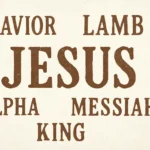
The figure at the center of Christian faith has been known by many names across languages, centuries, and traditions. Each title or alias carries a thread of meaning about who Jesus is, what he did, and how believers relate to him. Jesus Other Names: A Complete List of Titles and Aliases gathers the most common and significant names, epithets, and descriptors found in Scripture, liturgy, and tradition. This guide aims to help readers recognize the variety of ways Jesus is addressed and to understand the roles and identities those names convey. The breadth of these names reflects a complex and layered portrait: a teacher and rabbi, a messianic king, a divine Logos, a humane savior, and a personal friend who meets people in their lives today.
In the Bible and Christian tradition, names and titles are more than labels; they reveal character, purpose, and relationship. The most fundamental names tie Jesus to his Hebrew and Greco-Roman contexts as well as to the Christian belief in his unique identity. Yeshua is the Hebrew form of Jesus’ name, meaning “the Lord saves.” When translated into Greek, it becomes Iēsous, which in turn becomes Jesus in English. The title Christ is the Greek Christos, meaning “the Anointed One” or Messiah in Hebrew. Together, these names signal both humanity and divine vocation: Jesus, the Savior who fulfills the long-awaited messianic hope.
Core titles in the New Testament
The Messiah and the Christ
The most foundational designation is Christ (the Greek equivalent of Messiah). It designates Jesus as the long-awaited anointed one, the fulfillment of prophecies about a king and Savior who would restore God’s people. In many biblical passages, the title is inseparable from the person: Jesus the Christ or Jesus, the Messiah. This is not merely a surname; it identifies Jesus as the divinely chosen agent who inaugurates God’s kingdom on earth.
The Son of God
Another cornerstone title is the Son of God. While within Judaism a unique relationship of Jesus to the Father is emphasized, early Christian writers present this designation as a claim about Jesus’ divine nature and mission. The phrase points to a special, unique family relationship with God, and it is closely connected to doctrines about Jesus’ authority, his role in creation, and his redemptive work.
The Son of Man
Jesus also frequently used the title Son of Man, which appears in the Gospels as a self-designation. This title draws from apocalyptic and prophetic imagery (notably from Daniel 7) and emphasizes Jesus’ humanity, his authority given by God, and his role in suffering, judgment, and the coming kingdom. The phrase functions in part as a bridge between Jesus’ human life and his exalted, divine mission.
The Word (Logos)
In the Gospel of John, Jesus is identified as the Word or Logos, a divine principle of reason, order, and revelation through which God spoke the world into existence. The Logos concept presents Jesus as the ultimate revelation of God—one who embodies truth, life, and divine self-disclosure. This title has profound theological depth, linking creation, revelation, and salvation in a single, person-centered identity.
Other foundational self-identifications
Several names in the New Testament highlight Jesus as the Light of the World, the Bread of Life, and the Lamb of God. Each of these descriptors points to a different aspect of salvation: illumination in spiritual darkness, nourishment for the soul, and sacrifice for sin. Taken together, they offer a multispectral portrait of Jesus’ person and work.
Jesus is described as the Good Shepherd who lays down his life for the sheep, and as the Chief Shepherd who will appear at the end of the age. The shepherd metaphor emphasizes guidance, protection, and intimate care for the least and the lost. The image of the Bridegroom points to intimate relationship, fidelity, and the eschatological hope of union with God.
King and Lord
Many titles emphasize Jesus’ rulership and sovereignty: King of Kings, Lord of Lords, and sometimes King of Israel in specific gospel scenes. These regal titles acknowledge Jesus’ authority over creation, history, and human affairs, and they situate him within a long biblical expectation of divine rule mediated through an anointed king.
Savior, Redeemer, and Intercessor
Central to Christian faith are names that point to salvation and atonement: Savior, Redeemer, and Mediator (or Intercessor). These terms articulate the belief that Jesus accomplishes reconciliation between God and humanity, removing sin by his death and restoring the broken relationship with God.
Prophetic and priestly roles
Christians also speak of Jesus as the Prophet in the sense of revealing God’s will, and as the Great High Priest who intercedes for humanity before God. The combination of prophetic and priestly offices helps explain how Jesus communicates God’s truth while simultaneously making sacrifice and atonement possible.
Names for Jesus in the Gospels and early Christian usage
Geographic or familial identifiers
Readers frequently encounter Jesus described as Jesus of Nazareth, or Jesus the Nazarene, linking him to his hometown and background. In some contexts, he is also referred to as Jesus of Galilee, which underscores the geographic arc of his ministry and the communities he addressed. These labels emphasize his human life and historical setting before they are deepened by theological interpretation.
Titles reflecting vocation and authority
In addition to the core titles already discussed, readers will encounter descriptors such as Rabbi (teacher), Master (teacher or authority), and Lord (a term of reverence and divine authority). The use of Rabbi underscores Jesus’ role as a Jewish teacher with authority to interpret and apply the Law, while Lord functions in various voices as a confession of faith in Jesus’ divine status.
In worship, prayer, and creeds, Jesus is addressed with a number of devotional epithets and titles. Phrases such as Savior, Redeemer, and King of Glory appear in hymns, doxologies, and confessional statements, reflecting the living tradition of faith that has grown up around his name across generations.
Theological titles and cosmic imagery
Alpha and Omega; Beginning and End
In the Revelation to John, Jesus is described as the Alpha and the Omega, the Beginning and the End, signifying his eternal presence and sovereignty over history from its origin to its culmination. This cosmic dimension of Jesus’ identity links time to eternity, history to destiny, and human longing to divine fulfillment.
The Light and the Life
Jesus is frequently depicted as the Light of the World and the Life—themes that highlight revelation, moral direction, and eternal significance. Together with other “I am” statements, these titles evoke a Jesus who illumines and sustains spiritual life in a world often marked by darkness and confusion.
The Bread of Life and Living Water
Metaphors of nourishment—Bread of Life and Living Water—illustrate how Jesus satisfies fundamental human longings for meaning, sustenance, and spiritual vigor. These images are particularly poignant in the Gospel of John, where eating and drinking become symbols for belief and eternal life through Jesus’ person and work.
Wisdom personified: Wonderful Counselor, Mighty God
The prophetic declaration in Isaiah 9:6 paints a fourfold suite of titles: Wonderful Counselor, Mighty God, Everlasting Father, and Prince of Peace. Christian interpreters read these as messianic references that point to Jesus’ divine nature, royal authority, and the peace he brings between God and humanity.
Language, culture, and the global reach of Jesus’ names
As the Christian faith spread across continents, Jesus acquired names and titles in many languages. Each linguistic setting tangibly shapes how believers imagine him and relate to him. For example, in Latin the name appears as Iesus or Iesus Christus; in Spanish-speaking cultures, as Jesús and Jesucristo; in French as Jésus and Jésus-Christ. Beyond direct translations, cultural adaptations often add reverent adjectives or phrases that enrich the sense of mission and presence. Regardless of language, the core meanings—savior, messiah, teacher, shepherd, and lord—remain recognizable across traditions.
A comprehensive list of Jesus’ titles and aliases
The following list gathers many of the most widely attested names, epithets, and descriptors attached to Jesus in Scripture, tradition, and liturgy. The items are grouped to help readers see how each name highlights a particular facet of Jesus’ identity or work. Bold terms indicate especially central or frequently used descriptors.
Jesus — the given name, meaning “the Lord saves.”
Jesus of Nazareth — geographic identifier tied to his hometown.
Jesus the Nazorean — variant form emphasizing Nazarene identity.
Jesus of Galilee — regional reference for ministry.
Christ (the Greek Christos) — “the Anointed One,” messianic title.
Messiah (Hebrew Mashiach) — the anticipated king and savior sent by God.
the Messiah, the Christ — combined usage stressing fulfillment of prophecies.
the Son of God — divine sonship and unique relationship with the Father.
the Son of Man — self-designation emphasizing humanity and cosmic authority.
The Word (Greek Logos) — the divine self-revelation and agent of creation.
Light of the World — illumination and revelation in a dark world.
Bread of Life — sustenance that gives eternal life.
Living Water — spiritual refreshment and eternal life provided by Jesus.
Lamb of God — sacrifice for sin and atonement.
Savior — rescuer from sin and death.
Redeemer — one who purchases freedom and restores relationship with God.
Mediator / Intercessor — one who reconciles and pleads on our behalf.
Prophet — the ultimate revealer of God’s will and truth.
Priest — spiritual mediator who offers sacrifice and intercedes for humanity.
High Priest — the supreme priest who mediates an eternal covenant.
King of Kings — sovereign authority over all rulers and powers.
Lord of Lords — ultimate lordship over the universe.
King (various formulations such as King of Israel) — messianic royal identity.
Wonderful Counselor — divine wisdom and guidance.
Mighty God — a title of divinity and strength; notably used in Isaiah 9:6.
Everlasting Father — fatherly care and eternal nature in the divine plan.
Prince of Peace — the one who inaugurates true peace between God and humanity.
Alpha and Omega — the beginning and the end, eternal presence.
The Beginning and the End — similar to Alpha and Omega, emphasizing eternity.
The Way — the path to the Father, associated with truth and life (John 14:6).
The Truth — absolute and reliable reality through whom God is known.
The Life — the source of eternal life and the authentic human flourishing.
King of Glory — divine majesty and regal magnificence in worship.
Bright Morning Star — herald of new dawn and hopeful expectation.
Rock — steadfast foundation and source of security for believers.
Chief Shepherd — leadership that cares for and guides the flock.
Good Shepherd — self-giving leadership and protection for the vulnerable.
Door (or Gate) — access to life and salvation through Jesus.
The Word of God — explicit combination of divine revelation and personal identity.
Immanuel (often spelled Immanuel or Emmanuel) — “God with us,” highlighting divine presence among people.
Rabbi — Jewish teacher with authoritative interpretation of the Law.
Teacher / Master — educational and authoritative role in faith formation.
Jesus the Nazarene — alternative appellation underscoring his earthly origin.
Jesus the Christ — combined form used to highlight both his name and messianic identity.
Names and titles in liturgy, creeds, and tradition
Theological affirmations and doxologies
Across centuries of worship, believers have spoken of Jesus with a suite of titles that appear in creeds, liturgical prayers, and hymns. Phrases like Jesus Christ our Lord, our Savior, and the Word made flesh appear in creedal statements and corporate worship. These forms help communities confess who Jesus is within their own historical and devotional contexts, while remaining connected to the biblical witness.
In the epistles, the apostolic authors frequently pair Jesus’ name with his offices to articulate the scope of salvation: Jesus the Messiah, Jesus the Son of God, and Jesus Christ the Lord recur as standard confessional phrasing. These combinations reinforce the unity of Jesus’ humanity, divinity, and sovereign authority for readers who lived in communities facing various trials and theological pressures.
Why these names matter for readers today
Names and titles do more than identify a figure from history; they orient faith, shape worship, and guide moral imagination. For contemporary believers, knowing the array of Jesus’ names helps in several ways:
They illuminate the multifaceted nature of Jesus, showing how he fulfills a spectrum of expectations—teacher, savior, king, healer, and divine revelation.
They provide language for prayer and praise. Different names can be invoked in different contexts: for guidance, for mercy, for strength, or for gratitude.
They connect modern readers with ancient faith communities, fostering a sense of continuity with the early church’s witness and devotion.
They enable better study and interpretation of Scripture. Recognizing titles helps readers read biblical texts more carefully, noting how authors use specific designations to convey meaning.
Notes on variations and translations
Because the Bible has been translated into many languages, and because theological usage has evolved in different Christian traditions, readers may encounter slight variations of some titles. For instance, Emmanuel may appear as Immanuel in some Bible translations, or as Emmanuel in others, both referring to “God with us.” Similarly, Christ and Messiah appear in bilingual forms (Greek vs. Hebrew) and may be paired with additional descriptors in liturgical contexts.
How to use this list in study or worship
When engaging with biblical texts, sermons, or devotional writing, consider the following practical approaches to using Jesus’ names and titles:
Match a name to a context: If a passage speaks about guidance and wisdom, recall titles like Wonderful Counselor and Rabbi.
Track the biblical witness: Notice how different authors emphasize different aspects of Jesus’ identity—e.g., John’s focus on the Word and life, Paul’s emphasis on Savior and Redeemer.
Use name-based prayers: Incorporate several names into private or corporate prayer to acknowledge different dimensions of Jesus’ work—“Lamb of God,” “Bread of Life,” “King of Kings,” and “Lord of Lords.”
Explore linguistic roots: If you study biblical languages, explore how Yeshua, Iēsous, and Christos carry the same core meaning but appear in different cultural frames.
Final reflections
The breadth of Jesus’ names and titles is not merely a catalog of labels; it is a map of his mission, character, and relationship to the world. From the intimate image of the Good Shepherd who knows and tends his sheep, to the cosmic proclamation of Alpha and Omega who holds all things together, the spectrum of designations invites readers to encounter Jesus from multiple angles. For believers, these names function as anchors for faith, invitation to worship, and language for honest prayer about hope, mercy, justice, and love.
In sum, Jesus’ many names testify to a figure who defies simple categorization. He is at once fully human and fully divine, a teacher and a savior, a historical figure and an eternal presence. As you explore these titles—the Messiah, the Word, the Light, the Lamb, the King of Kings, and beyond—you gain a richer sense of how Christians understand who Jesus is, what he did, and how he continues to be involved in the life of every believer today.








Leave a Reply