Brief Sermon: How to Deliver a Short and Impactful Message
Brief Sermon: How to Deliver a Short and Impactful Message
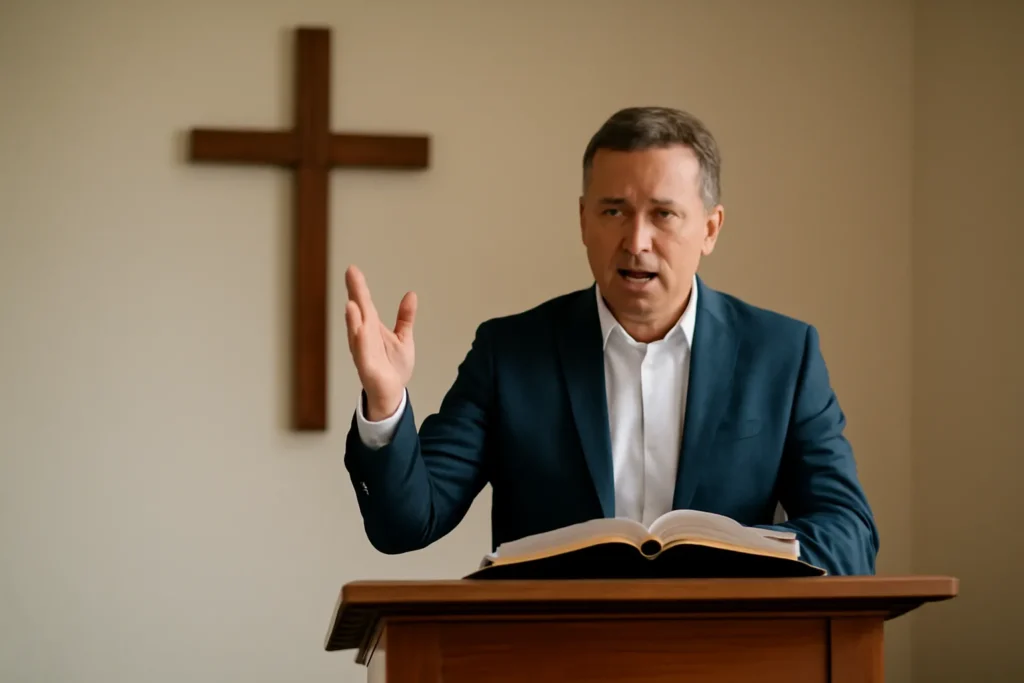
A brief sermon is not merely a shorter version of a long sermon. It is a distinct communication craft that aims to convey a clear, compelling truth in a compressed time frame. Whether you are addressing a Sunday gathering, a midweek service, a youth group, or a small group meeting, the goal remains the same: speak with clarity, relevance, and spiritual impact in a compact form. This article explores the art and science of delivering a short sermon, or what some speakers call a concise homily, a micro-sermon, or a brief exhortation. You will find practical steps, structure templates, delivery tips, and examples to help you craft and present a message that sticks without overstaying its welcome.
Defining the concept: what makes a brief sermon effective?
A brief sermon is defined more by its outcome than by its duration. It is a message that seeks to:
Clarify the core truth in plain language so listeners can grasp it quickly.
Connect that truth to everyday life, so hearers see a concrete application.
Inspire a response, whether it is obedience, prayer, or reflection, within a short window of time.
Honor the audience’s attention by staying within a committed time limit and avoiding filler.
In practice, a brief sermon often uses a single overarching idea supported by a few tightly reasoned points. Instead of trying to cover every facet of a topic, it hones in on a specific truth and demonstrates its relevance through scripture, story, and a clear call to response. The brevity can actually enhance impact when paired with intentional structure and thoughtful delivery.
Variations of the brief sermon: semantic breadth and terminology
Different churches and speakers may refer to the same thing with different labels. Here are some commonly used terms and their nuances:
Brief sermon — the broad, general term emphasizing the shortened form of a sermon.
Short exhortation — often more exhortational, urging immediate response.
Concise homily — a formal term that implies a focus on a single Scriptural truth.
Micro-sermon — a very compact message, sometimes 3–5 minutes, used in online clips or tightly scheduled services.
Succinct sermon — emphasizes linguistic economy and precision.
Brief devotional talk — in some contexts, intersections with devotional practices and personal reflection.
Despite the variety of labels, the aim remains the same: deliver a message with clear spiritual content, practical application, and memorable resonance in a compressed time frame. When you recognize the variety of terms, you can adapt the form without losing the core aim: to illuminate Scripture and move listeners toward action or contemplation.
Why a brief sermon matters in modern settings
Attention discipline: Contemporary audiences often have shorter attention spans. A brief sermon respects that constraint while still inviting deep reflection.
Flexibility: Short messages fit into diverse settings—worship services, children’s or youth gatherings, conferences, or community events.
Clarity of purpose: A compact message forces you to articulate a precise objective and avoid tangential content.
Memorability: A well-crafted compact sermon often leaves a single, memorable takeaway, making it easier to recall and apply.
Accessibility: People can share and discuss a brief sermon more readily, increasing its reach beyond the immediate audience.
However, brevity is not a license for shabbiness. The best brief sermons balance depth and economy, offering a well-reasoned argument anchored in Scripture, while avoiding jargon, stray anecdotes, or disconnected points. When done well, a short message can be more quotable, more usable in daily life, and more likely to spark ongoing dialogue within the community.
Core principles for crafting a brief sermon
To ensure your brief sermon is powerful, anchor your process in a few core principles that guide you from concept to delivery:
Clarity — speak in plain language. Avoid ambiguity and theological clutter. If a listener can't summarize the main idea in a sentence, you likely need to refine it.
Scriptural basis — ground your message in a single, well-chosen passage or a clear biblical thread that listeners can verify and reflect upon.
Relevance — show how the truth intersects daily life, relationships, or faith practices. Use contemporary scenarios, language, and imagery that resonate with your audience.
Precision — select only a few supporting points. Each point should be tightly argued and directly tied to the main truth.
Breathability — include pauses, questions, or moments for contemplation to prevent cognitive overload and to encourage personal reflection.
Memorable takeaway — craft a concise, repeatable phrase or question that encapsulates the core message and can be carried by listeners beyond the room.
Graceful closure — end with a call to response, prayer, or a tangible next step that fits the setting and your audience.
Preparation steps for a compelling brief sermon
Preparation is the backbone of effectiveness. Here is a practical process you can adapt for your own practice. The steps can be completed in a few focused hours, or spread across a week of prayer and study, depending on your schedule.
Define the aim. Decide the one primary truth you want to communicate. Ask: What do I want listeners to know, feel, or do by the end of the talk?
Select a core passage. Choose a Scripture that most naturally supports that aim. It could be a single verse, a parable, or a short narrative with a clear takeaway.
Extract the main idea. Write a one-sentence summary of the message. This becomes your guiding theme and the spine of your outline.
Design a compact outline. Plan 2–4 succinct points that directly support the core idea. Each point should be a logical step toward application.
Find a vivid hook. Start with something that captures attention—an illustrative story, a question, a startling fact, or a brief scene. The hook should tie to the main idea.
Develop transition lines. Create smooth, natural transitions between points. Avoid abrupt shifts; let the narrative flow.
Choose a memorable phrase. Create a short, repeatable line or question that encapsulates the core truth and can be repeated by listeners in everyday life.
Plan the application. Provide concrete, reachable steps listeners can take. The application should be specific and time-bound when possible.
Finish with a prayer or reflection. Close with a brief moment of prayer, thanks, or personal reflection that invites continued contemplation or action.
Rehearse with discipline. Practice timing, voice, and body language. Record yourself to evaluate pace, emphasis, and clarity.
Structure best practices: building a compact yet complete message
Even within a short frame, you can build a structure that feels complete and satisfying. Consider the following elements and how they might fit into a brief sermon of 5–8 minutes, or even shorter.
Hook (15–30 seconds): An engaging opening that draws attention and connects to the core idea.
Bridge to Scripture (30–60 seconds): Tie the hook to a Biblical text or narrative, explaining why the passage matters now.
Main truth (60–180 seconds): State the central message clearly in a single sentence or two, followed by a concise justification.
Supporting points (1–2 minutes): Present two or three compact, logically ordered points that illustrate the main truth with biblical examples, analogy, or brief storytelling.
Application (1 minute): Provide practical steps for living out the truth in everyday life, with a clear call to action or invitation.
Conclusion (15–30 seconds): Close with a memorable line, a short prayer, or a benediction-like thought that echoes the main idea.
Sample five-minute outline
The exact timing will depend on your pace, but a concise outline often looks like this:
Hook: a brief story about a relatable moment of failure or grace.
Bridge: connect the story to a verse about God’s faithfulness.
Main truth: “God’s grace meets us where we are, not where we should be.”
Point 1: God’s grace is practical and not theoretical.
Point 2: Grace calls for a response in daily life.
Application: choose one concrete step today to embody grace in a relationship.
Conclusion: a short, prayerful plea for help to live out the truth.
Delivery techniques for a brief sermon that lands
Delivery can make or break a well-crafted message. Here are techniques that help your words land with impact while preserving dignity and reverence appropriate to the setting.
Voice control — vary pace and pitch to emphasize key ideas. Don’t rush; allow natural breathing and pausing for emphasis.
Pauses — use deliberate silences after the hook, after the main truth, and after the application to let the message sink in.
Breath and rhythm — short phrases spoken with breathing space create a musical rhythm that aids memory.
Body language — open posture, occasional hand gestures for emphasis, and eye contact with different sections of the audience build connection.
Clarity of articulation — avoid tongue-twisting phrases or jargon. Enunciate key terms to ensure understanding.
Rehearsal discipline — practice with a timer and, if possible, in the actual room to get a feel for acoustics and movement.
Language that works: crafting memorable and credible phrasing
The language of a brief sermon should be precise, vivid, and trustworthy. Here are practices to refine wording and boost impact:
Single idea focus — keep sentences short and anchored to the main truth. Long, meandering sentences dilute impact.
Active voice — favors action and immediacy, e.g., “God invites us to…” rather than passive constructions.
Concrete imagery — use concrete metaphors and images that listeners can picture or relate to in daily life.
Transitional phrases — connect sections with natural language such as “that matters because…,” “so we must…,” or “here’s the point.”
Repetition with purpose — repeat the core phrase or question at strategic moments to reinforce memory without sounding repetitive.
Scriptural fidelity — ensure each claim about Scripture is accurate and properly cited; avoid misquoting or overextending a verse.
Application and call to action: turning hearing into practice
A short sermon without a tangible application risks becoming devotional fluff. A strong brief sermon includes a clear call to action that listeners can implement before they leave. Consider these approaches:
Direct next step — “Today, take one step toward reconciliation in a strained relationship.”
Reflection prompt — invite listeners to spend five minutes in silent prayer or journaling after the service reflecting on a specific question.
Accountability cue — encourage pairing listeners with a person who will check in on their progress during the week.
Resource suggestion — point to a devotional guide, Bible reading plan, or small group discussion material that deepens the message.
Structure and outline templates for different contexts
Different settings may demand different shapes of a brief sermon. Below are adaptable templates you can plug into your schedule and audience needs.
Template A: 4-Point Brief Exhortation
Hook or illustration
Scriptural anchor (brief)
Main truth
Two short applications
Closing prayer or invitation
Template B: 2-Point Focused Message
Hook
Point 1 with Scripture
Point 2 with Scripture
Combined application
Prayer or invitation
Template C: Narrative-Driven Brief Sermon
Gripping opening scene (story)
Scriptural truth embedded in the narrative
Two and only two implications for life
Direct call to response
Real-world scenarios and how to tailor a brief sermon
Different settings require different tones, forms, and emphases. Here are a few common contexts and how you might adapt your brief message to each:
Sunday morning service — balance reverence with relevance. A five-minute brief sermon can serve as a bridge between longer hymns and the sermon, offering a concrete takeaway tied to the ongoing series.
Youth group — lean into contemporary language, dynamic storytelling, and a bold call to action that is attainable within a week (or even a day).
Small group or home gathering — more conversational tone, greater emphasis on personal reflection, and a gentle invitation to apply over the next week.
Online clip or social media — ultra-focused message, one main idea, and a crisp takeaway that can be stated in one sentence or a click-worthy question.
Funeral or memorial setting — while brevity is still important, the tone is more solemn, and the core message centers on consolation, hope, or God’s faithfulness in grief.
Common pitfalls in brief sermons and how to avoid them
Avoiding common missteps helps maintain credibility and impact. Here are frequent traps and practical remedies:
Overloading with points — limit the number of main points to two or three. If you have more, consider separating content into a sermon series or a devotional follow-up.
Jargon and abstractions — replace abstract terms with concrete examples that a diverse audience can grasp.
Weak transitions — practice smooth transitions that connect your points rather than abruptly jumping from one idea to another.
Misalignment with Scripture — never force a point to fit a Scripture; ensure the passage supports the message naturally and honestly.
Inadequate closure — end with a clear call to action, reflection, or prayer; avoid leaving listeners with nothing tangible to take away.
Tools, resources, and practical aids for crafting a brief sermon
Helpful tools can accelerate your ability to craft compelling brief sermons. Consider the following resources and practices:
Bible study templates — use simple templates to extract main ideas from a passage (what it teaches, why it matters, how to respond).
Illustration bank — keep a personal collection of short stories, anecdotes, and case studies that illustrate your main points without overshadowing the message.
Practice buddy — partner with a trusted listener who can give you feedback on clarity, pace, and impact.
Timing apps — utilize timers during practice to ensure you stay within your target window.
Voice and diction training — practice enunciation and resonance to maintain listener engagement, especially in larger venues.
Sample scripts — study well-crafted brief sermons from trusted preachers to understand structure, language, and delivery
Ethical and pastoral considerations for brief sermons
In any setting, you are stewarding a message that represents a larger spiritual community. Consider the following:
Humility — acknowledge the limits of one short talk. Offer space for continued reflection and dialogue beyond the service.
Pastoral sensitivity — tailor content to the needs and sensitivities of the audience; avoid shaming language or coercive tones.
Scriptural integrity — expose your audience to accurate biblical interpretation and responsible application.
Inclusion — ensure language and examples are accessible to a diverse audience, including different ages, backgrounds, and experiences.
Putting it all together: sample excerpts and practice strategies
Here are a few example excerpts to illustrate how the concepts come together in practice. These are not full sermons, but short passages you can adapt, tune, and deploy in your own speaking moments.
Hook: “Have you ever prayed for something you didn’t believe would happen?”
Bridge: “In Luke 18, Jesus about the persistence of faith invites us to keep praying with hopeful anticipation.”
Main truth: “Persistent faith honors God’s timing and shapes our hearts more than the outcome.”
Application: “This week, identify one area where you’ve given up on God’s timing and take one deliberate step—pray with hands open to receive and with feet ready to act.”
Hook: “What do you do when your plans don’t unfold as expected?”
Bridge: “Philippians 4 reminds us to rejoice, to pray, and to trust God’s provision.”
Main truth: “God’s peace is cultivated as we release control and lean into His care.”
Application: “This week, practice one moment of release—pray about control, then take one practical step that reflects trust.”
Conclusion: the art and discipline of delivering a brief sermon
Delivering a brief sermon is both an art and a discipline. It requires clear thinking, careful preparation, and intentional delivery. When you approach a short message with a plan, an eye toward Scripture, and a heart oriented toward service, you can create moments that feel compact in time but expansive in impact. The ultimate aim is not to impress with length or linguistic flourish but to illuminate truth, invite reflection, and catalyze action in a way that resonates beyond the final word. A well-crafted brief sermon can become a touchstone for a community—a memorable, repeatable pattern people carry into the week.
To recap, here are the essential elements of a successful brief sermon:
One main idea supported by two or three tightly reasoned points.
Scriptural grounding that anchors your message in God’s word.
Practical application with concrete steps listeners can take.
Concise, clear delivery that respects the audience’s time and attention.
Memorable closing that invites a response—whether prayer, reflection, or action.
If you are preparing to deliver a brief sermon, consider practicing a few distinct versions: a five-minute outline for a standard worship service, a two-minute version for a youth gathering, and a one-minute social media clip with a single, repeatable takeaway. By varying length and focus while maintaining core elements, you’ll become a more versatile communicator who can adapt the brief sermon format to many audiences and occasions. With ongoing practice, feedback, and faithful study of Scripture, your capacity to move hearts and shape lives through concise, grounded preaching will grow—one short, impactful message at a time.











Leave a Reply