Call to Worship Scriptures from Psalms: Inspiring Bible Verses for Congregational Worship
In many worship settings, the call to worship is a pivotal moment when a community of faith consciously turns its attention toward God. The Psalms offer some of the most evocative and inclusive invitations to praise, adoration, and reverent awe. This article explores psalm-based call to worship passages that churches and small groups can use to guide assemblies into the presence of God. Drawing from a broad spectrum of psalms, we encounter translations and phrasing that fit a variety of liturgical styles—from formal congregational readings to contemporary responsive readings. Whether you want a single verse to begin a service or a short sequence to anchor a pattern of worship, the psalms provide reliable, profound language for calling a gathered people to praise, thanksgiving, confession, and reverent awe.
Below, you will find curated sections built around the common aims of a call to worship: inviting praise, acknowledging God’s sovereignty, fostering joyful community, giving thanks, praising creation, and shaping practical liturgies for congregational life. Each section includes carefully chosen verses (primarily from the King James Version for traditional resonance, but suitable for other translations), with emphasis on key phrases to help leaders and worship teams emphasize intention and theology. The verses are presented in a way that can be read aloud in a congregational setting, or used as a basis for responsive readings, sung antiphons, or printed call-to-worship cards.
Inviting Praise and Adoration
A primary purpose of a call to worship is to invite the congregation into joy-filled reverence: to enter the presence of the Lord with gratitude and to align hearts with God’s beauty and holiness. The following psalms offer timeless invitations and powerful opening lines.
Psalm 95:1-2 — An overt invitation to praise
O come, let us sing unto the LORD,let us make a joyful noise unto the rock of our salvation. Let us come before his presence with thanksgiving, and make a joyful noise unto him with psalms.
This pair of verses functions as a natural opening cry for corporate worship. Consider presenting them as a call to assembly—a musical or spoken invitation that sets a tone of communal joy. You may highlight the phrases sing unto the LORD and joyful noise to emphasize the celebratory character of the gathering.
Enter into his gates with thanksgiving, and into his courts with praise: be thankful unto him, and bless his name. For the LORD is good; his mercy is everlasting; and his truth endureth to all generations.
These verses frame worship as a journey toward God’s gates and courts, where gratitude becomes the rhythm of praise. Emphasize the claims about God’s goodness, mercy, and faithfulness as anchors for congregational confession and adoration.
Psalm 96:9 — Worship in the beauty of holiness
O worship the LORD in the beauty of holiness:fear before him, all the earth.
A succinct and vivid call, Psalm 96:9 invites the church to recognize that true worship points to the purity and beauty of holiness. Use this verse to usher the assembly into a posture of reverent awe, especially in services that foreground liturgical beauty—music, art, and congregation-wide responses.
Acknowledging God’s Sovereignty and Holiness
A robust call to worship not only invites praise but also orients the worshiper toward the glory, majesty, and sovereignty of God. The following psalms underscore the kingly rule of God and the appropriate response of creation and humanity.
Psalm 99:1-3 — The Lord reigns; let the people tremble
The LORD reigneth; let the people tremble: He sitteth between the cherubims; let the earth be moved. The LORD is great in Zion; and he is high above all the people. Let them praise thy great and terrible name; for it is holy.
By highlighting God’s reign and the holiness of his name, these verses frame worship as a response to a sovereign, holy King. Leaders may pair this with a brief moment of silence or a kneeling posture to visually communicate submission to divine authority.
O clap your hands, all ye people; shout unto God with the voice of triumph. For the LORD Most High is terrible; he is a great King over all the earth.
Psalm 47 broadens the invitation to include all peoples and all cultures in praise. It is especially suitable for services that celebrate the church’s mission in the world or emphasize unity in diversity within the body of Christ.
Psalm 24:7-10 — The King of glory enters
Lift up your heads, O ye gates; and be ye lift up, ye everlasting doors; and the King of glory shall come in. Who is this King of glory? The LORD strong and mighty, the LORD mighty in battle. Lift up, ye gates; even lift them up, ye everlasting doors; and the King of glory shall come in. Who is this King of glory? The LORD of hosts, he is the King of glory.
When the text invites the King of glory to “come in,” it positions worship as a response to God’s sovereign presence among his people. Consider using this as a responsive reading between a leader and the congregation, beginning with an invitation and concluding with a declaration of God’s supreme lordship.
Joyful Gatherings and Community Identity
Worship is often experienced most fully in the company of others. Psalms that celebrate joyful assembly, the beauty of unity, and the blessing of dwelling together in faith can shape a service’s ethos and tone.
Psalm 122:1-2 — Gladness to go to the house of the LORD
I was glad when they said unto me, Let us go into the house of the LORD. Our feet shall stand within thy gates, O Jerusalem.
Psalm 122 centers the community’s shared joy in approaching God together. This passage works well as an opening line or a transitional refrain that reinforces what it means to worship as a people rather than as isolated individuals.
Psalm 133:1-3 — Behold, how good and how pleasant it is for brethren to dwell together in unity
Behold, how good and how pleasant it is for brethren to dwell together in unity! It is like the precious ointment upon the head, that ran down upon the beard, Aaron's beard, that went down to the skirts of his garments.
Unity is celebrated with a rich image—the anointing oil that blesses the whole community. Use Psalm 133 to emphasize harmony, reconciliation, and love as essential expressions of a worshiping congregation.
Psalm 150:6 — All breath, all praise
Let everything that hath breath praise the LORD. Praise ye the LORD.
The closing verse of Psalm 150, though simple, functions as a sweeping capstone for corporate worship. It invites every voice and instrument to join together in praise, making it a fitting culmination for a call to worship or a responsive chorus after a sermon.
Thanksgiving, Blessings, and Personal Renewal
A call to worship often foregrounds the gracious acts of God—his forgiveness, healing, and steadfast love. The following passages emphasize gratitude, blessing, and personal renewal as essential components of worship.
Bless the LORD, O my soul: and all that is within me, bless his holy name. Bless the LORD, O my soul, and forget not all his benefits: Who forgiveth all thine iniquities; who healeth all thy diseases; Who redeemeth thy life from destruction; who crowneth thee with lovingkindness and tender mercies; Who satisfieth thy mouth with good things; so that thy youth is renewed like the eagle's.
These verses offer a richly personal but publicly proclaimed call to testify to God’s benefits. As a spoken call to worship, they invite the congregation to reflect on God’s goodness and to respond with gratitude, confession, and praise.
Psalm 42:1-2 — Longing for God as a communal posture
As the hart panteth after the water brooks, so panteth my soul after thee, O God. My soul thirsteth for God, for the living God: when shall I come and appear before God?
For times of lament, longing, or seasonal penitence, these lines help anchor a gathering’s longing for God. They can be offered as a preface to confession, or as a call to a season of prayerful reflection within the larger act of worship.
Creation and Adoration
The Psalms often direct worship toward all of creation, inviting the cosmos to join in praise. These passages provide a broad, cosmic dimension to a call to worship, reminding the congregation that worship is not limited to a room but is a response to God’s all-encompassing work.
Psalm 148:1-5 — Praising the Lord from creation
Praise ye the LORD. Praise ye the LORD from the heavens: praise him in the heights. Praise ye him, all his angels: praise ye him, all his hosts. Praise ye him, sun and moon: praise him, all ye stars of light. Praise ye him, ye heavens of heavens, and ye waters that be above the heavens. Let them praise the name of the LORD: for he commanded, and they were created.
Psalm 148 invites the entire created order to participate in praise. In a service, this can be paired with imagery or visuals of nature, or displayed in banners or announcements that call people to acknowledge God as Creator and Sustainer.
Psalm 147:1 — It is good to sing praises unto our God
Praise ye the LORD: for it is good to sing praises unto our God; for it is pleasant; and praise is comely.
A short, straightforward encouragement, Psalm 147:1 validates the joy of offering songs of praise. It can serve as a brief liturgical refrain between readings or a motif for a musical response at the top of a service.
Practical Ways to Use Psalm-Based Calls to Worship
The verses above can be applied in several practical formats, depending on the church’s tradition and the service structure. Here are a few approaches that honor Psalm-based calls to worship while remaining accessible to diverse congregations.
Sequential Reading — Read a short sequence of verses, moving from invitation (call to worship) to a brief statement of God’s character, followed by a unison prayer or song.
Responsive Reading — Leaders read a line or verse and the congregation responds with the next line, creating a conversational worship rhythm (e.g., Leader: "O come, let us sing unto the LORD," People: "let us make a joyful noise to the rock of our salvation").
Sung Antiphons — Pair verses with a simple choral refrain. For example, after reading Psalm 95:1-2, sing a short refrain based on the same language to encourage participation.
Printed Call-to-Worship Cards — Provide the verses on a card for the congregation to read aloud together or to use as a personal focus during a moment of silence.
Seasonal Variations — Rotate calls for Advent, Lent, or Thanksgiving by selecting passages that fit the theme of the season, while maintaining a strong biblical foundation.
When planning psalm-based calls to worship, consider the following practical tips:
Clarity — Choose verses with clear imagery and concise phrases that are easy for the whole assembly to grasp.
Length — A single well-chosen verse or a short pair is often more impactful than a long quoting block at the outset of a service.
Voice — Decide whether the call should be spoken by a leader, read in unison, or shared as a call-and-response between leader and congregation.
Theology — Prioritize passages that center on God’s character (holiness, faithfulness, mercy) and the proper human response (awe, praise, gratitude).
Seasonal and Thematic Variations
Different seasons and themes can shape the choice of psalms for call-to-worship moments. The Psalms give vocabulary for the full arc of Christian worship—from awe before God’s sovereignty to gratitude for salvation, from longing for God’s presence to celebration of communal life.
Lent and Penitential Moments
During seasons of reflection, consider verses that acknowledge human need and God’s mercy. For example, Psalm 42:1-2 expresses longing for God, which can become a heartfelt invitation to drawn-out prayer or a call to repentance and renewal. Pair lines like "As the hart panteth after the water brooks, so panteth my soul after thee, O God" with a guided time of confession and forgiveness.
Thanksgiving and Harvest Seasons
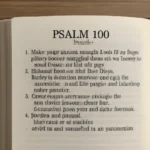
Harvest and Thanksgiving seasons invite explicit gratitude. Psalm 103 and Psalm 100 offer robust language of gratitude for God’s benefits and faithfulness. Use these verses to anchor moments of public testimony, where congregants share brief expressions of God’s kindness in their lives.
Though often associated with New Testament narratives, psalms can illumine Advent themes as well. Psalm 98:4-6 says, "Make a joyful noise unto the LORD, all the earth; make a loud noise, and rejoice, and sing praise." This lends itself to a festive, anticipatory mood that looks outward toward the promise of Christ’s coming.
Here are a few ready-to-use templates that incorporate psalm-based calls to worship. Each template can be customized to suit your congregation’s size, tradition, and musical resources.
Template A — Classic Call-and-Response
Leader: O come, let us sing unto the LORD, let us make a joyful noise to the rock of our salvation. People: O come, let us sing unto the LORD and lift our voices together.
Leader: Enter into his gates with thanksgiving, and into his courts with praise. People: With thanksgiving and praise, we worship you, O God.
Leader: For the LORD is good; his mercy is everlasting, and his truth endureth to all generations. People: Amen and amen.
Template B — Unified Reading with a Short Prayer
All: O worship the LORD in the beauty of holiness.
Leader: The psalm continues with a call to fear and reverence before our Creator—let us approach him now with humility and trust.
All: A brief prayer, e.g., "Holy Father, we gather in your presence, stirred by your holiness and your good gifts. Teach us to worship you in spirit and truth."
Template C — Seasonal Variation: Thanksgiving
Leader: Enter into his gates with thanksgiving, and into his courts with praise.
All: We give thanks for your goodness and steadfast love, which endures forever.
Leader: Psalm 150 invites all creation to praise. Let us lift our hearts and voices together.
Guidelines for Using Psalm-Based Calls to Worship in Various Contexts
As with any liturgical practice, flexibility and sensitivity to your context are essential. The Psalms offer language that is both timeless and adaptable. Here are some practical guidelines to help you implement these calls in a way that strengthens corporate worship.
Know your congregation — Some gatherings may thrive on short, spoken calls; others may benefit from longer, musical responses. Tailor the length and cadence accordingly.
Balance reverence and joy — Include calls that emphasize God’s holiness as well as calls that celebrate his mercy and faithfulness. A balanced approach prevents worship from becoming merely sentimental or exclusively solemn.
Link to Scripture in preaching — Use a psalm-based call to worship as a bridge into the sermon, helping listeners see the continuity between the gathered praise and the message they are about to hear.
Involve diverse gifts — Invite voices from music, liturgy leadership, and lay readers to participate in the call to worship, so that the act of calling the gathered community is itself a small, shared ministry.
Adapt for children and youth — Simplify language where needed or use a child-friendly version of the verses for family services while preserving the core message about praising God.
Conclusion: The Ongoing Value of Psalm-Based Calls to Worship
The Psalms are a trove of invitations to approach God with confidence, gratitude, and awe. They provide tested language for leading a gathered people into the Lord’s presence, and they offer a grammar of worship that can be used across generations and cultures. By selecting psalm verses that fit your service’s theme, you can craft calls to worship that are not only informative but transformative—inviting a congregation to respond to God’s character with praise, thanksgiving, confession, and renewed devotion.
If you are just beginning to build a psalm-based call to worship, consider starting with a simple sequence: Psalm 95:1-2 as the invitation, Psalm 100:4-5 as the grounding for thanksgiving, and Psalm 24:7-10 as the moment of acknowledging God’s kingship. You can then complement with an additional psalm of your choice—such as Psalm 133 for unity or Psalm 150 to close with a unison song of praise. Over time, you will develop a repertoire that reflects your church’s liturgical rhythm while keeping the timeless spirit of the Psalms at the center of congregational worship.
In all things, may the call to worship from the Psalms remind us that worship is a shared, grateful, and obedient response to the one true God—Creator, Redeemer, and King. May your gatherings be saturated with the beauty of holiness, the joy of unity, and the sustaining assurance of God’s steadfast love—now and forever.








Leave a Reply