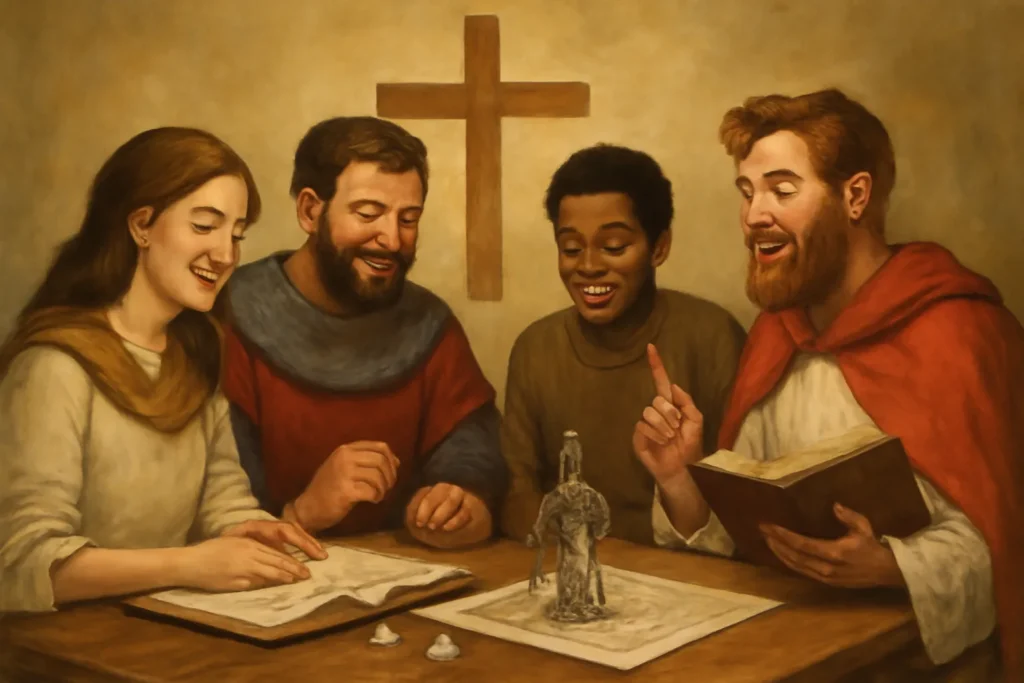
Christian role playing games, often referred to as faith-based RPGs or biblical RPGs, sit at an intriguing intersection of storytelling, ethics, and community engagement. They invite players to explore worlds where faith, values, and human frailty are not merely background texture but active forces shaping choices, relationships, and outcomes. This guide aims to explain what these games are, how they work, and why they matter for players, designers, educators, and church communities. Whether you are curious about how a faith-based RPG differs from secular fantasy titles, or you want to understand how to design, critique, or teach with this genre, you will find practical guidance and thoughtful analysis here.
In broad terms, a Christian RPG is a game in which the narrative, settings, mechanics, or goals are strongly influenced by Christian themes such as grace, mercy, justice, salvation, and discipleship. Some games foreground Biblical stories or characters and invite players to interpret or reenact them. Others weave Christian ethics into original worlds where players navigate dilemmas that resonate with Christian moral imagination. Across this spectrum, the core promise of a faith-based RPG is not only escapism but the opportunity to reflect on faith-inspired questions in a collaborative and interactive format.
This article uses a broad and inclusive lens. It treats Christian role playing games as a family of experiences—including traditional tabletop RPGs, digital role-playing games, narrative-driven adventures, and hybrid learning environments—that foreground the moral and spiritual implications of play. We will discuss the historical context, core themes, mechanics, design considerations, and practical applications. We will also address common questions about suitability, accessibility, and cultural sensitivity, so readers can approach these games with both curiosity and care.
What are Christian Role Playing Games?
At their best, Christian RPGs model a virtuous and complex world in which players are invited to grow in character as they pursue goals that reflect Christian ideals. These games can take many forms:
Explicitly Biblical settings where players assume roles within stories from scripture or early church history.
Redemption-focused adventures that center on forgiveness, reconciliation, and transformation of self and society.
Service-oriented experiences where the narrative emphasizes mercy, justice, and mission to help others.
Theological exploration RPGs that encourage players to wrestle with doctrines such as grace, sanctification, and the problem of evil through interactive storytelling.
Educational or ministry tools that use role playing to teach scripture, ethics, or church history.
A defining feature across these variants is that moral agency and accountability are woven into the gameplay. Players are rarely passive; their decisions have consequences that ripple through the plot, alter relationships, and shape the spiritual arc of the character. The results can be ethical debates among players, moments of personal reflection, or communal learning experiences that extend beyond the screen or tabletop.
Historical Context and Evolution
The idea of Christian storytelling through play has roots in ancient and medieval traditions of parables and moral instruction. In modern times, the emergence of tabletop RPGs in the 1970s and 1980s created fertile ground for religious communities to adapt the format for instruction and fellowship. Since then, faith-based RPGs have diversified in response to changes in technology, culture, and the church's own needs.
Early roots and educational aims
Early Christian game authors and educators often used role playing as a form of catechesis—a method to teach doctrine and Christian living through experiential storytelling. These initiatives emphasized:
Character formation and virtue development
Scripture engagement through narrative immersion
Group discussion that follows play sessions to unpack insights
In many cases, these early efforts were classroom- or church-based activities that gradually adopted commercial or open-source game frameworks to reach broader audiences.
Digital diversification and community play
With the rise of computer and console gaming, a new generation of digital faith-based RPGs emerged. Developers and churches experimented with:
Cooperative play that mirrors pastoral care and community service
Narrative-driven experiences that emphasize prayerful decision-making
Cross-cultural and ecumenical partnerships to broaden representation
Today, the field includes both indie titles and larger projects, some designed for personal exploration and others intended for group study or ministry contexts. The evolution reflects a broader trend in religious media toward interactive formats that invite active listening, empathy, and moral discernment.
Core Themes in Faith-Based RPGs
Across the spectrum, faith-based RPGs frequently foreground certain enduring themes that align with Christian imagination and practice. Understanding these themes helps players and designers evaluate fit for different audiences and purposes.
Redemption and forgiveness: Journeys of restoration that allow characters to grow after failure.
Discipleship and service: The call to follow, learn, and serve others, even at personal cost.
Grace under pressure: How mercy shapes decisions in conflict and temptation.
Justice and mercy: Balancing accountability with mercy in communal life.
Faith in practice: How belief translates into everyday actions within a game world.
Hope and resilience: Sustaining purpose in the face of adversity.
Community and belonging: Relationships as a vehicle for growth and mission.
Some games emphasize biblical literacy, offering players opportunities to study scripture in parallel with in-game choices. Others foreground moral philosophy and ethical dilemmas, inviting intense group discussions after sessions. Still others center on evangelism and outreach, framing the gameplay around mission work, charitable acts, and cross-cultural engagement. No matter the emphasis, credible faith-based RPGs tend to treat faith as something that is lived and tested, not merely discussed.
The mechanics of Christian role playing games vary widely, but several common design patterns recur across different variants. Understanding these patterns can help players anticipate what they will experience and help designers make intentional choices about tone, pacing, and learning outcomes.
Core mechanics that frequently appear
Morality systems that track decisions against ethical anchors such as mercy, justice, truth, and humility.
Alignment narratives or value-driven paths that influence how NPCs react and how events unfold.
Compassion-based rewards where helping others yields not only in-game benefits but opportunities for spiritual reflection.
Group storytelling that emphasizes collaborative decision-making and accountability within a community of players.
Scripture integration through quotes, themes, or verses that appear in dialogue or quests, encouraging study and reflection.
Mechanics aligned with learning goals
Reflection prompts after pivotal scenes to connect play with personal faith and church teaching.
Discussion guides built into the module or campaign to facilitate debriefs and theological exploration.
Character arcs that explicitly trace spiritual formation, including moments of doubt and recommitment.
Service quests that require players to engage in acts of mercy, charity, or community improvement.
In digital formats, developers may use dialogue trees, branching quests, and non-player character (NPC) relationships to model the way faith informs social interactions. In tabletop experiences, the role of a game master (GM) is especially important for guiding conversations, keeping debates constructive, and ensuring that themes remain suitable for the audience.
Narrative and Moral Choices
The heart of many Christian role playing games lies in narrative complexity and moral deliberation. Players are not simply trying to “win”—they are invited to wrestle with consequences that reflect real-world spiritual and ethical questions.
Branching narratives and what they teach
In well-designed faith-based campaigns, choices often lead to divergent futures. This branching structure mirrors the Christian doctrine that small decisions can have large consequences. Players may experience:
Paths of restoration that repair damaged relationships or communities.
Paths of temptation and testing that challenge personal virtue and trust in God.
Paths of courageous action that demand sacrifice for others’ good.
Theological considerations in storytelling
Writers and game masters must navigate a spectrum of theological ideas while remaining respectful and accessible. Key concerns include:
How to portray sin and grace without trivializing harm or endorsing harmful behavior.
How to represent diverse Christian perspectives on topics such as justice, salvation, and sanctification.
How to maintain a generous space for doubt, questions, and growth among players.
A mature narrative approach in Christian RPGs treats faith as a lived experience—something players practice and reflect upon, not simply a backdrop for action. The most enduring stories encourage empathy, solidarity, and a sense of purpose beyond personal achievement.
Role of Faith and Community
One of the defining strengths of faith-based RPGs is their potential to function as communal practice. Games can become a platform for spiritual formation, pastoral dialogue, and youth and adult education.
Church and ministry integration
Churches and faith-based organizations often integrate role playing into their programs in ways that support discipleship and outreach. Examples include:
Small-group studies that align game sessions with weekly teachings.
Pastoral care and counseling contexts where players process difficult moral questions.
Outreach initiatives where the in-game themes translate into real-world service projects.
Community norms and healthy play
Communities engaging with Christian RPGs benefit from clear expectations around consent, safety, and inclusivity. Setting norms for respectful dialogue, handling sensitive topics (such as trauma or moral injury in stories), and ensuring accessibility for players with diverse abilities is essential. Strong communities emphasize:
Respect for differing interpretations of faith and scripture.
Consent and non-judgment in role-playing decisions that involve personal experiences.
Inclusive language, representation, and accessibility accommodations.
When done well, community play in Christian RPGs can foster deeper relationships, mutual accountability, and a shared sense of mission that extends beyond the table or screen.
Designing a Christian RPG: Principles and Practical Steps
Whether you are a game designer, a ministry leader, or a teacher, creating a successful Christian role playing game involves careful planning, clear goals, and a respectful approach to faith and culture. The following principles offer a practical framework.
Clarify purpose and audience
Start by asking, What do we want players to take away from this game? Is the aim to teach scripture, to encourage moral reflection, to build community, or to support outreach? Identify the target age group and cultural context, and design your content accordingly.
Define core themes and boundaries
Articulate the central moral questions and theological ideas you want to explore. Then establish boundaries around topics that may be harmful or inappropriate for your intended audience. Clear boundaries help maintain a constructive atmosphere.
Decide whether the project will be a tabletop RPG, a digital game, or a hybrid experience. Each format has advantages:
Tabletop RPGs support intimate, reflective conversations and adaptable storytelling.
Digital RPGs can offer scalable narratives, automated consequences, and accessibility features.
Hybrid formats can combine the strengths of both modalities, with live play and digital tools for study and reflection.
Integrate learning outcomes
If the goal includes education or ministry objectives, align quests and encounters with measurable learning outcomes. This could include Scripture recall, doctrinal understanding, or demonstrations of virtuous behavior in the game world.
Design for safety and inclusivity
Build in community standards, content warnings where appropriate, and opt-in mechanisms for sensitive topics. Ensure accessibility choices—visual, auditory, and social accessibility—so a diverse group can participate.
Educational and Ministry Applications
Faith-based role playing games offer opportunities beyond entertainment. They can complement Bible study, catechesis, youth ministry, and pastoral education by turning abstract ideas into concrete practice. Here are some practical applications.
Curriculum integration
Teachers and mentors can integrate RPG-style activities into lesson plans. For example, a biblical narrative unit can be explored through a campaign that mirrors scriptural arcs, allowing students to internalize stories through decision-making, dialogue, and collaborative problem solving.
Youth and family programs
In youth groups, faith-based RPGs can facilitate mentorship, peer discussion, and service planning. They can also provide a structured space where adolescents practice discernment, empathy, and leadership under the guidance of trusted adults.
Clinically informed or pastorally guided campaigns can serve as safe spaces for exploring trauma, doubt, or moral injury. The reflective debriefs that follow play sessions help participants articulate feelings, identify values, and seek healthy growth.
Community outreach and evangelism
When aligned with outreach goals, Christian RPGs can function as entry points for conversation with seekers or new believers. Shared storytelling and collaborative problem solving can model relational trust and spiritual curiosity in accessible ways.
Accessibility and Inclusion
A thoughtful Christian RPG design respects accessibility and inclusivity. This means considering players with different abilities, learning styles, and cultural backgrounds, as well as ensuring content is appropriate for the intended audience.
Inclusive representation
Representation matters. Designers should strive to include diverse voices in character options, narratives, and artwork, while honoring conscience and tradition within the faith community.
Adaptable difficulty and pacing
Provide multiple difficulty levels or narrative pacing to accommodate newcomers and veteran players alike. This helps beginners experience meaningful progress while seasoned players encounter meaningful challenges.
Multi-sensory and accessible formats
For digital games, options such as text-to-speech, color-blind palettes, and adjustable UI scale improve accessibility. For tabletop experiences, consider providing concise, readable handouts and clear session outlines to support participants with diverse needs.
The landscape of Christian role playing games is dynamic, with several promising directions on the horizon. While no single trajectory will fit all communities, several trends appear repeatedly in thoughtful conversations among designers, educators, and church leaders.
Narrative AI collaboration: Tools that help create adaptive, theologically aware stories while preserving human oversight and accountability.
Cross-media ecosystems: Transmedia experiences where tabletop play, mobile apps, and church programming reinforce one another.
Ethics-forward design: Games that explicitly model ethical frameworks and invite critical reflection rather than moralizing.
Ecumenical and intercultural storytelling: Narratives from multiple Christian traditions and global perspectives to broaden empathy and understanding.
Educational partnerships: Collaboration between churches, schools, and nonprofit organizations to use RPGs for scripture study, service learning, and leadership development.
Regardless of technological advances, the enduring aim remains: to offer faithful, thoughtful, and inclusive experiences that help people live out their beliefs with integrity, courage, and compassion.
Ethical Considerations and Cultural Sensitivity
When engaging with Christian role playing games, it is essential to approach both content and community with ethical care. This includes respect for diverse interpretations within the Christian tradition, sensitivity to personal experiences, and a commitment to non-coercive, non-exclusionary practices.
Respect for doctrinal diversity
Christian communities are not monolithic. A well-designed RPG recognizes this diversity and avoids presenting a single doctrinal line as the only valid interpretation. This openness invites constructive dialogue and shared learning.
Content warnings and safety tooling
Some scenarios may touch on difficult topics (trauma, violence, prejudice, spiritual doubt). It is prudent to provide content guidance and opt-in mechanisms so participants can prepare and choose their level of exposure.
Ethics over sensationalism
Programs should avoid sensationalizing faith experiences for entertainment. The goal is to honor the gravity of spiritual topics while maintaining a constructive, growth-oriented tone.
Conclusion: The Value of Faith-Informed Play
Christian role playing games offer a distinctive space where imagination, community, and faith intersect. They encourage players to imagine better futures, inhabit roles that reflect Christian virtues, and practice discernment in collaborative settings. For churches, educators, and families, these games can be powerful tools for discipleship, scripture engagement, and social responsibility.
The field will continue to evolve as designers experiment with new formats, but the best work will remain grounded in three principles: faithful storytelling that honors the traditions people hold dear; inclusive community that invites participation from diverse backgrounds; and practical impact that translates play into courage, compassion, and service in the real world.
If you are a player, designer, educator, or ministry leader curious about how to begin, start with clear goals, involve diverse voices from your community, and approach each session with curiosity, humility, and a readiness to learn. A well-crafted faith-based RPG can be more than a game—it can be a doorway to deeper understanding, stronger relationships, and a more resilient faith in daily life.









Leave a Reply