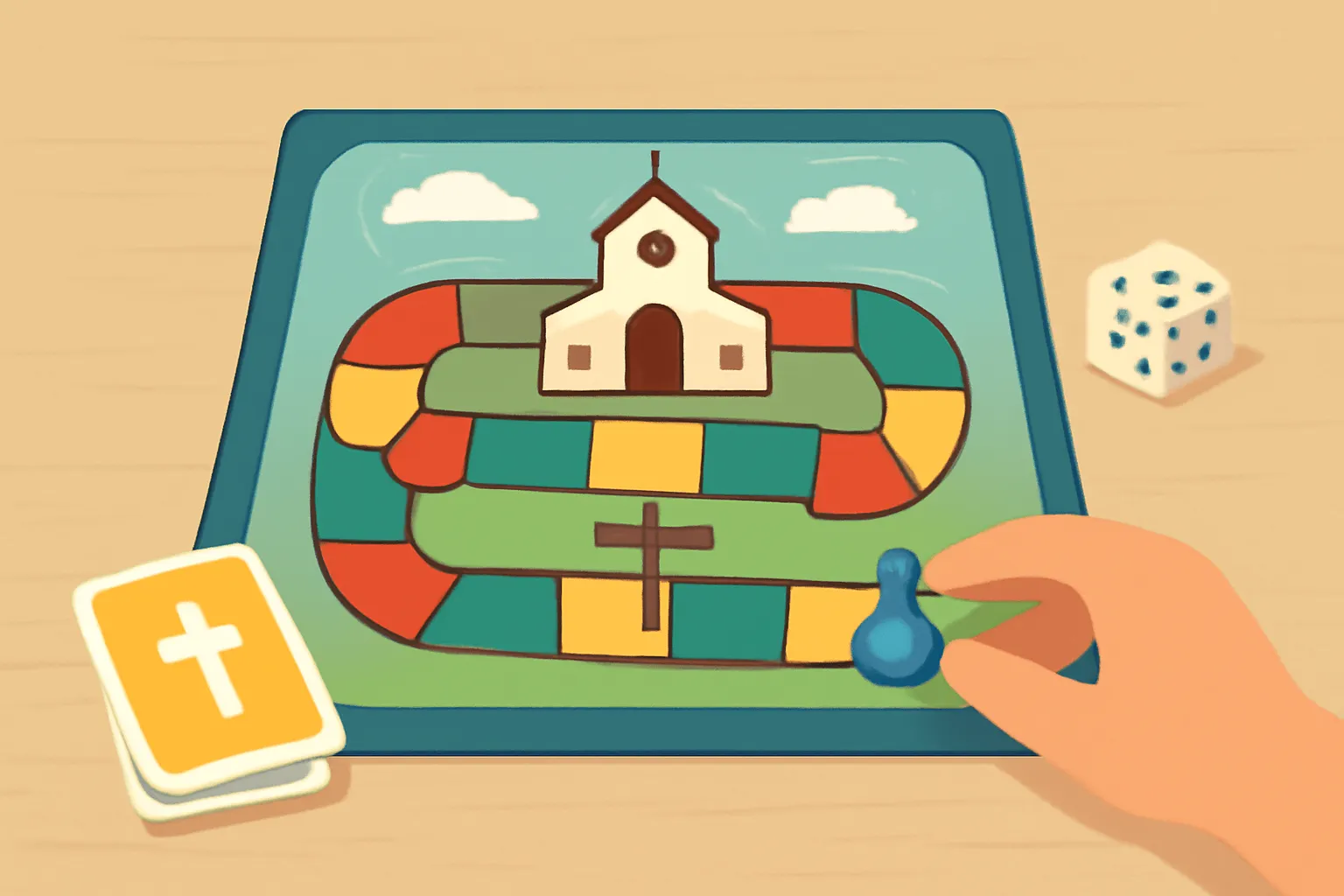
Introduction: Games About Christianity and Their Place in Gaming
The world of Christian-themed games is a niche that has grown and shifted as the broader video-game landscape has evolved. From early faith-based
titles designed for educational settings to modern indie projects that explore biblical stories, moral choices, and spiritual themes, these
games offer players a chance to engage with Christianity in interactive, narrative-driven ways. This article surveys top faith-based games and provides thoughtful reviews that consider gameplay, storytelling, accessibility, and the way each title handles its Christian
themes. Whether you are a gamer seeking meaningful content or a parent or educator looking for age-appropriate experiences, the titles below illustrate
how Christian ideas have been expressed through different genres, platforms, and eras.
What makes a good Christian game?
Before diving into specific titles, it helps to outline criteria that critics and players often use to evaluate faith-based games. A well-rounded Christian game
typically balances faithful thematic content with engaging gameplay, ensuring that the spiritual messages feel integral rather than tacked on.
Thematic integrity: Does the game treat its Christian themes—such as grace, forgiveness, redemption, sacrifice, and moral decision-making—with depth and sensitivity?
Story and character depth: Are biblical or faith-centered narratives told through compelling characters and well-constructed arcs, not preachy exposition?
Accessibility and audience suitability: Is the game appropriate for its target age group? Can players with varying levels of familiarity with scripture engage meaningfully?
Gameplay quality: Are mechanics polished, enjoyable, and varied, or do they serve as a mere container for messages?
Educational value: Does the title illuminate biblical stories or Christian history in an engaging way?
Art, music, and presentation: Do visuals and sound design reinforce the tone—whether reverent, adventurous, or contemplative—without compromising playability?
Classic faith-based games: early attempts that paved the way
The history of Christian-themed games includes several retro releases that, while sometimes imperfect, laid groundwork for later, more nuanced
experiences. Here are two classics that contemporary players may still find worth revisiting for their historical context and educational potential.
Bible Adventures (Wisdom Tree, mid-1990s)
Overview: Released in the mid-1990s for retro platforms, Bible Adventures offered a collection of mini-adventures centered on biblical stories,
presented in a light, kid-friendly format. The title was designed to be accessible for younger players and families, with simple mechanics and
straightforward objectives drawn from familiar narratives.
Gameplay and design: The game combined multiple short segments—often with mixed genres—such as platform-style exploration or puzzle tasks linked
to stories like Noah’s Ark or Moses and the Exodus. The controls were intentionally approachable, prioritizing playability for younger audiences
and educational engagement over sophisticated combat or complex pacing.
Thematic handling: Because this title was aimed at children and families, it tended toward light storytelling and explicit moral takeaways.
It served as an introduction to biblical geography, characters, and key events, rather than a dramatic reimagining of scripture.
Pros: Accessible for families, introduces biblical content in a safe, age-appropriate format, supports classroom and home use with discussion prompts.
Cons: Lacked narrative depth and monetized gameplay mechanics typical of mainstream titles; could feel repetitive or simplistic for older players.
The Bible Game (E1 Entertainment, 2005)
Overview: A party-style, trivia- and mini-game–driven title designed around biblical knowledge and Christian themes. It surfaced on multiple platforms
and aimed to be approachable for fans of light, social gaming experiences.
Gameplay and design: The game centered on fast-paced mini-games, each drawing from biblical topics, characters, or events. The tone was celebratory
and educational, with a focus on family-friendly competition rather than narrative depth.
Thematic handling: Questions and challenges emphasized knowledge of scripture, geography, calendars, and stories from both the Old and New
Testaments, offering a reliability-first approach to faith education.
Pros: Engaging for families and groups, good for reinforcing Bible literacy, straightforward controls, broad accessibility.
Cons: Gameplay variety can be limited, and some players may find the experience more of a trivia game than an immersive adventure.
Modern faith-based games and their impact
In more recent years, Christian-themed games have tended to emphasize narrative depth, larger-scale storytelling, and more nuanced
representations of faith, often within established franchises or through indie projects that explore biblical narratives with contemporary game design
sensibilities. The following entries illustrate the range—from licensed adaptations of beloved stories to indie experiences that foreground moral choice and
spiritual reflection.
Left Behind: Eternal Forces (Inspired Media Entertainment, 2006)
Overview: Based on the popular Left Behind series, this real-time strategy game placed players in a post-apocalyptic setting where Christian
themes of faith, evangelism, and moral decision-making were integrated into the mechanics of base-building, unit management, and tactical combat.
Gameplay and design: The RTS framework involved resource gathering, building, and battle scenarios with an emphasis on evangelism as a strategic element.
The title attempted to weave spiritual conflict into tactical decisions, offering a distinctive blend of gameplay and message.
Thematic handling: The game leans into a direct, overt Christian narrative—protagonists, factions, and encounters are framed within a world where
faith shapes outcomes. This unequivocal stance was both its appeal and its point of controversy.
Pros: Ambitious concept that tries to merge strategy gameplay with a faith-centered worldview; can be engaging for players who appreciate
moral choice underpinned by religious themes; provides a conversation starter about how faith informs decision-making in times of crisis.
Cons: Critics have pointed to heavy-handed evangelism, problematic depictions of non-believers, and technical issues or design frustrations
that can hinder long-term engagement. Some players report that the game’s messaging overshadows gameplay depth.
Verdict: Left Behind: Eternal Forces is a notable entry for its audacious fusion of RTS mechanics with explicit Christian messaging. It remains a
polarizing title, valued by some for its clear faith perspective and critiqued by others for preaching over polish. For players curious about faith-and-gameplay hybrids,
it is a meaningful artifact to study, even if it may not be the first pick for those seeking a purely entertainment-focused experience.
Narnia games: The Chronicles of Narnia—The Lion, the Witch and the Wardrobe (2005) and Prince Caspian (2008)
Overview: The Chronicles of Narnia video games are based on C.S. Lewis’s beloved Christian allegory, a series renowned for its themes of sacrifice, redemption,
forgiveness, and the presence of a Christ-like figure in Aslan. The Lion, the Witch and the Wardrobe (2005) translated the film’s narrative into an action-adventure
or action-platform format, while Prince Caspian (2008) offered a continuation with puzzle-solving and combat elements.
Gameplay and design: Both titles emphasize exploration, combat, and puzzle solving, with level design that mirrors key story beats. The games often
balance cinematic cutscenes with interactive segments, giving players opportunities to influence outcomes through combat choices, exploration, and puzzle solving.
Thematic handling: Aslan’s role as a savior-like figure and the moral dimensions of character choices are integral to the experience. The games
celebrate courage, loyalty, and faith, presenting Christian-inflected redemption arcs within a family-friendly action/adventure framework.
Pros: Strong storytelling anchored in familiar, widely loved material; high production values for licensed titles; accessible action and puzzles
that suit a broad audience, including younger players and families.
Cons: Some players find the gameplay repetitive, with level pacing that mirrors film structure rather than offering deeper mechanics. The controls
can feel dated by modern standards, and the emphasis on narrative can come at the expense of variety.
Verdict: The Narnia games demonstrate how Christian themes can be integrated into mainstream action/adventure experiences
without losing their core message. They are also a reminder of how licensed properties can reach families through accessible gameplay while offering moments of moral reflection.
Educational and narrative-forward faith-based titles in the indie space
Beyond large franchises, a handful of indie and educational games experiment with biblical storytelling, devotional framing, and interactive Bible study
mechanics. While they may not have the blockbuster production values of major console releases, these titles often excel at depth, accessibility, and thoughtful
design that respects players’ intelligence and curiosity.
Indie and educational approaches to Biblical storytelling
Story-driven interpretation: Some indie games emphasize narrative immersion—re-telling a Bible story through environmental storytelling, dialogue choices,
and atmosphere. Players may experience a more contemplative pace, with opportunities to reflect on faith-based values such as forgiveness or mercy.
Moral and decision-based gameplay: A few titles use branching outcomes to explore ethical dimensions from a Christian worldview, prompting players to consider
consequences of actions in light of scripture and community values.
Educational integration: Family-friendly games that pair Bible trivia with story chapters or cinematic sequences can be effective classroom and homeschool tools,
sparking discussion about geography, history, and scriptural content.
Emerging trends: what the market suggests for Christian-themed games
The landscape for Christian-themed games has evolved with technology and audience expectations. Several trends stand out for players and developers who want to
explore faith through play:
Hybrid genres: Combining strategy, role-playing, and adventure formats to express theological ideas through dynamic, player-driven outcomes.
Story-first design: Emphasizing narrative, character arcs, and emotional resonance to convey biblical themes rather than relying solely on trivia or preachiness.
Licensed storytelling: Leveraging beloved faith-centered stories (e.g., biblical narratives, classic Christian literature, or the Chronicles of Narnia) to reach broader audiences while maintaining moral focal points.
Educational integration: Partnering with schools, churches, and family organizations to provide curricula-compatible content that fosters discussion and understanding of scripture.
Accessibility and inclusion: Creating experiences that welcome players of diverse ages and backgrounds, focusing on universal themes like hope, courage, and compassion.
How to approach reviews of faith-based games
When reviewing games about Christianity, it is helpful to balance spiritual assessment with game design critique. Reviewers often weigh:
The degree to which the faith elements are integrated without overpowering gameplay.
Replayability and long-term engagement, especially for titles aimed at families or education.
Content sensitivity and age appropriateness, ensuring alignment with intended audiences.
Accessibility (controls, UI, difficulty), particularly for younger players or players new to gaming.
Biblical accuracy and historical framing, when a game aspires to educational value.
Beyond the classics: a closer look at a few standout titles
Below are more detailed notes on selected games that illustrate the range of approaches to Christian-themed storytelling and gameplay.
The Lion, the Witch and the Wardrobe (2005) – Narnia, faith, and family-friendly action
Overview: This adaptation for consoles aimed to bring the magical world of Narnia to life with action-adventure mechanics, puzzle solving, and a narrative anchored
in loyalty, sacrifice, and faith-inspired courage. Players explore richly imagined environments while following the film’s or book’s central arcs.
Theme integration: The series’ Christian allegory—centered on redemption, forgiveness, and the ultimate triumph of good—manifests through character
relationships and pivotal moments (for example, Aslan’s sacrifices and triumphs). The game translates these moments into cinematic scenes and interactive sequences.
Strengths: Strong storytelling support for families and fans of the books/films; accessible combat and platforming; attractive visuals for its era.
Limitations: Some narrative beats rely on cutscenes and familiarity with source material; gameplay can feel repetitive in later levels; voice acting quality varies.
Takeaway: For players seeking faith-aligned adventure with familiar characters, the Lion, the Witch and the Wardrobe offers a compelling package that can spark discussions about virtue and sacrifice.
Prince Caspian (2008) – Continuation of Narnia in a different mechanical mold
Overview: Building on the first Narnia game, Prince Caspian emphasizes exploration, cooperative play, and puzzle-solving in a narrative that emphasizes
courage in the face of oppression and the struggle for justice.
Theme handling: The game continues the Bible-inspired moral vocabulary typical of Narnia: loyalty to friends, standing up for what is right, and the restoration
of peace through virtue.
Strengths: Cooperative multiplayer options can be engaging for families; puzzles encourage teamwork and critical thinking.
Limitations: May feel derivative of other action-adventure games of its time; some balance issues between combat and exploration.
Takeaway: Prince Caspian demonstrates how Christian allegory can be embedded in a large, cinematic franchise while preserving accessible gameplay for a broad audience.
How to choose the right Christian-themed game for you
With a spectrum of options—from retro Bible-based adventures to modern licensed titles—gamers can select experiences that align with their interests and comfort levels.
Consider the following when choosing a game:
Your preferred genre: Do you want action-adventure, strategy, party trivia, or an educational puzzle experience?
Age and audience: Are you shopping for young players, teens, or adults? Is the content appropriate for the intended audience?
How central the faith theme is: Is faith a backdrop, a central driver of the plot, or integrated through gameplay mechanics?
Replayability and learning value: Does the game offer meaningful takeaways beyond surface-level messages, such as biblical literacy or moral reflection?
Reviews in brief: a takeaway for each highlighted title
To summarize, here is a compact verdict for quick reference:
Bible Adventures (retro): A nostalgic gateway to biblical stories with family-friendly collaboration potential; best viewed as a historical artifact and an educational tool.
The Bible Game (2005): A solid choice for Bible trivia and party-style play; best for gatherings and light learning rather than deep immersion.
Narnia: The Lion, the Witch and the Wardrobe (2005) and Prince Caspian (2008): Accessible action-adventure experiences that marry familiar Christian themes with engaging (if sometimes formulaic) gameplay; suitable for families and fans of the franchise.
Left Behind: Eternal Forces (2006): Ambitious fusion of RTS mechanics with explicit faith messaging; historically significant but polarizing due to design choices and controversial depictions.
Conclusion: interpreting faith in digital worlds
Games about Christianity offer a spectrum of experiences, from explicitly devotional or evangelistic aims to story-driven adventures that embed Christian
themes within broader entertainment contexts. The best titles in this space tend to transcend mere message-forwardness by delivering compelling
gameplay, memorable characters, and thoughtful reflection on moral choices. They also invite dialogue—about theology, ethics, and community—rather than dictating beliefs.
For players curious about how faith and play intersect, exploring a range of titles—from the retro roots of Bible-based games to the narrative-rich,
license-backed experiences—provides a deeper understanding of how Christian ideas can be expressed, challenged, and reimagined in interactive media.
Important takeaway: A good Christian game respects its audience, balances message with mechanics, and encourages meaningful engagement with faith
without compromising on the fun of playing. Whether you are seeking educational value, family-friendly entertainment, or a thoughtful narrative experience, there is a place for Christian-themed games in the broader tapestry of video gaming.

 Por Laura Jara