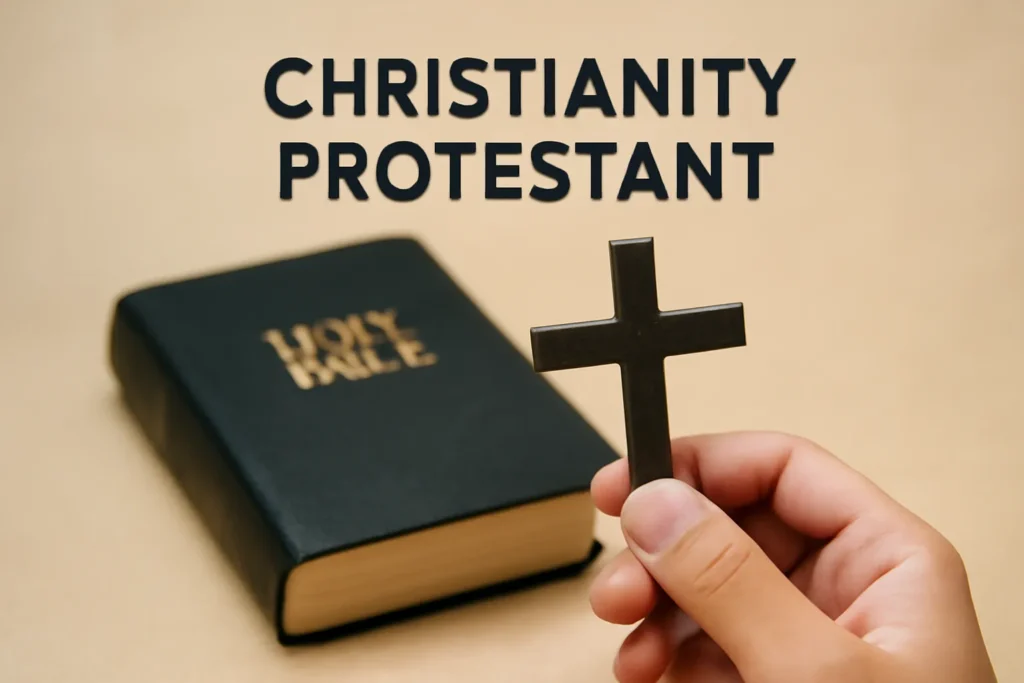
Christianity Protestant: A Guide to Protestant Beliefs and History
The term Protestant Christianity designates a diverse family of Christian faith communities that trace their origins to the Reformation era and to historical movements that sought to reform the Roman Catholic Church and recover what they saw as a more faithful adherence to biblical teaching. In this guide, we explore the core beliefs, the historical development, and the variety of expressions found within the broader umbrella of Protestantism. Although Protestantism encompasses many different traditions, there are shared emphases—most notably a focus on scripture as the ultimate authority, on grace through faith, and on the centrality of a personal relationship with God through Jesus Christ. This article uses the phrases Protestant Christianity, Protestantism, and the Protestant tradition interchangeably to highlight the breadth of belief and practice within this religious family.
Historical Origins and Development
The history of Protestant Christianity begins in the 16th century with the Reformation, a movement that began as a reform effort within the Western Christian Church and eventually produced distinct churches. The motivations and circumstances varied across regions, but the driving questions often centered on the authority of Scripture, the role of church tradition, the sale of indulgences, and the structure of church governance.
The Reformation: Key Figures and Milestones
Two towering figures are commonly highlighted in discussions of Protestant origins:
Martin Luther, whose 95 Theses challenged practices he found inconsistent with biblical teaching and sparked a broader debate about authority, salvation, and church reform.
John Calvin, whose reforms in the Swiss cities and his later work in Geneva helped shape a robust theological framework for the Reformed tradition, including ideas about predestination and covenant theology.
Other important threads in the tapestry of Protestant history include:
The Anglican Reformation, which produced the Church of England (and later the broader Anglican Communion), combining elements of reform with a distinctive liturgical and constitutional identity.
The rise of Lutheran churches, especially in parts of Germany and Scandinavia, which preserved a strong emphasis on justification by faith and the authority of Scripture within a liturgical frame.
The development of Nonconformist and later Baptist and Congregational movements that emphasized believer’s baptism, congregational governance, and local church autonomy.
Core Beliefs and Doctrines
Scripture, Tradition, and the Authority of God’s Word
A central conviction across most strands of Protestant Christianity is sola scriptura: the belief that the Bible is the primary source and norm for Christian faith and practice. While tradition and the historic creeds play a significant role in shaping interpretation and communal life, they do not carry the same binding authority as scripture. This conviction has led to a wide variety of scholarly approaches and interpretive methods, but it also serves as a common anchor for the Protestant family.
In many Protestant communities, the Bible is read and taught in the vernacular language of the people, with an emphasis on accessible interpretation. This democratization of scripture helped foster a culture of personal reading, study, and accountability, while at the same time inviting careful exegesis and responsible preaching.
Justification by Faith and Salvation
A defining doctrine within Protestant confession is justification by faith, often paired with the phrase sola fide (faith alone). This belief holds that a person is declared righteous before God not by human works but by faith in Jesus Christ and by God’s grace. While Protestants disagree on some details of how this works in practice, they generally agree that salvation is a gift from God and received through trust in Christ.
Two Sacraments: Baptism and the Lord’s Supper
In contrast with the traditional Catholic understanding of seven sacraments, most protestant bodies recognize two primary sacraments or ordinances: baptism and the Lord’s Supper (also called the Eucharist or Holy Communion). Protestants typically view these as outward signs of inward grace and as symbolic acts that signify faith, while some streams liken them to means of grace. Within evangelical and mainline traditions, the emphasis and interpretation of these rites can differ, but the two-sacremental model remains a common thread across Protestantism.
Worship, Liturgy, and Church Life
Worship in the Protestant church can range from highly liturgical to purely informal. Some communities preserve a structured order of service with preaching, prayer, and singing drawn from traditional hymns and Psalms, while others prioritize contemporary music, spontaneous prayer, and participatory leadership. A shared emphasis across the spectrum is the centrality of preaching from the Bible, the use of congregational song, and the practice of baptism and the Lord’s Supper as recurring ordinances.
The Lutheran and Reformed traditions often sit side by side in the broader Protestant family, yet they emphasize different theological contours. Lutheran churches tend to stress justification by faith, the authority of Scripture, and a sacramental approach within a liturgical context. The Reformed or Calvinist streams emphasize God’s sovereignty, covenant theology, and a more expansive view of church governance and catechesis. Both influence modern denominational families and contribute to ecumenical dialogue.
Anglican and Episcopalian Traditions
The Anglican tradition represents a historical bridge between Catholic and Protestant identities. It maintains a formal structure, a recognized liturgy (as seen in the Book of Common Prayer), and a breadth of theological voices—from evangelical to high church to charismatic. In various regions, Anglican churches have developed distinct expressions while preserving a shared historical heritage and the authority of Scripture.
Baptist and Congregational Movements
Baptist churches emphasize believer’s baptism by immersion and church autonomy, with a strong tradition of congregational governance and a focus on the local church. The Congregational movement likewise champions local church self-government and a church-minded approach to governance, though it spans a spectrum of theological positions.
Methodist, Holiness, and Wesleyan Traditions
The Methodist and Wesleyan streams grew out of the 18th-century revival led by John and Charles Wesley. They emphasize grace, sanctification, methodical discipline, and a friendly but theologically robust approach to social ethics. Practical piety, evangelical preaching, and a contagious missionary impulse characterize much of this family.
Pentecostal, Charismatic, and Renewal Movements
In the 20th century, the Pentecostal and other renewal movements sparked changes in worship styles, expectations about spiritual gifts, and an emphasis on personal experience of God’s presence. Varieties range from conservative to neo-charismatic expressions, but all share a fascination with the active work of the Holy Spirit in contemporary life.
Protestant Identity Across Regions
Europe, North America, and Beyond
The Protestant family emerged from a European context, but its influence has since spread worldwide. In Europe, historic Protestant churches remain significant players in national identity and cultural life, even as secular trends have reshaped religious practice. In North America, the Protestant presence is diverse, including large evangelical movements, mainline churches, and numerous independent congregations. Globally, the church of the Protestant family is thriving in Africa, Asia, and Latin America, where new churches emphasize mission, education, and community development. The result is a dynamic and evolving network of faith communities with shared roots but varied expressions.
Across different strands of Protestant Christianity, the Bible is read, studied, and applied in daily life. Bible study groups, catechism classes, and sermon series aim to deepen understanding and cultivate spiritual disciplines. Prayer—corporate and private—remains a fundamental practice, with a broad spectrum of styles from liturgical prayer to spontaneous, charismatic intercession.
Community Life and Governance
Governance within Protestant churches can range from episcopal and presbyterian structures to congregational governance. In episcopal systems, authority is vested in bishops as part of a hierarchical framework; in presbyterian models, representative assemblies guide church affairs; in congregational systems, local congregations hold primary decision-making power. Even with institutional differences, Protestant communities commonly emphasize accountability, transparency, and servant leadership.
Education, Mission, and Social Engagement
A persistent feature of Protestant history is an emphasis on education, literacy, and mission. Many Protestant churches sponsor schools, universities, and seminaries, support charitable organizations, and engage in community service. Mission efforts, both local and global, reflect a conviction that the gospel has practical implications for social justice, economic justice, health, and human flourishing.
Contemporary Issues and Debates within Protestantism
Ecumenism and Dialogue
In the modern era, many Protestant groups participate in ecumenical conversations with other Christian families, including Catholics and Orthodox Christians. The aim is to seek common ground on essential Christian beliefs while preserving legitimate differences. These conversations often focus on baptism, the Lord’s Supper, the nature of church leadership, and shared mission in the world.
Gender Roles, Leadership, and Ordination
Debates about women in church leadership and ordination are prominent in several Protestant traditions. Some denominations ordain women to pastoral and episcopal offices, while others uphold complementary or traditional gender roles in church leadership. The conversation continues to evolve as churches reflect on theology, culture, and scripture.
Human sexuality and pastoral care
The Protestant family often engages questions about human sexuality, marriage, and family life with a variety of responses. Many communities emphasize pastoral care, compassionate ministry, and a careful reading of biblical teachings in light of contemporary circumstances.
Social Justice, Poverty, and Global Responsibility
A number of Protestant groups emphasize social justice and humanitarian work, linking faith to public policy and community improvement. This includes advocacy for the poor, health care access, education, and sustainable development, reflecting a belief that faith should translate into compassionate action in the world.
Common Misconceptions and Clarifications
Misconception: Protestant churches reject all tradition
Protestant Christianity often maintains that scripture is the highest authority, but this does not mean a rejection of all tradition. Many Protestants affirm a robust role for historic creeds, confessions, and church practices—provided they align with biblical teaching and serve the church’s mission.
Misconception: All Protestants believe the same thing
The Protestant family includes a broad spectrum of beliefs and practices. While common threads—such as justification by faith, the authority of Scripture, and the two sacraments—bind many groups, there are meaningful differences in baptismal practice, church governance, emphases in worship, and social ethics.
Protestants are not a single institution; they represent a diverse array of denominations, networks, and local churches. This diversity is a strength in many opinions, fostering a rich ecosystem of worship styles, theological emphases, and community life, all rooted in the same historical memory of reform and renewal.
A Quick Guide to Key Terms and People
Protestantism — the broad movement arising from the Reformation and its ongoing expression in many churches.
Reformation — the sixteenth-century movement that aimed to reform the Western Church and led to the emergence of Protestant churches.
sola scriptura — Scripture alone as the ultimate authority for faith and practice.
sola fide — faith alone as the means of justification.
Baptism and Lord’s Supper — the two primary Protestant sacraments/ordinances.
Lutheran and Reformed — major streams within the Protestant tradition described by their historical and theological emphases.
Anglican — a historic tradition with a distinctive blend of Catholic and Protestant features.
Baptist — emphasizes believer’s baptism and church autonomy.
Methodist — focuses on grace, sanctification, and disciplined spiritual life.
Pentecostal — emphasizes the ongoing work and gifts of the Holy Spirit.
Conclusion: The Protestant Spectrum and Its Significance
The story of Protestant Christianity is a story of reform, renewal, and the ongoing search for faithful, biblically grounded living in diverse cultures. While Protestantism has endured critiques and faced challenges—such as debates over doctrinal precision, church unity, and social engagement—it remains a powerful expression of Christian faith, identity, and mission across the globe. The variations within the Protestant tradition reflect a deep historical impulse to recover the gospel in fresh ways, respond to new contexts, and invite believers into a community where the Scriptures are read, proclaimed, and lived out in daily life. Whether one identifies with a historic denomination, a local church, or a global Protestant network, the enduring call is to know Christ, study the Bible, and serve the world with love and integrity.
Frequently Asked Questions
What distinguishes Protestant Christianity from Catholicism?
The primary distinctions typically include the authority of Scripture over church tradition, the belief in justification by faith rather than by works, and the practice of two primary sacraments. Protestants generally emphasize personal faith and the priesthood of all believers, whereas Catholic tradition emphasizes apostolic succession and sacramental grace administered through a hierarchical church.
Are all Protestant churches the same?
No. The Protestant family encompasses a broad range of churches with differing beliefs, worship styles, and governance structures. Some are highly liturgical, others very informal; some practice infant baptism, others practice believers’ baptism; all share a common heritage rooted in reform and biblical authority.
How has Protestantism influenced modern society?
Protestantism has contributed to developments in education, politics, human rights, and social reform in many countries. The emphasis on individual conscience, literacy, and the value of preaching and civic responsibility has intersected with cultural, educational, and political life in significant ways.
What is the role of the Bible in Protestant life?
For many Protestants, the Bible is the ultimate authority for belief and behavior. It is central to worship, preaching, catechesis, and private devotion. The relationship between Scripture and faith is dynamic, allowing for thoughtful interpretation, responsible scholarship, and ongoing spiritual formation.
In sum, the broad landscape of Protestant Christianity offers a rich tapestry of beliefs, communities, and practices. From the historical roots traced to the Reformation to the vibrant diversity of today, the Protestant tradition continues to shape how millions of believers understand God, neighbor, and the world they inhabit. This guide aimed to provide a comprehensive overview that acknowledges both the unity and the variety within the Protestant family, while underscoring the enduring commitments to Scripture, grace, and mission that have defined Protestantism through the centuries.




Leave a Reply