Overview: Catholic vs Christian — What the Terms Mean
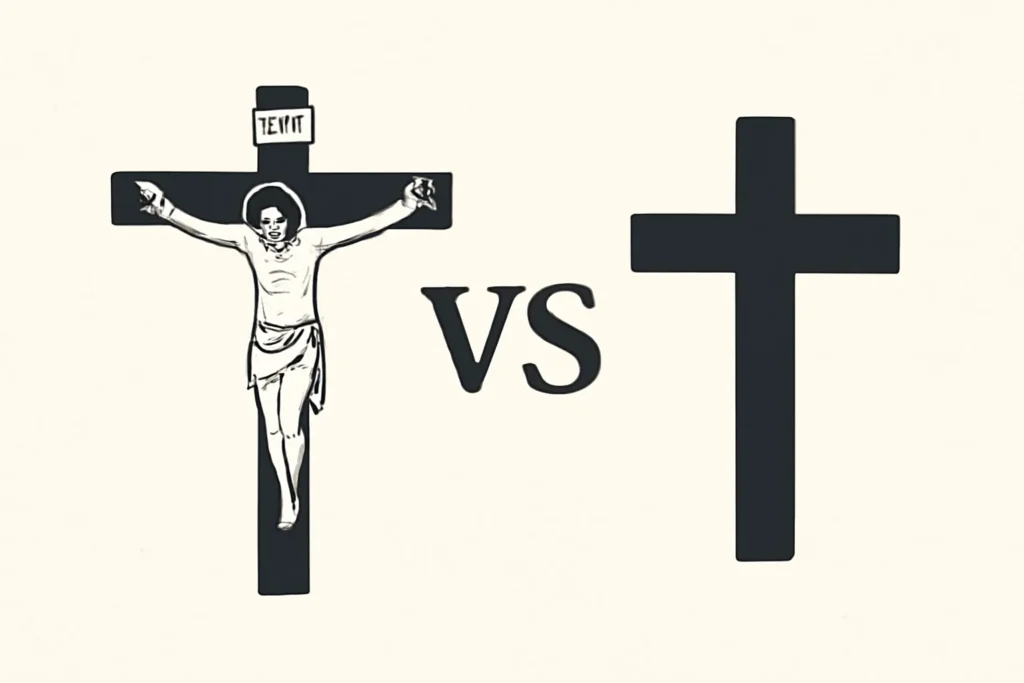
The phrases Catholic and Christian are often used in everyday conversation, but they point to different scopes of belief and tradition. In general usage, the Catholic Church refers to a specific, historic, and globally organized tradition within Christianity that traces its leadership, sacraments, and doctrinal development to the apostolic era and the city of Rome. By contrast, the Christian faith is a broad family of beliefs that includes a wide variety of denominations and communities, from Ancient Eastern churches to numerous Protestant groups, as well as independent congregations. This article traces the key distinctions in beliefs, history, and practices between Catholicism and the wider Christian landscape, while also highlighting the important areas of agreement.
Throughout this discussion, you will encounter terms like Roman Catholic, Catholicism, the Magisterium, Scripture and Tradition, and the papacy. These ideas are central to understanding how Catholics differ from many other Christians, yet they also point to a shared foundation: belief in Jesus Christ as Lord and Savior, and a reverence for the Bible as sacred Scripture within a broader interpretive framework.
Historical Roots and Development
The history of the Catholic Church is inseparably linked to the broader story of early Christianity. In the first centuries after Christ, believers formed a diverse but cohesive community centered on apostolic teaching, baptism, and the celebration of the Eucharist. Over time, a distinctive set of structures, rituals, and theological emphases emerged that would define the Catholic tradition.
Early Foundations and Shared Ancestry
Both catholic and non-catholic Christians trace their roots to the same first-century church. The earliest followers of Jesus gathered in local assemblies, formed communities across the Mediterranean world, and handed on a shared set of beliefs about the Trinity, Jesus’ resurrection, and the authority of the apostles. A central feature of this era was the practice of baptism and the celebration of the Eucharist, which remained a unifying practice across different Christian communities.
The Great Schism and the Emergence of distinct Traditions
By the 11th century, theological, cultural, and political differences culminated in the Great Schism between the Western Church (which would become the Roman Catholic Church) and the Eastern Church (which would become the Eastern Orthodox Church). The division introduced separate hierarchies, liturgical traditions, and canonical books in some cases, laying the groundwork for the later framing of Catholicism as a distinct tradition within Christianity.
Reformation and Catholic Reassertion
The 16th century brought the Protestant Reformation, a time of sweeping reform movements across Northern Europe that challenged certain Catholic doctrines and practices. The Catholic response, crystallized in the Council of Trent (1545–1563) and later reforms, reaffirmed foundational doctrines and clarified the Catholic understanding of Scripture and Tradition, grace, and the sacraments. The period that followed—often called the Counter-Reformation—led to new religious, cultural, and political dynamics that shaped Catholic identity for centuries.
Modern Developments and Vatican II
In the 20th century, the Second Vatican Council (Vatican II) represented a transformative moment for the Catholic Church. This ecumenical council encouraged greater engagement with the modern world, promoted liturgical renewal, and opened new avenues for ecumenical dialogue with other Christian traditions. The changes initiated by Vatican II helped many Catholics relate to Scripture, liturgy, and the church’s mission in more contemporary contexts, while preserving core Catholic identity.
When discussing Catholic history versus the broader Christian story, it is important to distinguish events that are specific to the Catholic tradition (the papal office, the Magisterium’s doctrinal role, canonical scripture with the Deuterocanonical books, Roman liturgical rites) from events and movements that involve Christians across many traditions (the early ecumenical councils, the spread of the gospel, the emergence of Protestant denominations, and contemporary interchurch dialogue).
Core Beliefs: Doctrines and Theologies
At the center of any comparison between Catholicism and other Christian expressions is the question of what is believed about God, Jesus, salvation, and revelation. In the Catholic tradition, several doctrines are considered definitive and are taught as binding for Catholics worldwide. In the broader Christian family, beliefs can vary widely, but there are common confessions around the Trinity, the person and work of Christ, and the authority of the Bible.
The Nature of God, the Trinity, and the Person of Christ
Catholics affirm the classic Christian confession of one God in three persons—the Trinity. They hold that Jesus Christ is fully divine and fully human, united in a single person, and that he is the decisive agent of salvation for humanity. Within Catholic theology, the Incarnation, the Atonement, and the Resurrection are foundational realities that shape prayer, worship, and moral life.
Scripture, Tradition, and the Magisterium
A central Catholic claim is that God reveals himself in two interlocking sources: Sacred Scripture and Sacred Tradition. These are not opposed but are interpreted together under the guidance of the Magisterium, the teaching authority of the Church. Catholics believe that the Magisterium, exercised by the Pope and the bishops in communion with him, has a unique role in safeguarding the correct interpretation of revelation across time.
By contrast, many other Christian groups emphasize the principle of Scripture alone (sola scriptura) or place less emphasis on tradition as an independent authority. Within Orthodox and some Protestant traditions, there is a different balance between Scripture, tradition, and ecclesial authority. The Catholic approach to authority is distinctive and has shaped Catholic education, catechesis, and pastoral life for centuries.
The Sacraments and Their Significance
Catholics hold that there are seven sacraments—Baptism, Confirmation, the Eucharist, Reconciliation (Confession), Anointing of the Sick, Matrimony, and Holy Orders. These sacred rites are considered outward signs, through which the grace of God is imparted and nourishes the life of the believer. The Eucharist, in particular, is taught as the Real Presence of Christ under the appearance of bread and wine, a central act of worship in Catholic life.
Many other Christian communities recognize some form of baptism and the Lord’s Supper, but the number, understanding, and administration of sacraments vary. For example, a typical Protestant church may observe two ordinances (Baptism and Communion) and may interpret them symbolically or memorially rather than as a conduit of grace in the same way Catholics understand them. The Orthodox Church, while sharing the belief in the real presence of Christ in the Eucharist and the seven sacraments, usually emphasizes a different historical development and liturgical expression.
Salvation, Grace, and Justification
Catholic doctrine teaches that salvation is by grace, received through faith and nourished by the sacraments, good works, and cooperation with divine grace. The Church teaches that merit is possible in cooperation with grace, a perspective rooted in Church tradition and the Council of Trent formulations. This stands in a nuanced way in contrast to the Protestant emphasis on justification by faith alone (sola fide) and the priority of faith as the channel of salvation.
In the wider Christian world, views on justification and sanctification range from Reformational perspectives that stress faith as the sole means of justification to more sacramental frameworks that emphasize grace working through the church’s means of grace. Catholic teaching is often described as a synthesis of faith and works within the pathway of grace, while many other Christian traditions emphasize different formulations of that relationship.
Mary and the Communion of Saints
A distinctive feature of Catholic piety is the honored place given to Mary, mother of Jesus, as well as to the saints. Catholics honor Mary through prayers, devotions, and intercessory requests, while maintaining that worship belongs to God alone. Veneration of Mary and the saints is not identical to the worship offered to God; rather, it is a form of intercession and example. The practice is shared in varying degrees with some Eastern Christian traditions, though it is less emphasized or differently framed in many Protestant communities.
Liturgy and Sacred Time
Catholic belief about worship centers on a liturgical calendar and a rhythm of prayer that tracks seasons like Advent, Christmas, Lent, and Easter. The Mass is the central act of worship, structured around Scripture readings, prayers, and the Eucharist. This liturgical life is designed to sanctify the whole person and shape a Christian life in community.
In comparison, many Christian groups outside Catholicism emphasize varied forms of worship—some with a highly liturgical pattern (as in many Anglican and some Lutheran churches), others with more spontaneous or pastor-led forms of worship (common in many Baptist and charismatic churches). The contrast here is not simply “formality vs. spontaneity” but rather how liturgy, sacraments, and communal prayer shape doctrine and daily living.
Authority and Tradition
Authority in matters of belief and practice is central to understanding how Catholics differ from other Christians. The Catholic tradition claims a uniquely organized and continuing authority that is rooted in the apostolic succession and the teaching office of the Church.
papacy, episcopal governance, and Magisterial authority
The Catholic papacy designates the Bishop of Rome as the successor of Peter and the head of the global church. The pope presides over the College of Bishops, and together they exercise the Magisterium—the official teaching authority that interprets both Sacred Scripture and Sacred Tradition. This structure is complemented by a hierarchy of bishops, priests, and deacons, whose ministry is seen as extending the apostolic witness into every generation.
Scripture and Tradition in Catholic Life
Catholics hold that Scripture and Tradition are two streams that flow from the same source of divine revelation. The Church maintains that biblical authority is safeguarded by the Magisterium, ensuring unity and continuity across time and culture. This perspective has shaped Catholic catechesis, education, canon law, and pastoral practice.
While the Catholic Church maintains doctrinal and sacramental distinctives, it has engaged in ongoing ecumenical dialogue with other Christian traditions since the 20th century. This dialogue seeks common ground—such as shared creeds, moral teachings, and humanitarian aims—while also addressing differences in sacramental theology, ecclesial authority, and liturgical practice. The result has been a growing but complex tapestry of relationships that fosters mutual understanding and collaboration where possible.
Sacraments, Worship, and Liturgy
A distinctive and highly visible difference between the Catholic tradition and many other Christian communities lies in the sacraments and the structure of worship. These elements shape how believers encounter grace, form community, and integrate faith into daily life.
Seven Sacraments in Catholic Practice
Baptism – entry into the faith and incorporation into Christ’s body.
Confirmation – deepening of baptismal grace and joining the adult life of the church.
Eucharist – reception of the body and blood of Christ; viewed as theReal Presence.
Reconciliation (Confession) – forgiveness of sins through the ministry of the priest.
Anointing of the Sick – spiritual and, when appropriate, physical healing for the suffering.
Matrimony – the covenantal union of spouses blessed by the church.
Holy Orders – ordination of bishops, priests, and deacons to ministry.
In contrast, many Christian traditions outside the Catholic Church recognize fewer sacraments or define them differently. For example, the common Protestant practice typically includes Baptism and the Lord’s Supper as ordinances or memorials rather than sacramental channels of grace in the same sense as Catholic teaching. The Orthodox Church, while sharing the belief in seven sacraments, has its own distinct theology of the Eucharist, liturgical language, and ecclesial governance that reflects its separate historical development.
Worship as a Central Encounter with God
The Catholic liturgy is a public, structured act of worship that emphasizes reverence, ritual, and the sacred calendar. The Mass is both a sacramental encounter and a narrative that re-presents the paschal mystery of Christ. Catholics engage in rich symbolism, incense, liturgical art, and a cadence of prayers that connect personal devotion with communal worship.
Liturgical Diversity Within a Unified Tradition
Although the Catholic Church presents a unified doctrine, there is also geographical and cultural diversity in liturgical practice. Latin Rite Catholics use the Roman Rite; many Eastern Catholic Churches preserve Eastern liturgical traditions in communion with Rome. These variations reflect a unity-with-diversity principle: the essential beliefs remain consistent, while the outward expressions can differ to honor local cultures and ancient rites.
How a church is governed, how leadership is organized, and how communities worship together are tangible markers that distinguish Catholicism from other Christian expressions. The Catholic Church presents a highly organized, hierarchical, sacramental model that is global in scope.
Global Hierarchy and Local Parishes
The Catholic Church is a worldwide communion of dioceses and parishes. Each diocese is led by a bishop, and local parishes serve as the ordinary places of worship and community life for Catholics in a given community. The pope sits at the apex of this hierarchy as the Bishop of Rome and the leader of the whole church, with a role rooted in tradition, sacramental authority, and doctrinal stewardship.
The Role of Clergy and Laity
In Catholic life, ordained ministers—bishops, priests, and deacons—carry out the sacraments, teach, and shepherd the faithful. The laity participate in many ways: through liturgical roles, catechesis, charitable works, and the governance of parishes through councils and lay movements. This cooperative dynamic reflects a priestly, prophetic, and kingly calling for all baptized Christians, with a distinctive emphasis on sacramental participation.
Ecumenical and Local Communities
Catholic parishes often organize ministries focused on education, youth, family life, healthcare, and social justice. The global nature of the Catholic Church means that local communities can bring international resources to bear on local needs, while maintaining continuity with universal doctrine and practice.
The veneration of Mary and the saints is a prominent feature of Catholic life and a point of difference with many other Christian groups. This section clarifies how Catholics understand intercession, prayer, and devotion within a framework of reverence rather than worship directed toward God alone.
Mary as Mother of the Church
Catholics honor Mary as the mother of Jesus and as a model of faith and obedience. Marian devotion includes prayers and feasts, and while Mary is highly revered, the worship of God remains central. The line between veneration and worship is carefully maintained in Catholic teaching.
Intercession and the Communion of Saints
The Catholic tradition teaches that the saints, including Mary, can intercede for believers in prayer. This does not replace direct prayer to God; rather, it is understood as a powerful form of fellowship in the one Body of Christ. Other Christian groups may reject intercessory prayer to saints or Mary, preferring direct prayer to Jesus or to God the Father.
Devotions and Public Practice
Public devotions, such as the Rosary, novenas, and liturgical feast days, are common in Catholic life. These practices provide structure for devotion and sanctity of daily life. Orthodox Christians sometimes share similar devotional patterns, while many Protestant communities emphasize different forms of prayer and meditation that may be less liturgical in character.
Ecclesial Unity, Schisms, and Ecumenism
The Catholic Church has a long history of ecumenical engagement—efforts to foster unity among Christians while preserving essential doctrinal commitments. Understanding the history of divisions within Christianity helps explain why Catholic identity is distinct, yet within reach of dialogue and cooperation with other Christian communities.
The Great Schism and the Orthodox Communion
The split between East and West in 1054 is a watershed event in Christian history. The Roman Catholic Church and the Eastern Orthodox Church each developed unique liturgical, theological, and juridical features. While both celebrate baptism and share some creedal foundations, differences in ecclesiology, sacramental theology, and papal authority contributed to the separation.
The Reformation and Aftermath
The Protestant Reformation placed a spectrum of Christian groups in conversation and sometimes in conflict with the Catholic Church. Over centuries, many elements of Protestant and Catholic thought have converged in some areas (moral and social teaching, humanitarian work) and diverged in others (scripture authority, sacramental theology, church governance).
Pope John XXIII and the participants in Vatican II opened doors to dialogue, shared prayer, and mutual learning. Modern ecumenism emphasizes common witness in areas such as social justice, charity, and the proclamation of the gospel, even as doctrinal differences remain. This ecumenical spirit reflects a commitment to unity without eroding essential convictions.
Geography, Demographics, and Global Influence
The Catholic Church is the largest single Christian church by number of adherents, with a presence on every inhabited continent. Its demographic distribution is diverse, with large populations in Europe, the Americas, Africa, and parts of Asia. The Catholic Church’s global reach shapes its educational networks, charitable institutions, and influence on public life.
Geographic Concentrations
Latin America and parts of the Caribbean and North America have historically large Catholic populations.
Europe includes both historic Catholic strongholds and regions where Catholic communities exist alongside other Christian traditions.
Africa and parts of Asia have growing Catholic communities, often emphasized in mission and social ministry.
Global Initiatives and Social Teaching
Catholic social teaching informs a wide range of global initiatives—education, healthcare, poverty alleviation, human rights, and environmental stewardship. The Church’s influence in education and social welfare has created networks of schools, universities, hospitals, and charitable organizations worldwide.
The Christian Majority and Diversity Worldwide
When we speak of the Christian world, we refer to a population that includes Catholics, Protestants, Orthodox, Anglicans, and many other communities. Each tradition contributes to a shared cultural and spiritual landscape. The {@@} diversity within Christianity is a strength that allows Christians to learn from one another while maintaining distinctive confessional identities.
Similarities That Bind Catholic and Christian Identities
Despite the visible differences, Catholics and other Christians share foundational beliefs and practices that constitute a common heritage. Recognizing these commonalities helps in constructive dialogue and mutual respect.
Monotheism and belief in the same central God who revealed himself through Jesus Christ.
Belief in the Bible as a sacred text, though Catholics also hold to Sacred Tradition and the Magisterial interpretation.
Creedal confessions about the Trinity, the incarnation, the crucifixion, and the resurrection.
Baptism as the entry into the Christian life and a shared sign of faith, though the understanding of its effects varies between traditions.
Prayer, worship, and moral living as expressions of discipleship and love for God and neighbor.
Mission and service to the poor, the sick, and the marginalized as a common Christian duty.
In daily life, both Catholic and other Christian communities often collaborate in charitable work, youth ministry, and interchurch dialogue. The recognition of shared values helps build bridges and fosters a spirit of mutual respect, especially in multi-faith and multi-cultural societies.
Common Misconceptions and Clarifications
Misunderstandings about Catholicism and Christianity can arise from oversimplifications or unfamiliar vocabulary. Here are several common misconceptions, clarified:
Misconception: Catholics worship the pope. Clarification: Catholics do not worship the pope; they reverence the papal office as a sign of unity and moral leadership. Worship is reserved for God alone.
Misconception: All Christians reject Mary and the saints. Clarification: Catholics venerate Mary and the saints as holy people who intercede in prayer, while many other denominations emphasize direct prayer to God through Jesus.
Misconception: Catholics only rely on tradition, not Scripture. Clarification: Catholics affirm Scripture as inspired and authoritative, but in harmony with Sacred Tradition and the Magisterium’s interpretation.
Misconception: The Catholic Church has always been monolithic and unchanging. Clarification: Catholic teaching has developed over centuries, especially in response to new contexts and ecumenical dialogue, while preserving core beliefs.
Misconception: All Christians have identical beliefs about sacraments. Clarification: Views on sacraments vary widely. Catholics hold seven sacramental rites as channels of grace; many Protestant groups recognize fewer or interpret the rites differently.
By distinguishing what is unique to Catholicism from what is shared across the Christian family, readers can better understand how Catholics relate to other believers and how diverse Christian expression can be while maintaining a common faith in Christ.
Conclusion: Understanding the Distinctions Without Division
The relationship between Catholic and Christian identities is one of both continuity and distinction. The Catholic Church embodies a particular interpretation of Christian faith shaped by a long historical arc, a distinctive sacramental life, and a structured teaching authority. At the same time, Catholics share with the broader Christian family the core conviction that Jesus Christ is the Son of God, that salvation comes through him, and that faith must be lived in love, mercy, and service.
For readers exploring these topics, the most helpful approach is to study both the unity and the diversity within Christianity. By distinguishing the Catholic tradition from other Christian expressions while also recognizing their shared roots, one can gain a richer, more nuanced understanding of beliefs, history, and practices. This awareness is not merely academic; it can inform dialogue, friendships, and collaborations that honor both differences and common ground.
In the end, whether one identifies primarily as a Catholic or as part of the wider Christian family, the life of faith invites ongoing learning, humility, and solidarity with all who seek to follow Christ in love and truth.





Leave a Reply