Creation Children's Bible Story: A Kid-Friendly Tale Explaining How God Created the World
Creation Children's Bible Story: A Kid-Friendly Tale Explaining How God Created the World
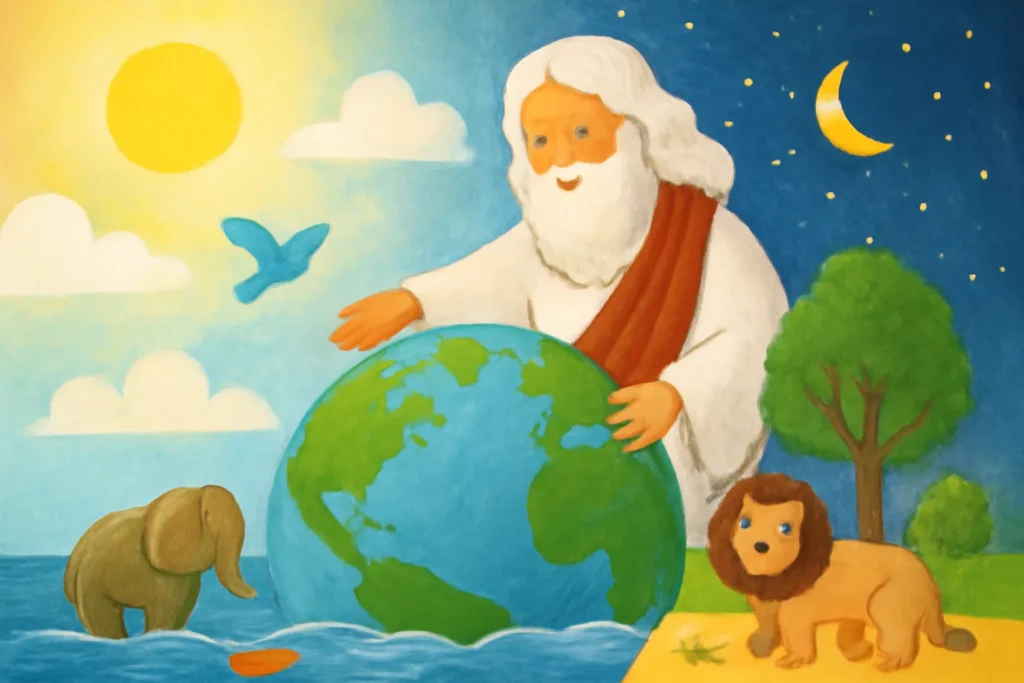
Welcome to a kid-friendly exploration of the Creation story. This article presents a gentle, educational retelling of how God created the world and everything in it. It uses simple language, vivid imagery, and thoughtful activities to help children understand the big ideas behind the Creation narrative: order, goodness, care for nature, and the special place of human beings in God’s plan. We’ll use variations of the phrase Creation story for kids, a kid-friendly creation tale, and a Genesis-style creation narrative for children to build a rich, semantic understanding of this ancient story.
This article offers a gentle doorway into the biblical account of the world’s beginning. It frames the Creation story as a journey—a careful sequence in which God brings order out of chaos, fills the void with light, sky, land, and life, and creates people to live in relationship with Him. By presenting the story in kid-friendly language, we invite children to notice not only what happened on each day, but also the character of God who planned, spoke, and saw that it was good. In this kid-friendly retelling, the Creator’s voice is calm, deliberate, and full of purpose, helping children grasp themes such as wonder, care for creation, responsibility, and humility before God.
Why a Kid-Friendly Creation Tale?
Many families and classrooms choose a creation story for kids because it lays groundwork for values that last a lifetime. A kid-friendly creation narrative helps children:
Understand the concept of beginnings and how the world came to be.
See the beauty and order of creation as God’s design rather than a distant myth.
Learn about responsibility for the natural world as part of their faith journey.
Explore the idea of rest as part of a healthy rhythm in life, reflected in the Creator’s seventh day.
The Creation Week: A Kid-Friendly Guide
In many traditions, the Creation story unfolds over a span of seven days. This section presents a clear, kid-friendly breakdown of each day, including what was created and what children can learn from it. For each day, we offer a short description along with a practice idea or reflection prompt to help families and teachers turn listening into living faith.
Day 1 — Light and Darkness
On the first day, God spoke and brought forth light to separate it from darkness. This established a rhythm of day and night, a pattern that helps creatures manage time and rest. A child-friendly takeaway is the idea that God brings light into darkness and that every new day is a gift. In many stories for kids, this day is about awakening, clarity, and hope.
What children can learn: Courage to step into light, the importance of patterns and rest, and the sense that God is present from the start.
Activity idea: Create a simple “day and night” craft using a paper plate divided into light and dark halves. Use stickers or crayons to illustrate the sun on the light side and stars or a moon on the dark side.
On the second day, God separated the waters to form the sky, making space for weather, clouds, and birds to fly above the earth. This day teaches children about separation and order—how different parts of creation fit together to make a whole.
What children can learn: The world has boundaries that help creatures thrive; the sky and sea are parts of a grand design. Kids can notice the beauty of rain, wind, and clouds as reminders of God’s care.
Activity idea: Do a weather watching chart for a week. Track sunny days, rainy days, and cloud shapes. Talk about how weather shows changes in creation and how God made the sky to hold the rain and birds.
Day 3 — Lands, Rivers, and Plants
On Day 3, the earth gathered into dry land, seas were defined, and plants appeared. This marks a turning point from emptiness to a living landscape full of color and fragrance. The plants invited life and food for animals and people, beginning a cascade of interconnected relationships we see throughout creation.
What children can learn: The world is full of resources intended to sustain life. Caring for plants and animals helps us appreciate God’s abundance.
Activity idea: Plant a small garden or potted herbs. Talk about how plants give us air, shade, and food, and how it feels to tend living things with care.
Day 4 — Sun, Moon, and Stars
To light the day and mark the seasons, God created the sun, moon, and stars. These heavenly bodies help us tell time, navigate, and celebrate annual rhythms. This day emphasizes order in the cosmos and the beauty of design.
What children can learn: Timekeeping, seasons, and cosmic wonder point to the Creator’s intentional plan. It’s a chance to talk about awe and gratitude for the universe.
Activity idea: Make a night-sky map on the ceiling using glow-in-the-dark stars or a printable star chart. Count the days as you observe the night sky together.
Day 5 — Sea Creatures and Birds
On Day 5, life fills the waters and the air. God created a great variety of fish, sea creatures, and birds. Each creature has its place, its own song, and its own role in the living world.
What children can learn: Diversity is a gift. Different creatures contribute to the balance of life on earth, and humans are invited to appreciate and protect this diversity.
Activity idea: Create a “creature safari” poster with drawings or cut-outs of different animals. Discuss how each one helps the world in its own way.
Day 6 — Animals and Humans
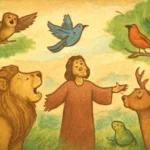
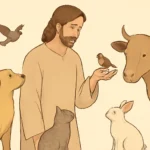
Day 6 brings the most special development: land animals and, finally, humans. People are made in a unique way with the capacity for relationship, creativity, and responsibility. The story emphasizes that humans have a special place in creation, designed to care for the earth and to live in harmony with others and with God.
What children can learn: We are part of a larger family of living beings; we have the opportunity to exercise stewardship, kindness, and cooperation.
Activity idea: Build a small “eco-crew” map of your home or classroom, showing how people, animals, plants, and water connect. Discuss ways to care for resources responsibly.
Day 7 — Rest
God completes the Creation week by resting on the seventh day, setting an example of balance and sabbath-keeping. Rest is not simply inactivity; it’s a time to reflect, enjoy, and be renewed. This day introduces the rhythm of work and rest—a rhythm many families observe today in different, meaningful ways.
What children can learn: Rest is purposeful and good. It helps families pause from busyness, pray or reflect, and appreciate what has been made.
Activity idea: Have a family “rest day” routine with a quiet activity like reading a story together, a nature walk, or listening to music. Discuss how rest can be as important as activity for well-being.
Key Themes in the Creation Story for Children
Retellings of the Creation narrative for kids often highlight several important themes. Here are a few that frequently appear in kid-friendly creation tales and why they matter:
Order and goodness: The world comes into being in an orderly way, and each step builds toward something good.
God’s intentional design: Creation is thoughtful and purposeful, not accidental.
Stewardship: Humans are entrusted with caring for the earth and its creatures.
Relationship: God’s plan includes a relationship with people and a community that lives together in harmony.
Rhythm of work and rest: The week’s structure teaches balance and Sabbath-like rest as a gift.
Character-Building Lessons from the Creation Story
A well-crafted creation tale for children can nourish values and character. Here are some lesson prompts drawn from the Creation narrative to guide conversations with kids:
Gratitude: Encourage giving thanks for light, air, food, water, and relationships.
Wonder: Nurture curiosity about the natural world—everything from tiny seeds to vast oceans.
Responsibility: Teach how small choices—watering plants, picking up litter, conserving water—matter.
Kinder communities: Explore how different creatures and people fit together like parts of a big family.
Peace and rest: Embrace rest as a positive, restorative practice for individuals and families.
Engaging Activities Linked to the Creation Story
To translate the creation story for kids into hands-on learning, consider a mix of crafts, songs, questions, and family projects. Below are activity ideas that align with the seven days of creation and the themes described above.
Day-by-Day crafts: Create a seven-day banner or a flipbook that illustrates each day with colors and icons (light/dark for Day 1, sky and water for Day 2, plants and land for Day 3, sun/moon/stars for Day 4, birds and fish for Day 5, animals/humans for Day 6, rest symbols for Day 7).
Field journal: Take a nature walk and record observations. Ask questions like “What do you notice today that reminds you of the Creation story for kids?”
Storytime with a twist: Read a kid-friendly Creation tale and invite children to rewrite a paragraph in their own words, preserving the sense of wonder and responsibility.
Song and rhythm: Learn a simple song about the creation week, emphasizing the cadence of days and the idea of rest. Music helps memorization and engagement for young listeners.
Stewardship project: Start a small conservation project, such as a recycling plan, a seed-planting activity, or a habitat for insects, to practice caring for creation.
Questions and Answers: Clarifying the Creation Story for Children
Parents, teachers, and caregivers often have questions when sharing the Creation narrative with kids. Here are some commonly asked questions along with concise, child-friendly answers that stay true to the spirit of the story while remaining accessible:
Why did God create the world?
God created the world out of love and to share life with creatures. The world is a sign of God’s care, wisdom, and power, inviting us to live in relationship with Him and with each other.
What does “rest” on the seventh day mean for kids?
Rest is a time to pause, enjoy God’s gifts, and recharge. It isn’t just about being quiet; it’s about returning to our center and valuing the people and creation around us.
Are there many interpretations of creation stories?
Different cultures have their own creation stories. A kid-friendly creation tale for children focuses on universal ideas like wonder, responsibility, and belonging while honoring the tradition it comes from.
Glossary of Kid-Friendly Terms
Here are some simple definitions to help children understand key ideas in the Creation narrative:
Creation: The act of bringing something into existence.
Genesis: The first book of the Bible that tells the Creation story.
Light and Darkness: The first division God made to separate day from night.
Rest: A time to stop work and enjoy what God has made.
Stewardship: Caring for the world and its resources responsibly.
Humans: People created by God to live in relationships and care for creation.
Variations of a Creation Story for Children
Across cultures and Christian traditions, there are many gentle, age-appropriate ways to present a creation story for kids. Here are some variations you might encounter or adapt in your classroom or family setting:
Storybook retellings that use simple language, bright illustrations, and repeated phrases to reinforce memory and engagement.
Interactive storytelling where children act out parts of the creation days, use props, or build a “creation wall” with sequential visuals.
Song-based versions that incorporate mnemonic rhymes, helping children remember the order of creation and the themes of each day.
Art-centric retellings that invite kids to express each day of creation through color, texture, collage, or sculpture.
Incorporating the Creation Story into Teaching Plans
Educators and parents can integrate the Creation narrative into broader learning plans. Below are practical approaches that align with a kid-friendly creation tale and deepen comprehension:
Cross-curricular ties: Link the seven days to science topics (biology, astronomy, ecology) while maintaining the story’s narrative frame.
Discussion prompts: Use open-ended questions to invite kids to reflect on what it means that God created the world with intention and care.
Family rituals: Establish weekly rhythms—work, play, worship, and rest—that echo the Creation Week’s cadence.
Inclusive language: When presenting for diverse audiences, maintain respect for different beliefs while highlighting universal values such as stewardship and compassion.
A Kid-Friendly Verdict: Why the Creation Story Matters
At its core, a creation story for children is more than a sequence of days. It is an invitation to see the world as a gift and to participate in a story larger than oneself. By presenting the Creation narrative with warmth, clarity, and practical application, adults can help children grow into thoughtful, curious, and compassionate stewards of all life. The story teaches that life has purpose, that every creature has a place, and that human beings bear responsibility to care for the earth and one another. It also points toward gratitude, wonder, and a durable sense of rest—values that can shape a family’s daily rhythm and a child’s lifelong faith journey.
Final Reflections: Keeping the Creation Narrative Alive
To keep the Creation Children's Bible Story vibrant in homes and classrooms, consider regular, light-touch touchpoints. Short daily or weekly moments—like noticing something beautiful in nature, telling a brief gratitude prayer, or sharing a favorite creation-themed craft—help embed the story’s messages. When kids connect the tale to their daily lives—their plants, pets, chores, and friendships—the Creation story becomes not just something they hear, but something they live. In this way, the kid-friendly creation tale remains an enduring resource for faith formation, moral development, and a deeper appreciation for the world God made.





Leave a Reply