Difference Between Temptation and Sin: A Clear Guide
Understanding Temptation
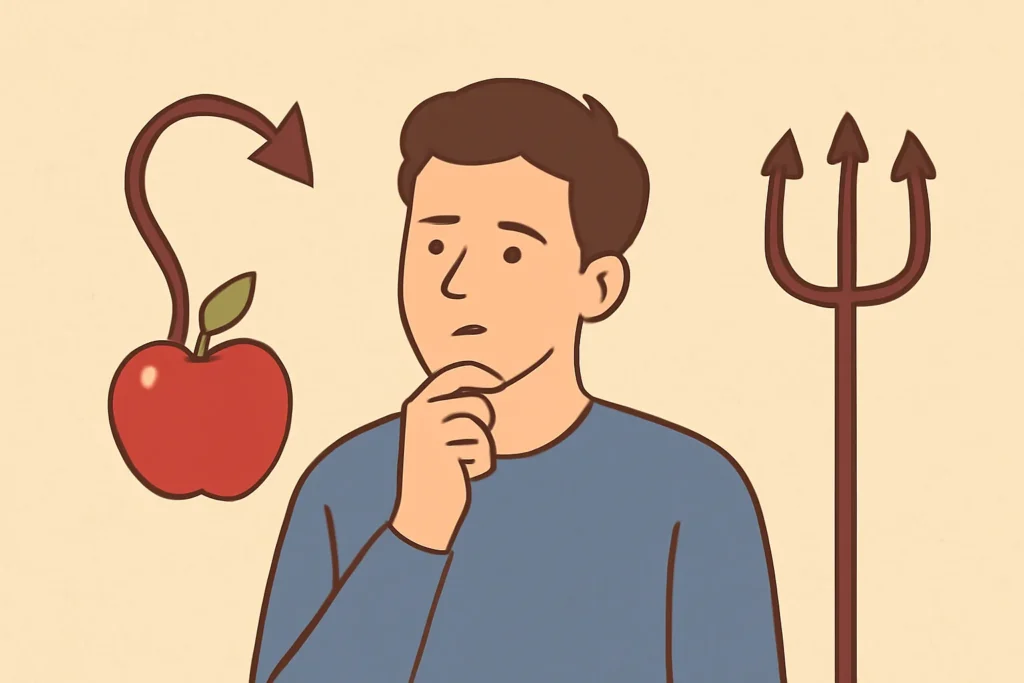
Temptation is a call to consider or pursue something that is attractive but potentially harmful or wrong. It often comes in the form of a suggestion, a stirring, or a whisper of desire that makes a particular action seem appealing. Importantly, temptation is not a verdict about a person’s character; it is an event or an invitation that happens in the mind or in the environment. In this sense, temptation is a neutral or conditional phenomenon that tests a person’s will, values, and judgment.
To grasp the difference between temptation and sin, it helps to distinguish between the source of the impulse and the response to it. Temptation might arise from internal factors—like stress, fatigue, longing, or a past habit—or from external influences—like media, peer pressure, or a provocative situation. The crucial question is not whether temptation exists, but what a person does with it. The same impulse may be resisted, redirected, or examined, or it may be embraced in a way that leads to harm. In other words, temptation challenges a person to exercise integrity, but it does not automatically define the outcome.
What temptation is not
It is not automatic guilt for having a thought or feeling. Thoughts themselves are not sins unless they are joined to deliberate, harmful actions.
It is not final judgment on a person’s identity. Temptation can be a temporary burden that can be overcome through practice and support.
It is not universal condemnation of ordinary human weakness. People often face temptations that are common and normal, yet manageable with wisdom.
How temptation shows up in daily life
Temptation can be subtle, like a voice that whispers, “Just this once won’t hurt,” or it can be more overt, such as a situation that makes a choice feel urgent. A person may experience temptation in areas such as honesty (stretching the truth), justice (bending rules for personal gain), self-control (overindulging in food or screens), or relationships (flirting or crossing boundaries). In each case, the mind evaluates options, and a decision point emerges.
What is Sin?
By contrast, sin is typically described as a willful violation of moral or divine law. It involves intentional disobedience, rejection of a good standard, or harm to oneself or others that flows from a choice. In many religious traditions, sin carries ethical weight beyond a momentary lapse; it can affect relationships with God, self, neighbors, and the surrounding community. It is not merely a bad feeling or a selfish impulse—it is a refusal to align actions with a recognized moral order.
Different dimensions of sin
Actions: Wrong deeds performed or attempted, such as lying, stealing, or harming another person.
Intentions: The purpose or motive behind an act, including malicious or reckless aims.
Omissions: The failure to do what one ought to do in a given situation, when there is a clear duty or opportunity to help.
Thoughts with conscious defiance may be considered sinful if they are willfully embraced and repeated in ways that justify wrong conduct.
The distinction between thoughts and deeds matters for practical discernment. Not all thoughts become sins, but some thoughts, when nurtured or acted upon, contribute to sinful behavior. Many traditions emphasize the grace of forgiveness and the possibility of repentance, acknowledging that humans are susceptible to error and can change their paths with humility and effort.
Key Distinctions Between Temptation and Sin
Understanding the difference between temptation and sin requires focusing on four core axes: origin, moral status, agency, and outcome.
Origin: Temptation arises from an encounter, impulse, or circumstance that invites a response. Sin arises from a chosen response that violates a moral standard.
Moral status: Temptation, by itself, is not a moral verdict; sin is a moral judgment about an action or inaction.
Agency: Temptation tests a person’s self-control and discernment; sin reflects a decision to transgress after evaluating the options.
Outcome: Temptation may lead to sin if resisted poorly or embraced; sin produces harm and has consequences that may require accountability and repair.
A practical way to articulate the difference between temptation and sin is to think in terms of pathways: temptation is a potential pathway offered by circumstances; sin is a path a person chooses to follow despite awareness of its harm. Recognizing this distinction helps people respond with discipline, compassion, and accountability.
Common misreadings and clarifications
Not every temptation is sinful unless a person embraces it as the justification for wrongdoing.
Sin can begin in the heart or mind and become visible through actions, omissions, or harsh judgments against others.
Temptation can be a teacher, offering insight into one’s values, boundaries, and growth areas when approached honestly.
The Psychological Dimension
Temptation engages cognitive and emotional processes. When a person faces a tempting thought or feeling, several mental systems activate: memory (to recall past patterns), evaluation (to assess costs and benefits), and affect (to generate emotional arousal). The psychology of self-control suggests that willpower is finite and can be exercised more effectively with habits, routines, and supportive contexts.
Self-regulation involves recognizing triggers, setting clear intentions, and applying strategies to delay or redirect impulses. People who cultivate healthy routines—sleep, nutrition, mindfulness, social support—tend to experience fewer overwhelming temptations or, at least, respond to them with greater steadiness. In many cases, temptations persist, but the ability to manage them improves with practice and accountability.
Behavioral patterns and temptation cycles
Trigger identification: Recognize what situations, environments, or emotions precede temptation.
Cue-response modification: Change routines to weaken the link between trigger and response.
Delay and decision: Use a pause to allow emotion to subside before acting.
Seeking support: Share struggles with trusted friends or mentors who can provide accountability.
The Theological Perspective
Across traditions, the difference between temptation and sin is vital for pastoral care and moral formation. In many Christian frameworks, temptation is seen as a test or invitation that does not condemn a person; sin is the misstep that disrupts relationship with God and neighbor. The response to temptation—resistance, discernment, confession, and communal support—reflects a path toward growth and healing.
Key theological concepts
Temptation as test or trial: Some traditions view temptation as an opportunity to demonstrate virtue under pressure.
Sin as breach: Sin is often described as a breach of the moral order or a violation of love in action.
Grace and forgiveness: Many faith communities emphasize that forgiveness is available after sin, along with guidance to prevent recurring failures.
Repentance and renewal: The path from temptation to sin, if it occurs, can involve repentance, reconciliation, and new habits.
The practical upshot is that believers are encouraged to recognize temptations, name them, and seek spiritual disciplines that support righteous choices. This approach reframes the dynamic from one of fearful guilt to a constructive process of growth, accountability, and reliance on divine assistance.
Real-life situations illuminate the difference between temptation and sin in tangible ways. Here are several illustrative scenarios with guidance on how to discern temptation from sin.
Scenario set A: honesty and integrity
Temptation: You consider bending the truth to gain an advantage, but you pause and consider the consequences. You choose to tell the truth even though it’s costly.
Potential sin: Acting on the impulse to lie would constitute a dishonest act that harms others and violates moral norms.
Scenario set B: relationships and boundaries
Temptation: A coworker's invitation to cross a boundary tests your commitment to healthy limits. You feel drawn to flirt, but you decide to maintain appropriate boundaries.
Potential sin: Crossing emotional or physical boundaries would be a violation of trust and a form of harm to a relationship.
Scenario set C: impulses and self-control
Temptation: Feeling overwhelmed by hunger or craving leads you to reach for an unhealthy snack. You choose a healthier option or practice delayed gratification.
Potential sin: If you deliberately ignore the harm of overindulgence and persist in harmfully compulsive behavior, it may constitute a sin against the body or self-discipline.
Scenario set D: justice and fairness
Temptation: You notice a biased assumption or unfair advantage. You decide to speak up or seek fair treatment rather than manipulating the outcome.
Potential sin: Persistently exploiting the system to advantage yourself, while rationalizing the behavior, would be a sinful pattern.
Strategies to Manage Temptation and Prevent Sin
Practical strategies empower people to respond to temptation with wisdom and to reduce the likelihood that temptation becomes sin. A well-rounded approach includes awareness, preparation, and community accountability.
Know your triggers: Maintain a personal inventory of situations, people, or emotions that intensify temptation.
Plan ahead: Create concrete plans for avoiding or managing high-risk moments (e.g., boundaries, time-limited commitments, or alternative activities).
Delay and reframe: Practice pausing when tempted, giving time for reason to reassert itself; reframe the choice toward a constructive outcome.
Seek accountability: Share struggles with a trusted confidant or mentor who can provide support, perspective, and gentle accountability.
Practice self-compassion: Treat yourself with mercy as you learn; shame can undermine progress and discourage seeking help.
Engage in healthy routines: Adequate sleep, exercise, balanced nutrition, and meaningful activities strengthen resilience against temptations.
Address root causes: If repeated temptations reveal unmet needs or unresolved pain, consider counseling, spiritual guidance, or community support as appropriate.
In discussing temptation and sin, it is also useful to develop a language for discernment. Phrases like “I feel tempted to,” “This would be a sin if I did it,” or “I am choosing to refrain for the sake of others” help articulate the inner process and invite accountability.
Misconceptions and Clarifications
Several common myths about temptation and sin can hinder healthy spiritual and ethical development. Here are some clarifications to keep in mind.
Mistakes are not sins simply because they happen. An unintended lapse might be faultful if there is negligence, but many mistakes arise from imperfect judgment rather than deliberate disobedience.
Temptation is not a moral failure. Feeling drawn to something wrong does not automatically reflect a lack of virtue; it tests virtue and the strength of character one is building.
One can be tempted without acting on it. The moral weight lies in the choice to act, not in the mere presence of temptation.
Sin requires intentional disregard. For many traditions, sin involves consciously choosing a path that contradicts moral obligations after weighing choices.
Historical and Cultural Views on Temptation and Sin
Throughout history, different communities have phrased the relationship between temptation and sin in ways that reflect their moral frameworks. Some emphasize the inevitability of temptation as a condition of the human condition, while others stress human agency and responsibility. Across traditions, there is a shared concern with protecting individuals from destructive patterns while offering pathways to growth.
Literary and scriptural touchpoints
In many religious texts, temptation is depicted as a test of fidelity, and the response of the individual reveals character rather than defines it.
Scriptural passages often describe temptation and sin as linked, yet distinct: temptation presents a choice; sin follows when that choice is embraced.
Various ethical traditions distinguish between wrongdoing (sin) and moral discomfort (temptation) as phenomena that can be addressed through discipline and community norms.
Cultural contexts also shape what is considered temptation in certain situations, as social norms determine which desires or impulses are deemed acceptable or forbidden. Regardless of context, the underlying principle remains: awareness, accountability, and a commitment to the common good guide healthy engagement with temptation and the avoidance of sin.
Practical Applications in Daily Life
Translating the distinction between temptation and sin into daily practice helps individuals live with integrity in work, family, and community. Here are some concrete applications.
Work and honesty: When facing pressure to misrepresent results or cut corners, use a temptation-aware approach—state the value of honesty, seek alternative safe paths, and involve a supervisor if needed.
Relationships and boundaries: Maintain clear boundaries, communicate openly, and resist coercive or manipulative dynamics by applying the test of mutual respect and consent.
Digital life: Guard against temptations to stalk, plagiarize, or engage in harmful online behavior by using privacy settings, filters, and time limits, along with accountability partners.
Consumption and self-care: Recognize urges toward overconsumption (food, media, substances) and implement strategies like scheduling, mindfulness, and supportive communities to prevent harm.
Moral courage: When tempted to abandon one’s values for convenience, remember the long-term impact on self and others; choose small, consistent acts that align with one’s commitments.
Summary: Distinguishing Temptation and Sin in Daily Faith Life
The difference between temptation and sin is a practical compass for moral formation. Temptation is a natural, often universal, invitation or urge that tests a person’s values. Sin is the result of deliberate choices that violate moral norms and harm relationships. Recognizing this distinction helps individuals respond with integrity, resilience, and compassion.
In summary, when you encounter temptation, you are not deemed a bad person merely for feeling the pull; you become accountable for your response. If you act on the pull in ways that break moral boundaries, you move toward sin. If you resist and seek help or reform, you move toward virtue and growth. The journey from temptation to sin—or to virtue—depends on awareness, support, and intentional action.
For many people, the best path forward involves naming the temptation, articulating the intention to refrain or redirect, and engaging in practices that reinforce healthy boundaries. Community, grace, and ongoing practice play essential roles in strengthening one’s ability to navigate the difference between temptation and sin with wisdom.
Closing Reflections on Temptation and Sin
While the vocabulary of temptation and sin can feel abstract, its real value lies in practical discernment—how we recognize moments of pressure, how we choose to respond, and how we repair when mistakes occur. The difference between temptation and sin remains a guiding lens for personal growth, ethical living, and communal responsibility. By cultivating self-awareness, seeking accountability, and embracing paths toward healing, individuals and communities can transform moments of weakness into opportunities for strengthening character.
If you are exploring these ideas for study, sermon, or personal reflection, consider keeping a simple journal of temptation episodes and responses. Note what triggered the temptation, what choice you made, and what you learned about your values. Over time, such practice can illuminate patterns, reinforce healthy habits, and reinforce the distinction between temptation and sin in everyday life.











Leave a Reply