According to the Bible, Is Masturbation a Sin? Biblical Perspective
According to the Bible, Is Masturbation a Sin? Biblical Perspective
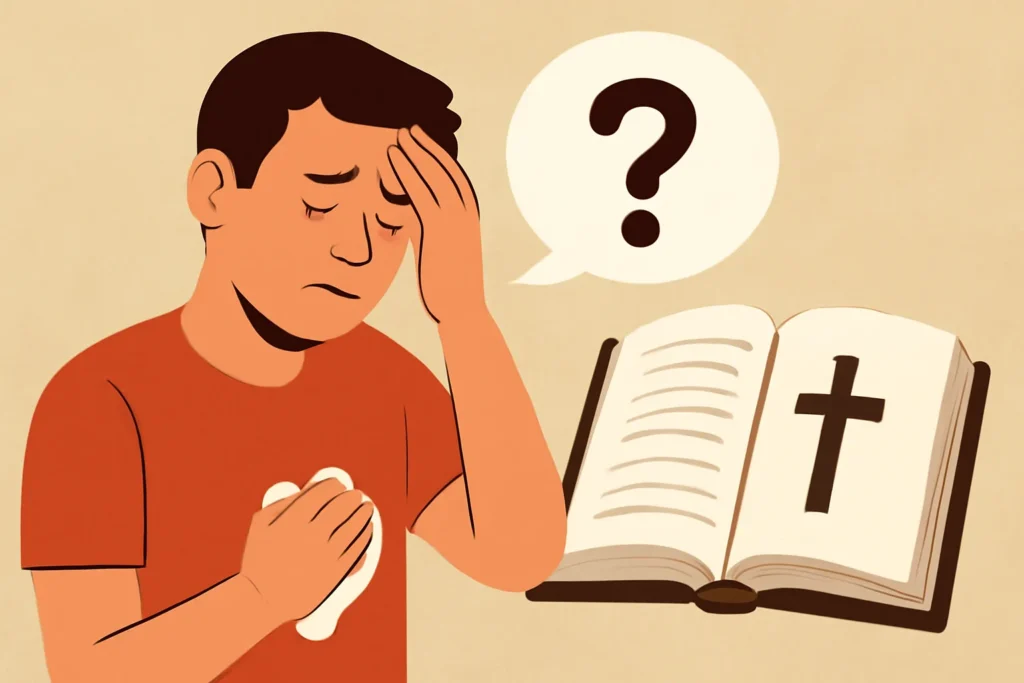
Many readers ask a foundational question with significant personal and spiritual implications: According to the Bible, is masturbation a sin? This question sits at the crossroads of biblical interpretation, historical tradition, and individual conscience. In this article, we’ll explore what the Bible says, what it does not explicitly say, and how different Christian traditions approach the topic. The goal is to offer a careful, scripture-informed perspective that helps readers think clearly about sexuality, self-control, and holiness within the Christian life.
Overview: Where the Bible Speaks to Sexual Morality
To understand whether masturbation is a sin, it helps to frame the larger biblical rhythm around sexuality. The Bible consistently speaks about purity, desire, self-control, and honoring God with our bodies. It often condemns or cautions against lust, impurity, and sexual immorality, while exhorting believers to pursue holiness, discipline, and love for others. Importantly, the Bible does not always speak in explicit, explicit modern terms about every behavior people ask about today; rather, it provides principles that guide how followers of Jesus think about sexual conduct.
Common Framing: Is masturbation inherently sinful or contextually problematic?
Many readers seek a short verdict: “Is it a sin or not?” The Bible’s lack of an explicit, universal line on masturbation means there are varied, thoughtful conclusions among Christians. Some insist it is sinful in all circumstances because it is rooted in lust or self-centered sexual gratification outside the covenantal context of marriage. Others argue that masturbation can be morally neutral or even psychologically healthy when it is not driven by lust, pornography, coercion, or other disordered desires, and when it functions within a framework of chastity and self-control. Still others emphasize the broader goal of pursuing holiness and avoiding anything that causes another to stumble. The core questions tend to be: What is the motive? What is the pattern? Does it lead to lustful thoughts or objectification? Does it honor God and others? Is it rooted in self-control or self-gratification?
According to the Bible, Is Masturbation a Sin? Variations in Perspective
To capture the breadth of traditional and contemporary Christian thought, we can articulate several common positions. The following sections reflect varying but biblically informed readings, not a single universal verdict. For clarity, we will use phrases like according to the Bible or according to Scripture as anchors in each view.
Position A: Masturbation is inherently tied to lust and is therefore often sinful
In this perspective, the question “Is masturbation a sin?” is answered with a conditional yes. The reasoning emphasizes Jesus’ teaching that lust in the heart is already a form of sin (for example, Matthew 5:27-28—“You have heard that it was said, You shall not commit adultery, but I tell you that anyone who looks at a woman lustfully has already committed adultery with her in his heart.”). Advocates of this view argue that masturbation frequently involves
pornography or erotic fantasy, which objectifies others
self-centered gratification at the expense of others
a pattern that can undermine emotional and spiritual intimacy in marriage
From this stance, self-control and holy living require Christians to abstain from sexual self-stimulation that centers on lust or reduces others to objects. Scriptural anchors often cited include 1 Thessalonians 4:3-5 (the will of God is sanctification and abstaining from sexual immorality), 1 Corinthians 6:18-20 (the body is a temple of the Holy Spirit), and Colossians 3:5 (putting to death earthly passions, including impurity and lust). Proponents of this view argue that even if a particular act is not explicitly named in the Bible, its effects—lust, objectification, or diversion from a sacred marital vision—place it outside the biblical ideal of sexual conduct.
Position B: Masturbation can be morally neutral or permissible in certain contexts
Another reading holds that the Bible does not explicitly condemn masturbation in all forms, and that the act itself is not necessarily sinful if it is not accompanied by lust, pornography, or harm. In this view, the moral assessment rests on the heart’s motive and the outcome of the action. If masturbation is practiced in a way that is isolated from lustful temptation, encourages self-control, and does not lead to harming others or violating biblical commands, some Christians argue it could fall within a realm of moral gray that requires pastoral discernment. Key verses include the general exhortations to pursue holiness (1 Thessalonians 4:3-5; Philippians 4:8 on thinking pure thoughts) and the principle that Scripture often emphasizes freedom and responsibility in matters not explicitly regulated in detail (see Romans 14). Supporters of this view stress:
the difference between lustful thoughts and a private, non-lustful sexual act
a concern for personal holiness and self-mastery
the possibility of healthy sexuality within a married life, with boundaries that avoid objectification
From this angle, the Bible’s overarching themes—purity, love, and self-control—inform a nuanced stance: the act may be acceptable in some circumstances, but it must always align with a heart oriented toward God and others, not toward selfish gratification or addiction. This approach often emphasizes accountability, spiritual maturity, and ongoing growth in sanctification.
Position C: The Bible’s silence on explicit mention invites careful pastoral discernment
A broader, more integrative approach notes that the Bible does not explicitly name every sexual behavior in modern terms. In this view, the significant question is not merely “Is it allowed?” but “What is its effect on spiritual life, marriage, and community?” Proponents point to the biblical pattern of fleeing sexual immorality (see 1 Corinthians 6:18), pursuing purity, and maintaining a vision for healthy sexuality within marriage. This stance invites careful, compassionate pastoral care, encouraging believers to examine motives, seek accountability, and rely on Scripture’s larger moral framework. It also recognizes that different Christians may reach different conclusions based on their consciences and contexts, provided they conduct themselves in love and seek unity in essential beliefs.
Key Biblical Passages and How They Are Interpreted
Several biblical passages are regularly cited in discussions about sexual morality and self-control. While none of them speaks with a precise, modern verdict on masturbation, they shape the moral framework within which believers interpret this question.
Matthew 5:27-28 — Jesus deepens the prohibition of lust: looking at someone with lust is equivalent to committing adultery in the heart. This passage is often used to argue that lustful thoughts and the objectification of others are at odds with holiness, and that a sexual action tied to lustful intent may be inconsistent with biblical ethics.
1 Corinthians 6:12-20 — Paul emphasizes that believers’ bodies are temples of the Holy Spirit and that sexual immorality is a sin against one’s own body. The broader call is to honor God with the body and avoid actions that exploit or degrade the self or others.
1 Thessalonians 4:3-5 — The will of God includes sanctification and avoiding sexual immorality, with an exhortation to control one’s body in a way that is holy and honorable. This passage is frequently cited in discussions of modesty, chastity, and self-control.
Romans 13:14 — Put on the Lord Jesus Christ and make no provision for the flesh to satisfy its desires. This is often used to advocate for vigilance over sinful patterns and the cultivation of virtuous habits.
Colossians 3:5 — Put to death earthly nature’s sexual immorality, impurity, and lust. The language here signals a strong stance against patterns of sexual sin, while inviting believers to pursue holiness in daily life.
Ephesians 5:3 — Among the practices to be avoided are sexual immorality, impurity, and greed; this reinforces the principle of living as children of light.
Genesis 38 (Onan’s story) — Often referenced in discussions of sexual conduct, though its primary context is the levirate obligation and obedience rather than masturbation per se. The key takeaway for many readers is about obedience to God’s commands and the seriousness with which God regards sexual behavior.
1 John 1:9 and Psalm 51 (repentance and forgiveness) — While not directly addressing masturbation, these passages provide pastoral language for repentance, mercy, and spiritual renewal when individuals struggle with sexual sin or temptation.
Is It Always Sinful, or Context-Dependent?
The heart of the matter often reduces to motive, pattern, and impact. The biblical narrative emphasizes intention, the dignity of others, and the aim to live in a way that honors God. When considering masturbation, several questions can help readers evaluate their conscience in light of Scripture:
What is the motive? Is the act done out of love for God and others, or as a pursuit of self-centered gratification?
Does the behavior involve lust or the objectification of others, or is it devoid of harmful thoughts about others?
Does it lead to a pattern of addictive behavior, secrecy, or concealment that damages relationships or spiritual life?
What is the effect on one’s relationship with a spouse (if married) and on one’s own sense of holiness and call to purity?
Are there healthier, biblical ways to manage sexuality, such as prayer, accountability, and building healthy habits?
Many pastors and theologians argue that the sinful dimension arises not necessarily from the act itself in all cases, but from its motive, addiction, or destruction of relational and spiritual well-being. Others would say that any sexual self-stimulation that is not oriented toward a marital relationship and counters the biblical framework for sexual ethics should be avoided. The tension reflects the Bible’s broader concern for the heart, the dignity of others, and the call to holiness.
Practical Guidance for Believers Who Are Wondering How to Apply Scripture
If you’re wrestling with this question, here are practical steps grounded in Scripture and pastoral wisdom. The aim is ministry to the whole person—spirit, mind, and body—while maintaining fidelity to biblical truth.
Pray for guidance and for a transformed heart. The Christian life begins in relationship with God. Prayer, confession, and seeking the Holy Spirit’s empowerment are foundational when wrestling with sexual temptation.
Study Scripture with a trusted guide. Reading key passages (see the “Key Biblical Passages” section) alongside commentaries and pastoral counsel helps interpret Scripture accurately and humbly.
Seek accountability. A trustworthy friend, mentor, counselor, or pastor can provide grace-filled accountability, practical strategies, and encouragement toward healthier patterns.
Develop healthy boundaries and routines. This can include limiting exposure to pornographic material, avoiding triggers, and establishing daily rhythms that reinforce purity and self-control.
Replace old patterns with new ones. Replace mindless or compulsive habits with constructive activities—exercise, service, creative work, or intimate bonding within marriage if applicable.
Foster healthy sexual education in a biblical framework. Understanding God’s design for sexuality as good, joyful, and ordered toward love and commitment helps reframe temptation into discipleship opportunities.
Embrace forgiveness and renewal. If confession reveals sin, the Christian hope is God’s mercy and cleansing (1 John 1:9). Repentance is a doorway, not a final verdict on a person’s identity or future.
Consider marital implications. If married, communication with a spouse about sexuality should be honest, respectful, and oriented toward mutual flourishing. In many cases, a healthy marriage can address issues that arise around sexual frustration or dissatisfaction.
Common Questions and Clarifications
Below are concise answers to questions that frequently accompany discussions about masturbation in biblical contexts:
Is masturbation always a sin? Not universally agreed. Some argue it is always connected to lust and self-centered gratification, thus sinful; others view it as potentially neutral when not driven by lust or harm. The determining factor is motive, pattern, and impact on holiness and relationships.
How does lust relate to this topic? Lust, per Jesus’ teaching, is a matter of the heart. If lustful thoughts accompany the act, or if the act is used as a substitute for healthy marital intimacy, many interpret that as contrary to biblical guidance.
What about the Onan narrative? The story of Onan in Genesis 38 is often cited in discussions of sexual ethics. It is essential to understand the broader context (obedience to Levirate law and covenant faithfulness) rather than using it as a blanket verdict on masturbation.
How should pastors respond to someone who confesses this struggle? Pastoral care should combine truth-telling with grace, offering practical tools, accountability, and spiritual support. The goal is restoration and growth, not shame or condemnation.
Across Christian traditions, perspectives on masturbation have varied over time. Here is a snapshot of how different streams approach the topic, while recognizing that individuals and local churches may diverge from these general tendencies.
Roman Catholic perspective: The Catholic Church has traditionally highlighted sexual integrity and has often treated masturbation as morally disordered, especially when not undertaken within the context of marriage. However, pastoral care stresses compassion, ongoing conversion, and growth in virtue rather than harsh judgment of individuals who struggle with sexual sins. The Catechism (no. 2352) discusses masturbation in the context of chastity and self-control, inviting believers to examine the dispositions of the heart and seek God’s grace.
Protestant and Evangelical perspectives: Many evangelical communities view masturbation through the lens of lust and sexual purity, often emphasizing abstinence out of concern for lustful thoughts and porn use. Others argue for a nuanced approach, recognizing that not every instance is driven by lust or harm, and that personal conscience and accountability matter. The central emphasis remains on holiness, self-control, and love for God and neighbor.
orthodox and traditionalist voices: Orthodox Christian ethics stresses temperance, chastity, and the transformation of the heart. Masturbation may be considered sinful if it stems from or fosters impurity, but pastoral guidance often centers on spiritual disciplines, confession, and restoration to wholeness in Christ.
Contemporary pastoral counsel: A growing portion of modern Christian counselors encourage compassionate pastoral care that recognizes the complexity of human sexuality. They may distinguish between personal struggles, addictions, and deliberate patterns that harm oneself or others, offering steps toward healing relationships, mental health, and spiritual growth.
Conclusion: A Scripture-Grounded, Compassionate Path Forward
So, According to the Bible, is masturbation a sin? The short answer is more nuanced than a simple yes or no. The biblical text places a high premium on holiness, self-control, and the dignified treatment of others. It emphasizes that the heart matters—the motives, loves, and loyalties that govern behavior. Since the Bible does not provide a single universal verdict on every modern sexual behavior, Christians are called to discern with prayerful honesty, submit to the guidance of Scripture, seek accountable community, and pursue healing when struggling with temptation or sin.
From a biblical perspective, the question is reframed as: How does this behavior fit with the call to holiness? Does it foster life-giving, self-giving love within marriage and community, or does it foster lust, secrecy, objectification, or addiction? The answer, in many Christian circles, remains that purity, self-control, and devotion to God should shape one’s sexual life. For some believers, this means consecrating sexuality to marriage and avoiding actions that could degrade the dignity of oneself or others. For others, it means recognizing that healing and growth are possible through confession, repentance, and mature spiritual formation, even if one continues to wrestle with temptation.
Ultimately, the biblical call remains the same: seek God first, guard what you allow to shape your heart, and pursue a life that honors God with your body, your mind, and your relationships. If you’re navigating this topic personally, consider speaking with a trusted pastor or counselor who can provide biblical wisdom, practical tools, and ongoing support as you seek to live in the freedom and fullness of Christ.
Note on language and spelling: In this article, you may encounter variations such as according to the Bible, is masturbation a sin? and even a heading that uses the phrase “According to the Bible, Is Masterbation a Sin?” to reflect user-supplied phrasing. The core aim is to present a balanced, biblically grounded discussion that respects diverse views within the Christian tradition while upholding the seriousness of biblical ethics and pastoral care.








Leave a Reply