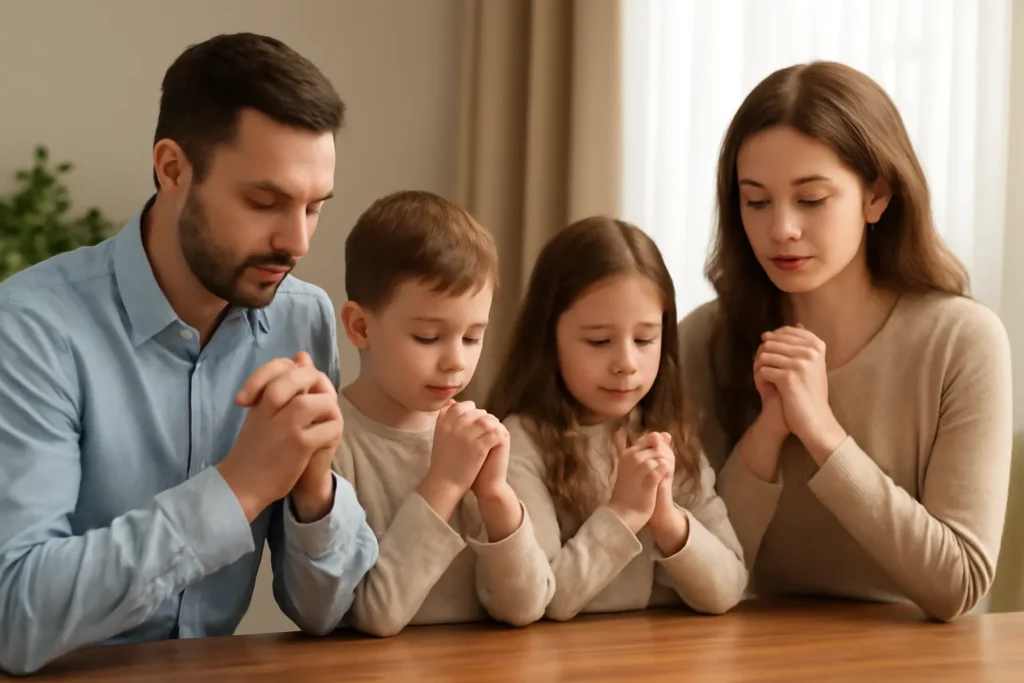
Family prayer is more than a daily ritual; it is a shared practice that weaves together the rhythms of life with the values a family hopes to cultivate. When family members come together to pray, they create a secure space for communication, gratitude, and hope. This kind of shared devotion helps children learn to articulate their needs, listen to one another, and develop a sense of responsibility for the well‑being of the household. It also provides parents with a trusted framework for guiding conversations about difficult topics, modeling humility, and demonstrating that family bonds are strengthened through mutual care.
Across cultures and faith traditions, there are many ways to practice household prayer or collective devotion. The goal is not to impose a rigid routine, but to cultivate consistency, warmth, and openness. The seven approaches described here are designed to be practical, adaptable, and encouraging for families at different stages of life. Whether you are starting from scratch or seeking to refresh an established routine, these ideas offer tangible paths to deepen connection through shared prayer, reverence, and purposeful action.
Why family prayer matters
When families pray together, they signal that spiritual life is not a private affair but a collective journey. Regular, intentional devotion fosters:
Togetherness: shared moments become a foundation for mutual trust and security.
Communication: children learn to verbalize feelings, fears, and gratitude in a safe environment.
Resilience: during challenging times, prayer rituals can offer steadiness and hope.
Values: conversations about kindness, forgiveness, and service become practical and ongoing.
Empathy: listening to others' needs teaches compassion and patience.
This article outlines seven practical ways to engage in family prayer as a shared practice. Each approach includes steps you can tailor to your family’s size, age range, traditions, and schedule. Use them alone or combine a few into a weekly rhythm that suits your household. The core idea is simple: create moments where every voice matters, every heart is heard, and every intention is blessed through prayer.
Seven Simple Ways to Pray Together as a Family
Way 1 — Create a regular time and place for family devotion
Consistency is foundational. A predictable moment in the day or week makes prayer a habit rather than a project. The goal is to establish a ritual that feels natural and inviting for everyone.
How to implement:
Agree on a regular time that works for parents and children. Common windows include after dinner, before bedtime, or on weekend mornings.
Choose a dedicated space—a quiet corner, a small table, or a family prayer board where everyone can sit comfortably.
Keep the routine simple and brief at the start, with room to grow as the children become more engaged.
Use a flexible template that can accommodate ages, from toddlers who join by listening to older siblings recite, to teens who contribute more extended prayers.
Create a tiny ritual to mark the moment—lighting a candle, ringing a gentle bell, or saying a one‑line blessing together.
Sample script (short and adaptable):
“Dear God, thank you for this day and for our family. Please help us to care for one another, to be kind, and to use our gifts to help others. Bless our home and keep us safe. Amen.”
Benefits: a predictable rhythm builds security, and a spacious yet simple framework encourages participation from all ages.
There is power in conciseness. A brief, heartfelt opening sets the tone and makes it easier for younger children to contribute. Short prayers help keep the focus on intention rather than length.
How to implement:
Invite each family member to offer a single line or phrase each day, starting with gratitude, then need, then blessing.
Use simple, age‑appropriate language. Avoid jargon and keep the tone sincere rather than performative.
Encourage spontaneous contributions as comfort grows—allow space for silence after a prompt so others can reflect.
Finish with a unifying closing, such as a shared blessing or a quick blessing over each other (e.g., “May you be safe, may you be kind, may you be loved.”).
Opening prayer: “Gracious God, thank you for our family and the ordinary moments that shape our days.”
Centering moment: a moment of quiet listening to each other’s concerns or joys.
Closing blessing: “Bless us as we go to bed and wake to new possibilities. Amen.”
Tip: keep a small set of prompt cards with prompts like “thank you for...,” “I’m worried about...,” or “please help us with...,” to spark ideas for younger children.
Way 3 — Build a gratitude circle
Gratitude is a powerful thread that ties family devotion to daily life. A gratitude circle invites each person to name something they appreciated today or this week, fostering positivity and hopeful conversation.
How to implement:
Begin by sharing one thing you’re grateful for as a family—this helps set a constructive, uplifting mood.
Encourage family members to name not only big things but small joys (a kind gesture, a good meal, a reassuring word).
Rotate the person who leads the circle to build ownership and confidence in all ages.
Keep a simple visual record—a gratitude jar, a wall chart, or a digital note—so you can revisit blessings later.
Sample prompts to use in the circle:
What small act of kindness did you notice today?
What is one thing you are grateful for in this moment?
Who inspired you today and why?
Practical emphasis: focusing on gratitude shapes a hopeful mindset in children and teaches them to recognize goodness even in ordinary days.
Way 4 — Invite each person to share a prayer request
Prayer requests are invitations to care, listen, and support one another. This practice teaches the family to bear one another’s burdens and celebrate each other’s hopes.
How to implement:
Provide a comfortable moment for each person to name a need or intention—this can be about health, school, friendships, or personal growth.
Respect privacy; allow those who are not ready to share to pass or write their request privately to be prayed for later.
After each request, offer a brief blessing or a silent moment of prayer, followed by a collective “Amen” or a similar wrap‑up.
Encourage action alongside prayer—consider small acts the family can undertake in response to a request (e.g., a card, a letter, or a simple visit).
Sample format for requesting prayers:
“Please pray for a classmate who is going through a tough time,” or “Pray for our family’s upcoming move and for a smooth transition.”
Key insight: requests create a sense of accountability and solidarity—prayer becomes a shared promise to support one another.
Way 5 — Include scripture, verses, or inspirational readings
For families that value sacred texts or uplifting literature, a short reading can anchor the prayer time in shared wisdom. Readings can be tailored to age groups, or a single verse can guide the entire period of devotion.
How to implement:
Select a brief verse, poem, or quote that resonates with your family’s current season (beginning of school year, holiday season, or recovery from a challenge).
Discuss its meaning in simple terms before prayer—ask questions like “What does this remind us to do?” or “How can we apply this today?”
Encourage younger children to draw a picture that represents the reading and share it during the session.
End with a short prayer that ties the reading to daily life.
Example reading and prayer:
Reading: “Be kind and compassionate to one another, forgiving one another, just as in Christ God forgave you.” (Adapted from Ephesians 4:32)
Prayer: “Help us to live out kindness and forgiveness in our home, school, and neighborhood. May our actions reflect love in tangible ways. Amen.”
Benefit: the symbolic power of meaningful words can guide behavior and provide a shared moral compass for the family.
Way 6 — Practice prayer through actions
Prayer is expressive beyond words. Praying through action invites the family to live faith in practical ways, turning devotion into daily service.
How to implement:
Choose a small, concrete act of service to perform together after the prayer time (e.g., helping a neighbor, cleaning a shared space, writing letters to family members far away).
Link the action to a shared intention—“We will pray for people in need and then donate to a local food bank.”
Reflect briefly after the act: “What did we notice? How did helping others change our day?”
Document the experiences in a family journal or photo log to reinforce the connection between prayer and action.
Illustrative examples:
Action idea: Visit a local park to pick up litter and show care for creation and community.
Rationale: embodied prayer makes spiritual life tangible and demonstrates that beliefs translate into compassionate behavior.
Way 7 — Start a family prayer project and journal
A longer‑term practice can deepen the sense of purpose and continuity. A family project, such as a prayer jar, wall, or journal, provides a living record of prayers, growth, and answered hopes.
Prayer Jar: Each time someone prays for or with someone else, they jot a note and place it in the jar. On a chosen day, the family reads a few notes aloud and prays again for continued support.
Prayer Wall: Create a dedicated space where family members post prayer requests, blessings, or reflections on sticky notes or small cards.
Family Prayer Timeline: Add memorable milestones—new traditions, answered prayers, or moments when a difficult time was eased through prayer.
Longevity: a well‑maintained project strengthens the family’s shared spiritual story, providing a visible reminder of how prayer is woven into daily life.
Practical considerations for diverse families
Different families bring different traditions, beliefs, and comfort levels with structured prayer. The ideas above are designed to be inclusive and flexible.
Respect pace: allow children to participate at their own pace. The goal is ongoing engagement, not forced participation.
Adapt language: use language that matches your family’s communication style—formal, casual, or somewhere in between.
Honor differences: if your family includes members with different faith backgrounds, invite readings or blessings that are meaningful to everyone, and focus on universal values such as kindness, gratitude, and compassion.
Make room for silence: moments of quiet during prayer time can be powerful, especially for older children and adults checking in with themselves and God or the universe.
Be realistic: start with a short duration and gradually grow as interest and comfort increase. It’s better to sustain a brief routine than to overextend and fizzle out.
Tips for sustaining a healthy family prayer practice
Building a lasting practice requires intention and a little creativity. Here are some practical suggestions to keep your family devotion thriving without turning it into a burden.
Use reminders: a family calendar, a phone reminder, or a visible cue on the dinner table helps you remember to pause and pray.
Invite guest voices: occasionally invite a relative, mentor, or family friend to join the session. Fresh voices bring new energy and perspectives.
Celebrate progress: mark milestones with a small celebration or a special blessing to reinforce the value of the practice.
Balance structure and spontaneity: have a loose framework but allow spontaneous moments to arise when someone feels moved to speak or share.
Protect the space: avoid distracting outside topics during prayer time—consider turning off devices or designating a “no interruptions” rule for the duration.
Variations and broader applications
While the focus here is on family prayer, many households find it helpful to expand these practices to other meaningful gatherings—such as a bedtime routine for siblings, a weekend devotion with extended family, or a community group that shares encouragement and support.
You might also adapt the seven ways to create a more general framework for family devotionals or household worship, suitable for secular households that value reflection, gratitude, and acts of kindness.
Closing thoughts
The practice of prayer together as a family is not about achieving perfection but about building connection—through listening, expressing needs, and acting with compassion. By incorporating regular routines, short and meaningful prayers, gratitude, shared requests, readings, actions, and ongoing projects, families can cultivate a resilient spiritual life that supports each member. The seven ways presented here aim to be accessible, adaptable, and enduring—so that your family can grow closer, learn together, and live out the values you share in daily life.
If you’d like, you can mix and match these approaches to create a customized rhythm. For example, you might pair Way 1 (Set a Routine) with Way 5 (Read a Verse) on weekdays, and then devote Way 7 (Prayer Project) on weekends to deepen your family’s spiritual story. The most important element is to begin and to stay attentive to one another’s needs with love, openness, and mutual respect.










Leave a Reply