Overview: How Is Jesus Connected to King David? Exploring His Messianic Lineage and Biblical Prophecy
From the earliest pages of Scripture to the Gospel narratives, the connection between Jesus and King David is foundational for understanding Christian belief about the Messiah, salvation, and the unfolding story of God’s promises. This article surveys how Jesus is linked to David through genealogies, prophecies, and birth narratives, and how those connections are interpreted theologically. The aim is to illuminate the ways in which Davidic lineage becomes a lens for comprehending who Jesus is, what he came to accomplish, and how the ancient expectations of a Davidic king are reimagined in the person and mission of Jesus.
David in the Biblical Narrative: A Central Figure in the Covenant Story
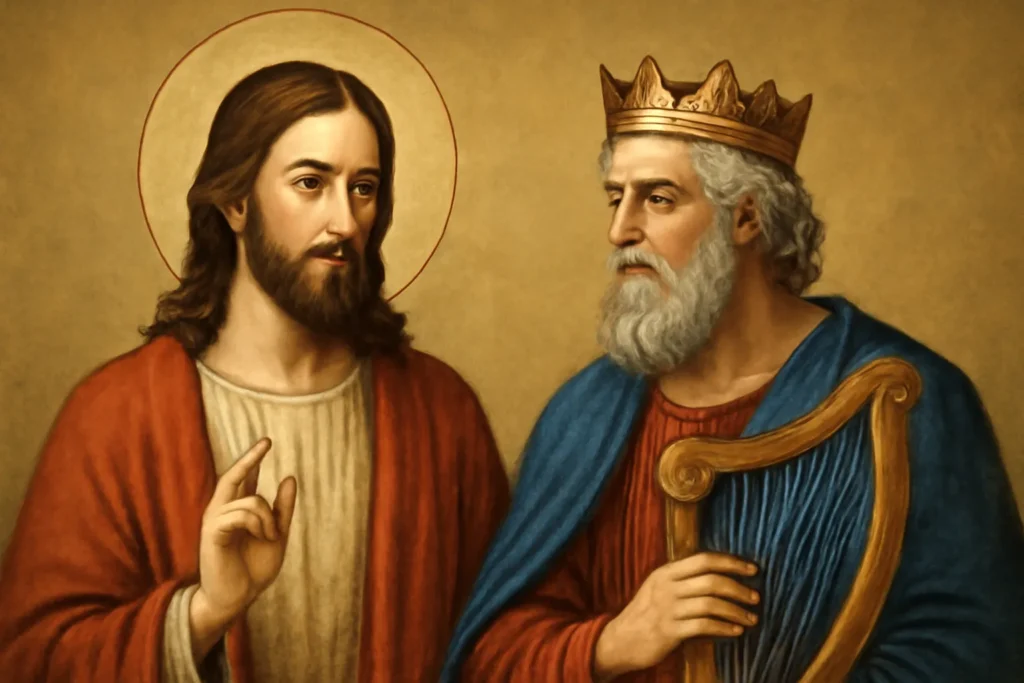
King David is a central character in the biblical story not merely as a legendary king, but as a figure whose life stands at the intersection of political leadership, religious reform, and messianic expectation. He is introduced as a shepherd-turned-warrior who unites the tribes of Israel and establishes a dynasty that—according to biblical authors—would endure forever through a covenantal promise. This setting provides the backdrop for understanding why later generations would look to David as the archetype of the ideal king and the source of a line of succession tied to God’s purposes for his people.
Two elements in particular stand out when one asks, why is David so important for understanding Jesus? The first is the Davidic Covenant, and the second is the sense that the promised long-term eligibility for a ruler from David’s line will culminate in a climactic fulfillment. In short, David and his descendants became a canonical reference point for Jewish expectations about a future king who would restore the fortunes of Israel and reconstitute the kingdom in righteousness.
The Davidic Covenant and the Messianic Expectation
The Davidic Covenant—as articulated in 2 Samuel 7—is a foundational text for Christian reading of the Messiah. God’s promise to David includes a guarantee of a royal house, a lasting throne, and a future heir who would build a temple of peace and blessing. While the immediate historical context concerns David and his son Solomon, the prophets and later biblical writers broaden the scope of the covenant to point to a future, eternal king from David’s line. This configuration lays the groundwork for the timeless claim that the Messiah is linked to the dynasty established by David.
Important dimensions of this expectation include:
Royal lineage: The Messiah would come from David’s line, ensuring legitimacy in the eyes of biblical Israel and the social memory of God’s promises.
Enduring throne: The promise of an eternal throne becomes a symbolic frame for understanding Jesus’ mission and the Christian claim of a kingdom that transcends political power.
Worldwide blessing: The Davidic promise is often read in conjunction with universal blessing—God’s salvation reaching all nations through the righteous reign of the coming king.
Prophets such as Isaiah, Jeremiah, and others expand on these themes, suggesting that the future king would embody justice, peace, and righteousness. In Christian interpretation, these prophetic textures help readers see Jesus not only as a descendant of David but as the one who fulfills the prophecies in a way that surpasses expectations of political sovereignty, pointing instead to a spiritual and eternal kingship.
To appreciate how Jesus is connected to David, several interlocking genealogical strands in the New Testament warrant careful attention. The Gospels present two primary lines of descent that culminate in Jesus, one through Joseph as the legal father and a second line that, by traditional readings, traces through Mary or through alternate ancestral routes. These genealogies are not merely lists of names; they carry theological weight, establishing Jesus’ rightful place in the Davidic line and aligning his life with the expectations of the ancient covenant people.
Matthew's Genealogy: Royal Descent, Legal Claim, and Covenant Fulfillment
The Gospel of Matthew opens with a genealogy that deliberately anchors Jesus in the line of David and Abraham. The listing runs through Judah, King David, and the royal line, emphasizing Jesus’ legal right to the throne according to Jewish law and social memory. Matthew’s structure highlights three clusters of fourteen generations, a literary device that underscores completeness and order in the royal line.
Key features of Matthew’s genealogy include:
A chain from David to Jesus that foregrounds the royal lineage, conveying the claim that Jesus is the rightful heir to the promises spoken to David.
Inclusion of women in the genealogy in some places (notably Tamar, Ruth, Bathsheba) that signals a broader, sometimes surprising scope of God’s redemptive work through imperfect people.
Presentation of Jesus as the one who fulfills the prophetic expectations of the Messiah by entering the world in a way that resonates with both Jewish memory and early Christian faith.
In Matthew’s account, Joseph’s legal status plays a crucial role in linking Jesus to the royal line. While the narrative presents Jesus’ birth as miraculous, the genealogy serves to establish a legitimate connection to Davidic ancestry in order to meet the expectations for the Messiah’s descent through the kingly line. This is why many readers interpret Matthew as underscoring Jesus’ legal claim to the throne and his place in the narrative of covenant blessing.
Luke's Genealogy: A Different Lineage and Theological Emphases
Luke provides a different genealogical path, often described as tracing Jesus’ lineage through Mary or through a different line of descent leading to David but through Nathan rather than Solomon. Luke’s genealogy culminates in Adam, highlighting a broader universal scope: Jesus is the Son of Adam and, by extension, the Son of God, bringing salvation to all people, not only to a particular royal line.
Important features of Luke’s account include:
A genealogy that moves from Jesus backward to David, then to Abraham, then to Adam, emphasizing the universal reach of Jesus’ mission.
Names and genealogical pathways that differ from Matthew’s list, inviting readers to consider the complexity of genealogical traditions and the theological aims behind each gospel’s presentation.
Potential emphasis on the humble origins of Jesus’ human lineage and his solidarity with ordinary people, which complements the Davidic portrait by highlighting God’s favor toward the lowly and the marginalized.
Scholars have debated the exact relationship between Luke’s genealogical list and Mary’s line versus Joseph’s, as well as why Luke would traverse a different route. Regardless of the precise mechanism, Luke’s portrayal consistently connects Jesus to David and to the covenantal promises associated with David, aligning Jesus with the Messiah’s expected ancestry while broadening the scope to include all peoples and nations in salvation history.
Prophetic Foundations: Key Predictions Pointing to a Messiah from David’s Line
Beyond genealogies, the scriptural witness identifies several prophetic passages that Christians understand as foreshadowing or foretelling a future king from David’s line. These prophecies, interpreted in light of Jesus’ life and ministry, are central to the claim that Jesus fulfills the Messianic expectations rooted in the Davidic covenant.
Isaiah’s prophets describe a prince who will bring peace, righteousness, and justice, often imagining a ruler whose lineage and reign mirror the stability associated with David’s era.
Jeremiah speaks of a righteous Branch from David, a language that christological interpreters connect to Jesus’ messianic identity and to the continuity of God’s plan for Israel.
Micah 5:2 prophesies that the ruler of Israel will come from Bethlehem, the city of David, a prophecy that Matthew and Luke both reflect in their infancy narratives surrounding Jesus’ birth.
Psalm 110 presents the Lord addressing the king in a way that Christian readers interpret as revealing a royal anointing that Christians associate with Jesus’ priest-kingly authority in the heavenly realm.
Psalm 132:11 and related Psalms articulate the idea that God swore an oath to David about a throne and a king who would rule and reign with justice.
In Christian interpretation, these prophetic strands are not merely historical footnotes; they are the interpretive keys that unlock the understanding of Jesus’ identity as the Messiah who fulfills the Davidic prophecies in a new and comprehensive way. The way Jesus performs healing, teaches with authority, and proclaims the Kingdom is read through the lens of Davidic expectation, reframed in the light of the gospel’s revelation of God’s grace and sovereignty.
Birth Narratives and Royal Imagery: Bethlehem, David’s City, and the Anointed One
You expect a king when you hear about the Messiah, and the Gospel narratives repeatedly stage Jesus’ birth and early life in ways that echo Davidic and royal motifs. The setting of Bethlehem—the city of David—is not incidental; it situates Jesus within the living memory of the Davidic throne and the covenant’s promises. The Magi’s visit and the shepherds’ proclamation both participate in a dramatic unveiling of a child who bears a royal significance, even as his kingdom is said to be not of this world.
Several features of the narrative align Jesus with Davidic symbolism:
Bethlehem as the birthplace, fulfilling Micah’s prophecy that the ruler would come from Bethlehem.
Recurrent kingly imagery around Jesus, including references to the compassionate shepherd-king and to the authority with which he teaches and heals.
The title “Son of David” appears within the gospel traditions as a messianic epithet that reflects a royal expectation while also signaling a call to trust in Jesus’ redemptive mission rather than political conquest alone.
The birth narratives thus function on multiple levels: they anchor Jesus in the Davidic and prophetic horizon, they announce a new kind of kingship, and they invite readers to consider how God’s plan for a king is realized in the person of Jesus—one who embodies divine justice, mercy, and personal invitation to faith.
Legal and Royal Inheritance: Jesus as the Royal Heir and the Spiritual King
In biblical terms, one of the strongest markers of Jesus’ Davidic connection is the language of inheritance and rulership. The idea of a kingly heir who inherits an everlasting throne resonates throughout the New Testament, and Jesus’ kingship is described not primarily in terms of political sovereignty but as the inauguration of a spiritual kingdom rooted in love, truth, and the reordering of life under God’s reign.
Important nuances include:
The royal claim tied to David’s line is presented as legitimate and authoritative, but Jesus redefines the nature of kingship by offering a kingdom that is not bound by geography or heavy-handed political power.
The concept of eternal throne is reframed in the New Testament as a reign present in the life, death, and resurrection of Jesus and understood in the context of the risen Christ who rules with cosmic authority.
Jesus’ authority is demonstrated through acts of healing, exorcism, teaching, and the invitation to enter God’s kingdom by faith—an authority that, in Christian reading, fulfills Davidic expectations in a transcendent way.
This is why the title “Son of David” recurs in the Gospels as a confession of faith and a diagnostic of Jesus’ identity. At times it is used by individuals seeking salvation or healing, recognizing in Jesus the fulfillment of ancient expectation. At other times, it functions as a test: will those who encounter Jesus understand him to be the rightful heir whose reign brings blessing to Israel and the nations?
Christological Interpretation: Fulfillment of Davidic Prophecy in the Life of Jesus
From a Christian theological perspective, the connection to David is not merely genealogical; it is Christological, meaning it bears on who Jesus is and what his life accomplishes. The New Testament writers interpret Jesus as the one who finally fulfills the promises spoken to David and expanded by the prophets. In this light, Jesus’ birth, ministry, suffering, death, and resurrection are understood as the climactic fulfillment of the Davidic promise—not as a repetition of the past but as a decisive advancement of God’s plan of salvation for all humanity.
Fulfillment language: Phrases like “this is what was spoken by the prophet” or “this is the one who fulfills what is written” recur in the Gospel accounts to signal convergence between ancient prophecy and Jesus’ life.
The shift from a political to a spiritual kingdom reframes expectations about how God’s promises will be realized, highlighting a broader scope for the Messianic mission that includes rescue, reconciliation, and the establishment of God’s reign in heaven and on earth.
Jesus’ role as mediator, priest, and king—combining royal authority with servant leadership—has deep citations in the Epistles as the way Christians understand the Davidic line fulfilled in a new covenant calendar and community.
In sum, Christian readers often describe Jesus as the one who embodies and fulfills the Davidic covenant in a more complete sense—pastoral, redemptive, and cosmic. The connection to David remains a central thread that ties together the expectation of a ruler who brings peace and the reality of a savior who offers redemption from sin and a new way to relate to God.
Common Questions and Clarifications: Navigating the David-Jesus Link
Readers frequently ask about the specifics of how Jesus can be both a descendant of David and the inaugurator of a kingdom that is not of this world. A few common clarifications help.
Is Jesus literally descended from David? In the Gospel genealogies, Jesus is connected to David through genealogical lines that trace legal and national inheritance (Matthew) and, in Luke, a line that highlights broader human descent. Debates about the exact biological vs. legal nature of these lines reflect ancient and modern scholarly discussions about adoption, lineage, and inheritance.
Why are there two genealogies? Matthew and Luke present different genealogies to emphasize distinct theological aims: Matthew foregrounds Jesus’ royal right to David’s throne and the Jewish messianic expectation; Luke emphasizes universal blessing and Jesus’ humanity, linking to Adam and the human family.
What about Mary vs. Joseph? Traditional readings propose that Matthew traces Joseph’s legal line to David, while Luke’s genealogy may trace Mary’s lineage (though the text presents it as Joseph’s lineage in typical ancient genealogical fashion). The broader point is that Jesus’ Davidic connection sits at the center of both accounts, regardless of the precise maternal or paternal route.
How does this affect belief? The Davidic connection is often understood as lending credibility to Jesus’ messianic identity, while the interpretation of how that lineage operates can vary among different Christian traditions. The theological focus remains the same: Jesus fulfills God’s promises in a manner that brings salvation to all people.
Practical Reflections: Why This Connection Matters Today
The link between Jesus and King David carries implications for faith, worship, and Christian ethics. It anchors the Gospel in a historic and covenantal framework, reminding believers that the story of Jesus is not an isolated event but part of a longer drama of God’s love and faithfulness to his people. For contemporary readers, several practical reflections emerge:
Identity and vocation: The Davidic connection invites Christians to reflect on what it means to live under God’s reign—cultivating justice, mercy, and humility, not merely pursuing political power or triumphalism.
Hope and anticipation: The enduring throne motif encourages steadfast hope in God’s continued work in the world, even when present circumstances seem challenging or uncertain.
Grace and inclusion: The prophetic vision associated with David’s lineage opens the door for Gentile inclusion in the blessing promised to Abraham and to David’s line, shaping the mission of the church in the world.
Conclusion: The Enduring Link Between Jesus and David
The question “How is Jesus connected to King David?” points toward a multifaceted answer that spans genealogy, prophecy, birth narratives, and theological interpretation. The Gospel writers deliberately crafted Jesus’ background to align him with the revered ancestry of David, while also reinterpreting what it means to be the true Davidic king. In their telling, Jesus is not simply a descendant of David; he is the fulfillment of the promises attached to David’s throne—the one who inaugurates a kingdom grounded in grace, justice, and life with God.
Evergreen themes in this connection include the fidelity of God’s promises, the reshaping of expectations around what a Davidic king would be, and the invitation to participate in the blessing that flows from this royal and redemptive lineage. As readers, we encounter not only a genealogical link but a living invitation to trust in theMessiah who embodies God’s rule and extends God’s mercy to a world in need of redemption.
Glossary of Key Terms
To help frame the discussion, here are some terms that recur in this topic:
Davidic Covenant: God’s promise to David about an enduring royal line and throne.
Messiah / Christ: The anointed one expected to deliver and rule according to God’s purposes.
Son of David: A title used in the Gospels for Jesus, emphasizing his Davidic heritage and messianic role.
Bethlehem: The city associated with David’s origins and the anticipated birthplace of the Messiah.
Genealogy: A lineage or ancestral record used to establish descent, legitimacy, and identity.
Fulfillment (fulfillment language): The idea that Jesus completes what the prophets and covenants foretold.
For readers who want to explore further, a study that compares Matthew 1 and Luke 3, surveys Isaiah 11 and Jeremiah 23, and considers the infancy narratives against the backdrop of Davidic symbolism can be especially enlightening. Such a study helps illuminate not only where Jesus comes from but what his coming means for the human story and for God’s ongoing work in the world.











Leave a Reply