Jews for Jesus: A Guide to Messianic Judaism and Beliefs
Jews for Jesus: A Guide to Messianic Judaism and Beliefs
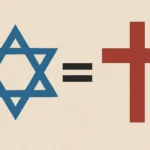
Jews for Jesus, today often referred to as part of the broader Messianic Judaism landscape, presents a distinctive
synthesis: a Jewish cultural and liturgical sensibility paired with the belief that Jesus is the Messiah. This combination has shaped a unique
movement that spans worship styles, theological language, and cultural identity. In this guide, readers will encounter a detailed overview of what this group claims, how it practices faith, how it sees the Jewish and Christian heritages as intertwined, and how scholars and religious communities outside this circle often evaluate its claims.
The roots of the present-day Messianic Jewish movement trace back to the 20th century, with several strands
converging in the 1960s and 1970s. A pivotal moment came in the early 1970s when Moishe Rosen and others
began to articulate a vision of Jewish people encountering Jesus without shedding their Jewish
identity. This stance stood in contrast to the long-standing view within mainstream Christianity that to accept
Jesus as Savior meant adopting a predominantly non-Jewish form of practice, and it stood in contrast to
conventional Judaism’s rejection of Jesus as the Messiah.
The organization commonly known today as Jews for Jesus was established to reach Jewish people
with the gospel while encouraging them to retain visible Jewish customs, holidays, and practices. Over the
decades, the movement grew into a network with regional offices, outreach programs, publishing efforts, and
media initiatives aimed at presenting a Jewish-friendly, Jesus-centered faith. In the lexicon of this
community, the phrase “the Messianic movement” often appears as a broader umbrella term that includes
local fellowships, congregations, and educational ministries that share similar theological aims, even if
organizational structures vary.
The history of Messianic Judaism and its associated ministries is also marked by debates regarding
affiliation with or distinction from traditional Judaism and mainstream Christian groups. Critics within the
Jewish community sometimes argue that a mission designed to bring Jews to belief in Jesus mirrors older forms
of proselytizing and challenges the boundaries of what counts as Jewish identity. Proponents, however, describe
their work as a continuation of a long-standing aspiration to honor Jewish roots while acknowledging the
claims of Jesus as the fulfillment of Jewish prophecies.
Core Beliefs of Messianic Judaism as Represented by the Movement
Core theological claims
Jesus is the Messiah and the divine Son of God, whose life, death, and resurrection provide the basis for salvation.
The Tanakh (the Hebrew Bible) and the New Testament (the Christian scriptures) are regarded as authoritative and complementary sources of truth.
Believers are invited to embrace faith in Jesus while maintaining a distinctly Jewish cultural and liturgical repertoire.
There is an ongoing sense of belonging to the people of God that spans both covenantal traditions, highlighted by the idea of a continuing covenantal relationship with God.
Differences with traditional Judaism
Acceptance of Jesus as the Messiah is not a position recognized by traditional Judaism, which does not view Jesus as the Messiah or as divine.
In many communities, there is a conscious emphasis on evangelistic outreach to Jewish people, which contrasts with standard rabbinic norms around conversion and religious belonging.
Interpretations of the Torah and prophetic writings are often harmonized with the Gospel accounts, creating a
hermeneutic that reads both testaments as part of a single story about Israel and the Messiah.
Some individuals and congregations within this movement adopt a form of two-testament theology, in which the Jewish people are seen as part of the covenant in a way that is fulfilled through faith in Jesus.
Key theological terms and concepts
New Covenant theology: the belief that Christ's sacrifice inaugurates a fresh covenant in the hearts of believers, while still honoring the Hebrew scriptures.
Grafted in imagery: the idea that non-Jews and Jews who believe in Jesus are added to the people of God, while Jewish identity remains meaningful for those who choose it.
Hebraic roots: a term used to describe deliberate efforts to preserve Jewish customs, language, and festival calendars within a faith oriented toward Jesus as the Messiah.
Practices, Liturgy, and Identity
The practical expression of belief in this movement blends elements borrowed from both Judaism and early Christianity.
A typical pattern includes worship that employs Hebrew prayers, scripture readings from both the Tanakh and the Gospels,
and songs that draw on Jewish musical idioms alongside contemporary Christian worship. Some groups emphasize
the continuity of Jewish liturgical forms, while others integrate more explicit Christian elements into the service.
Liturgy and worship
Shabbat observance and synagogue-style gatherings are common, often with a Christ-centered interpretation of scriptures and prayers.
Festivals and holy days—in addition to the annual cycle of Jewish holidays, some gatherings emphasize events in the life of Jesus during Christmas or Easter season, though many still observe Passover in a manner that highlights messianic symbolism.
Torah readings and commentary are typically integrated with New Testament readings, creating a composite lectionary that reflects both testaments.
Life-cycle rituals such as baptism, and testimonies of faith, are common in many congregations, though the specifics vary by community.
Lifecycle events and holidays
Baptism is often presented as a public confession of faith in Jesus and as an initiation into the Messianic community.
Wedding ceremonies may incorporate Jewish ritual elements (chaspe, ketubah, the celebration of family lineage) while affirming belief in Jesus.
Passover Seder is sometimes used as an evangelistic or teaching moment, explicitly linking the Passover narrative to the life and mission of Jesus.
Jewish festivals such as Hanukkah or Sukkot may be celebrated with commentary that highlights messianic expectations, prophecy, and the salvation narrative in Christ.
Many adherents strive to observe kosher-style dietary practices and to maintain Jewish ritual life, even as they interpret those practices through a Christ-centered lens.
Some communities emphasize personal holiness and ethical living as expressions of faith in Jesus, with attention to social justice, hospitality, and study of the scriptures.
Scripture and Hermeneutics
A hallmark of this movement is a distinctive approach to scriptures that invites readers to interpret the Hebrew Bible in light of the New Testament revelations about Jesus. This
approach can be described as a dual-scripture framework in which the two testaments are seen as
interconnected witnesses to God’s overarching plan for Israel and the nations. Within this framework, verses from
the prophets are interpreted as foretelling the coming of the Messiah, while gospel narratives illuminate the
ways in which Jesus fulfills those prophecies.
Critics argue that this interpretive stance requires a synthesis that is not universally accepted by Jewish or
Christian scholars. Proponents respond that the method preserves ancient ties to Jewish exegesis while
acknowledging the claims of Jesus as the fulfillment of biblical messianic expectations. In practice, congregations
may feature bilingual or semi-liturgical readings, with preaching that weaves together Hebrew, Aramaic or
Greek textual cues and contemporary theological reflections.
Relationship with Judaism and Christianity
The logical space where this movement resides is contested. On one hand, adherents insist that Messianic Judaism is a
valid expression of Jewish faith that does not abandon core Jewish commitments, including the love of Torah,
ethical conduct, and communal life. On the other hand, many within mainstream Judaism view these
groups as missionizing efforts that attempt to redefine Jewish belonging by introducing
explicitly Christian salvation claims. This tension affects how congregations are received by synagogues,
rabbinic associations, and Jewish cultural organizations.
Some denominations and scholars describe the movement as a form of evangelical Christianity conducted through a
Jewish lens. They emphasize proselytizing aims and the presence of conversion rhetoric as central
features. Others within the movement treat themselves as a legitimate extension of Jewish worship that accepts Jesus
as the promised Messiah while maintaining Jewish language, ritual, and heritage. This diverse spectrum leads to a
broad variety of practices and self-understandings among churches, congregations, and community groups associated
with it.
Notable Figures and Institutions
The history of this movement is intertwined with several prominent leaders and institutions that shaped its public
face. Among the most recognizable names is Moishe Rosen, the founder who helped articulate an
approach to Jewish outreach that emphasized continuity with Jewish culture and liturgy. Over the years, many
missionaries, scholars, and teachers emerged within the network, contributing to publications, television and
radio programs, and campus ministry efforts.
Important institutions in this ecosystem include dedicated ministries and local congregations that commonly publish study guides, hold Bible study groups, and organize
outreach events. While the organizational structure may vary from place to place, the shared aim is to present a
faith that honors Jewish roots while affirming belief in Jesus as the Messiah. It is common to find youth programs, weekend
seminars, and leadership training that emphasize both scholarship and evangelism.
Is this form of Judaism or Christianity?
This question reflects a central point of debate. The movement itself describes its identity as Messianic Judaism, a blend that asserts
Jewish ethnicity and religious practice while acknowledging Jesus as the Messiah. Many mainstream Jewish groups
do not recognize it as ethnic Jewish or as a legitimate form of Judaism, while certain Christian
groups regard it as a bridge to Jewish people that preserves ancient practices within a Christ-centered faith.
Do adherents have to renounce Judaism to believe in Jesus?
The typical position in the movement is not to require abandoning Jewish identity; rather, it invites people
to embrace Jesus while preserving elements of Jewish life. However, individual communities differ in how strictly they
maintain ritual practice and how they address issues of religious law. Some Jewish scholars emphasize that faith in
Jesus, when combined with traditional halakhic observance, can lead to a faith identity that diverges from what
traditional Judaism considers normative.
How do mainstream Jewish communities view these groups?
Reactions vary. Some Jewish organizations study the movement with caution, focusing on questions of
identity, outreach methods, and the potential for rabbis and communities to be drawn into missioning
without fully engaging with broader Jewish theology. Other groups may label the movement as a distinct
religious category that sits at the intersection of Jewish and Christian life but is not fully aligned with
traditional Judaism. The conversation is ongoing and often reflects broader debates about pluralism and
interfaith relations.
For readers seeking to understand this subject more deeply, a number of avenues exist. It can be helpful to:
Explore official Messianic Jewish associations and ministry pages that describe beliefs, practices, and community life.
Read a range of perspectives, including rabbinic literature and scholarly writings that analyze how this movement fits within or outside traditional Jewish and Christian frameworks.
Attend public events or study groups hosted by congregations that identify with Messianic Judaism to observe worship styles, teaching approaches, and community life.
Consult educational resources that distinguish between Messianic Judaism and other categories such as classic Judaism and evangelical Christianity.
When approaching this topic, it is important to recognize the diversity within the movement. Some groups place heavy emphasis on
evangelism and church-planting among Jewish populations, while others emphasize education, study, and worship that
mirrors traditional Jewish forms with the addition of belief in Jesus as the Messiah. The variety means that readers
will encounter differences in governance, liturgical language, and community norms from one congregation to another.
To better understand what sets this movement apart, consider these comparative features:
Identity negotiations: The insistence on Jewish cultural markers alongside a Christian-affirming faith creates a unique hybrid identity in which people navigate multiple communities.
Theological taxonomy: The framing of Jesus as the Messiah is a core Christian claim, yet the movement uses Jewish religious language and festival calendars to articulate it.
Outreach orientation: Proselytizing among Jewish populations has historically been a central feature, which influences how adherents engage with Jewish institutions and communities.
Liturgy and bilingual practice: Some congregations deploy Hebrew phrases, liturgical elements, and scriptural readings in Hebrew and English, reflecting a dual heritage.
These distinguishing features are not universal. The degree to which Torah observance is retained, the
use of Hebrew language in worship, or the priority given to baptismal testimony can vary widely
depending on local leadership, cultural context, and the preferences of individuals within the community.
Scholarly and communal conversations about this movement include thoughtful critique and open debate. Some common themes in
these discussions include the following:
Identity clarity: Questions about whether membership in this movement should be understood as Jewish or Christian or as a distinct category require careful
examination of self-definition, rabbinic recognition, and community acceptance.
Evangelism and consent: The ethical dimensions of outreach to Jewish individuals—especially with long-standing concerns about coercive or high-pressure conversion tactics—are frequently discussed.
Historical claims: Debates about the historical trajectory of Messianic Judaism, its continuity with Jewish law and tradition, and its relationship to early Jewish-Christian splits are ongoing among scholars.
Interfaith dialogue: The movement sits at a crossroads where interfaith respect must be balanced with doctrinal integrity and communal boundaries.
In the broader conversation about Messianic Judaism and Jews for Jesus, a range of voices—past and present—
contribute to the discourse. Some scholars emphasize the importance of distinguishing between genuine Jewish identity and
deliberate Christian theological claims presented in a Jewish idiom, while others highlight how such movements can serve as
bridge-building between Jewish and Christian traditions, especially when they promote literacy in Jewish texts and respect for
Jewish values such as justice, mercy, and communal responsibility.
Readers should approach such debates with a critical yet open mindset, recognizing that public understanding of these movements is
shaped by history, religious authority, and personal experience. It is often helpful to consult both primary sources produced by
the movement and independent scholarly analyses to gain a balanced view.
If you are researching the topic for academic, personal, or pastoral reasons, consider these practical steps:
Identify the institutional affiliation of a given ministry or congregation and examine its stated beliefs, member expectations, and leadership structure.
Compare the organization’s claims with independent sources, including rabbinic commentary and established church history resources.
Look for consistency between the movement’s public rhetoric and its private practices, such as how members are taught to interpret scripture and how they engage with Jewish law.
Assess the emphasis on social and ethical concerns, such as charity, care for the vulnerable, and community service, as part of a holistic view of faith in action.
In discussions about Jews for Jesus and nearby movements, several recurring myths surface. A balanced
examination helps separate caricature from credible description:
Myth: All who identify as Messianic Jews abandon Jewish identity. Reality: There is a spectrum; some emphasize robust Jewish
practice, while others foreground evangelical evangelism as a primary aim.
Myth: The movement is monolithic. Reality: There is significant diversity among congregations, including differences in worship style,
scriptural emphasis, and how they balance Jewish law with belief in Jesus.
Myth: The movement rejects the Hebrew Bible entirely. Reality: The Tanakh is frequently central, often read through a Christ-centered interpretive lens.
For readers seeking a nuanced understanding, it is essential to recognize that Messianic Judaism and its
manifestations, including Jews for Jesus, exist within a broader religious landscape. This landscape includes
traditional Judaism, liberal and Orthodox branches, and diverse strands of Christian faith. Each strand has its own history,
theological vocabulary, and set of practices that shape how adherents articulate their relationship with God, with the
Jewish people, and with Jesus as the Messiah. Rather than reducing the discussion to a single label, exploring the
movement’s histories, liturgical forms, and theological conversations offers a richer understanding of how faith communities
navigate identity, covenant, and mission in the modern world.
Whether you approach this topic from a scholarly angle, a religious studies lens, or a personal faith perspective, the
central questions remain the same: How do communities express devotion to God through scripture, tradition, and sacred
story? What does it mean to belong to a people with a shared memory, rituals, and prophetic expectations? And how do
people of faith honor their commitments to truth, compassion, and human dignity while engaging with those who hold
different beliefs?
This guide has offered a broad survey of Jews for Jesus as a representative case within the Messianic Judaism family of groups. The aim has been to illuminate
beliefs, practices, and debates with clarity and balance, helping readers understand the claims, the hopes, and the
tensions that shape this distinctive religious current.









Leave a Reply