Understanding the Topic: Baptism Jewish in Context
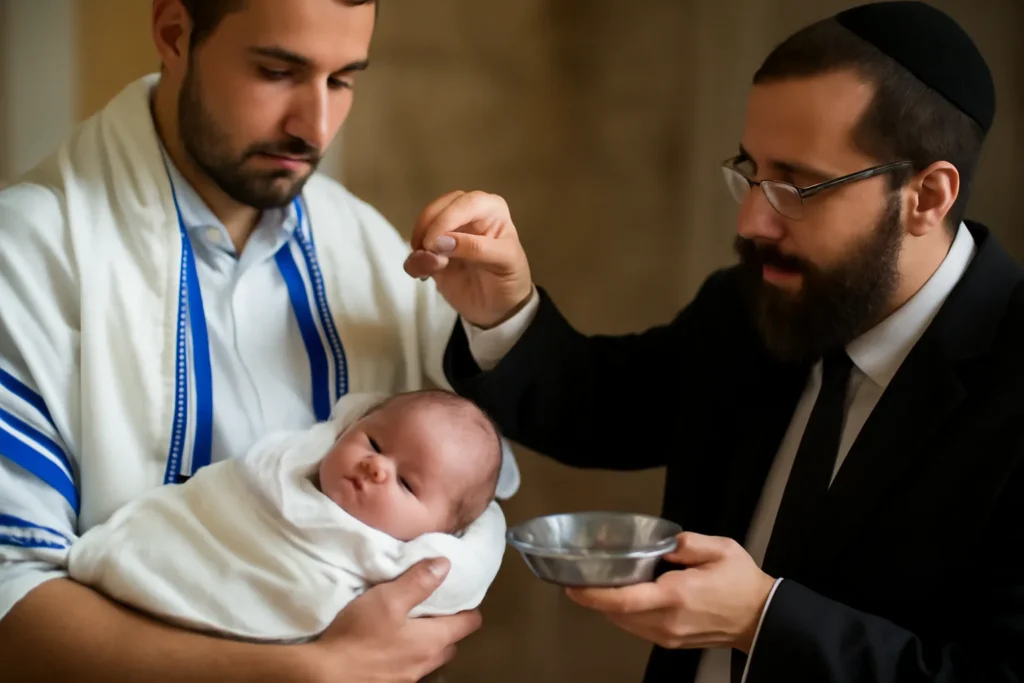
The phrase baptism Jewish is not a standard term in classical Jewish law, but it appears in discussions about ritual immersion, conversion, and how water practices relate to religious identity. In everyday Jewish practice, the formal term for ritual immersion is tevilah, and the explicit institution for such immersion is the mikvah. When people speak of baptism in relation to Judaism, they are often describing the way conversion to Judaism uses immersion, or they are referring to external explanations that compare Jewish immersion to the Christian sacrament of baptism. This article will explore the meaning of immersion in a Jewish framework, trace its history, and explain how it differs from mikvah.
What does “baptism” mean in a Jewish framework?
In Jewish usage, the closest concept to a rite of initiation via water is tevilah—the ritual immersion in living water (mayim chayim) or in water that meets halachic standards. The act of dipping into a mikvah is not a sacrament that imparts divine grace; rather, it is a formal process that signals a change of status or purification according to Jewish law. In that sense, the language around baptism Jewish often points to two intertwined ideas:
The idea of a person entering a new spiritual or communal status through immersion, such as a person who is converting to Judaism and must undertake giyur (the formal conversion process) that includes immersion in a mikvah.
The historical and cross-cultural use of water rites as marks of purification, rebirth, or initiation, which some readers compare to Christian baptism.
It is important to emphasize that, in traditional rabbinic literature, there is no doctrine of “rebirth” achieved by water in the way some Christian frameworks articulate baptism. Judaism views conversion as a life-long commitment to the commandments, and immersion in a mikvah is a procedural and symbolic step within that framework—not a standalone sacramental act.
Historical roots: how ritual immersion developed in Jewish life
Origins: biblical and early rabbinic foundations
The concept of ritual purification through water appears in the Hebrew Bible and in later rabbinic developments. The Torah discusses laws of ritual purity and impurity, including the need to wash or immerse in certain circumstances. Over time, Jewish scholars refined these ideas into a structured practice centered on the mikvah—a pool of water that is ritually acceptable for cleansing and transformative purposes.
Rabbinic codification: the Mishnah, the Talmud, and later authorities
In the Rabbinic period, the mikvah becomes a formal institution with precise requirements about the water source, the size of the pool, and how immersion must be conducted. The Mishnah and later Talmudic discussions lay out rules about who must immerse, when immersion is required, and who can perform the immersion process or supervise it. Notably, the practice of conversion to Judaism becomes tightly bound to immersion as a crucial element, alongside acceptance of the commandments and, for males, circumcision.
Conversion, purity, and community: how immersion functions in ger status
A person who wishes to join the Jewish people—referred to in Hebrew as a ger (proselyte)—enters a formal conversion process. In many historical and contemporary communities, immersion in a mikvah is paired with:
Kabbalat ol hamitzvot — acceptance of the commandments
For males, brit milah (circumcision) or hatafat dam brit if already circumcised
For females, immersion as part of the conversion ritual
The exact requirements can vary across denominations and communities, but the central structural role of tevilah within giyur is widely recognized. In discussing “baptism” in the Jewish tradition, many scholars highlight that the essential idea—changing one’s status through immersion—appears within the framework of the mikvah and conversion, rather than as an independent ritual unique to Judaism.
How ritual immersion differs from Christian baptism
Purpose and theology
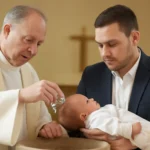
The fundamental difference lies in purpose and theological meaning. Christian baptism is typically viewed as a sacrament that signifies entry into the Christian community and a reception of divine grace. In contrast, tevilah within mikvah practice is a halachic ritual with rules about purity, ritual status, and communal life. It is not a sacrament or a guaranteed conduit of grace; it is a lawful act that formalizes a change in status or state for Jewish life.
Who participates and who administers
In Christian contexts, baptism is administered by an ordained minister or priest and is available to those who profess faith. In Jewish communities, the mikvah is administered by a qualified agent of ritual authority, often a rabbi or a team of scholars, and the participants are those seeking to observe or fulfill a Jewish status—most notably ger candidates undergoing formal conversion, Jewish women following certain life milestones, or others who need ritual purification.
The water requirements and ritual conditions
A key legal distinction is the water used for immersion. A mikvah must use water that meets halachic standard, typically living water (mayim chayim) from a natural source, or rainwater collected in a way that meets specific criteria. Christian baptism, historically, uses water in a variety of settings and does not require the interpretive rules of a mikvah. The constraints about water source, container, and immersion method are central to how mikvah immersion is performed in Judaism.
Implications for identity and authority
Because the Jewish framework ties composition of Jewish identity to the formal acceptance of commandments and, for male converts, circumcision, the outcome of immersion has particular implications for how a person is integrated into the Jewish people. In contrast, Christian baptism emphasizes faith in Christ and incorporation into the body of believers. These different theological and communal logics shape how each tradition understands the role of water in spiritual life.
Immersion in Judaism today: mikvah as a living practice
What is a mikvah?
A mikvah is a pool of water that is designed for tevilah. It is built to ensure that the water is living water, ideally sourced from a natural spring or collected rainwater, and it must be connected to a functioning legal water system. The space around a mikvah can be located in synagogues, dedicated ritual centers, or community facilities.
How immersion is performed
The process of immersion typically involves:
Preparation: washing and removing jewelry or other impediments.
Disrobing in private or semi-private space, depending on tradition.
Full immersion in the mikvah, usually in a single, complete submersion.
Post-immersion blessings or statements as dictated by the ritual context (especially in conversion processes).
For giyur candidates, the immersion is conducted under the supervision of a qualified halachic authority to ensure the procedure is valid according to the community’s standards.
Today, mikvah use spans a wide range of Jewish communities. Common purposes include:
Conversion to Judaism (giyur),
Purification practices for niddah (family purity) and postpartum periods for women,
Preparation for Sabbath and festival observances,
Fulfillment of certain rabbinic obligations or personal spiritual practice.
How “baptism Jewish” concepts appear in modern discourse
Academic and cultural discussions
In academic, interfaith, and popular writings, you may encounter the phrase baptism Jewish when describing how immersion functions in Jewish life, or when comparing Jewish conversion rituals with Christian baptism. These discussions often aim to clarify:
That baptism as a Christian practice is distinct in purpose from Jewish tevilah,
That the Jewish process of formal conversion includes immersion but also requires a declaration of commitment to the commandments,
That the mikvah embodies ancient continuity with water-based purification while maintaining a unique halachic structure.
Denominational differences in contemporary practice
Across the Jewish world, the exact sequence and requirements of conversion, and the use of the mikvah, vary by denomination:
Orthodox communities typically require immersion in a mikvah as part of conversion, along with circumcision for males and acceptance of the commandments, with oversight by a recognized panel of rabbis.
Conservative communities also use mikvah immersion in the conversion process, though there may be variations in how the process is structured compared with Orthodoxy.
Reform and some Reconstructionist communities may adopt more flexible or modern approaches to conversion, and the role of immersion can differ, sometimes focusing on a formal declaration of intent and other aspects rather than a strict halachic framework.
Key differences: Mikvah vs. baptism in Jewish life
Summary of essential contrasts
To recap the core differences for readers who are exploring the topic, here is a concise comparison:
Purpose: Mikvah immersion formalizes spiritual or ritual status within Judaism; Christian baptism expresses initiation into a Christian community and faith.
Authority: Mikvah procedures are guided by Jewish rabbinic authority; Christian baptism is overseen by Christian clergy or church leadership.
Water rules: Mikvah requires living water or properly collected rainwater and specific construction; Christian baptism uses water in various contexts without the halachic constraints of a mikvah.
Conditions for conversion: For a Jewish ger, immersion is part of a broader process that includes acceptance of commandments and, for males, circumcision; baptism in Christian contexts does not have this exact set of prerequisites.
Theological meaning: Mikvah is a ritual purification and status change within a covenantal framework; baptism is a sacramental act within Christian theology.
Practical considerations for those curious about the topic
How to learn more about mikvah and tevilah
If you want to explore mikvah practice more deeply, consider the following steps:
Consult a local rabbi or a ritual authority to learn about the mikvah in your community and the rules that apply there.
Visit a synagogue or ritual center that operates a mikvah and ask to observe or participate in a guided immersion under proper supervision.
Read trusted sources on Jewish law and liturgy that discuss tevilah and the conversion process, noting how different denominations define the requirements.
Learn the Hebrew terms involved, such as ger, giyur, brit milah, kabbalat ol hamitzvot, and mayim chayim, to better understand the linguistic foundations of the practice.
Where to find mikvah facilities
Mikvah centers are commonly affiliated with synagogues, Jewish community centers, or dedicated ritual organizations. If you are considering immersion for conversion or purity reasons, you should contact a recognized rabbinic authority who can guide you to an appropriate mikvah facility and provide the required oversight.
Frequently asked questions about baptism Jewish and mikvah
Is there a “Jewish baptism” equivalent?
The closest parallel within Judaism is the giyur process for conversion, which includes immersion in a mikvah, acceptance of the commandments, and in the male line, circumcision. This is not the same as Christian baptism, but for some readers, the phrase baptism Jewish is used to describe the ritual immersion that accompanies conversion.
Does immersion in a mikvah happen for non-conversion purposes?
Yes. Many Jewish communities observe niddah practices and postpartum purification, which involve ritual immersion in a mikvah for women. Some men also immerse for reasons tied to purification or preparation for certain prayer or observances. In all these cases, the immersion serves as a ritual purification or status change within the Jewish covenant, not a conversion act.
Can a person be baptized in a Jewish mikvah?
The answer is no in terms of traditional practice: the act of Christian baptism is a separate ritual with distinct theological meaning. A Jewish mikvah is not a substitute for Christian baptism, and Christian rites are not integrated into Jewish law. However, in interfaith contexts or historical discussions, people may refer to immersion in a general sense as “baptismal-like” in terms of water ritual, which is why precise terminology matters.
Conclusion: embracing the language of meaning, history, and practice
The concept of baptism Jewish invites careful distinction between how water functions in Jewish ritual life and how water functions in Christian sacramental life. In Judaism, tevilah and the mikvah are foundational tools for marking transitions—especially in the context of ger, postpartum ritual, family purity, and other keystone moments of Jewish life. The practice carries centuries of legal nuance, communal practice, and spiritual symbolism that together create a robust framework for understanding how water can change status within a covenantal community.
If your interest is academic, interfaith dialogue, or personal exploration, the key is to honor the proper terminology and to recognize that, while both traditions use water as a signifier of purification and initiation, the underlying religious structures are distinct. By distinguishing baptism Jewish discourse from mikvah practice, readers can gain a clearer sense of how Judaism understands initiation, purity, conversion, and ritual life in a way that respects tradition and contemporary practice alike.





Leave a Reply