Master of Divinity vs Master of Theology: Key Differences
Master of Divinity vs Master of Theology: Key Differences
Choosing between a Master of Divinity and a Master of Theology is a major step for anyone pursuing a life in ministry, education, or religious leadership. While both degrees reside in the broad field of theological study, they are designed with different ends in view. This article offers a comprehensive look at the Master of Divinity (often abbreviated M.Div.) and the Master of Theology (commonly M.Th. or sometimes Th.M.), comparing their aims, curricula, outcomes, and what to consider when deciding which path to take. By examining key differences and using practical decision criteria, prospective students can choose the program that best aligns with their calling, whether that be pastoral leadership, academic scholarship, or a blend of both.
What these degrees are and what they aim to accomplish
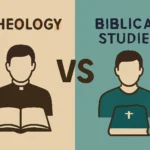
At a high level, a Master of Divinity is traditionally framed as professional ministerial training. It emphasizes practical competencies for church life, including preaching, shepherding, worship leadership, and congregational care. The Master of Theology, in contrast, is typically oriented toward theoretical study, research, and advanced scholarly analysis. It prepares students for further graduate work, such as a doctoral program, or for roles that require a high level of scriptural exegesis, systematic reflection, or teaching at the college or seminary level. The two programs represent different poles on the spectrum of theological education: one leans toward practical ministry and pastoral readiness, the other toward scholarly inquiry and theological development.
When institutions describe these degrees, you’ll often see language like these:
M.Div. as a comprehensive professional degree for ministry leadership, including congregational ministry, chaplaincy, and mission work.
M.Th. or Th.M. as an academically rigorous degree designed to deepen expertise in theology, biblical studies, or church history, often with an eye toward doctoral study or advanced teaching roles.
“Divinity degree” and “theology master’s” as interchangeable terms in some institutions, though they may signal different curricular emphases.
Core differences in purpose and focus
Vocational orientation: preparation for ministry vs. scholarly study
The Master of Divinity is purpose-built for people who see themselves serving in churches, parachurch organizations, hospitals, or other faith-based communities where leadership and pastoral care are central. It emphasizes skills such as effective preaching, pastoral counseling, worship leadership, and administrative acumen for running a local church or ministry program. In many contexts, the M.Div. is the standard credential required for ordination or licensing within a denomination.
By contrast, the Master of Theology is designed more for students who intend to pursue rigorous scholarly work. The emphasis is on critical engagement with theology, biblical languages, historical contexts, and advanced research methods. Graduates often pursue Ph.D. programs, teach at seminaries or universities, or contribute as researchers, writers, or scholars within religious organizations. While some M.Th. programs include practical electives, they typically do not center on the pastoral practicum that characterizes the M.Div.
Language study and research expectations
In terms of language preparation, both paths may require or strongly encourage biblical languages (Greek and Hebrew). However, the depth and emphasis differ. The M.Div. program often requires language study but prioritizes how those languages support exegesis for preaching and pastoral interpretation, as well as how to apply biblical texts to real-world ministry scenarios. The M.Th. frequently demands a higher degree of language proficiency and independent research. Students may be expected to conduct original research, write a substantial thesis or scholarly project, and engage with advanced theological debates.
Clinical and field education vs. research theses
A hallmark of the Master of Divinity is its field education components. These may include a supervised internship, practicum in a church setting, hospital chaplaincy rotations, youth or outreach programs, and other hands-on ministry experiences. The goal is to develop practical competencies that a church or ministry organization will recognize for ongoing service. The Master of Theology, by contrast, centers on research design, literature reviews, critical analysis, and a thesis or capstone project. The student demonstrates the ability to contribute new insights to theological discourse and to defend arguments in academic forums.
Curriculum and teaching methods: what you actually study
M.Div. core elements and typical courses
Most M.Div. programs structure the curriculum around a set of core requirements that establish a broad foundation for ministry. Typical elements include:
Biblical exegesis and languages (often Greek and Hebrew, with introductory Aramaic or other language options in some programs)
Old and New Testament studies with an emphasis on interpretation for preaching and teaching
Systematic and historical theology to understand beliefs, creeds, and the development of Christian thought
Church history to place contemporary ministry within a historical continuum
Pastoral care and counseling to support individuals and families in congregational settings
Preaching and worship leadership to develop effective communication and spiritual formation in a community
Ministry leadership and administration including budgeting, governance, and church management
Ethics and cultural engagement to address moral questions in diverse contexts
Spiritual formation and pastoral identity to help students develop a healthy sense of vocation and ethical practice
Field education or internship providing supervised ministry experience in real settings
Many M.Div. programs also require completion of a capstone project or integrative assignment that demonstrates applied learning across biblical, theological, and practical domains. It’s common for students to take electives in areas like church planting, youth ministry, worship arts, or mission strategy to tailor the degree to their intended ministry context.
M.Th. depth, focus, and research expectations
The M.Th. or Th.M. tends to be more academically intense and research-driven. Instructors often emphasize original thought, scholarly engagement, and critical analysis. Typical elements include:
Advanced biblical or theological coursework with a focus on specialization (e.g., exegesis, systematics, historical theology, or contemporary theology)
Research methods and scholarly writing to prepare for rigorous graduate study or publication
Thesis or substantial research project that contributes to theological discourse and may form the basis for further doctoral work
Seminar-based learning with close interaction with faculty and peers, often in a cohort setting
Exposure to philosophical and methodological debates within theology and biblical studies
Possibility of language prerequisites or enhanced language study to support critical engagement with primary texts
Because the M.Th. emphasizes research, students frequently engage with international or cross-denominational scholarship, publish article-length papers, and prepare proposals for doctoral programs. The pace and expectations differ from the M.Div., focusing more on scholarly contribution than on forming a pastor’s toolkit for immediate parish leadership.
Outcomes, careers, and impact after graduation
Where graduates typically work
Graduates of the Master of Divinity most commonly pursue roles that involve hands-on ministry, preaching, and church or faith-community leadership. Potential paths include:
Ordained or licensed ministry in a local church (pastor, associate pastor, or ministry team leader)
Chaplaincy in hospitals, military settings, or universities
Church planting or mission leadership
Director roles in faith-based nonprofits, outreach ministries, or youth/family ministries
Curriculum development or religious education leadership within congregations
Nonprofit leadership or faith-based community organizing
Graduates of the Master of Theology typically move toward roles that require research, teaching, and advanced theological synthesis. Common trajectories include:
Academic teaching at seminaries, colleges, or universities
Doctoral study (Ph.D. or D.Min. depending on goals) and scholarly publication
Research or policy roles within think tanks, denominational study centers, or religious foundations
Editorial work for theological journals or publishing houses
Specialized ministry roles that emphasize scholarship, such as higher education chaplaincy or ministry that blends academia with practice
Licensing, ordination, and denominational expectations
In many traditions, the M.Div. is the standard credential for ordination or formal licensing to lead a congregation or to serve in a ministry capacity that involves teaching, preaching, and pastoral care. Some denominations require completion of specific ordination exams, supervised ministry requirements, or residency programs alongside the M.Div. curriculum. The M.Th. may not automatically qualify a student for ordination in a given denomination, but it can enhance credentials for leadership in academic, mission, or teaching roles. It can also facilitate advanced opportunities within seminaries, universities, or church-sponsored research initiatives.
Programs vary, so it’s essential to check with the denomination or institution you hope to serve. Some churches view a rigorous M.Div. as the definitive path to authorized ministry, while others allow alternative routes or combination tracks that include practical ministry experience and ordination preparation alongside the theoretical study found in an M.Th.
Timeframes, structure, and practical considerations
Duration and pacing
The Master of Divinity is typically a multi-year commitment. In full-time programs, most students complete the degree in about three years, though durations can range from two to four years depending on the school and the inclusion of internships or field education. Part-time or online formats may extend to four or more years, with the caveat that field education components still need to be completed, which can shape scheduling.
The Master of Theology tends to be completed in a shorter timeframe for many students, often two years of full-time study or longer for part-time arrangements. The exact duration depends on the program’s required thesis timeline, language prerequisites, and whether students enter with advanced standing or prior graduate work.
Cost considerations and funding
Financial planning is a practical reality for most graduate students. Both degrees incur tuition and associated costs, including books, language resources, and exam or internship fees. Some considerations:
Tuition variability varies widely by institution, geography, and whether the program is online or on campus.
Scholarships and assistantships are commonly available for both tracks, particularly in seminaries and universities with strong theological programs.
Field education costs—supervised internships may involve travel or relocation expenses, depending on the placement.
Part-time enrollment often reduces monthly costs but may extend the total duration of the degree.
It’s crucial to estimate not only tuition but also the opportunity cost of time away from work, family, or other commitments. Some students offset costs with teaching assistantships, research assistantships, or denominational sponsorships connected to their ministry track.
Flexibility, alternatives, and delivery formats
Both degrees are offered in a variety of formats to fit different life circumstances. Here are some common options and what they mean for you:
On-campus full-time programs with robust field education and campus-based mentorship.
Online or hybrid formats that provide flexibility for working students, though some programs require short on-site intensives or supervised field experience in a specific locale.
Dual degree or concentration options that allow you to pair the degree with another credential (for example, M.Div. with a MA in Christian Education, or M.Th. with a Ph.D. track in a related field).
Online Th.M. programs are increasingly common, especially in institutions with strong remote-learning infrastructure, enabling scholars to continue teaching or ministry while completing advanced study.
Online access and practicalities
For students considering distance education, online M.Div. programs often emphasize the same core competencies but require careful attention to the way field education is arranged. Online M.Th. programs frequently provide a conducive environment for deep scholarly work with virtual seminars, digital libraries, and collaborative writing. When evaluating online options, consider:
Quality of faculty mentorship and access to advisors
Availability and quality of online libraries and research support
Requirements for on-site residencies or intensives, and whether they fit your schedule
Support for language study and independent research discipline in a virtual setting
How to choose between them: a practical decision framework
Deciding between the Master of Divinity and the Master of Theology requires a structured reflection on your calling, goals, and life situation. Here is a practical framework to guide your thinking:
Clarify your vocation: Do you feel drawn to lead a local faith community, preach weekly, and oversee church programs? Or do you imagine an academic, teaching, or research-oriented career that emphasizes scholarly contribution and theoretical development?
Consider denominational requirements: Some traditions require an M.Div. for ordination, while others may accept other paths with appropriate licensing. If ordination is important to you, verify the denominational expectations early.
Assess your readiness for research vs. practice: Are you energized by writing, critical analysis, and the prospect of a thesis, or do you prefer hands-on ministry experience, mentorship in pastoral settings, and practical leadership?
Evaluate fit with institutions: Different seminaries and universities emphasize different pedagogy, faculty strengths, and networks. A school with a strong pastoral program may be ideal for the M.Div., while a research-oriented theology department could be better for the M.Th.
Plan for the long term: If you might pursue a Ph.D. or a teaching role, the M.Th. can be a natural step. If your immediate goal is to enter or advance in pastoral leadership, the M.Div. is typically the more direct route.
Think about flexibility and lifestyle: Consider whether you need online options, part-time pacing, or a traditional residential setting. Your family, work obligations, and geographic location will influence feasibility.
Common misconceptions and clarifications
Several myths float around these degrees. Here are some common misunderstandings and the realities behind them:
Myth: An M.Div. is only for clergy who want to preach. Reality: While pastoral leadership is a primary purpose, M.Div. graduates work in education, ministry administration, community outreach, and chaplaincy, among other settings.
Myth: An M.Th. will automatically lead to a teaching position. Reality: Teaching roles require a track record, connections, and often a doctorate for tenure in many institutions. An M.Th. is a strong foundation, but additional steps are typical for academic careers.
Myth: The two degrees are interchangeable. Reality: They serve different trajectories, even if there is some overlap in coursework or electives. Your career goals largely determine which path makes the most sense.
Myth: Only one denomination accepts the M.Div. as a credential for ministry. Reality: The M.Div. is widely recognized across many denominations, though exact ordination requirements vary, so it’s essential to verify with your intended denominational body.
Case studies and scenarios: how choices play out in real life
Consider a few representative scenarios to illustrate how the decision between an M.Div. and an M.Th. can shape a career path:
Scenario A: Local church calling — A student feels called to serve as a pastor in a mid-sized city church. They value preaching, congregational care, and leadership in a community. They enroll in an M.Div. program with a strong field education component, focusing on homiletics, pastoral counseling, and church administration. After graduation, they pursue ordination within their denomination and assume a lead pastor role within a few years.
Scenario B: Academic vocation — A student is drawn to biblical studies and systematic theology and envisions a career in higher education. They opt for an M.Th. or Th.M. with a solid plan to pursue a Ph.D., publish research, and teach at a seminary or university. Their portfolio includes a substantial thesis, conference presentations, and language mastery in biblical languages.
Scenario C: Hybrid pathway — A candidate wants to combine ministry with scholarly work. They choose a dual-track arrangement (where available) or select an M.Div. with elective emphasis in theology, or an M.Th. with practical ministry practicum. This path supports parish leadership while keeping doors open to advanced scholarly work in the future.
Scenario D: Nonprofit or chaplaincy emphasis — Someone aims to serve in hospital chaplaincy or military ministry, where both pastoral skill and theological grounding matter. They pursue an M.Div. to gain ministry competencies and clinical pastoral education (CPE) experiences, complemented by optional elective courses in organizational leadership and ethics.
Choosing where to study: accreditation, reputation, and fit
Beyond the content of the curriculum, several practical considerations influence the strength and suitability of a program:
Accreditation and program quality: Ensure the school is accredited by a recognized accrediting body for graduate theological education. Accreditation affects transferability of credits, eligibility for certain licenses, and recognition of the degree in professional circles.
Faculty expertise and mentorship opportunities: Look for faculty with research interests aligned with your aims, and a track record of mentorship—especially for students who plan to pursue further study or ordained ministry.
Denominational connections and networking: A program with strong ties to your intended denomination may facilitate ordination processes, internship placements, and job opportunities.
Alumni outcomes and placement data: Research where graduates end up working, whether in parishes, academic settings, or specialized ministries, to gauge the program’s effectiveness for your goals.
Campus resources and research infrastructure: Access to libraries, language tools, theological archives, and publishing support can be especially important for M.Th. students.
Location and flexibility: Consider whether you prefer a campus-based program in a particular region or a flexible online format that accommodates work and family commitments.
Summary: matching your plan with the right path
In brief, the choice between a Master of Divinity and a Master of Theology hinges on your immediate calling, your long-range career objectives, and how you intend to integrate faith, leadership, and scholarship in your life. The M.Div. is typically the best fit for those who want to lead churches, provide pastoral care, and develop practical ministry skills with an eye toward ordination and local church leadership. The M.Th. is usually the better match for students who want to engage theology deeply, contribute to scholarly discussions, or prepare for doctoral study and advanced teaching.
Despite these general tendencies, there is no one-size-fits-all answer. Some students successfully combine elements of both programs by selecting electives that emphasize pastoral leadership while pursuing a rigorous research project. Others choose to begin with an M.Div. to gain practical experience and later pursue an M.Th. or Th.M. as a bridge to doctoral study. The path you select should reflect your sense of vocation, your readiness for the demands of graduate study, and the opportunities available at the institutions you are considering.
Practical tips for prospective students
Start with conversations with pastors, denominational leaders, and faculty to understand what credential is most valued in your intended ministry context.
Request a program catalog and sample course descriptions to see how deeply each degree engages with topics you care about, such as preaching, pastoral care, or advanced theological theory.
Ask about field education requirements and how internships are coordinated. If you are balancing work, ensure the program’s field placements align with your location and schedule.
Investigate language requirements and whether you will have the opportunity to master biblical languages if you want to pursue the M.Th. path.
Consider long-term goals, including potential doctoral study, publishing ambitions, or teaching roles. Choose a program that best aligns with those aims.
Compare total cost, funding opportunities (scholarships, teaching assistantships), and the expected time to degree to gauge the overall return on investment.
As you gather information, remember that the terminology can vary by institution. Some schools market Th.M. as the same program as M.Th., while others treat them as distinct tracks. The most reliable guide is the specific program description from each school, along with conversations with admissions counselors and faculty advisors who can explain how the degree will function in practice within your denomination and career plan.
In the end, whether you pursue the Master of Divinity or the Master of Theology, you are choosing a path of formation—intellectual, spiritual, and vocational. Both degrees offer meaningful opportunities to grow, contribute, and lead within faith communities or academic circles. Your decision should reflect your sense of vocation, your desired balance between practice and theory, and your readiness to commit to a rigorous program of study that will shape your professional life for years to come.










Leave a Reply