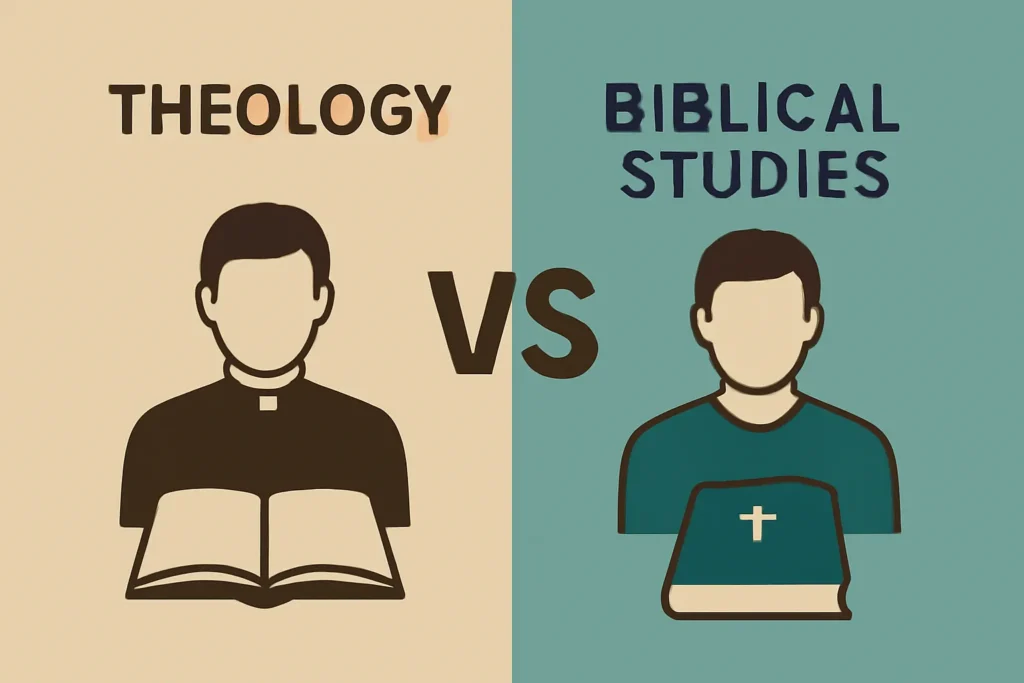
When people explore matters of faith, they often encounter two related but distinct scholarly fields: theology and biblical studies. Broadly speaking, theology asks what can be said about God, ultimate reality, and the meaning of life from a faith-informed perspective. It tends to engage doctrines, beliefs, and the implications of faith for life, practice, and perception of reality. By contrast, biblical studies concentrates on the biblical texts themselves: their languages, historical contexts, literary structures, transmission history, and how the biblical authors shaped their messages. In other words, theology is often about belief systems and the nature of God, while biblical studies is often about the texts that inform those beliefs.
Within the scholarly world, you will frequently encounter variations of how these fields are described or organized. Some call the field theology and doctrine or systematic theology when they emphasize coherent sets of beliefs. Others speak of biblical interpretation or biblical criticism when they highlight the critical study of the Bible as a literary document and historical artifact. Yet another common pair is biblical studies versus theological reflection, which foreground the practical and doctrinal implications of the biblical text. Regardless of the naming, the central distinction remains: one field tends to focus on God, faith, and doctrinal articulation; the other focuses on the biblical text and its historical and literary dimensions.
Key differences in aims and questions
The aims of theology (or systematic theology) and biblical studies (or biblical interpretation) are interrelated but distinct. Here are representative questions that typically drive each field:
Theology or doctrinal theology asks: What is God like? How do we understand the Trinity, creation, salvation, grace, justice, and the meaning of suffering? What can we affirm about the faith as a whole, across time and culture?
Biblical studies asks: What did the biblical authors intend? How were the texts formed, transmitted, and interpreted in their original settings? What does the text say in its historical, linguistic, and literary context?
In practice, scholars of biblical studies may analyze exegesis (finding the intended meaning of the text), historical criticism (placing the text in its original milieu), textual criticism (examining manuscript variants), and literary analysis (studying genre, form, and structure). Those engaged in theology, on the other hand, may conduct systematic theology, historical theology, or practical theology (how belief informs ministry and everyday life). The overlap is significant, but the emphasis shifts toward either text-centered interpretation or belief-centered synthesis.
Methods and disciplines
Both fields employ rigorous methods, but their tools and aims differ in emphasis. Understanding these methods helps clarify why the two pursuits sometimes converge and other times diverge.
Theology and related practices
Systematic theology: organizing the convictions of the faith into coherent categories (God, world, humanity, salvation, church, last things) and evaluating implications for ethics and practice.
Historical theology: tracing how beliefs have developed over time, from patristic to medieval to modern periods, and assessing continuities and changes.
Practical theology and ministry studies: focusing on how doctrine informs worship, pastoral care, mission, and community life.
Philosophical theology: engaging with questions at the intersection of faith and philosophy, such as the problem of evil, the nature of revelation, and the limits of human understanding.
Biblical studies and related practices
Exegesis and hermeneutics: interpreting biblical texts with attention to language, genre, and historical setting to recover meaning.
Textual criticism: comparing manuscript copies to determine the most reliable text.
Historical criticism: reconstructing the historical contexts of biblical writings, including authorship, date, and setting.
Literary analysis: examining narrative structure, motifs, character development, and composition techniques within biblical literature.
Canonical studies: exploring how the books were received, edited, and arranged within the canon and why particular books were included or excluded.
Scope, authority, and the relationship to faith communities
A practical way to distinguish these disciplines is to consider their typical scope and epistemic posture. Theology often speaks to the beliefs that a faith community holds about God, humanity, salvation, and the shape of life under a divine framework. It tends to be normative, offering beliefs to be confessed, cherished, and practiced. By contrast, biblical studies tends to be descriptive and analytical, asking “What does this text say, and how did it come to be?” While biblical studies can certainly influence faith and practice, its primary aim is not to dictate creed but to illuminate the sources of creed and to clarify the text’s original meaning.
Authority in theology is often theological and doctrinal: confessional statements, creeds, and the consensus of a tradition can guide what is believed and how it is lived.
Authority in biblical studies is primarily textual and historical: manuscripts, linguistic evidence, and historical context shape understanding of what the text communicates.
In many religious communities, these two strands are deeply interwoven. The study of Scripture informs theology, while theology provides interpretive frameworks for reading the text. For example, a biblical studies inquiry into the portrayal of justice in prophetic literature can feed into theology concerning God’s justice and the ethical life of the community.
The distinction between the two domains has evolved over centuries, and different traditions emphasize certain paths more than others.
Early church and patristic era: theologians in the ancient world (for example, Augustine and Irenaeus) often engaged in both the study of Scripture and the articulation of doctrine, using biblical interpretation as a foundation for theological conclusions.
Medieval synthesis: scholastic theologians like Thomas Aquinas built comprehensive systems that integrated philosophy, theology, and biblical interpretation into a unified framework.
Reformation and post-Reformation: a renewed emphasis on Scripture sparked robust exegetical work in biblical studies, alongside doctrinal formulations in theology, with both fields influencing each other.
Modern era: the rise of critical methods in biblical studies (textual criticism, form criticism, redaction, source criticism) raised questions about the historical reliability and literary design of biblical books, while theology engaged with modern philosophy, science, and ethics in new ways.
Contemporary cross-pressures: many scholars pursue integrative programs that combine theological reflection with rigorous biblical interpretation, recognizing that a robust faith tradition depends on a clear understanding of its textual roots and a coherent theological articulation of its beliefs.
How to decide which path suits you
For students and mature readers asking which path should I follow: theology or biblical studies?, there are practical questions to consider and steps to take. The decision is often not exclusive; many people will pursue both tracks in sequence or in tandem. Here are guiding considerations.
Identify your primary interest: Are you most drawn to questions about God, faith, and moral life, or are you most excited about ancient languages, texts, and historical contexts? If you light up when you ponder doctrinal synthesis, theology may be your compass. If you light up when reading ancient texts, tracing their meaning through history, biblical studies could be your home.
Consider your long-term goals: Do you want to teach in a church or seminary, engage in pastoral leadership, or contribute to congregational life with a solid doctrinal framework? Or do you plan to pursue scholarly work that emphasizes critical text, archaeology, or literary analysis? Your vocation can shape your choice.
Evaluate the academic environment: Some programs blend theology and biblical studies, offering joint tracks or integrated curricula. Look for departments that explicitly value both fields and provide opportunities for cross-training, such as exegesis combined with systematic theology.
Think about how you learn best: If you prefer doctrinal synthesis and the application of beliefs to life, you may thrive in theology. If you favor historical-critical methods and philological work, biblical studies could be more engaging.
Assess the methodology you respect: Do you prize the authority of tradition and confessional framing, or do you prize critical inquiry into sources and context? The answer often points toward a path or a balance between both.
A pragmatic approach is to start with a foundational exposure to both fields. Take introductory courses in biblical studies that cover exegesis and canonical formation, alongside introductory courses in theology that address systematic themes and church history. Over time, you can develop a blended program: a robust biblical studies base to anchor your understanding of texts, followed by theology to connect those texts to broader doctrinal and ethical questions.
Where the disciplines intersect and how they enrich each other
Rather than viewing theology and biblical studies as rival camps, many scholars describe a productive partnership. The most fruitful work often occurs at the intersection, where careful textual study informs doctrinal reflection, and vice versa.
Biblical theology emphasizes the way Scripture itself develops a coherent story about God and salvation across the biblical canon, which then informs broader theology and doctrine.
Exegetical theology uses precise interpretation of passages to justify or refine theological claims, ensuring that beliefs do not stray from what the text actually says.
Cultural and historical context insights from biblical studies can prevent anachronistic interpretations in theology and help articulate a more credible public faith.
Ethical discernment emerges when texts are read with attention to their historical worlds but interpreted with a contemporary ethical vision supplied by sound theology.
For example, a study of the biblical concept of covenant in the Hebrew Bible (Old Testament) can illuminate the theological anthropology and soteriology (doctrines of salvation) of later Christian or Jewish traditions. Conversely, a systematic account of grace, mercy, and judgment in theology can guide readers in interpreting passages about forgiveness, judgment, and divine action within the biblical narrative.
Educational pathways and typical programs
If you are considering formal study, several educational routes are common, with theology and biblical studies curricula often overlapping.
Bachelor’s degrees: Options include a BA in Theology (or Biblical Studies), a BA in Biblical Studies with a theological focus, or a General Humanities track with courses in both fields.
Master’s programs: Common degrees are Master of Divinity (M.Div.), Master of Arts in Theology (MA Theology), and Master of Arts in Biblical Studies (MA Biblical Studies). Some programs offer dual-majors or concentrating tracks in systematic theology or biblical languages.
Doctoral studies: PhD programs or ThM (Master of Theology) tracks allow specialization in areas like biblical languages, biblical archaeology, historical theology, or biblical interpretation, with the option to combine with theological reflection.
Non-degree options: Summer institutes, certificates in biblical languages, or continuing education courses for church leaders can provide practical exposure to both fields without committing to a degree.
Regardless of the degree path, most programs emphasize a set of core competencies: proficiency in relevant languages (e.g., Hebrew and Greek for biblical studies), ability to analyze ancient texts, familiarity with major manuscripts and textual traditions, knowledge of church history, and the capacity to articulate coherent theological conclusions that are textually informed.
Common misperceptions and how to navigate them
People new to these disciplines often enter with assumptions that can hinder genuine learning. Here are some common misperceptions and clarifying notes.
Theology is the enemy of critical thinking. In reality, healthy theology often requires rigorous argument, transparent reasoning, and engagement with competing viewpoints. The best theologians know their sources deeply and respond to critique thoughtfully.
Biblical studies is only history. While historical method is central, biblical studies also engages literary form, rhetoric, theology-lite readings, and the reception history of Scripture—how texts have shaped faith communities over time.
One must choose between faith and critical inquiry. In practice, many scholars maintain robust faith commitments while applying critical methods to texts and traditions. The relationship between faith and scholarship is often synergistic rather than antagonistic.
All biblical studies are anti-tradition. A careful biblical studies approach appreciates the historical weight of tradition, recognizing how interpretation changes as new evidence or methods emerge.
To avoid these pitfalls, approach both fields with intellectual humility and a willingness to revise positions in light of evidence, whether textual data or doctrinal considerations.
Practical guidance for churches, students, and educators
For communities seeking to cultivate robust learning environments, a balanced program that values both fields tends to yield the strongest outcomes. Here are practical recommendations.
Design curricula that interlink text and belief: Courses that pair biblical exegesis with systematic theology help students see how interpretation supports doctrine and how doctrine guides interpretation.
Foster required reading across fields: Ensure students study canonical texts and key theological works. Encourage reading that bridges the two disciplines, such as biblical theologies that trace how biblical covenants inform modern doctrinal formulations.
Provide language training: For biblical studies, exposure to Hebrew and Greek is often essential; for theology, fluency in historical sources (Latin, German, French, Greek) can be valuable for engaging primary sources.
Encourage critical reflection: Build opportunities for students to consider how doctrinal commitments shape interpretation and how evidence from Scripture can refine or revise doctrinal claims.
Offer cross-disciplinary mentorship: Pair students with mentors who work at the intersection, so they learn how to think theologically about texts and read texts through theological lenses.
For individual learners, a practical approach is to begin with foundational books and resources in both domains, then gradually specialize. A starter reading list might include introductory surveys in theology and biblical studies, followed by more focused works on biblical exegesis, hermeneutics, and systematic theology.
Starter reading and suggested pathways
If you are new to the subject and want to test your inclination toward theology or biblical studies, consider sampling a few canonical works from each side. The following suggestions are broad and aim to equip you with a sense of each field’s concerns.
Theology introduction: A concise overview of core doctrines, such as a work on systematic theology or a survey of historical theology that maps how doctrine developed in different eras.
Biblical studies introduction: A basic primer on biblical interpretation and exegesis, followed by a survey of the canonical process and the historical contexts of the biblical books.
For more in-depth engagement, you can explore specific subfields:
Exegesis and hermeneutics of a chosen book (e.g., a Gospel or a Pauline letter).
Canonical studies to understand how the Bible’s books were collected and how their canonical status shaped interpretation.
Historical theology to grasp how interpretations and confessions evolved in response to new philosophical and scientific currents.
Systematic theology to examine key doctrinal clusters like creation, salvation, eschatology, and grace.
In practice, the best approach is iterative. Read a biblical text closely, then explore a theology text that engages with the same themes. Repeat with different texts and compare how the insights align or diverge.
Final reflections: choosing a long-term path
The choice between theology and biblical studies is often less about a hard dichotomy and more about a preferred starting point and long-term priorities. If you value articulating a coherent faith with attention to life, worship, and ethical commitments, you might orient toward theology and its subfields. If you love language, culture, history, and the nuanced study of ancient texts, you might prefer biblical studies and its wide array of methodologies. Either path can be deeply enriching, and many scholars grow strongest by weaving both strands together.
For churches and faith communities, a practical stance is to encourage ongoing learning that respects both textual integrity and doctrinal clarity. A healthy program invites students to learn how to interpret Scripture responsibly while also learning how to articulate the beliefs that communities hold in common.
In sum, the distinction between theology and biblical studies is not one of superiority but of emphasis. Understanding the differences helps scholars and readers appreciate the distinct questions each field asks, the methods they employ, and the ways in which they illuminate one another. Whether you are drawn to the study of God and faith in a doctrinal sense or to the careful reading of biblical texts in their historical settings, you are engaging a long and fruitful conversation that has shaped religious thought for centuries and continues to inform contemporary life.










Leave a Reply