Messiah in the Bible: meaning, promises, and fulfillment
Messiah in the Bible: meaning, promises, and fulfillment
In the Bible, the Messiah is God’s anointed deliverer and king, ultimately identified by Christians as Jesus Christ.
The word Messiah comes from the Hebrew mashiach, meaning “anointed one.” The Greek equivalent is Christos, from which English gets Christ. “Jesus Christ” is therefore not a first name and last name; it means Jesus the Messiah.
The Bible’s teaching about the Messiah develops over time. Early passages establish the need for rescue and righteous leadership. Later promises connect God’s chosen ruler with David’s family, Israel’s restoration, justice for the nations, suffering, death, and victory. Christians read these promises together and see their fulfillment in Jesus, while Jewish interpretation generally does not identify Jesus as the Messiah.
In the Old Testament, anointing involved applying oil to a person as a sign of appointment and consecration. Priests were anointed for sacred service, and kings were anointed to govern under God’s authority. In some cases, prophets or other people could also be described with language connected to anointing.
The title did not originally refer only to a future end-time figure. The Hebrew term could describe a current king or another person set apart for a particular task. For example, Saul and David are connected with anointing, and the Persian ruler Cyrus is called God’s “anointed” in Isaiah 45:1 because God used him to accomplish a purpose for Israel.
Over the course of the Bible, however, the idea becomes more specific. Hope gathers around a future ruler who will represent God faithfully, protect his people, defeat evil, and establish an enduring kingdom. This promised figure is often called the Messiah, or “the Anointed One.”
Word connection: “Messiah” is the Hebrew-based title, while “Christ” is the Greek-based title. Both mean anointed one; they are titles describing Jesus’ identity and mission.
How the Messiah fits the Bible’s larger story
The Messiah cannot be understood by isolating one verse. The theme grows from the Bible’s central story: God creates a good world, humanity rebels, sin damages relationships and society, and God begins a plan to bless and restore the nations through a chosen people.
After humanity’s fall, Genesis 3:15 is often read by Christians as the first hint of a coming victory over the serpent, which represents evil. The passage does not use the word Messiah, and its interpretation has been debated. Still, it establishes a pattern that continues through Scripture: evil will wound God’s purposes, but evil will not have the final word.
God then calls Abraham and promises that his family will become a channel of blessing to all nations, as described in Genesis 12:1-3. The future Messiah is later linked to this covenant story because he comes through Israel and extends God’s blessing beyond Israel’s borders.
The Exodus adds another important pattern. God rescues Israel from slavery, brings the people into covenant, and gives them a place to live under his rule. Later biblical promises portray the Messiah as bringing a greater rescue—not merely from a human empire, but from sin, death, injustice, and alienation from God.
The main biblical promises connected with the Messiah
Several themes appear repeatedly in passages that Christians understand as messianic. They do not all describe the Messiah in exactly the same way, and some originally addressed historical situations in Israel. Christian interpretation sees a fuller meaning when these passages are read together.
A promised descendant: The Messiah comes through the family line associated with Abraham, Isaac, Jacob, and Judah.
A Davidic king: He belongs to David’s royal line and receives an enduring kingdom.
A righteous ruler: He judges fairly, defends the vulnerable, and rules in obedience to God.
A servant who suffers: He bears rejection and suffering in a way connected with the healing or restoration of others.
A bringer of salvation: He rescues God’s people and deals decisively with sin and evil.
A ruler for the nations: His authority and blessing extend beyond Israel.
A victorious king: He defeats opposing powers and brings peace under God’s reign.
These themes sometimes seem difficult to combine. Some passages emphasize a triumphant king, while others describe rejection, suffering, or apparent defeat. The New Testament presents Jesus’ death and resurrection as the point where these strands meet: the Messiah suffers before entering glory and reigns in a way that begins with self-giving rather than political conquest.
Old Testament passages that shape messianic hope
God’s promise to David
One of the most important foundations appears in 2 Samuel 7. God promises David that his royal house will continue and that a descendant will occupy a throne established by God. The immediate context concerns Solomon and the continuation of David’s dynasty, but later biblical writers use this promise to express hope for an ideal future king.
Psalm 2 portrays God’s chosen king as his “anointed” ruler, opposed by earthly powers but ultimately established by God. Psalm 110 presents a king who reigns at God’s right hand and is also described with priestly language. These psalms helped shape later expectations that the Messiah would possess extraordinary authority and would combine royal leadership with a unique relationship to God.
The prophets’ vision of a righteous king
Isaiah 7:14, Isaiah 9:1-7, and Isaiah 11:1-10 are frequently associated with the Messiah in Christian teaching. Isaiah 9 presents a coming ruler connected with David’s throne who brings justice and lasting peace. Isaiah 11 pictures a shoot growing from Jesse’s family line, equipped by God’s Spirit and judging with righteousness.
Isaiah’s language has both historical and future dimensions, and interpreters do not all understand these passages identically. Christians read them as pointing ultimately to Jesus’ identity and kingdom. The images of wisdom, justice, peace, and universal recognition continue to shape Christian expectations about the Messiah’s reign.
Micah 5:2 connects a future ruler with Bethlehem, David’s hometown. Matthew 2:1-6 applies this passage to Jesus’ birth. The point is not simply that Jesus was born in a particular village; it connects him with David’s line and with the ancient hope for a shepherd-ruler arising from Judah.
The suffering servant in Isaiah
Isaiah 52:13–53:12 describes a servant who is rejected, suffers, bears the consequences of others’ wrongdoing, and is ultimately vindicated by God. The passage does not use the title Messiah, and Jewish and Christian interpreters have understood the servant in different ways, including as Israel, a faithful remnant, an individual, or a combination of these ideas.
The New Testament repeatedly applies this servant imagery to Jesus. Acts 8:26-35 describes an Ethiopian official reading Isaiah 53 and asking whom the passage describes; Philip explains it in relation to Jesus. First Peter 2:21-25 also connects Jesus’ suffering with the servant’s mission. Christians therefore see Isaiah’s servant as a major explanation of why the Messiah would suffer rather than immediately rule through force.
The Son of Man in Daniel
Daniel 7:9-14 describes a heavenly courtroom, the judgment of oppressive kingdoms, and a figure “like a son of man” who receives everlasting authority from God. The phrase can mean a human-like figure, but the figure’s role is far greater than that of an ordinary individual.
Jesus frequently uses the title Son of Man for himself in the Gospels. His teaching combines Daniel’s picture of authority and future judgment with the suffering servant’s path of rejection. In Mark 14:61-64, Jesus connects the title with coming at God’s right hand and with a future revelation of authority, leading the high priest to treat the claim as blasphemous.
The suffering and pierced figure in other passages
Psalm 22 describes a righteous sufferer surrounded by enemies and eventually rescued by God. The psalm begins in anguish but moves toward confidence and worldwide worship. The New Testament uses its imagery when describing Jesus’ crucifixion, although the psalm itself does not explicitly name a Messiah.
Zechariah 9:9 depicts a king arriving humbly, riding on a donkey, and Zechariah 12:10 describes mourning over a pierced figure. Matthew 21:1-9 applies the first image to Jesus’ entry into Jerusalem, while John 19:37 connects the second with Jesus’ crucifixion. These connections show how the Gospel writers interpret Jesus’ life through Israel’s Scriptures.
How Jesus is presented as the Messiah in the New Testament
The New Testament opens with the claim that Jesus is the promised Messiah. Matthew begins by identifying Jesus as the son of David and the son of Abraham, linking him directly to the covenant and royal promises. Luke emphasizes Jesus’ connection with David and describes his kingdom as established by God.
In the Gospel of Mark, Jesus begins his public ministry by announcing that God’s kingdom is arriving and calling people to repent and believe. Mark’s narrative quickly presents him as one who teaches with authority, confronts evil, forgives sins, heals the sick, and commands nature. These actions are signs that God’s reign is breaking into human life through him.
Jesus’ identity becomes explicit in several conversations. In Matthew 16:13-20, Peter identifies Jesus as the Messiah, and Jesus then explains that the Messiah must suffer, be killed, and be raised. This corrects a common expectation that the Messiah would immediately overthrow Roman rule and restore national power.
In John’s Gospel, various people recognize Jesus as the Messiah, including Andrew in John 1:40-42 and the Samaritan woman in John 4:25-26. John presents Jesus as the one who gives life, reveals the Father, and gathers people from different communities into one people of God.
Jesus is announced as the promised king: His genealogy, birth narratives, and public reception connect him with Davidic hope.
Jesus demonstrates kingdom authority: His teaching, healings, exorcisms, and forgiveness display the arrival of God’s rule.
Jesus redefines messianic power: He teaches that greatness involves serving others rather than controlling them.
Jesus accepts suffering: He repeatedly predicts rejection, death, and resurrection.
Jesus rises from the dead: The resurrection is presented as God’s vindication of him and the beginning of the age to come.
Jesus sends his followers to the nations: The Messiah’s mission extends beyond Israel to every people group.
Why the Messiah had to suffer in Christian belief
Many people in first-century Judea expected the Messiah to bring national liberation, restore Israel’s fortunes, and defeat foreign oppressors. The Gospels show that Jesus did not deny the kingdom hope, but he gave it a deeper foundation. He taught that the Messiah would first confront sin and death through obedient suffering.
At the Last Supper, Jesus interprets his death in covenant terms, presenting it as an act that establishes forgiveness and creates a renewed relationship between God and his people. The crucifixion is not described as an accidental end to a failed career. It is presented as the central act of the Messiah’s mission.
Christian theology explains this mission in several connected ways. Jesus bears sin, represents humanity before God, reveals God’s love, defeats the powers of evil, and opens the way to reconciliation. Different Christian traditions give different emphasis to these aspects, but all center the Messiah’s death and resurrection.
A necessary distinction: Christians do not believe Jesus fulfilled messianic hope by bringing every promised condition to completion at his first coming. They believe his resurrection began the fulfillment and that the Messiah’s final victory, judgment, resurrection of the dead, and universal peace remain future.
What Jesus’ resurrection means for messianic hope
The resurrection is essential to the New Testament’s claim about Jesus. Without it, Jesus could be remembered as a teacher, prophet, or martyr, but not as the living Messiah who reigns at God’s right hand. The apostles present the resurrection as God’s public vindication of Jesus after his rejection and execution.
In Acts 2, Peter interprets Jesus’ resurrection and exaltation through Davidic and royal passages, especially Psalm 16 and Psalm 110. The argument is that David died and remained in the grave, whereas Jesus was raised and now occupies the promised position of authority. The resurrection therefore confirms both Jesus’ identity and his kingship.
Paul’s letters connect Jesus’ resurrection with the future resurrection of his people. In 1 Corinthians 15, Christ is described as the firstfruits, meaning his rising anticipates the resurrection harvest still to come. The Messiah’s victory is already real, but its full effects have not yet appeared everywhere.
This creates the Christian idea of the “already and not yet” kingdom. Jesus already reigns, forgives, gives the Holy Spirit, and forms a people from the nations. Yet Christians still await the final defeat of death, the renewal of creation, and the complete establishment of justice and peace.
Messiah, Christ, and other titles for Jesus
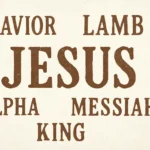
The New Testament uses several titles that overlap with the meaning of Messiah but highlight different aspects of Jesus’ identity. “Son of David” emphasizes his royal ancestry. “Son of God” expresses his unique relationship with God and, in many passages, his divine identity. “Lord” points to authority and becomes a title of worship.
“Son of Man” emphasizes both his humanity and his connection with Daniel’s heavenly ruler. “Savior” focuses on his work of rescue. “Lamb of God,” especially in John 1:29, connects Jesus with sacrifice and the removal of sin. No single title says everything, so the New Testament uses several together.
Calling Jesus “Christ” therefore makes a theological claim. It says he is not merely a gifted leader or spiritual example. He is the one appointed by God to fulfill Israel’s hope, reveal God’s reign, reconcile sinners, and bring history toward its appointed renewal.
How Jewish and Christian views of the Messiah differ
Judaism and Christianity share many Hebrew Bible passages and the expectation that God will redeem his people, but they interpret the messianic promises differently. Jewish interpretation generally expects a future human king from David’s line who will gather the exiles, restore Israel, establish justice, and bring an era of peace. Jesus is not accepted as that Messiah in mainstream Jewish thought because these conditions are not understood to have been fulfilled.
Christianity teaches that Jesus is the Messiah even though the world still contains sin, violence, and death. Christians explain the apparent tension through the two-stage pattern of Jesus’ first coming in humility and his future return in glory. Jewish and Christian readings also differ over passages such as Isaiah 53, Psalm 22, Daniel 7, and the meaning of particular Hebrew terms.
Recognizing this difference helps prevent oversimplification. Christians should not treat Jewish interpretations as if they are merely uninformed versions of Christian belief. The two traditions share Scripture while drawing different conclusions about Jesus, the timing of redemption, and the nature of the messianic age.
How to study the Messiah in the Bible
A careful study works best when you read individual passages in their original setting before tracing their connections across Scripture. Ask who is speaking, what problem the passage addresses, whether it describes a present person or a future hope, and how later biblical writers use it.
Start with the word: Compare passages where “anointed” refers to kings, priests, or other appointed people.
Trace the covenants: Follow the promises to Abraham, Judah, and David.
Read the royal psalms: Study Psalms 2, 22, 72, and 110 while noticing both kingship and suffering.
Read the prophets in context: Consider Isaiah 9, Isaiah 11, Isaiah 42, Isaiah 52–53, Micah 5, Zechariah 9, and Daniel 7.
Compare all four Gospels: Observe how Matthew, Mark, Luke, and John present Jesus’ identity and mission.
Read the apostolic explanation: Acts and the letters explain how Jesus’ death, resurrection, exaltation, and return relate to messianic hope.
Keep a distinction between explicit prediction, typology, and later interpretation. An explicit prediction directly describes something expected in the future. Typology identifies a person, event, or institution that foreshadows a later and greater reality. Later interpretation shows how New Testament writers understood Israel’s Scriptures in light of Jesus.
This approach also helps you avoid treating every mention of a king, servant, shepherd, or anointed person as a direct prediction of Jesus. The Bible’s messianic message is strongest when individual passages are respected in context and then understood within the larger story of God’s promises.
What the Messiah means for Christian faith
For Christians, the Messiah is not only an answer to a question about ancient prophecy. Jesus’ messianic identity shapes worship, salvation, ethics, and hope. Because he is understood as the true king, Christians owe him loyalty. Because he suffers for others, his followers are called to serve rather than seek status.
Because he is raised from death, Christian hope is not limited to the survival of the soul. It includes bodily resurrection and the renewal of creation. Because his mission reaches the nations, the church understands itself as a community drawn from every people, language, and social background.
The Messiah also gives Christians a way to hold together present faithfulness and future expectation. They are called to practice justice, mercy, forgiveness, and reconciliation now, while recognizing that no human government or institution can produce the complete kingdom promised by God.
The Bible’s Messiah is therefore both the suffering servant and the reigning king, both the one who bears rejection and the one who receives universal authority. In Christian belief, Jesus fulfills the promise through his life, death, resurrection, and exaltation, and he will complete that work when he returns to judge evil and renew all things.
Frequently asked questions
Is “Messiah” the same as “Christ”?
Yes. “Messiah” comes from the Hebrew word for “anointed one,” while “Christ” comes from the Greek translation of that title. Both describe someone appointed by God. “Jesus Christ” means “Jesus the Messiah,” not a personal name followed by a family surname.
Does the Old Testament explicitly say that Jesus is the Messiah?
The Old Testament does not name Jesus directly. It contains promises, patterns, and descriptions of a coming ruler, servant, and deliverer. The New Testament argues that Jesus fulfills these passages, while Jewish interpretation generally reaches a different conclusion about their meaning and fulfillment.
Why did Jesus not bring world peace if he is the Messiah?
Christianity teaches that Jesus began the Messiah’s kingdom through his ministry, death, and resurrection, but that its final visible completion is still future. Christians expect his return, the defeat of death, final judgment, and the renewal of creation. This is commonly described as the kingdom being present already but not yet complete.
What is the best place to start reading about the Messiah?
Begin with Luke and Acts for a connected account of Jesus’ life, resurrection, and the early Christian explanation of his mission. Then read 2 Samuel 7, Psalms 2, 22, and 110, Isaiah 9, 11, and 52–53, Micah 5, and Daniel 7. Compare each passage with its surrounding context.








Leave a Reply