In the Bible, new life means becoming spiritually renewed through faith in Jesus Christ. It is more than turning over a new leaf or improving your habits; it describes a changed relationship with God, a new identity, and a different direction for daily living.
The phrase new life Bible can point to two related ideas. Some readers are searching for what Scripture teaches about spiritual renewal, while others mean the New Life Version, an English Bible translation sometimes referred to informally as a “New Life Bible.” Understanding both uses helps you find the answer you need.
Biblical new life begins with God’s work, not human effort alone. Christianity teaches that sin separates people from God, but that God offers forgiveness and reconciliation through Jesus Christ. When a person trusts Christ, that person receives a new standing before God and begins a transformed life.
This change is often called salvation, rebirth, or regeneration. These terms describe different aspects of the same central truth: God does not merely repair a person’s outward behavior; he renews the inner person and brings that person into a living relationship with him.
New life does not mean that every problem disappears immediately. Christians may still experience grief, temptation, illness, conflict, and uncertainty. The difference is that they face those realities with a new source of hope, a new allegiance, and the continuing presence of God.
Core idea: Biblical new life is received by God’s grace through faith in Christ, then expressed through a growing pattern of trust, obedience, love, and spiritual renewal.
The Bible presents this renewal as both an event and a process. A person may identify a moment when faith began, but spiritual growth continues over time. The mind, priorities, relationships, and choices are gradually reshaped as the believer learns to follow God.
New life is different from self-improvement
Self-improvement usually begins with a person’s goals: becoming more disciplined, successful, calm, or productive. Those goals can be worthwhile, but Christian transformation reaches deeper. It changes what a person worships, what gives life meaning, and how that person understands forgiveness and responsibility.
The Bible does not teach that people earn new life by becoming good enough. Ephesians 2:8-9 describes salvation as a gift of grace received through faith rather than a reward for works. Good works still matter, but they are presented as the result of God’s work in a believer, not the price paid to obtain it.
That distinction protects the Christian message from two opposite errors. One error is pride: believing spiritual renewal proves personal superiority. The other is despair: believing past failure makes renewal impossible. The gospel answers both by placing salvation in God’s mercy and inviting people to respond with faith.
How Jesus describes spiritual rebirth
One of the clearest biblical explanations of new life appears in Jesus’ conversation with Nicodemus in John 3. Nicodemus was a respected religious teacher, yet Jesus told him that a person must be “born again” or “born from above.” The point was not physical reincarnation. Jesus was describing a spiritual birth brought about by God’s Spirit.
Jesus’ teaching shows why religious knowledge alone is not the same as new life. A person may know biblical facts, participate in religious traditions, or admire Jesus’ teaching without personally trusting him. Spiritual rebirth involves receiving God’s work within, not simply collecting information about faith.
John 3 also connects new life with God’s love and with faith in his Son. The passage presents salvation as God’s initiative and emphasizes that Jesus came to save rather than condemn. Its message offers both a serious warning about unbelief and a strong invitation to trust God.
The Holy Spirit is central to this renewal. In John 3, Jesus compares the Spirit’s work to the wind: its effects can be seen even though the wind itself cannot be controlled or observed directly. In a similar way, spiritual change becomes visible through new desires, new conduct, increasing love, and a willingness to turn toward God.
A new source: life comes from God rather than from personal effort alone.
A new identity: believers are no longer defined only by their past, failures, status, or achievements.
A new direction: faith leads toward God’s will, truth, love, and holiness.
A new relationship: prayer and worship become responses to a living relationship with God.
New birth should not be confused with reaching instant spiritual maturity. A newborn believer is genuinely alive but still needs nourishment, instruction, protection, and time to grow. The same pattern appears in Christian discipleship: conversion begins a life that must continue developing.
Key Bible passages about new life
Several passages provide a strong biblical foundation for understanding renewal. Rather than treating one verse as a complete explanation, read these references in their surrounding context. Together, they show that new life includes forgiveness, union with Christ, a new identity, spiritual growth, and future resurrection hope.
John 3:1-21 explains being born again
This passage introduces the language of spiritual rebirth. Jesus teaches that entry into God’s kingdom requires a work of the Spirit, not merely ancestry, moral achievement, or religious status. John 3:16 is especially well known because it connects God’s love, the gift of his Son, faith, and eternal life.
The surrounding verses add needed balance. They explain that Jesus came as light, but people may resist the light when they want to hide evil. New life therefore includes both trust in Christ and a movement toward truth.
2 Corinthians 5:17 describes a new creation
Paul’s statement in 2 Corinthians 5:17 presents believers as people who are “in Christ” and therefore part of a new creation. The passage does not claim that a believer forgets every memory or loses every personality trait. It means that the person’s relationship with God and fundamental spiritual identity have been changed.
The next verses connect this new creation with reconciliation. God restores sinners to himself through Christ and gives believers a role in sharing that message with others. New life is therefore personal, but it is not private; it shapes how Christians treat people and represent God’s mercy.
Romans 6 connects new life with freedom from sin
Romans 6 uses baptism as a picture of union with Christ’s death and resurrection. Paul’s argument is that grace does not give believers permission to continue treating sin as their master. Those who have received new life are called to live as people who belong to God.
This does not mean Christians never sin. It means sin is no longer accepted as the rightful ruler of the person’s life. Through Christ, believers receive a new basis for resisting temptation and returning to God after failure. The passage emphasizes both freedom from sin’s dominion and responsibility for daily choices.
Ephesians 2:1-10 shows grace producing good works
Ephesians 2 describes people as spiritually dead in sin before turning to God, then explains that God makes them alive with Christ. The passage strongly emphasizes mercy and grace. It also says believers are created in Christ for good works that God has prepared for them.
This sequence matters. Good works are not a way to purchase salvation; they are the fruit of salvation. Acts of compassion, honesty, generosity, service, and justice become appropriate responses to the new life God gives.
Galatians 2:20 describes life centered on Christ
In Galatians 2:20, Paul describes his identity as joined to Christ’s death and says that his present life is lived by faith in the Son of God. This is not a claim that Paul ceased to be a distinct person. It is a declaration that Christ had become the defining center of his life.
The verse also connects faith with Christ’s love and self-giving. New life is not cold rule-keeping. It is a relationship shaped by gratitude for what Jesus has done and by trust in him for strength.
Colossians 3 moves from spiritual identity to practical conduct. Believers are told to set their minds on things above, put away destructive behaviors, and put on compassion, kindness, humility, patience, forgiveness, and love.
The passage gives a realistic picture of change. New life affects speech, anger, sexuality, relationships, work, worship, and forgiveness. It does not remain an abstract idea. What a person believes about Christ eventually influences how that person responds to ordinary situations.
How new life changes everyday decisions
New life becomes visible through repeated choices. A Christian does not become spiritually mature by waiting for a constant feeling of inspiration. Growth usually comes through ordinary practices that keep attention focused on God and make room for the Spirit’s work.
Prayer is one of those practices. Prayer is not a technique for controlling outcomes; it is a way of bringing gratitude, fear, confession, requests, and decisions before God. Over time, regular prayer can train a person to depend on God rather than respond to every pressure through anxiety or self-reliance.
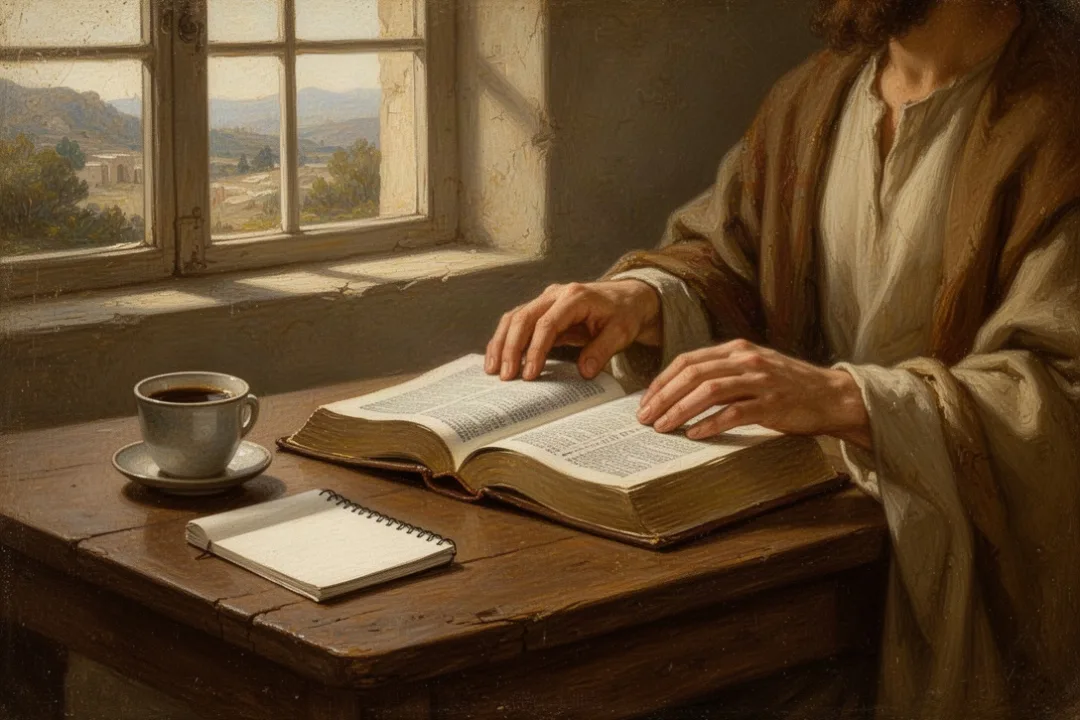
Reading the Bible also matters because new life needs a reliable source of truth. Scripture reveals God’s character, exposes harmful patterns, corrects false assumptions, and gives language for worship and wisdom. Reading should be more than rushing through a daily amount. Ask what the passage says about God, people, sin, grace, and faithful action.
Community provides another essential setting for growth. Other Christians can encourage you, challenge blind spots, pray with you, and help you persevere. Healthy Christian community is not based on pretending to be perfect. It makes room for honesty, accountability, forgiveness, and practical service.
Begin with honest prayer. Bring your actual fears, habits, questions, and hopes to God rather than presenting an edited version of yourself.
Read a manageable passage. Start with a Gospel such as Mark or John, or study one of the passages about new life listed above.
Identify one response. Choose a specific action, such as apologizing, resisting a harmful habit, helping someone, or setting aside time for prayer.
Share your growth with trusted believers. Ask for encouragement and honest accountability from mature Christians.
Return to grace after failure. Confess the failure, receive God’s forgiveness, make needed repairs, and continue following Christ.
Relationships often reveal whether spiritual renewal is becoming practical. New life may lead you to listen before defending yourself, tell the truth when dishonesty would be easier, forgive without denying harm, or set a wise boundary instead of responding with revenge.
Work and responsibility are also part of discipleship. Colossians 3:22-24 addresses the attitude of serving Christ through one’s work. The passage does not excuse exploitation or unfair treatment. It teaches that ordinary labor can be offered to God and carried out with integrity, diligence, and respect for others.
New life also changes how Christians handle suffering. The Bible does not promise that faith prevents pain. Instead, passages such as Romans 5:1-5 and James 1:2-4 describe how hardship can produce endurance and tested character when met with trust in God. That growth is not automatic; it requires honest lament, wise support, and continued dependence on God.
Practical test: Ask, “Does this choice help me love God and people truthfully?” The question will not answer every complicated decision, but it can expose motives that habits and preferences tend to hide.
What the New Life Version is and how to use it
If you searched for “new life Bible” because you want a particular translation, you may be thinking of the New Life Version, commonly abbreviated NLV. It is an English translation designed to use relatively simple vocabulary and sentence structure, making the biblical text accessible to readers who find traditional English difficult.
A simple translation can be especially helpful for new readers, children, people learning English, or anyone who wants to hear a familiar passage in clear language. Its readability may help you understand the main flow of a passage without stopping over older expressions or complex wording.
No translation removes the need for careful reading. Simple English can sometimes make a sentence feel more precise than the underlying Hebrew or Greek actually is. For serious study, compare the NLV with one or two other trustworthy translations and consult the surrounding context rather than building a belief on one wording.
When comparing translations, pay attention to several features:
Accuracy: Does the translation represent the meaning of the original text responsibly?
Readability: Can you understand the sentence without constant explanation?
Literary style: Does the translation preserve poetry, repetition, argument, and emphasis?
Study support: Are introductions, cross-references, notes, or parallel passages available?
Consistency: Does the translation use key terms in a way that helps you trace themes?
Using more than one translation can clarify difficult passages, but comparison should serve understanding rather than become a substitute for reading. You might read a chapter in the New Life Version for overall meaning, then consult another translation to notice wording, structure, and repeated terms.
Keep the translation distinction clear: the New Life Version is a form of the Bible, while “new life” is a major biblical theme. A person can study new life using any faithful English translation. The central message rests on the biblical teaching about God’s grace, Christ’s resurrection, the Spirit’s work, and the believer’s transformed identity.
Common questions about receiving and living new life
Many people wonder whether they have truly experienced new life because they still struggle, doubt, or feel spiritually dry. Scripture directs attention away from a demand for constant emotional certainty and toward trust in Christ, repentance, growing obedience, love for others, and perseverance.
New life is not measured by a flawless record. It is seen in a changed direction. A person who once ignored God may begin seeking him; someone controlled by resentment may start pursuing forgiveness; someone who lived only for self may begin serving others. These changes can be gradual and uneven, but they are meaningful signs of spiritual growth.
Doubt should be faced honestly rather than hidden. Bring questions to God, read the biblical context, speak with a mature pastor or Christian, and avoid treating temporary feelings as the final measure of faith. Biblical faith includes trust, but it can also coexist with seasons of uncertainty and the need for reassurance.
Repentance is another central part of new life. Repentance means more than feeling guilty. It involves turning away from sin and turning toward God, with a willingness to make changes and repair harm where possible. When failure occurs, the Christian response is neither denial nor hopelessness, but confession, dependence on grace, and renewed obedience.
The hope of new life also reaches beyond the present. The New Testament connects present spiritual renewal with the future resurrection and restoration God promises. Christians therefore live between what God has already begun and what he will complete. That hope gives meaning to present faithfulness without pretending that the world’s brokenness has already disappeared.
Frequently asked questions
Is the New Life Version a complete Bible translation?
Yes, the New Life Version is an English Bible translation intended to communicate Scripture in relatively simple language. It is designed for accessibility, but readers should still consider context and compare difficult passages with another reliable translation. “New life” itself is also a biblical theme, so the phrase may refer either to the translation or to spiritual renewal through Christ.
How does someone receive new life according to the Bible?
The Bible presents new life as God’s gift, received through faith in Jesus Christ rather than earned through moral performance. This response includes trusting Christ, turning from sin, and accepting God’s forgiveness. Genuine faith then develops into a changed life shaped by prayer, Scripture, love, obedience, and dependence on the Holy Spirit.
Does having new life mean a Christian will never sin again?
No. Biblical new life does not mean immediate perfection or the disappearance of temptation. It means sin no longer has the unquestioned authority it once had. Christians still fail, but they are called to confess sin, receive God’s forgiveness, resist destructive patterns, seek reconciliation, and continue growing in holiness and love.
Which Bible book is best for learning about new life?
John is a helpful place to begin because it explains belief in Jesus, eternal life, the Spirit, and spiritual rebirth. Romans, Ephesians, Galatians, and Colossians develop related themes such as grace, freedom from sin, new identity, and practical transformation. Reading each passage in its surrounding context will give a more complete understanding than collecting isolated verses.









Leave a Reply