Numbers in the Bible: Meanings, Patterns, and Context
Numbers in the Bible: Meanings, Patterns, and Context
Have you noticed the same number appearing in several Bible passages and wondered whether it carries a special message? Numbers in the Bible can have practical, symbolic, poetic, or theological significance, but their meaning depends on the passage. A number may count people, days, offerings, or measurements in one place and communicate an idea such as completeness or limitation in another.
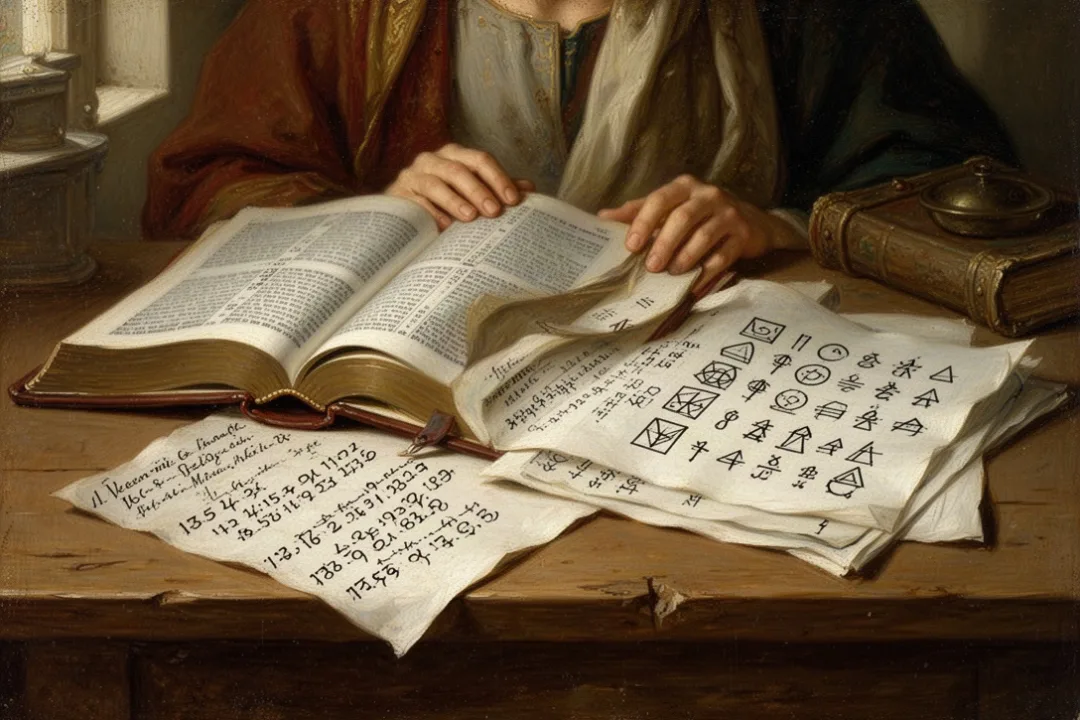
The safest approach is to begin with the text itself. Ask what the number is counting, how the surrounding passage uses it, and whether the Bible explains its significance. Biblical number symbolism is not a secret code that makes every modern occurrence spiritually meaningful. It is a feature of certain biblical passages that should be interpreted with care.
Good rule: Treat the plain meaning of a number as the starting point, and treat symbolism as a possibility supported by the passage rather than an automatic conclusion.
Many numbers in Scripture are simply ordinary quantities. The Bible records the number of people in a census, the years of a king’s reign, the dimensions of a building, or the amount of an offering. Those details can help establish historical setting, ritual instructions, or the scale of an event without carrying a hidden spiritual message.
Numbers can also serve a literary purpose. Biblical writers sometimes repeat a number to create rhythm, emphasize a pattern, or help readers remember a sequence. Genealogies, lists, and repeated time periods may organize a passage even when the number itself is not being presented as a symbol.
At other times, a number clearly contributes to the meaning of the story. The number seven is repeatedly associated with a complete cycle, especially in the creation account in Genesis 1–2, where the seventh day marks the completion and blessing of the work. The number forty often marks an extended period of testing, preparation, judgment, or transition, as seen in the flood narrative, Israel’s wilderness years, and Jesus’ time in the wilderness.
These examples do not mean that every seven or forty has exactly the same force. Context controls interpretation. A passage may use a number literally, symbolically, or in both ways at once. The fact that a number has a common biblical association does not remove the need to read the particular passage carefully.
Literal use: a number gives a count, measurement, age, date, or duration.
Structural use: a number organizes a list, cycle, genealogy, or repeated pattern.
Symbolic use: a number communicates an idea beyond its quantity.
Rhetorical use: a number strengthens emphasis, contrast, memory, or poetic expression.
Some passages use familiar numerical formulas without inviting precise calculation. Phrases such as “three” or “seven” may intensify a statement or establish a pattern. Proverbs, poetry, and prophetic writing often use numbers in this way. Their purpose is usually to make an idea vivid, not to provide a mathematical key for predicting events.
Common biblical numbers and their possible meanings
Several numbers appear often enough in Scripture to have recognizable associations. These associations are useful when they are confirmed by the passage’s themes, but they should not be treated as universal definitions. A number’s meaning can shift according to genre, speaker, setting, and repeated imagery.
One, two, and three
One can emphasize unity, uniqueness, or priority. The Bible’s teaching about one God is central to Israel’s confession in Deuteronomy 6. In other passages, one may simply identify a single person, object, or event, so the context must show whether a theological emphasis is present.
Two often appears in settings involving witness, partnership, confirmation, or division. Deuteronomy 19 connects multiple witnesses with establishing a matter, and Jesus sends disciples out in pairs in the Gospels. Two does not always symbolize agreement, however; paired figures can also stand in contrast.
Three can mark emphasis, repetition, or a significant sequence. Peter’s three denials of Jesus and his later threefold restoration in John 21 are connected parts of the Gospel narrative. The number helps readers see the relationship between failure and restoration, but the meaning comes from the whole scene, not from the number alone.
Four and five
Four is frequently connected with the created world or the whole earth. The Bible speaks of four directions or four winds, and Revelation uses groups of four in visions involving the world and its creatures. This pattern can suggest universality, although a group of four may also be a straightforward count.
Five has fewer consistent symbolic associations than some other numbers. It can appear in practical descriptions, such as the five loaves in the feeding narratives, or in literary patterns. Readers should resist assigning a fixed meaning to five merely because it occurs in a memorable episode.
Six and seven
Six is often viewed in relation to seven because it falls short of a complete cycle. Revelation’s use of 666 has led to extensive speculation, but the text itself connects the number with the beast and human calculation in Revelation 13. Its meaning should be interpreted through the book’s symbolism, historical setting, and contrast between the beast’s power and God’s authority.
Seven is one of the clearest recurring symbolic numbers in the Bible. It can communicate fullness, completion, or a complete series. The seven-day creation pattern, repeated sevens in Leviticus, and the many sevens in Revelation all show how the number can shape a passage’s structure and theological message.
Ten, twelve, and forty
Ten can represent a complete set or a substantial, rounded amount. The Ten Commandments are the best-known example, although Scripture itself calls them the “ten words” in Exodus 34 rather than presenting ten as an abstract code. The number also appears in stories involving testing, responsibility, or a complete group, but not every group of ten carries the same symbolism.
Twelve is strongly associated with the people of God in several major biblical settings. The twelve sons of Jacob become the ancestors of Israel’s tribes, and Jesus chooses twelve apostles. Revelation’s imagery combines twelve with other numbers to portray the fullness and order of God’s redeemed people.
Forty often describes a meaningful period of preparation, testing, judgment, or transition. Rain falls for forty days and nights in Genesis 7; Israel spends forty years in the wilderness; Moses spends extended periods on Mount Sinai; and Jesus fasts for forty days before beginning his public ministry. The number does not necessarily mean a precise symbolic unit every time, but its repeated use invites readers to notice a season of formation or testing.
Seventy, seventy-two, and one hundred forty-four thousand
Seventy can represent a broad or complete group. Examples include the seventy nations represented in the table of nations in Genesis 10, the seventy elders connected with Israel’s leadership, and Jesus’ mission of seventy or seventy-two disciples depending on the manuscript tradition reflected in different Bible translations. The precise number in that Gospel passage should be handled carefully, but the sending of a representative group remains clear.
The 144,000 in Revelation 7 and 14 is one of the most debated numerical images in Scripture. It is formed from twelve multiplied by twelve and then multiplied by one thousand, which leads many interpreters to see it as a symbolic picture of completeness among God’s people. Others read it more literally. The passage’s visions, symbolism, and relationship to the wider book should guide interpretation rather than calculations detached from Revelation.
What the Bible’s major number patterns communicate
Looking at individual numbers is helpful, but biblical meaning often becomes clearer through larger patterns. Writers may repeat a number across a story, connect it with a covenant, or use it to contrast human limitation with divine completeness. The pattern matters more than a dictionary-style definition.
The strongest recurring pattern is the use of seven for completion. The creation week provides the foundational example, while Sabbath rhythms and festival instructions extend the idea of completed cycles. In Revelation, groups of seven organize letters, seals, trumpets, and bowls, giving the visions a sense of ordered fullness even when the imagery itself is difficult.
The number twelve often identifies covenant community. Israel’s twelve tribes and Jesus’ twelve apostles connect the Old and New Testaments through a shared image of a people gathered under God’s purposes. Revelation develops this pattern through measurements and multiples of twelve, suggesting an ordered, complete community rather than an arbitrary numerical detail.
Forty describes a long, decisive interval. It can be a time when people are tested, prepared, judged, or brought from one stage into another. The wilderness narratives show that the period is not merely a delay. It exposes distrust, teaches dependence, and prepares a people for a new responsibility.
Numbers can also express human limitation or incompleteness. The contrast between six and seven is often discussed in this connection, especially in Revelation. Yet this interpretation should remain tied to the specific literary design of a passage. A symbolic reading becomes stronger when the number is repeated, contrasted, explained, or placed within a larger pattern.
Multiplication can intensify an established association. Twelve times twelve, for example, may communicate a complete people in a more expansive way than twelve alone. Similarly, seven multiplied or repeated can suggest an intensified fullness. These patterns are not mathematical predictions; they are part of the Bible’s symbolic language.
Identify the number and record every nearby reference to it.
Ask whether the number is counting something real or creating a literary pattern.
Compare the passage with other uses of the same number in Scripture.
Consider the genre: narrative, law, poetry, prophecy, wisdom, or apocalyptic vision.
State the interpretation modestly if the text allows more than one reading.
Read the pattern, not just the number: A number’s significance is strongest when repetition, contrast, structure, or explanation in the surrounding passage supports it.
Why the Book of Numbers is more than a list of counts
The phrase “numbers in the Bible” can also refer to the fourth book of the Old Testament, traditionally called Numbers. Its Hebrew title is connected with the opening words about a census, while the English title reflects the book’s two major population counts. Those censuses matter, but they are only part of the book’s message.
Numbers begins with Israel organized around the tabernacle after leaving Mount Sinai. The first census counts men eligible for military service among the tribes, while the Levites are counted and assigned duties related to the sanctuary. These lists establish order, responsibility, worship, and community structure before Israel travels toward the promised land.
The book then follows Israel through the wilderness. Its stories include complaints about food and water, opposition to Moses, the report of the spies, Korah’s rebellion, the bronze serpent, Balaam’s encounters with Israel, and preparations for entering Canaan. The repeated tension is between God’s promise and Israel’s distrust.
The first census and the later census in Numbers 26 frame a generation’s transition. The older generation is associated with the failure to trust God after the spies’ report, while the later count prepares a new generation for settlement in the land. The numbers therefore contribute to the book’s themes of judgment, continuity, inheritance, and renewed responsibility.
The census figures should not be treated as a simple modern population report without considering ancient literary and historical questions. Scholars have discussed how terms, counting practices, and large figures function in the text. A careful reader can affirm the book’s theological message without pretending that every modern question about the numbers has an uncomplicated answer.
The book also uses numbers in ritual and social instructions. Offerings, tribal arrangements, travel stages, and inheritance boundaries show that Israel’s life was being ordered around God’s presence. Counting in Numbers is connected with belonging and duty, not merely with statistical information.
Reading the Book of Numbers well means paying attention to both its lists and its narratives. The lists show organization and continuity; the stories reveal fear, rebellion, patience, judgment, intercession, and hope. Together they portray a community learning that freedom from Egypt does not automatically produce faithful living.
How to interpret biblical numbers without forcing symbolism
Numerical interpretation becomes unreliable when readers begin with a preferred meaning and search for passages to support it. A better method starts with observation before application. Write down what the number does in the passage before deciding what it might represent.
Start by checking the immediate context. If a number appears in a legal instruction, it may function as a practical requirement. If it appears in a vision filled with animals, lamps, horns, colors, and unusual measurements, symbolic interpretation is more likely. Genre does not solve every question, but it sets reasonable boundaries.
Next, look for internal explanation. Sometimes a biblical writer interprets an image or gives a clue about its meaning. Daniel’s visions and parts of Revelation include explanations alongside symbols. When the text provides an interpretation, it should carry more weight than a later tradition or a personal association.
Then compare related passages without flattening their differences. Seven in Genesis, Leviticus, and Revelation may share an association with completeness while serving different purposes in each book. Scripture can develop an image over time, but that development does not mean every occurrence has an identical message.
Pay attention to literary repetition and contrast. A number used once may be incidental, while a number repeated throughout a vision may be central to its design. Notice whether the author pairs it with another number, places it at a turning point, or uses it to mark a beginning, ending, judgment, or restoration.
It is also wise to distinguish biblical interpretation from numerology. Numerology tries to derive hidden predictions, personality traits, or personal guidance from numerical patterns. The Bible does contain symbolic numbers, but it does not authorize using arbitrary calculations to predict lottery results, dates, secret messages, or God’s will for every private decision.
Do not assume that a number has the same meaning in every passage.
Do not build a doctrine on a single uncertain numerical pattern.
Do not treat modern sightings of a number as automatic divine signs.
Do not ignore plain historical, grammatical, and literary details.
Do compare interpretations with the Bible’s central themes rather than isolated speculation.
Translations and manuscripts can also affect how readers encounter a number. A passage may use different wording, units, or textual readings in different translations. When an interpretation depends on an exact figure, consult several reliable translations and, when necessary, a study Bible or informed commentary.
The most responsible conclusion is sometimes that a number’s significance is uncertain. Admitting uncertainty is better than inventing precision. Biblical faith does not depend on assigning a hidden meaning to every figure, and a passage can communicate clearly even when numerical details remain debated.
How numbers point to biblical themes without becoming predictions
Numbers can help readers notice themes that might otherwise remain in the background. Seven can draw attention to completion and sacred rhythm. Twelve can highlight the formation of a covenant people. Forty can make readers watch for testing and transition. These associations are valuable because they support attentive reading.
They also reinforce the Bible’s larger claim that God works through ordered time, gathered communities, and meaningful seasons. Creation is described through a rhythm of work and rest. Israel’s worship follows appointed cycles. Jesus’ ministry takes place within the story of Israel, and Revelation presents history through carefully arranged visions.
At the same time, numbers do not control God or provide a formula for the future. The prophetic books call people to repentance and faithfulness, not to secret calculations. Jesus’ teaching about the timing of the end, recorded in the Gospels, directs attention away from date-setting and toward watchful obedience.
When you encounter a repeated number, let it prompt a better question: What is this passage emphasizing about God, people, judgment, worship, or hope? That question keeps numerical symbolism connected to the message of Scripture instead of allowing it to become a detached puzzle.
A sound reading may therefore say, “This number appears to contribute to the passage’s picture of completeness,” rather than, “This number always means completeness.” That small difference protects both the text and the reader. It leaves room for genuine symbolism while avoiding claims the Bible itself does not make.
Used carefully, numbers help reveal the Bible’s structure and imagery. They can connect stories across books, highlight repeated promises, and show how biblical writers shape meaning through pattern. Their value lies not in secret predictions but in helping you read the text with greater attention to context, design, and theological purpose.
Frequently asked questions
Does every number in the Bible have a spiritual meaning?
No. Many numbers give ordinary counts, measurements, ages, or periods of time. Some have symbolic significance, especially when a passage repeats them, contrasts them, or uses them in a vision. The surrounding context should establish that symbolism. Assigning a spiritual meaning to every number can distract from the passage’s plain message and lead to interpretations the text does not support.
What is the most important number in the Bible?
There is no official single “most important” number. Seven, twelve, and forty receive frequent attention because they recur in major biblical patterns, but their importance varies by passage. The number one is also central to biblical teaching about God’s uniqueness, while other numbers matter in particular stories. Meaning comes from the text’s use, not from a universal ranking.
Is 666 a code for a modern person or institution?
Revelation 13 presents 666 as the number associated with the beast and invites wisdom in understanding it. Many interpretations have connected it with historical figures or systems, but applying it confidently to a modern person requires assumptions beyond what the passage clearly states. It should be read within Revelation’s conflict between deceptive power, faithful witness, and God’s final judgment.
Why does the Bible use large numbers in censuses and battles?
Biblical lists and battle accounts can establish the size, organization, inheritance, or responsibility of a community. Questions about ancient counting terms and unusually large figures have generated different interpretations. You can study those questions while still recognizing the narratives’ main concerns: Israel’s identity, God’s promises, leadership, obedience, and the consequences of trusting or rejecting those promises.









Leave a Reply