Prayer Mat Praying: How to Use a Prayer Mat for Better Prayers
Prayer Mat Praying: How to Use a Prayer Mat for Better Prayers
Prayer Mat Praying: How to Use a Prayer Mat for Better Prayers
For many Muslims, the prayer mat is more than a decorative accessory; it is a personal, portable space that marks a moment of direct connection with God. A well-used prayer mat can help create a sense of sacred order, reduce distractions, and support a deeper sense of presence during prayer. This article explores how to use a prayer mat effectively, from choosing the right mat and preparing the space, to the practical steps of prayer, mindful variations in practice, and care tips that keep your mat in good condition for years. Whether you are new to using a prayer mat or you want to optimize your routine for better focus and sincerity, the guidance below offers a thorough, balanced approach.
A prayer mat, or rug used for salat (the Muslim daily prayers), serves several practical and symbolic roles. It provides a clean surface for the prostrations (sujud) and helps define a personal sacred space in a room that may be shared with others. The mat often includes a designated place for the forehead and nose during prostration, a border that helps indicate the area to honor with the person’s entire body, and sometimes an emblem or design that points toward the qibla (the direction of Mecca). While jurists emphasize that prayer can be performed on any clean surface, using a dedicated mat can reinforce cleanliness, focus, and reverence in daily practice.
Important terms to know include:
Cleanliness (tahara): A clean surface helps ensure the validity of prayers.
Qibla: The direction toward Mecca, toward which prayers are oriented.
Niyyah (intention): The mental resolve to perform the prayer for God’s sake.
Prostration (sujud) and bowing (ruku): Core postures that reflect submission and humility.
Preparing the space and the body for prayer
Preparation is a key factor in quality prayer. A good routine helps you approach the mat with intention and calm. Here are practical steps to create the right conditions:
Cleanliness: Perform wudu (ablution) if possible, wash your hands, face, arms, and feet as appropriate. If water is not available, use tayammum (dry ablution) per your tradition’s guidance.
Clothing: Wear modest, comfortable clothing. Remove shoes only if required by your space, and keep footwear away from the mat so it stays clean.
Environment: Choose a quiet place, free from loud noises or interruptions. Close doors, silence devices, and consider dimming bright lights if they tempt distraction.
Time and rhythm: Try to pray at consistent times as much as possible. A routine helps cultivate focus and a sense of sacred time.
Distractions: Turn off or silence notifications, step away from screens, and set the mat in a location where you can face the qibla with minimal interference.
Ni yyah and mental preparation
The moment you intend to pray on the mat, you engage your niyyah—the intention to perform the prayer for God alone. This inward commitment is as important as the outward actions. A brief reminder before you begin can help:
Pause, take a few slow breaths to settle the mind.
State mentally, or softly aloud if you prefer, your intention to pray the specific prayer with sincerity.
Visualize leaving worldly thoughts at the edge of the mat as you step into the prayer space.
How to lay out and orient your prayer mat
Correct placement of the mat supports a correct posture and helps maintain concentration. Here are practical steps to lay out the mat effectively:
Unfold and smooth the mat on a flat surface. Ensure there are no creases under the forehead area or between the knees and feet.
Align toward the qibla: Position the mat so that the longer edge points toward the direction you face while praying. If the mat has a decorative or patterned end, you may orient it so the decorative end is nearer to you or slightly ahead, depending on your mat’s design and home layout.
Check the surface: Place the mat on a clean floor—carpet, hardwood, or tile. If the floor is dusty or dirty, gently wipe or clean the area before placing the mat.
Stability: If the mat tends to slide, use a non-slip underlay or place it on a rug that grips the floor. Stability reduces movement that can break concentration.
Variations in mat design can influence placement. Some mats have a built-in center marker or an indication of the foreseen prostration area. If your mat includes a border, you can use the border as a visual cue to keep your body alignment consistent during salah.
Practical steps for praying on a mat
Below is a practical, step-by-step guide to the essential actions of salah when using a prayer mat. This overview emphasizes the core movements common to the practice, while acknowledging minor regional variations.
Intention (niyyah): Stand in a comfortable position facing the qibla, keep your back straight, and mentally commit to the prayer you are about to perform.
Takbir al-Ihram: Raise your hands to the level of the shoulders or ears and say “Allahu Akbar” (God is the Greatest). This marks the start of the prayer.
Qiyam (standing): Recite the opening supplication and short verses of the Quran. In many cases, this includes Surah Al-Fatiha followed by another portion (or a short surah) of your choice.
Ruku (bowing): Bow with hands on the knees, back straight, and gaze directed slightly downward. Say “Subhana rabbiyal adheem” three times or as prescribed by your tradition.
I‘tidal (stand up straight): Return to a standing position, saying “Sami’ Allahu liman hamidah” and then “Rabbana lakal hamd” as you rise.
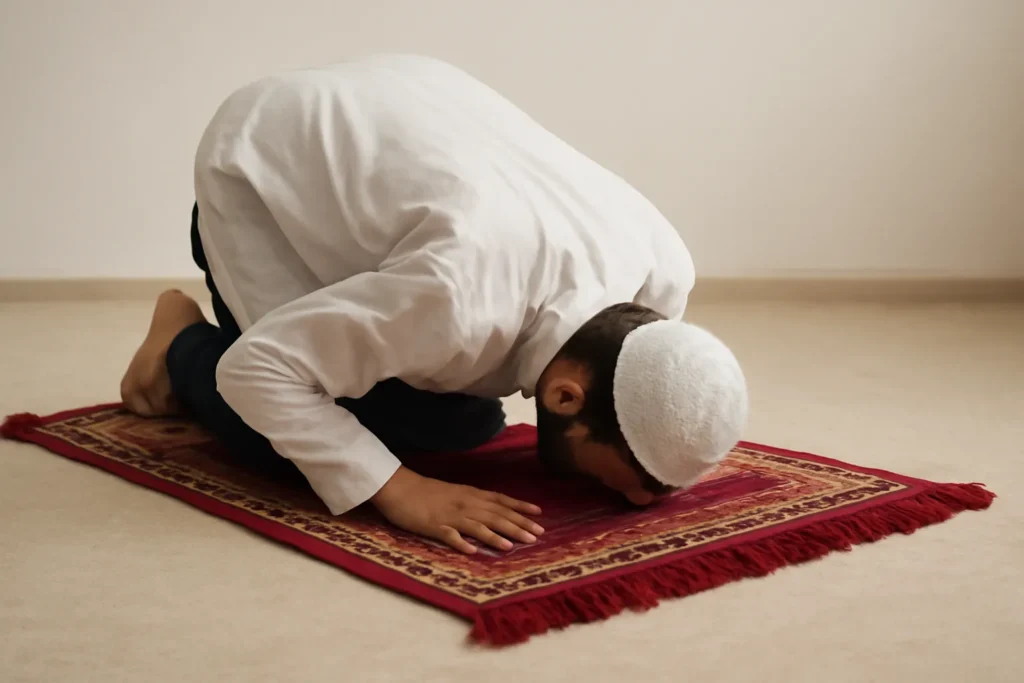
Sujud (prostration): Prostrate with the forehead, nose, palms, knees, and toes touching the mat. This is the moment of utmost humility; recite supplications or verses as appropriate.
Jalsah (sitting between prostrations): Sit briefly on the left thigh or in a comfortable seated position, and offer any required supplications.
Sujud (second prostration): Perform another prostration in the same manner as the first.
Final Tashahhud and Salam: After completing the required number of cycles (rak‘ahs) for the specific prayer, sit for the testimony (tashahhud), send blessings on the Prophet, and finish with the tasleem (saluting to the right and left).
Depending on your level of practice and the specific prayer you are performing (for example, Fajr, Dhuhr, Asr, Maghrib, Isha), the number of rak‘ahs varies. The steps above describe the core sequence that remains constant across many forms of daily prayer. You can adapt your recitations and supplications to your own tradition and language, as long as you maintain reverence and focus.
Variations of prayer mat praying
The practice of praying on a mat can vary in multiple ways, reflecting personal preference, culture, and circumstances. Here are several common variations of prayer mat praying you may encounter or choose to adopt:
Travel mats and compact designs
When you are away from home, a travel-ready mat offers portability without sacrificing cleanliness or concentration. Options include roll-up mats, foldable mats, or lightweight synthetic designs. Travel mats often have a smaller surface area but are still oriented toward the qibla. Some travelers may use a large scarf or prayer rug that can be folded into a mat-length size for convenience.
Indoor mats are typically plush and cushioned, providing comfort during extended sessions. Outdoor prayers may require mats with weather-resistant backs or waterproof surfaces to resist damp or soil. In community spaces like mosques, large, shared prayer carpets behave differently, emphasizing spatial etiquette and collective focus, but personal mats remain valuable for private moments of reflection.
Family and group prayers
In family settings, each person often uses their own individual mat within a shared area. This preserves personal hygiene and helps maintain focus, especially for children who are learning the routine. In a larger congregation, the mats may be arranged in rows with clear indicators of the front line facing the qibla.
Mat materials and textures
Prayer mats come in many materials—cotton, wool, silk blends, or synthetic fibers. Each material offers a different balance of softness, durability, and price. The choice of material may influence extended prayers (longer sessions may benefit from a softer surface) and ease of cleaning. Important considerations include skin sensitivity and maintenance requirements for the chosen textile.
Decorative and symbolic designs
Some mats feature lines, borders, or motifs that guide body alignment or provide a point of focus. Others may include religious verses or motifs that offer inspiration. While design does not replace the essential actions of prayer, it can contribute to a sense of beauty, reverence, and connection to tradition when used respectfully.
Using the prayer mat to enhance mindfulness and focus
A prayer mat can be a practical tool for improving mindfulness in daily practice. It serves as a cue that helps transition from daily activity to spiritual activity. Consider these strategies:
Breath and posture: Use slow, deliberate breathing during the takbir and throughout the bowing and prostration to anchor your awareness in the present moment.
Single-point focus: Choose a single visual anchor on the mat (for example, the center or a border) to minimize wandering thoughts during the prostration.
Ritual rhythm: Maintain a steady tempo in your movements to create a predictable rhythm that calms the mind and steadies the heart.
Reflection: After finishing the prayer, take a brief moment to reflect on any lessons or gratitude you want to carry into your day.
Common mistakes and how to avoid them
Even seasoned practitioners can slip into small missteps that affect the experience or, in some cases, the validity of the prayer. Here are frequent issues and practical fixes:
Not facing the qibla: Recheck the direction before beginning; a quick glance toward the wall or window can help confirm alignment.
Dirty or slippery surface: Use a clean mat and, if needed, a non-slip underlay to prevent shifting during prostration.
Rushing through steps: Slow down the movements and recitations to preserve reverence and accuracy.
Inconsistent niyyah: Begin with a clear, quiet intention each time you begin; consistency reinforces mindfulness.
Distractions: Minimize input from devices and background noise; consider placing a small sign or note reminding you to focus during prayer.
Care, cleaning, and maintenance of the prayer mat
A durable prayer mat remains a faithful companion with proper care. Here are practical maintenance guidelines to ensure your mat stays clean, fresh, and ready for use:
Regular cleaning: Shake out loose debris after use and brush off dust from the surface. For mats with removable covers, follow care instructions on the label for washing cycles.
Washing materials: Most cotton and wool mats can be hand-washed or machine-washed on a gentle cycle with mild detergent. Silk or delicate mats may require spot cleaning or dry cleaning per manufacturer guidance.
Air-drying: Allow the mat to dry completely before rolling or folding to prevent mold and mildew.
Storage: When not in use, roll the mat with the top side facing out and store in a cool, dry place. If space is limited, a flat-fold method helps avoid creases that could affect comfort.
Sun exposure: Prolonged direct sunlight can fade colors or weaken fibers; store away from intense sun when possible.
Regional and cultural variations in prayer mat usage
Across different regions, prayer mats reflect local aesthetics, materials, and customs. Some examples include:
Middle East and North Africa: Mats may feature geometric borders and sometimes feature a central space for the forehead, oriented toward the qibla. Materials may range from wool to synthetic blends.
South Asia and Southeast Asia: Cotton mats are common, with vibrant colors and floral motifs. Travel mats may resemble prayer scarves or small rugs that fold compactly.
Europe and North America: Modern mats often emphasize portability and ease of cleaning, with anti-slip backs for better stability on different floor types.
Integrating a prayer mat into daily life: tips for consistency
Consistency in prayer requires practical planning, not just spiritual intention. Here are ideas to help you integrate mat-prayer into daily routines:
Dedicated space: Create a quiet corner with a clean surface reserved for prayer. A small shelf, a wall hook, or a mat rack can help keep the space organized.
Ritual cues: Set a timer or reminder to encourage timely prayers, helping you build a habit that becomes automatic over time.
Family involvement: Invite family members to observe or participate in a short, mindful practice together, reinforcing a shared sense of sacred time.
Adaptability: Choose mats that fit various spaces—home, office, or travel—to maintain practice regardless of location.
Frequently asked questions about prayer mats and praying
Below are concise answers to common questions people ask about prayer mats and praying on them:
Can I pray without a mat? Yes, if the surface is clean. A prayer mat is a personal aid, not a requirement, though it often helps with cleanliness and focus.
Is it okay to use a mat with symbols or text? As long as the mat’s content is respectful and appropriate, designs can be a source of inspiration and focus; some people prefer simple, plain surfaces for greater concentration.
What if my mat gets damaged? If the mat’s surface or backing wears out, consider replacing it. A well-maintained mat supports long-term prayer practice.
How do I choose the right mat? Consider material, size, thickness, ease of cleaning, and whether it suits your typical prayer space and climate. A mat should feel comfortable, provide stability, and align with your personal practice.
Conclusion: turning a simple mat into a gateway for better prayers
A prayer mat is more than a physical object; it is a doorway to intentional focus, spiritual presence, and consistent devotion. By choosing a mat that suits your needs, preparing your space and body with care, laying out the mat properly, and following a mindful sequence of movements, you can enhance the quality of your prayers. Variations in mat material, design, and usage—whether you travel with a compact mat, pray outdoors, or practice in a busy family home—do not change the core aim: to offer a clean surface, a clear direction, and a sacred space where you can connect with God with humility and sincerity. With regular maintenance and thoughtful routines, your prayer mat can remain a trusted companion that supports your practice for many years to come.
To recap, here are the key takeaways:
Preparation matters: Cleanliness, intention, and a calm environment set the foundation for a meaningful prayer.
Correct orientation: Facing the qibla and aligning your mat helps maintain proper posture and focus.
Mindful practice: Slowing down, breathing intentionally, and engaging with the recitations deepen your connection.
Practical variations—travel mats, outdoor use, family practices—can support consistency in different contexts.
Care and maintenance: Regular cleaning and proper storage extend the life and comfort of your mat.
Whether you are just starting to explore how to use a prayer mat effectively or you want to refine an established routine, the mat can be a powerful ally in your spiritual practice. By honoring the space it represents and committing to focused, sincere prayer, you may find that even daily prayers become a source of clarity, compassion, and calm in your life.










Leave a Reply