📅 15th-13th century BCE (during the Israelite conquest of Canaan) · 📜 The name Rahab means 'vast' or 'height' in Hebrew, symbolizing her prominent role or perhaps her notable stature in biblical history.
RahabFaithCourageSalvation History
According to Joshua 2:11 — "For the LORD your God, he is God in heaven above and on the earth beneath."
This verse captures Rahab's recognition of God's sovereignty and her faith in His power, which was pivotal to her salvation and her place in biblical history.— Joshua 2:11
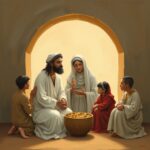
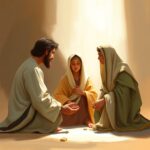
Rahab was a woman living in the ancient city of Jericho, known for her profession as a prostitute. When Israelite spies arrived in Jericho, she hid them to protect them from discovery, demonstrating extraordinary faith and courage. Recognizing the power of Israel's God, she Bargained for her life and her family's safety in exchange for her assistance, instructing the spies to mark her house with a scarlet cord. Her actions helped the Israelites conquer Jericho, and her faith was later commended by Hebrews and James as exemplary. Rahab's story highlights God's ability to use unlikely individuals for divine purposes, emphasizing themes of redemption, faith, and inclusion in God's plan of salvation. Her transformation from a figure of societal marginalization to an ancestor of Christ illustrates God's grace and sovereignty. She is remembered as a woman of remarkable faith who played a pivotal role in biblical history and God's salvation story.
🏛️ Cultural & Historical Context
In ancient Canaanite society, women’s roles were often limited, especially those engaged in professions like prostitution. Yet, Bashful societal norms did not diminish her agency or her capacity for faith. Her decision to aid the spies challenged social expectations, highlighting her boldness and desire for salvation. Women like Rahab, though marginalized, could exercise influence and demonstrate bravery, especially when motivated by faith. Her story reflects the complex social fabric of ancient Near Eastern cultures where morality, survival, and faith intersected. Rahab’s actions also reveal how divine purposes transcend societal boundaries, offering hope and redemption regardless of background.
👨👩👧 Family Connections
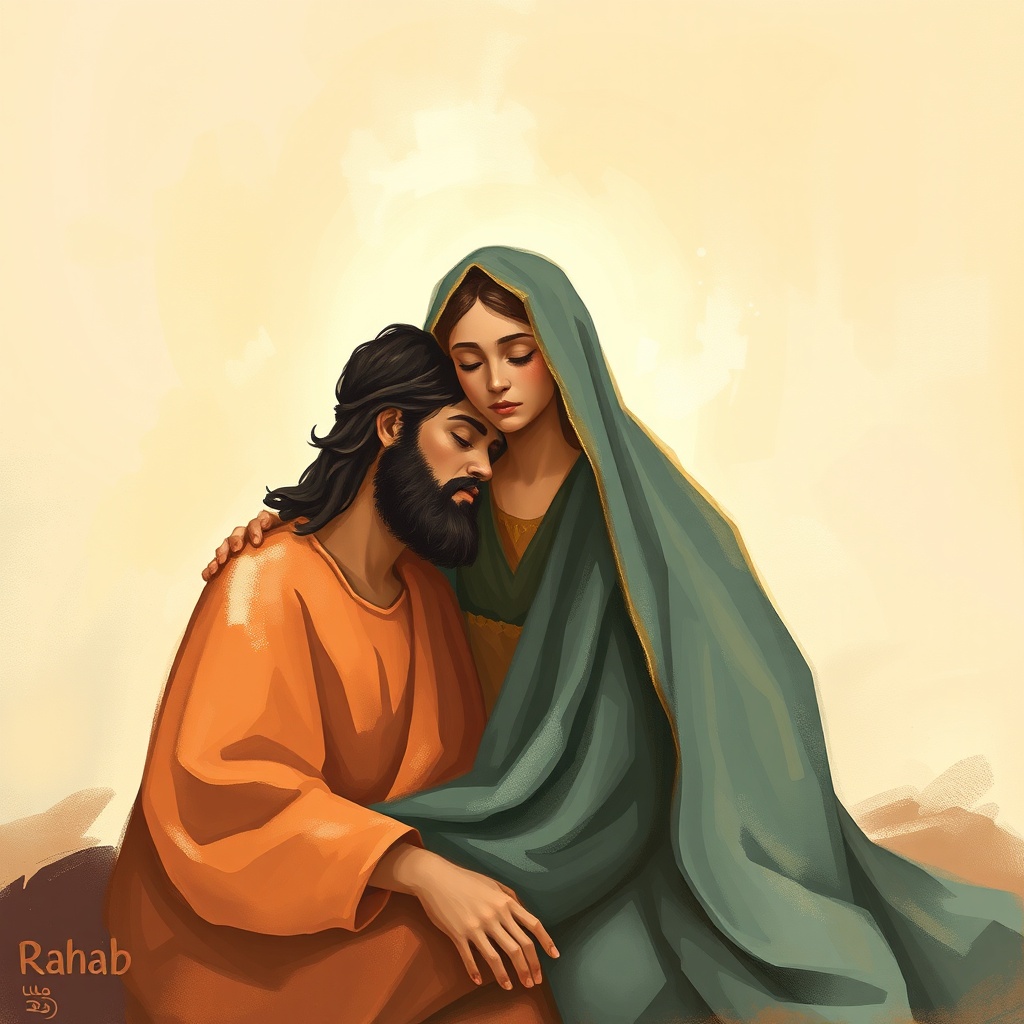
Rahab's familial details are not explicitly documented; she was a prostitute in Jericho. She later married Salmon, a member of the tribe of Judah, and became the mother of Boaz, an ancestor of King David.
Rahab embodies the theme of faith and redemption, illustrating how God's grace can transform the unlikely into instruments of His divine plan. Her story reinforces the biblical message that salvation is available to all, regardless of past actions or societal status. By including Rahab in the lineage of Christ (Matthew 1:5), the Bible emphasizes God's inclusive love and the importance of faith-based obedience. Her example demonstrates that true faith often requires bold action and trust in God's sovereignty, making her a symbol of hope and divine mercy in salvation history.
📖 Lessons for Today
📖 Lesson 1
Faith often requires boldness and stepping out of societal norms to trust God's plan, even when the outcome is uncertain.
Rahab contrasts with women like Sarah or Hannah, who are celebrated for their faith within societal expectations, while Rahab's faith was expressed in bold action amidst societal marginalization. Her story highlights themes of redemption and faith beyond traditional roles, illustrating that divine grace extends to those on the societal fringes. Her inclusion in Jesus' lineage underscores her significant connection to God's salvation plan, showing how divine purpose can elevate unlikely women to prominence.
📜 Scripture References
Reference
Joshua 2
Joshua 6
Hebrews 11:31
James 2:25
❓ Frequently Asked Questions
Was Rahab truly a prostitute?
The Bible refers to Rahab as ' Rahab the prostitute' (Joshua 2:1), indicating her profession. However, her faith and actions reveal her to be much more, highlighting her role as an ancestor of Jesus and a woman of great moral courage.
Did Rahab's faith save her?
Yes, her faith in God and her actions to protect the spies led to her salvation during the fall of Jericho (Joshua 6:22-25). Her faith was commended in Hebrews 11:31 and James 2:25 as exemplary.
What is Rahab's significance in biblical genealogy?
Rahab is included in the lineage of Jesus Christ in Matthew 1:5, emphasizing that divine grace can transform and elevate individuals regardless of their past, making her a symbol of redemption.
✨ Did You Know?
Rahab's special scarlet cord, used to mark her house, symbolized her faith and allegiance to God's promise. Linguistically, her name is linked to concepts of height or expansion, perhaps reflecting her notable impact or her place in divine history.






Leave a Reply