Roman Catholic questions and answers for everyday life
Roman Catholic questions and answers for everyday life
You may be preparing for Mass, considering becoming Catholic, or trying to answer a child’s question about prayer when a simple question suddenly feels complicated. Roman Catholic questions and answers often involve both basic facts and personal circumstances, so a useful response should explain what the Church teaches while recognizing that some situations require pastoral guidance.
The Catholic faith centers on Jesus Christ, his death and resurrection, and the Church formed around his apostles. Catholics also draw on Scripture and Sacred Tradition, interpreted through the teaching authority of the Church. The questions below cover common concerns about Catholic beliefs and practice in clear, everyday language.
What Roman Catholics believe about God and the Church
What is the central belief of Roman Catholicism?
Roman Catholics believe in one God who exists as the Father, Son, and Holy Spirit. The Son, Jesus Christ, became human, taught, suffered, died, and rose from the dead for the salvation of humanity. Catholics believe that Jesus remains present to the Church and calls people to conversion, faith, love, and service.
Catholic belief is summarized in the Nicene Creed, which is recited at Sunday Mass and on certain solemn celebrations. It expresses faith in the Trinity, the Church, baptism, forgiveness of sins, the resurrection of the dead, and everlasting life. Catholics do not treat the Creed as a complete explanation of every doctrine, but it provides a concise foundation.
What does “Catholic” mean?
The word catholic means universal or according to the whole. It points to the Church’s worldwide mission and its calling to proclaim the fullness of Christian faith to people of every culture. “Roman Catholic” commonly identifies Catholics who are in communion with the Bishop of Rome, the pope.
The Catholic Church includes many cultures, languages, spiritual traditions, and legitimate styles of worship. That variety does not mean every belief is optional. Catholics share core teachings, the sacraments, communion with the pope and bishops, and a common liturgical life.
Why does the pope matter to Catholics?
Catholics believe the pope serves as the successor of Saint Peter and the visible sign of unity for the worldwide Church. He teaches, governs, and encourages Catholics, assisted by bishops and other Church leaders. The pope is not considered divine, and Catholics do not believe every statement he makes is automatically protected from error.
The Church’s teaching about papal infallibility is narrow. It concerns specific acts in which the pope definitively teaches a matter of faith or morals for the whole Church under conditions defined by Catholic doctrine. It does not mean the pope is sinless, knows everything, or is protected from poor judgment in ordinary decisions.
Do Catholics worship Mary and the saints?
No. Catholics offer worship to God alone. Mary and the saints are honored because of God’s work in their lives, and Catholics ask them to pray for them in the same broad sense that a Christian might ask a friend to pray.
Mary receives a unique honor because Catholics believe she is the mother of Jesus and an outstanding example of faithful discipleship. The Church teaches that Mary is not a goddess and does not replace Christ. Prayer addressed to Mary, such as the Hail Mary, ultimately asks her to pray with and for the person who is seeking God’s help.
A helpful distinction: Catholic teaching separates adoration, which belongs only to God, from honor given to Mary and the saints. Asking for their intercession is not the same as treating them as independent sources of divine power.
How Catholic worship and the sacraments work
Why is Mass important to Catholics?
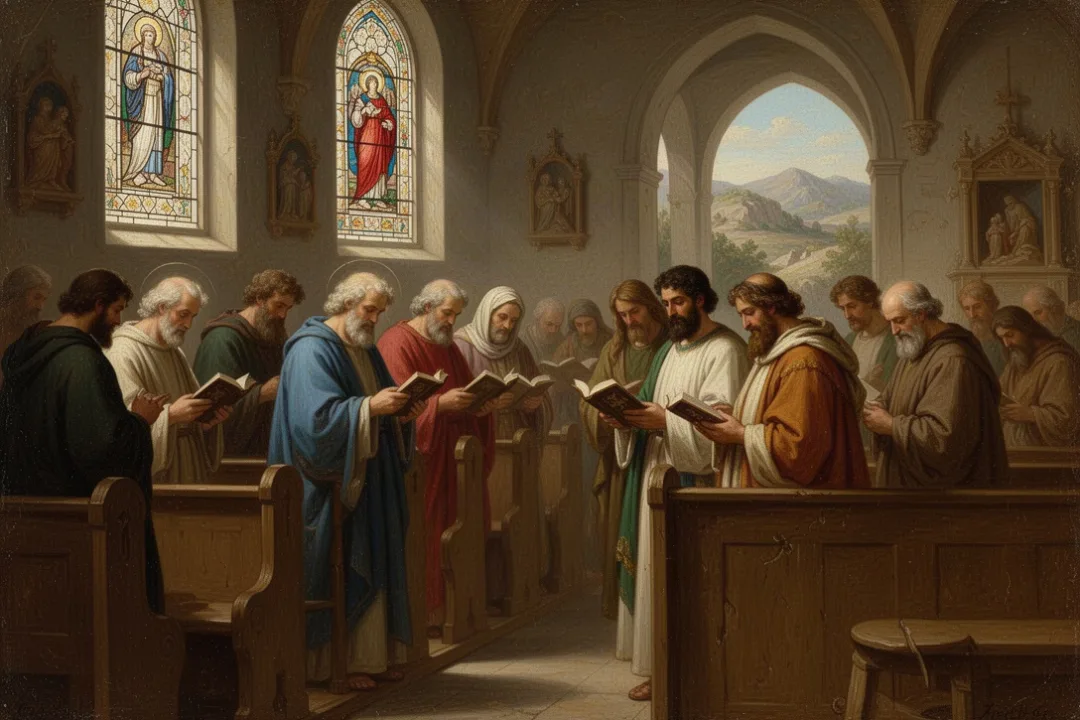
The Mass is the Catholic Church’s central act of public worship. It includes the Liturgy of the Word, with readings from Scripture and a homily, followed by the Liturgy of the Eucharist. Catholics gather to praise God, hear the Gospel, offer themselves with Christ, receive spiritual nourishment, and be sent to live the faith.
At the Eucharistic Prayer, Catholics believe the bread and wine become the Body and Blood of Christ, while retaining the appearances of bread and wine. This teaching is called the Real Presence. Catholics do not understand Communion as merely a reminder or symbol, although it certainly also carries symbolic meaning.
Why do Catholics attend Mass on Sundays?
Sunday is the Lord’s Day, the weekly celebration of Christ’s resurrection. Catholics are generally obliged to participate in Mass on Sundays and holy days of obligation unless a serious reason prevents them, such as illness, lack of access to a priest, dangerous travel, or responsibility for someone who cannot be left alone.
Attendance is not meant to be a way to earn God’s love. Catholics attend because worship is a duty of love and because the Eucharist strengthens the Church’s life. Local bishops can establish or dispense certain holy days, so the exact calendar varies by country and diocese.
What are the seven Catholic sacraments?
The sacraments are visible signs of God’s grace entrusted to the Church. Catholics believe Christ instituted them and that they communicate grace when celebrated properly and received with the appropriate disposition. The seven sacraments are grouped into three categories:
Sacraments of initiation: Baptism, Confirmation, and the Eucharist.
Sacraments of healing: Reconciliation, also called Confession, and Anointing of the Sick.
Sacraments at the service of communion: Holy Orders and Matrimony.
Baptism begins a person’s sacramental life and incorporates the person into the Church. Confirmation strengthens baptismal grace. The Eucharist nourishes Catholics with Christ’s presence. Reconciliation restores communion with God and the Church after serious sin, while Anointing of the Sick offers grace and spiritual strength during serious illness or old age.
Holy Orders provides the ministries of bishops, priests, and deacons. Matrimony is the covenant in which a man and woman establish a lifelong partnership ordered toward the good of the spouses and the upbringing of children. Each sacrament has its own requirements, preparation, and form of celebration.
Can a non-Catholic receive Communion?
Ordinarily, Holy Communion is reserved for Catholics who are properly prepared and in a state of grace. This discipline expresses the belief that receiving the Eucharist signifies full unity in faith, sacramental life, and Church governance. A visitor may participate in the prayers and blessings without receiving the consecrated host.
There are limited circumstances in which members of other Christian communities may receive Communion from a Catholic minister, particularly when they share Catholic faith concerning the sacrament and face a serious spiritual need. The rules are specific, and local pastoral guidance matters. Visitors should ask a priest privately rather than assume that attendance automatically permits reception.
What Catholics believe about prayer, Scripture, and forgiveness
How should a Catholic pray?
Prayer is a relationship with God who knows and loves each person. Catholics pray through worship, thanksgiving, petition, repentance, and silent attention to God. There is no single required posture or setting for personal prayer; a person may pray in a church, at home, while walking, or during ordinary work.
Traditional Catholic prayers include the Our Father, Hail Mary, Glory Be, and Act of Contrition. Other forms include lectio divina, meditation on the mysteries of the Rosary, Eucharistic adoration, spontaneous prayer, and contemplation. A consistent short period of prayer is often more sustainable than waiting for ideal conditions.
Why do Catholics pray the Rosary?
The Rosary is a Christ-centered prayer that combines repeated prayers with meditation on events in the lives of Jesus and Mary. The repeated words create a steady rhythm, while the mysteries direct the mind toward the Incarnation, Christ’s ministry, his Passion, and his glory.
Catholics may pray the Rosary for a particular person, need, or intention. The prayer is not a magical formula and does not guarantee a desired outcome. Its purpose is to draw the person toward Christ, deepen trust in God, and encourage reflection on the Gospel.
How do Catholics use the Bible?
Catholics believe the Bible is the inspired word of God and a central source for Christian faith. Scripture is proclaimed at Mass, studied in families and parishes, prayed with, and interpreted within the Church’s living Tradition. Catholics read individual passages in light of the whole Bible rather than treating isolated sentences as complete statements.
The Catholic Bible contains books that are not included in some Protestant editions. These additional Old Testament books are commonly called the Deuterocanonical books. Catholics do not believe that private study and personal insight are unimportant; they believe personal reading is strengthened by sound interpretation, historical awareness, and the Church’s established teaching.
What is sin, and why do Catholics go to confession?
Sin is a deliberate act, thought, word, or omission that damages love of God, neighbor, or self. Catholic teaching distinguishes between venial sin, which weakens communion with God, and mortal sin, which seriously breaks that communion when serious matter, full knowledge, and deliberate consent are all present.
In Confession, a person examines their conscience, expresses sorrow, confesses serious sins to a priest, receives absolution, and completes a penance. The priest acts in the ministry of Christ and the Church. Catholics are not expected to provide dramatic details or every minor fault; they should be honest, clear, and appropriately specific without making excuses or accusing others.
A person who is unsure whether a sin is mortal should not panic. Factors such as fear, habit, pressure, limited understanding, or impaired freedom can affect personal responsibility. A priest can help distinguish objective wrongdoing from personal culpability and offer practical direction.
What Catholic teaching says about daily moral decisions
How do Catholics make moral decisions?
Catholic moral reasoning considers the object of an action, the intention behind it, and the circumstances. A good intention cannot make an intrinsically wrong action good, and difficult circumstances do not erase every moral boundary. At the same time, the Church recognizes that fear, coercion, ignorance, social pressure, and other conditions can affect responsibility.
A well-formed conscience is not simply a personal feeling. Conscience is the practical judgment by which a person recognizes the moral quality of a specific choice. Catholics form conscience through Scripture, the teachings of the Church, prayer, sound reasoning, honest self-examination, and advice from trustworthy spiritual or professional counselors.
Why does the Catholic Church emphasize human dignity?
Catholic social teaching begins with the belief that every human person is created in the image and likeness of God. Human dignity does not depend on wealth, health, productivity, citizenship, age, intelligence, or social status. This principle supports concern for the poor, the unborn, migrants, prisoners, people with disabilities, the elderly, and anyone facing exclusion.
The Church also teaches that people have responsibilities toward one another. Common good, solidarity, care for creation, economic fairness, religious liberty, and the family are connected to the dignity of the person. Catholic social teaching does not fit neatly into one political party or one policy platform, so Catholics must apply principles thoughtfully to concrete situations.
What does the Church teach about marriage and family life?
Catholic marriage is understood as a lifelong and faithful covenant between a baptized man and woman. It is ordered toward the good of the spouses and the generation and education of children. The Church sees marital love as a total gift involving emotional, spiritual, and bodily unity.
Catholic families are called to practice patience, forgiveness, fidelity, hospitality, and care for vulnerable members. The Church recognizes that families can face separation, abuse, infertility, addiction, grief, or conflict. A person experiencing abuse should seek immediate safety and qualified help; no religious teaching requires someone to remain in danger.
Practical ways to find reliable Catholic answers
Online searches can produce explanations that are outdated, incomplete, or presented without context. A reliable answer should identify whether it describes official doctrine, a theological opinion, a local discipline, or a personal devotional practice. The following habits can help you evaluate what you hear:
Ask what kind of question it is. A question about a defined doctrine differs from one about parish custom, canon law, or personal spirituality.
Check the source. Prefer your diocese, parish, the Catechism of the Catholic Church, an approved Catholic Bible, or a qualified priest or theologian.
Consider context. A quotation from a Church document may address a specific issue and should not be detached from the surrounding explanation.
Separate universal and local rules. Mass schedules, holy days, fasting practices, and preparation requirements can vary by country or diocese.
Ask about exceptions carefully. General rules may have pastoral provisions, but an exception should come from a legitimate authority rather than an internet comment.
Bring personal circumstances to a priest. Questions involving confession, marriage, Communion, conversion, or serious moral distress often cannot be answered responsibly without details.
It is also reasonable to ask a Catholic source to explain the reasoning behind a teaching. Understanding the relationship between faith, reason, Scripture, and Tradition usually produces a clearer answer than memorizing isolated rules. A good explanation should be accurate, charitable, and honest about what remains difficult.
Common mistake: Do not treat every Catholic practice as a dogma or every personal opinion as official teaching. Ask whether the matter is doctrine, discipline, local custom, devotional advice, or a prudential judgment.
What mistakes should Catholics avoid when seeking answers?
One common mistake is assuming that a confident speaker automatically represents the Church. Another is treating a single passage, social media post, or dramatic personal story as more authoritative than the Church’s complete teaching. Catholic answers often require distinctions, and those distinctions are not evasions; they prevent a simple rule from being applied incorrectly.
Do not confuse temptation with sin; an unwanted thought is not the same as a freely chosen act.
Do not assume missing Mass and deliberately skipping Mass carry the same responsibility when illness, caregiving, or another serious obstacle is involved.
Do not receive Communion merely to avoid embarrassment if you are not properly prepared.
Do not use Confession to obtain advice about an emergency that requires medical, legal, or safety assistance.
Do not let scrupulosity turn ordinary uncertainty into endless self-accusation; seek a consistent confessor and follow sound guidance.
Do not judge another person’s guilt solely from outward circumstances, since God alone knows the person’s full knowledge and freedom.
Questions people ask before joining the Catholic Church
Can someone become Catholic as an adult?
Yes. Adults who are not baptized, and baptized Christians who are exploring Catholicism, usually take part in a period of formation through a parish process often called the Order of Christian Initiation of Adults. The process includes prayer, instruction, participation in the community, and discernment rather than a test that someone must pass.
The sacraments received depend on the person’s history. An unbaptized adult ordinarily receives Baptism, Confirmation, and the Eucharist after preparation. A baptized Christian whose baptism is recognized as valid is not baptized again; that person may be received into full communion and receive the sacraments that remain.
Can a Catholic disagree with a Church teaching?
Catholics can ask questions, experience doubt, and need time to understand a doctrine. Honest inquiry is not the same as rejection. Catholic faith involves the assent of mind and will to teachings proposed by the Church, while the level of authority and required response can differ among teachings.
When a person struggles with a teaching, a useful response is to study the issue carefully, pray, and speak with a knowledgeable priest or theologian. Publicly misrepresenting Catholic teaching or encouraging others to reject it is different from privately working through sincere difficulty. Patience and truthfulness are valuable in both cases.
What should a visitor do at a Catholic Mass?
A visitor may sit, stand, kneel, and respond as comfortable, using the parish missal or following the congregation. You do not need to know every response before attending. During Communion, non-Catholics and Catholics who are not receiving may remain seated or approach for a blessing where that local practice is offered.
Dress should be respectful and suitable for a public worship service. It is acceptable to introduce yourself to the priest or parish staff after Mass and ask questions. A parish should welcome sincere visitors without pressuring them to make commitments before they understand the Church’s faith and practices.
How Catholics can grow in faith after receiving an answer
An answer becomes useful when it leads to a better practice. If you are learning Catholicism, choose one manageable habit: attend Sunday Mass, read a short Gospel passage, set aside five minutes for prayer, or speak with a parish minister. Growth usually involves steady participation rather than collecting information without applying it.
Community also matters. A parish can provide instruction, friendship, service opportunities, Bible study, sacramental preparation, and support during grief or hardship. If a parish does not respond well, that experience does not define the entire Church; try another parish or contact the diocesan office for guidance.
Roman Catholic questions and answers ultimately point beyond facts to a life shaped by Christ. The Church invites people to worship God, receive grace through the sacraments, form their conscience, practice charity, and seek holiness in ordinary responsibilities. Some answers are brief, while others require conversation, prayer, and time.
Frequently asked questions
Are Roman Catholics Christians?
Yes. Roman Catholics are Christians who profess faith in Jesus Christ as Lord and Savior and believe in the Trinity, the Incarnation, the death and resurrection of Christ, and the mission of the Church. Catholicism is one historic Christian tradition, with distinctive teachings about authority, the sacraments, Mary, the saints, and the Eucharist.
Can Catholics eat meat on Fridays?
Catholic practice depends partly on the local bishops’ conference and the time of year. Abstinence from meat is required on specified days, especially Ash Wednesday and Good Friday, while Friday penance is observed according to local rules. Catholics should check their diocese for current requirements rather than relying on a general assumption.
Do Catholics have to confess every sin to a priest?
Catholics are required to confess every remembered mortal sin that has not already been absolved. Venial sins may also be confessed and can benefit spiritual growth, but they can be forgiven through other sincere acts of prayer and repentance. If you are unsure what must be confessed, ask the priest for guidance without being afraid.
What happens if a Catholic misses Mass?
The circumstances matter. Deliberately missing Sunday Mass without a serious reason is considered grave matter, but illness, caregiving, dangerous conditions, lack of access, or another serious obstacle can remove the obligation. Someone who is concerned should discuss the situation with a priest, especially before receiving Communion if serious sin may be involved.





Leave a Reply