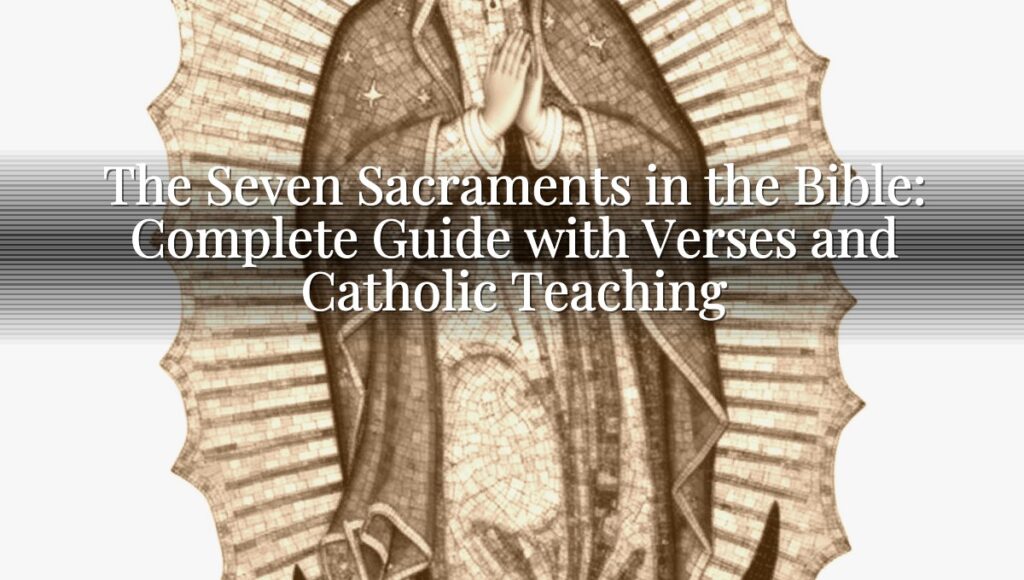
The Seven Sacraments in the Bible: Complete Guide with Verses and Catholic Teaching
The seven Sacraments are the visible signs by which Christ communicates grace to us through the Church. grounded in Scripture and safeguarded by Sacred Tradition, they accompany Catholics from baptism to eternal life. In a world that often emphasizes personal feeling over communal faith, the Sacraments anchor our pilgrimage in Christ’s saving work. This article explores the biblical basis for each sacrament using the New American Bible Revised Edition (NABRE) and pairs it with Catholic teaching to equip you for catechesis, apologetics, and personal devotion. Whether you are preparing for a sacramental celebration, teaching, or simply seeking deeper understanding, the Sacraments illuminate God’s mercy and our call to holiness in daily life.
What is The Seven Sacraments in the Bible?
The term "sacrament" in Catholic teaching refers to a sacred sign instituted by Christ through which grace is dispensed. The Catholic Church recognizes seven such signs: Baptism, Confirmation, Eucharist, Penance (Reconciliation), Anointing of the Sick, Holy Orders, and Matrimony. These are grounded in Scripture—where Jesus and the Apostles administer signs of grace—and in Sacred Tradition, as clarified and safeguarded by the Church’s Magisterium. While the term and explicit enumeration of seven sacraments develop in the patristic and medieval eras, the Bible reveals the essential dynamics of signs and grace that the Church would consummate in these seven channels. The Catholic canon, informed by Councils and the authority of the Church, affirms them as functioning works of Christ through the Church for every baptized believer.
Most Important Verses from The Seven Sacraments in the Bible
Baptism — Matthew 28:19-20 (NABRE): Jesus’ mandate to baptize all nations, teaching and making disciples through the sign of water and the Holy Trinity. Acts 2:38 (NABRE) and 1 Peter 3:21 show baptism as the plunge into new life and the remission of sins (NABRE).
Eucharist — Matthew 26:26-28 (NABRE) and John 6:54-57 (NABRE): Jesus’ institution of the Supper as his Body and Blood and the necessity of partaking in faith. 1 Corinthians 11:23-26 (NABRE) links the meal to the proclamation of the Lord’s death and remembrance (anamnesis).
Penance (Reconciliation) — John 20:22-23 (NABRE): the risen Lord breathes on the apostles and gives them the power to forgive sins. James 5:16 (NABRE): the faithful are urged to confess sins and seek healing within the community of faith.
Confirmation — Acts 8:17 (NABRE): the laying on of hands and the receiving of the Holy Spirit. Acts 19:5-6 (NABRE): the gift of the Spirit is imparted to believers as they receive the baptism (NABRE).
Anointing of the Sick — James 5:14-15 (NABRE): prayer of faith and anointing with oil for healing and forgiveness of sins within the Christian community.
Holy Orders — Luke 22:19-20 (NABRE): the institution of the Eucharist is linked with the sending forth of apostles. Acts 6:6; 1 Timothy 4:14 (NABRE): the laying on of hands and ordination for service in the Church.
Matrimony — Genesis 2:24 (NABRE): the creation ordinance of one flesh. Matthew 19:4-6 (NABRE): Jesus confirms the permanence of marriage, echoed in Ephesians 5:31-32 (NABRE) as a sign of Christ’s relationship with the Church.
What the Catholic Church Teaches
The Catholic Church teaches that the seven sacraments are efficacious signs of grace instituted by Christ and entrusted to the Church. The Catechism of the Catholic Church (CCC) provides an authoritative summary of how each sacrament conveys grace: Baptism (CCC 1213-1284); Confirmation (CCC 1309-1319); Eucharist (CCC 1322-1419); Penance (CCC 1446-1498); Anointing of the Sick (CCC 1499-1532); Holy Orders (CCC 1536-1589); Matrimony (CCC 1601-1666). The Council of Trent (1547) affirmed the reality and necessity of these sacramental signs, countering views that denied grace through rites. Vatican II (1962-1965) reaffirmed the universality and pastoral efficacy of the sacraments in Lumen Gentium and the various declarations, guiding the modern church in liturgical renewal, catechesis, and ecumenical dialogue. In apologetics, one counters the claim that sacraments are merely symbolic by noting their biblical basis, their continuity with apostolic practice, and the historical witness of the Church. The Sacraments are not human rituals alone; they are Christ’s gifts to the Church, operative and grace-giving by the power of the Holy Spirit.
This Book/Topic in Church History
From the Fathers to the scholastics, the Church’s understanding of the sacraments matured through centuries of reflection on Scripture and tradition. Early Fathers such as St. Irenaeus and St. Justin Martyr attested to baptism and the Eucharist as central acts of Christian life. St. Augustine underscored the grace conferred through signs and rites, shaping later medieval thought. St. Thomas Aquinas and the Scholastics systematized the sevenfold sacramental economy in the Summa Theologiae, detailing how each sign communicates grace. The Council of Trent decisively defined the seven sacraments against Protestant critiques and clarified their efficacy. Vatican II, through Lumen Gentium and the Decree on Ecumenism, reaffirmed their universal call and pastoral role in salvation. Popes and saints throughout history have emphasized the sacraments as the Church’s primary means of sanctification, mission, and unity—continuing to catechize the faithful in every generation.
Are the seven sacraments described in the Bible or are they later church inventions? Answer: The Bible contains the signs and commands that the Church later formalized as seven sacraments; the Catholic Church reads both Scripture and Sacred Tradition as authoritative sources of revelation.
Why are there seven sacraments, not fewer or more? Answer: Seven signifies completed, divinely ordered grace through Christ, and the Church has discerned these signs as comprehensive channels of grace for the whole Christian life from birth in baptism to eternal life in matrimony and Eucharistic union.
Do sacraments require a priest or bishop to be valid? Answer: In the Catholic view, the valid administration of sacraments requires proper form, matter, and intention, typically by a valid ordained minister; Christ acts through the Church, not by human merit alone.
What is the difference between a sacrament and a symbol? Answer: A sacrament is a sign that not only represents grace but actually conveys grace; it is an efficacious sign, instituted by Christ and entrusted to the Church.
How should a Catholic prepare to receive a sacrament like the Eucharist or Confession? Answer: Proper disposition, examination of conscience, and faith in Christ’s promises are essential; the Church provides teaching, liturgy, and discipline to prepare the faithful.
Closing Prayer
O Holy Spirit, fill our hearts with faith, hope, and love, that we may recognize and receive the grace Christ has entrusted to His Church. Increase our desire for the Sacraments, our receptivity to their grace, and our zeal to live as temples of the living God who dwells within us. Through Christ our Lord. Amen.
“Go therefore and make disciples of all nations, baptizing them in the name of the Father and of the Son and of the Holy Spirit.” (Matthew 28:19, NABRE)





Leave a Reply