Saint Peter the Apostle — Leader of the Early Church | Life and Legacy
Saint Peter the Apostle — Leader of the Early Church | Life and Legacy
Saints and Martyrs · apóstoles
Saint Peter the Apostle — Leader of the Early Church | Life and Legacy
February 22
apóstoles Saint Peter the Apostle
Saint Peter the Apostle was one of Jesus Christ’s twelve main disciples and a prominent leader in the early Christian community. Born in Bethsaida, he was a fisherman before following Jesus. Known for his strong faith, he became the first pope and preached the Gospel throughout the Roman Empire. His life exemplifies humility, courage, and unwavering devotion to Christ, leading to his veneration as a saint and martyr.
The name Peter derives from the Greek word 'Petros', meaning 'rock'. Originally called Simon, Jesus renamed him Peter, signifying his role as the foundation of the Church. The name symbolizes strength and stability, reflecting his role as the spiritual leader among the apostles. It carries cultural significance as a symbol of faith and steadfastness in Christian tradition.
Feast Day
February 22
Related Bible Verses
Matthew 16:18
And I tell you that you are Peter, and on this rock, I will build my church.
This verse highlights Jesus’ designation of Peter as the foundational rock of the Church, underscoring his spiritual leadership.
John 21:17
Lord, you know all things; you know that I love you.
This verse reflects Peter's deep repentance and love for Christ after his denial, illustrating his humility and devotion.
Acts 2:14-41
Peter boldly proclaims the Gospel at Pentecost, leading to the conversion of thousands.
This passage demonstrates Peter’s role as a fearless preacher and leader in establishing the early Church.
Martyrdom and Canonization
Saint Peter died as a martyr in Rome during the reign of Emperor Nero, around 64 AD. His cause for canonization was based on his unwavering faith and heroic virtue in the face of persecution. Tradition holds that he was crucified upside down, believing unworthy to die in the same manner as Jesus. The Church recognizes his miracles, such as healing the sick and raising the dead, as signs of his holiness. His canonization was affirmed by tradition and church authority, and he was officially declared a saint centuries after his death, with his relics and tomb preserved in the Vatican.
Miracles and Apparitions
Miracles attributed to Saint Peter include healings at his tomb, as well as reports of apparitions and visions throughout history. Many pilgrims have experienced miraculous healings at sites associated with him, confirming his intercessory power. The Church has documented these miracles through investigations and testimonies, especially in connection with Vatican relics and shrine visits. These miracles serve as a testament to his continued spiritual influence in the Catholic faith.
Prayer and Devotion
Devotees invoke Saint Peter’s intercession through prayers such as the 'Prayer to Saint Peter' and novenas asking for courage and faith. Medals and scapulars bearing his image are used as spiritual protection and reminders of his leadership. Many set up shrines in his honor or visit sites associated with him, seeking his guidance in times of trial. His feast day is an occasion for the faithful to reaffirm their commitment to the Church’s mission and to seek strength in their faith journey.
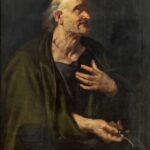
Saint Peter is often depicted holding keys, symbolizing the 'Keys of Heaven' bestowed upon him by Christ. His relics, believed to be in the Vatican, are some of the most venerated relics in Christendom, and his tomb is marked by the famed St. Peter’s Basilica.
Frequently Asked Questions
Why is Saint Peter considered the first Pope?
Because Jesus established him as the leader of the apostles and the foundation of the Church, as indicated in Matthew 16:18. Tradition also holds that he was the first bishop of Rome and the successor of the apostles.
What is the significance of Saint Peter’s martyrdom?
Saint Peter’s martyrdom symbolizes ultimate devotion and sacrifice for Christ. His death in Rome underscores his role in spreading Christianity and his unwavering faith even unto death.
How can I emulate Saint Peter’s virtues today?
By fostering faith, humility, and courage in your life, and trusting in God's guidance. Prayer, service, and steadfastness in trials reflect the virtues exemplified by Saint Peter.