Simon Apostle: The Life, Teachings, and Legacy of Peter
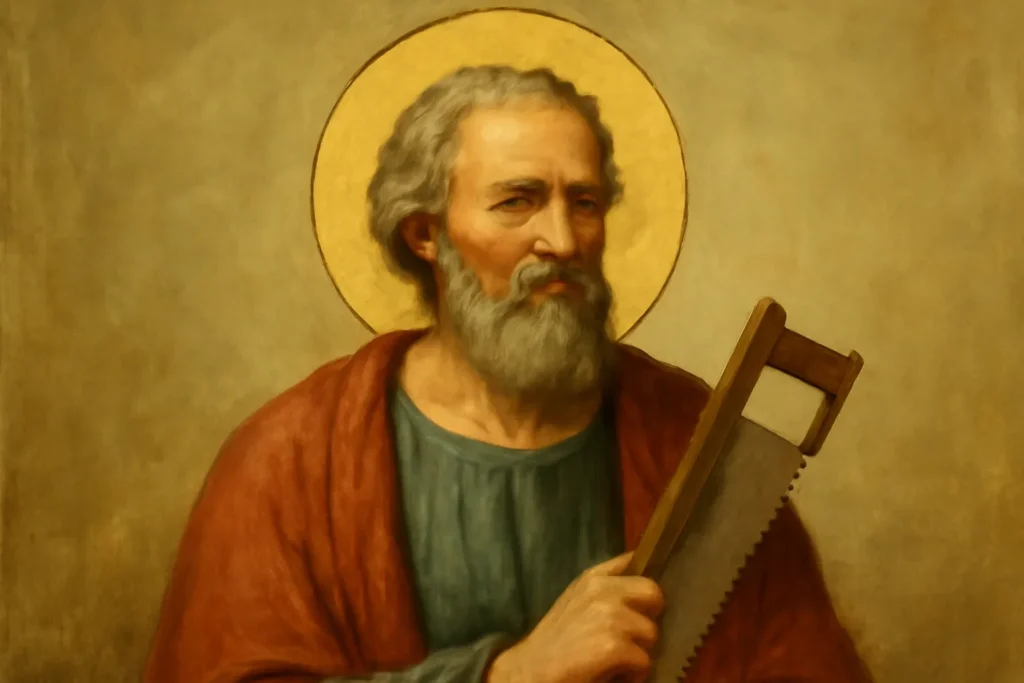
Simon Peter, also known as Peter the Apostle, is one of the most prominent figures in the New Testament narrative. From a humble fisherman beside the Sea of Galilee to a leading voice in the early Christian church, this figure—referred to in various traditions as Simon Peter, St. Peter, and Cephas (the Aramaic term for "rock")—embodies
transformation, courage, and a complex blend of strength and vulnerability. The life of the Apostle Simon Peter provides not only a chronological chronicle of his experiences but also a map of how early Christian communities understood leadership, faith, and the meaning of discipleship.
Origins and Early Life
Family Background and Profession
The biographical sketch of Simon Peter begins in the region of Galilee, where he and his brother Andrew were engaged in the family trade of fishing. In accounts that move from ordinary livelihoods to extraordinary mission, these fishermen are depicted as men who recognized a calling larger than themselves. The Gospel narratives highlight their occupation as a defining detail of their identity prior to their encounter with Jesus.
Common occupation: fisherman on the Sea of Galilee
Family ties: brothers who often worked together in the family business
Geographic origin: primarily associated with Bethsaida and Capernaum in the gospel depictions
First Encounters with Jesus
The earliest moments in the life of the Apostle Peter are inseparable from Jesus’ invitation to follow. In several Gospel accounts, Jesus meets Simon and his brother Andrew, calling them to abandon their nets and assume a new vocation as "fishers of people." This moment is frequently treated as the fulcrum of Peter’s vocation, the turning point that converts a practical fisherman into a participant in a divine mission.
Names and Identity
From Simon to Peter: Names and Significance
The narrative around this figure is notable for its layered nomenclature. He is introduced as Simon, a common name in Jewish circles, but the text quickly emphasizes a transformed identity: Peter (the Greek form of "petros," meaning rock), and the Aramaic nickname Cephas, also translated as "rock."
Simon: his given name at birth and early life
Peter: the name given by Jesus, symbolizing a foundational role
Cephas: the Aramaic designation that reinforces the rock imagery
Peter the Apostle: a designation that highlights his role among the Twelve
Apostolic Call and Ministry
Call to the Twelve and Early Ministry
The calling of Simon Peter is inseparably linked with the commissioning of the Twelve. In the Synoptic Gospels, Jesus identifies him not only as a follower but as a leader-in-training. The phrase “on this rock I will build my church” is a focal moment in Matthew’s account, underscoring a vocation that blends personal transformation with communal responsibility. This dual emphasis—personal faith and collective mission—shapes the trajectory of the Apostle Peter’s ministry.
Roles and Responsibilities within the Inner Circle
Within the circle of Jesus’ closest disciples, Peter is frequently depicted as a spokesperson, a representative leader who often speaks for the group, makes bold confessions of faith, and sometimes falters under pressure. This ambivalence—strength paired with weakness—becomes one of the enduring themes of the Apostle Peter’s witness, offering readers a model of repentance, perseverance, and humility.
While the Epistles attributed to Peter are not as numerous as those attributed to Paul, several core themes emerge in the record of his preaching and leadership. The following elements are commonly cited as central to the message conveyed by the Apostle in early Christian circles.
Confession of Jesus as Messiah: Peter’s pivotal confession in which he recognizes Jesus as the Christ, a moment that anchors the Christological emphasis of early Christian preaching.
Authority and the Keys: Jesus grants the disciples a symbolic authority, often interpreted in traditional Christian thought as the “keys of the kingdom”—a motif closely associated with Peter’s leadership role.
Pastoral Leadership: the call to shepherd the flock, feed the sheep, and tend the community with care and humility.
Humility and Restoration: after denying Jesus, the narrative turns toward a restoration that emphasizes forgiveness, renewal, and mission.
Joyful Hospitality to Gentiles and the widening of the church’s mission beyond Jewish boundaries as reflected in the broader Acts narrative.
Role in the Gospels and the Early Church
Peter in the Gospels: Prominence and Promises
Across the Gospel accounts, Simon Peter repeatedly appears at pivotal moments. He is present at the Transfiguration, witnesses Jesus’ miracles, and confesses the central creed that distinguishes Christian faith. The narrative arc follows a trajectory from impulsive zeal to matured leadership, illustrating a path of growth that resonates with many readers who see in Saint Peter a profile of steadfast devotion tempered by human weakness.
Peter in Acts: Leadership at Pentecost and Beyond
In the Book of Acts, the leadership of the Apostle Peter becomes explicit. He speaks at Pentecost, articulates the gospel to a diverse audience, and oversees the early Jerusalem community. His leadership is not merely ceremonial; it is functional, organizing prayer, distribution, and instruction. The early church looks to Peter for doctrinal guidance, communal governance, and a model of mission that seeks to reconcile tradition with expansion.
Pentecost: Peter’s sermon and the empowerment of the church through the Holy Spirit.
Council of Jerusalem: Peter’s involvement in the decision that opens the church to Gentile believers without requiring adherence to all Jewish law.
Miraculous signs and public testimony that validate the gospel message in a hostile world.
Denials, Restoration, and Renewal
The Denial and the Rooster
One of the most dramatic scenes in the Gospels concerns Peter’s denial of Jesus during the Passion narratives. In the moment of crisis, he succumbs to fear and confusion, disavowing knowledge of the Nazarene. The rooster’s crow becomes a symbol of human frailty and the need for repentance—a theme that will recur as the Apostle Peter confronts his own failures.
The post-Resurrection encounters between Jesus and the Apostle Peter form a crucial turning point. Jesus commissions him to “feed my sheep,” a directive that redefines Peter’s leadership from a defensive posture to a pastoral stewardship. This restoration motif—grace meeting vulnerability—offers a powerful template for how communities understand forgiveness, reconciliation, and renewed purpose.
Leadership in the Early Church
Jerusalem-Based Leadership and Community Formation
After the Resurrection, St. Peter emerges as a central organizer of the Jerusalem church. He plays a key role in teaching, governance, and outreach, guiding the believers through times of growth and controversy. The experience of leadership under Peter reflects the early church’s developing understanding of what it means to be a people called together by the gospel and empowered by the Spirit.
Epistles Attributed to Peter and Their Message
The New Testament includes letters associated with Peter that address living out faith amid trial, temptation, and persecution. While debates persist about authorship in some scholarly circles, traditional Christian heritage treats these letters as genuine or plausibly linked to the same apostolic circle. The letters emphasize:
Suffering and integrity in a hostile world
Hope in salvation through Christ’s sufferings and resurrection
Ethical exhortations for households, communities, and leaders
Legacy and Theological Significance
Theological Contributions of the Apostle
The figure of Peter has shaped not only the early church’s self-understanding but also later theological developments. In many Christian traditions, the Rock imagery rooted in Peter’s confession becomes a foundational metaphor for the stability and continuity of the church. The ascent from fisherman to shepherd highlights the paradox of strength found through grace, a theme that resonates in sermons, creeds, and devotional practice across centuries.
Leadership model: balancing authority with humility
Communal unity: fostering a church that welcomes diverse backgrounds
Mission mobility: expanding the reach of the gospel beyond local boundaries
The legacy of Peter has had a lasting impact on how Christian communities conceive authority, apostolic succession, and the transmission of teaching. For many traditions, the idea that Peter and his successors provide a continuity of leadership speaks to a tangible link between the earliest witnesses and contemporary faith communities. In other traditions, the emphasis is on the apostolic witness and the gospel’s transformative power over time, rather than on institutional lineage.
Death, Memorials, and Cultural Memory
Traditions About Martyrdom
The historical record about the exact details of Peter’s death is not unambiguous, but a robust strand of tradition holds that the Apostle died in Rome, bearing witness to the gospel under persecution. The most common traditional account is that he was crucified, reportedly with his head downward as a sign of humility or as a reversal of crucifixion norms. Regardless of precision, this tradition has made St. Peter a patron saint of the Church in many places and a symbol of fidelity under pressure.
Across the Christian world, churches, shrines, and art have commemorated the Apostle through altars, icons, and liturgical devotion. Pilgrims visiting sites associated with Peter’s legacy—traditional places of burial, early Christian worship spaces, and architectural monuments—encounter a material memory that complements the textual accounts.
Simon Peter in Culture: Language, Art, and Inspiration
Beyond the sacred texts, the figure of Simon Peter has permeated literature, music, and visual art. This “rock of faith” figure has inspired countless sermons, novels, and plays that explore themes of calling, failure, repentance, and reconciliation. The various ways in which Peter the Apostle is portrayed—sometimes triumphant, sometimes vulnerable—offer a rich reservoir for contemplation about what it means to follow a divine calling in a human life.
Variations on a Theme: Semantic Breadth Across Traditions
In scholarly and devotional writing, one encounters a range of expressions referring to the same individual. To reflect this semantic breadth, the article uses several forms, including:
Simon Peter: the simplest biographical form
Peter the Apostle: emphasizes he is among the Twelve
Peter and the Apostle Peter: common shorthand in narrative sections
Cephas: the Aramaic nickname that grounds the rock imagery
St. Peter or Saint Peter: ecclesial and devotional titles
Simon the Apostle or Simon, the Apostle: variation for stylistic diversity
Conclusion: The Enduring Significance of this Apostle
The life of Simon Peter stands as a compelling case study of how a real person—not a flawless archetype but a fallible human being—can be equipped for extraordinary leadership through encounter, confession, failure, restoration, and persistent mission. The narrative arc—from a fisherman’s nets to a foundational voice in the early church—offers a lasting reminder that faith is not a singular moment but a continual process of learning, serving, and growing in trust. Whether readers engage this figure as Peter the Apostle, Simon Peter, or Cephas, they encounter a life that speaks to the transformative power of conviction, the responsibilities of leadership, and the enduring hope that the gospel carries across generations.
In summary, the life, teachings, and legacy of this remarkable follower of Jesus illuminate how the Christian movement began, how early communities wrestled with identity and mission, and how a single life can shape generations of faith. The Apostle Peter remains not only a historical figure but a living symbol of perseverance, pastoral care, and courageous witness—an archetype whose memory continues to invite people to explore what it means to follow in the footsteps of one who was, in the deepest sense, called by the Master to be a rock for the church.







Leave a Reply