What Are Christian Missions: Meaning, History, and Global Impact
What Are Christian Missions: Meaning, History, and Global Impact
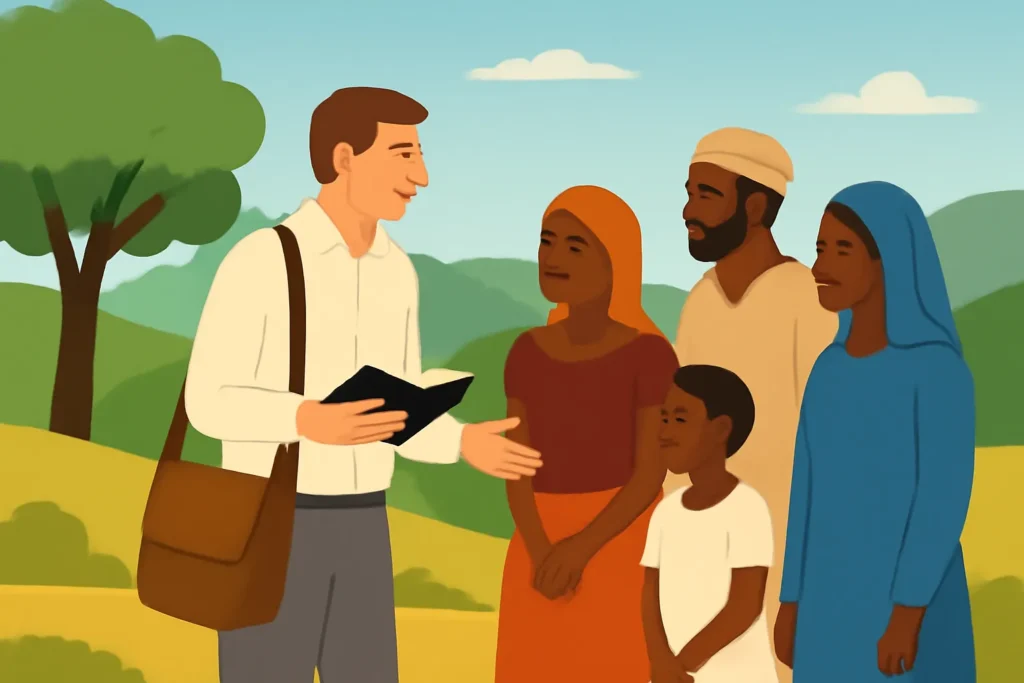
What are Christian missions, in the broad sense, are organized efforts by Christians and Christian communities to share their beliefs, serve people in need, and foster communities of faith in places where the church is not yet strong or where it seeks to grow. These endeavors combine proclamation with service, and they operate across cultures, languages, and political contexts. They are not only about converting individuals but also about forming institutions, training leaders, translating texts, and addressing human needs in ways that reflect a faith commitment to reconciliation, justice, and hope.
Meaning and Definition: Core ideas about Christian missions
To understand the meaning of Christian missions, it helps to examine the core components that often appear in discussions of what constitutes mission work, mission movements, and missionary activity. Although the vocabulary varies across denominations and eras, several recurring strands appear in most explanations of evangelistic outreach and its allied activities.
What counts as a mission in different contexts
Proclamation and teaching: Public preaching, personal evangelism, Bible study, and catechesis aimed at helping people understand the Christian message.
Service and social action: Hospitals, schools, famine relief, disaster response, and community development—emphasizing the social implications of faith.
Church planting and leadership development: Establishing new congregations, training pastors and lay leaders, and supporting denominational structures in new regions.
Translation and literacy: Translating Scripture into local languages, developing literacy programs, and producing educational materials.
Inculturation and contextualization: Adapting practices, music, liturgy, and organizational forms to fit local cultures while maintaining essential beliefs.
In scholarly terms, the mission of the church expresses a vocation that began in the early Christian movement and continued through centuries of change. The phrase “the Great Commission”—found in the Gospel of Matthew—has been a touchstone for countless mission efforts: to go, make disciples, and teach them to observe all that Jesus commanded. While not all mission activities focus on conversion in a strict sense, many continue to view evangelism as a central motivation intertwined with service and justice.
Historical trajectories: From early proclamation to global networks
Exploring the history of Christian missions reveals a long chronology that stretches from the apostolic era to the present day. Each era reflects shifting understandings of authority, culture, power, and strategy, while common motives—compassion, faith, and obedience to a perceived divine mandate—persist across time.
Ancient beginnings: The apostolic era and early church
The spread of the gospel in the Mediterranean world began with a small group of followers who traveled, preached, and formed communities. The apostles traveled from Jerusalem to Samaria, Asia Minor, Greece, and beyond.
Early Christian mission was often linked to synagogues, urban centers, and refugee communities. It entailed both teaching and demonstrating a new way of life, including acts of hospitality and concern for the marginalized.
Writings from this period emphasize mission as a vital expression of faith, sometimes risking persecution, and sometimes producing enduring churches in new locales.
Medieval to early modern periods: From monasticism to exploration
In late antiquity and the medieval era, mission took shape through monastic movements that trained pastors, translated scriptures, and established schools. Monks and nuns often became ambassadors of culture and learning, bringing literacy and agricultural practices to new regions.
Interactions with the broader world intensified after the rise of strong Christian kingdoms and the growth of trade routes. Missionary activity moved along the routes of commerce, often intertwined with political power and colonial expansion in later centuries.
Renaissance and post-Reformation periods highlighted debates about authority, doctrine, and the right methods for spreading faith, leading to different models of mission across Catholic, Orthodox, and Protestant traditions.
Global expansion and modern missions: 18th to 20th centuries
The age of global missions saw large-scale organization, fundraising networks, and formal missionary societies. Evangelical and dissenting groups sent workers to Asia, Africa, the Americas, and the Pacific, often accompanied by hospitals, schools, and publishing efforts.
As mission work became more institutional, debates arose about the relation between missions and colonialism. Critics argued that some missions aligned with imperial agendas, while others emphasized translation, education, and community development independent of political domination.
Indigenous leadership increasingly emerged, with local pastors and mission partners growing in prominence and shaping the direction of mission activities in their own contexts.
Ecumenical and postcolonial shifts: 20th century to present
The 20th century saw ecumenical movements that encouraged cooperation among churches, shared resources, and joint mission initiatives across denominational lines.
Postcolonial reflection prompted greater attention to local leadership, cultural integrity, and self-determination in mission work. Critics called for more equitable partnerships, mutual accountability, and humility about cross-cultural influence.
Contemporary missions often emphasize holistic engagement—spiritual renewal alongside social, economic, and environmental well-being—embracing contextual models that respect diverse cultural landscapes.
Geographical reach and global networks
Christian missions now manifest in a vast global network. The geography of mission activity has shifted several times over the centuries, with different regions emerging as major centers of mission sending and receiving. This global frame is characterized by collaboration among churches, mission agencies, local congregations, universities, non-governmental organizations, and community-based groups.
Sub-Saharan Africa: A region of growing indigenous leadership, with many churches planting churches, running schools, and contributing to social services.
East Asia: A complex field where mission activity intersects with rapid social change, spiritual seeking, and state regulation. Local believers often lead in evangelism and church development.
South Asia: Historical centers of Christian service, education, and medical care, often embedded in long-standing local communities and networks.
Latin America: Mission history here includes both Catholic and Protestant streams, with significant contributions to education, publishing, and social programs.
Europe and North America: Home to many mission-sending churches and agencies, but also the site of critical reflection about mission models, intercultural engagement, and the growth of secular contexts.
Pacific and Oceania: Mission activity engaging with island communities, translation work, and the establishment of churches across diverse cultures.
Impact areas: education, health, and social change
One of the most tangible features of Christian missions across history is their impact on society in broad institutional terms. Mission efforts have often intertwined with education, health care, linguistic work, and community development. While motives and outcomes vary, many mission initiatives produced lasting institutions and social infrastructure, sometimes in regions with limited prior access to schooling or medical care.
Education and literacy
Missionaries often established schools, libraries, and teacher training programs, contributing to increased literacy rates and access to knowledge.
Translation work enabled communities to read sacred texts and educational materials in their own languages, promoting linguistic preservation alongside religious instruction.
Educational outreach frequently extended beyond religious instruction to include practical subjects such as mathematics, science, and vocational training.
Health care and humanitarian relief
Hospitals, clinics, and nursing programs emerged out of missionary initiatives, sometimes introducing Western medical practices in new contexts and sometimes integrating traditional approaches with modern medicine.
Disaster response and humanitarian aid have been central to many mission organizations, reflecting a commitment to alleviating suffering in crisis situations.
Public health campaigns, nutrition programs, and maternal care services were often part of a broader strategy to serve communities and build trust for gospel-oriented communities.
Community development and social transformation
Mission-driven projects have supported water supply, agriculture, microenterprise, and gender equity initiatives, aiming to improve living standards and resilience.
Through churches and mission partnerships, communities have developed leadership pipelines, civic engagement, and charitable networks that endure beyond particular programs.
Critically, mission activity has also raised questions about cultural autonomy, the politics of aid, and the long-term effects of external involvement on local agency.
Culture, inculturation, and learning in mission contexts
Christian missions have repeatedly faced the challenge of communicating beliefs across cultural boundaries. The process of inculturation—adapting practices to be meaningful within local cultures—has been both celebrated and debated. The aim is to present a credible and respectful faith translation that preserves core convictions while honoring local identity, languages, and social norms.
Modes of engagement in cultural pluralism
Contextual theology: Interpreting Christian doctrine through local cultural categories to avoid alienation or misrepresentation.
Liturgical adaptation: Using local music, art forms, and rhythms in worship to communicate meaning in culturally resonant ways.
Language and translation: Producing Scripture and teaching materials in the vernacular to enable genuine comprehension and participation.
Relational mission: Building trust through long-term presence, intercultural friendships, and mutual learning between senders and receivers.
Nevertheless, inculturation raises questions about doctrinal integrity and the degree to which traditions must be preserved in order to remain recognizable as Christian. The tension between faithful transmission of core beliefs and cultural adaptation remains a live conversation in many churches and mission organizations today.
Contemporary trends and debates: what is happening now in missions
In the present era, mission practice continues to evolve in response to global dynamics, technology, and new understandings of power and partnership. Contemporary conversations explore ethics, equity, and sustainability in mission engagement, as well as the spiritual vitality of mission work in secular and plural settings.
Mutual partnership: Strengthening reciprocal relationships between sending churches and local Christian communities, with shared decision-making and accountability.
Indigenous leadership: Emphasizing local leadership and leadership training so that churches and mission-influenced organizations are guided by people who understand the local context.
Contextualization vs. syncretism: Finding a balance between communicating the gospel clearly and allowing local expressions of faith to shape worship and practice.
Technology and media: Using digital platforms, mobile outreach, and multimedia resources to reach remote populations and support education, discipleship, and community development.
Impact assessment and accountability: Measuring outcomes, learning from failures, and maintaining ethical standards in fundraising, field partnerships, and cross-cultural engagement.
Critiques and responses: imperialism, agency, and reform
Critics have long highlighted historical links between mission efforts and colonial trajectories, urging a clearer separation of faith commitments from political power.
Proponents emphasize agency and self-determination, arguing that authentic missions today prioritize respect, consent, and shared goals with local communities.
Many mission programs now adopt transparent governance structures, local leadership pipelines, and community-defined indicators of success to address concerns about dependency and cultural intrusion.
Operational models: how modern Christian missions are organized
Today’s mission organizations employ a mix of organizational models, ranging from denominational sending programs to independent NGOs, and from church-based initiatives to collaborative networks. The common thread is a commitment to ministerial purpose guided by theological convictions, but the methods they use can differ substantially depending on context.
Common organizational patterns
Church-planting networks: Teams who establish new congregations in new regions, often accompanied by leadership development and community services.
Educational and medical missions: Institutions that provide schooling, healthcare, and professional training while offering spiritual resources and community support.
Publishing and media outreach: Translation work, libraries, periodicals, radio, and online platforms that share the message and equip believers.
Humanitarian aid and development: Food security programs, disaster relief, water access, and sustainable livelihoods integrated with faith-based networks.
Cross-cultural partnerships: Collaborative projects between churches in different countries working together toward common goals, guided by principles of mutual accountability.
Funding, governance, and accountability
Funding models: Donations, church sponsorships, grants, and mission-focused fundraising campaigns that support field workers and programs.
Governance: Boards, advisory councils, and field leadership structures designed to maintain oversight, spiritual alignment, and financial integrity.
Accountability mechanisms: Field evaluations, partner reviews, and transparent reporting intended to protect beneficiaries and ensure ethical practice.
Common myths and realities about Christian missions
As with any long-standing human endeavor, myths about Christian missions abound. Sorting fact from fiction helps readers understand what missions can and cannot be, and what they typically involve in the real world.
Myth: Missions are only about converting people
Reality: While evangelistic proclamation is a central element for many groups, mission work often includes education, health care, social support, and community development. The aim is to demonstrate love and care in tangible ways as a doorway to meaningful engagement with faith and spiritual formation.
Myth: Missions require colonial power or coercion
Reality: Although historic episodes included coercive dynamics, modern mission practice increasingly emphasizes consent, partnership, and mutual respect. The emphasis is on empowering local communities to define their own paths and leadership structures.
Myth: Mission work is outdated in a secular global context
Reality: In many places, mission activity has adapted to secular and plural societies by focusing on service, social justice, and interfaith dialogue, while still sharing spiritual narratives through respectful, culturally informed means.
To help readers grasp the language often used in discussions of Christian missions, here is a concise glossary of important terms. Bold terms indicate concepts that recur throughout the article.
Great Commission: The biblical directive to go and make disciples, a foundational motive for many mission efforts.
Inculturation: The process of presenting Christian faith in a way that resonates within local cultures without compromising core beliefs.
Church planting: Establishing new congregations in unreached or under-churched areas.
Translation work: Rendering Scripture and religious materials into local languages to enable comprehension and participation.
Partnership: Collaborative relationships between sending churches and receiving communities that emphasize mutual accountability and shared leadership.
How missions affect local communities: tangible and intangible outcomes
The impact of mission activity can be measured by a combination of tangible outcomes and intangible shifts in attitudes, social norms, and spiritual life. The most positive effects often emerge when mission efforts cultivate trust, respect, and ongoing engagement rather than short-term projects.
Positive social outcomes: Improved health, greater literacy, better access to clean water, and increased educational opportunities.
Spiritual vitality: Churches become centers of community worship, mutual care, and spiritual formation, with members growing in faith and service.
Local leadership: Indigenous leaders assume greater responsibility for churches and programs, contributing to sustainable development.
Cultural exchange: Deepened understanding across cultures, with reciprocal learning about beliefs, languages, and practices.
At the same time, critical perspectives remind readers that missions must navigate power dynamics, avoid dependency, and respect local autonomy. The best current practices pursue ongoing dialogue, shared decision-making, and evaluation that centers the needs and voices of local communities.
Frequently asked questions about Christian missions
What are Christian missions? They are organized efforts to proclaim the Christian faith, serve communities, and establish or strengthen churches, often combining evangelism with humanitarian work.
Why do missions exist? Various motives have motivated missions throughout history, including faith commitments, compassion, and a sense of calling to participate in what believers understand as divine purposes for the world.
How do missions relate to culture? Missions interact with culture through inculturation, translation, and contextualization, aiming to communicate faith in meaningful ways while respecting local identities.
What is the role of local leadership? Local leadership is increasingly recognized as essential for legitimacy, sustainability, and relevance in mission contexts.
How do Christian missions adapt to modern times? By embracing partnerships, technology, ethical standards, and a focus on holistic development that addresses spiritual and material needs.
Final reflections: the enduring spectrum of Christian mission activity
The phenomenon often described as Christian missions encompasses a broad spectrum of activities, motives, and outcomes that have evolved over two thousand years. From the earliest apostolic journeys to contemporary, technology-enabled partnerships, the essential thread is a belief in a message believed to transform lives and communities. Across continents and generations, the aim has been to embody values of compassion, hope, and reconciliation while inviting others to explore what it means to live with faith in God as understood within Christian traditions. The global impact of these mission movements—whether through schools and hospitals, translated scriptures, or new churches—continues to shape religious landscapes, public life, and intercultural understanding in ways that are as complex as they are enduring. As readers examine the question, “What are Christian missions?” they are engaging with a living story that reflects both the universal longing for meaning and the particular paths through which faith expresses itself in diverse places and times.










Leave a Reply