World Missions in Christianity: A Comprehensive Guide to Global Evangelism
World Missions in Christianity: A Comprehensive Guide to Global Evangelism
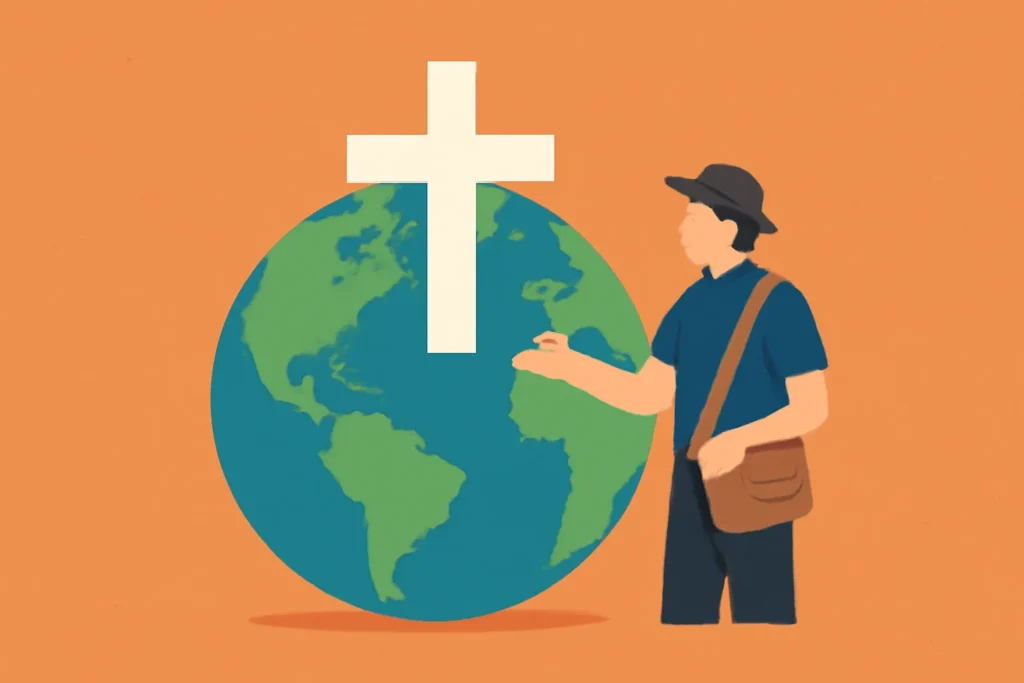
World missions in Christianity, often framed as the global effort to share the gospel, train believers, and serve flourishing communities, stands at the intersection of faith, culture, and service. This comprehensive guide explores the history, theology, methods, and contemporary realities of evangelism and service across diverse contexts. By tracing the arc from early Christian outreach to modern multi-ethnic partnerships, we can better understand how the church participates in God’s mission to redeem all nations. The following sections use variations on the theme of global evangelism to broaden the discussion and highlight the many facets of this enduring enterprise.
Global Missions: A Broad Definition and Its Core Purposes
World missions in Christianity refers to organized efforts by Christians and Christian communities to proclaim the gospel, disciple new believers, establish churches, and demonstrate Christ-like service in diverse cultural settings. This broad umbrella includes:
The proclamation of the gospel across linguistic and cultural barriers.
Discipleship, leadership training, and the formation of self-sustaining local churches.
Holistic ministry that addresses physical, social, educational, and health needs alongside spiritual nurture.
Partnerships between sending churches or organizations and local communities in mission fields.
Engagement with unreached and least-reached people groups, often focusing on long-term witness rather than transient presence.
Within this framework, several terms function as synonyms or closely related concepts, including global evangelism, mission movement, cross-cultural outreach, and worldwide evangelistic enterprise. Each emphasizes a different emphasis—gospel proclamation, community development, or cross-cultural adaptation—yet they share the ultimate aim of honoring the Great Commission and advancing the expansion of God’s kingdom.
Historical Foundations: From Jerusalem to Global Networks
Understanding where we stand today requires a grasp of the historical development of mission in the church. The story moves through distinct eras, each contributing methods, theology, and partnerships that shape contemporary practice.
Early Church and the Mediterranean Missionary Trail
From the first-century church onward, missionaries carried the message of Jesus beyond their own communities. The book of Acts recounts the spread of the gospel from Jerusalem to Judea, Samaria, and the ends of the earth. Key elements emerged early:
Cross-cultural engagement, often within the Roman world’s diverse cities.
House churches, which demonstrated a pragmatic model for multiplying believers.
Written letters and teaching that shaped doctrinal foundations and community life.
Medieval and Early Modern Phases
While missionary activity varied, two currents shaped later developments: monastic and scholastic efforts in Europe, and Catholic missionary movements seeking to establish faith communities worldwide. The Crusade-era framing was later replaced by more intentional evangelism and education programs in various regions.
The 15th–17th centuries brought extensive cross-cultural contact, often intertwined with colonial histories. Protestant and Catholic missions established schools, medical facilities, and translated scriptures into dozens of languages. While this period laid groundwork for widespread literacy and Bible access, it also raised questions about cultural exchange, power dynamics, and indigenous agency.
Ecumenical and Theological Shifts in the 19th and 20th Centuries
The modern era saw the rise of dedicated missions organizations, mission-sending networks, and formal training for missionaries. This period brought:
Structured sending and sending churches that supported long-term field service.
Transfer of leadership skills and organizational development, enabling local churches to mature in different settings.
Growing attention to localization, language learning, and cultural sensitivity as essential competencies.
Theological Foundations: Why Mission Matters
A robust theology of mission undergirds every practice in world missions. Two foundational concepts—often discussed together—provide clarity for planning, teaching, and organizing mission work.
The Great Commission and Global Witness
The biblical imperative is clear in passages such as Matthew 28:18–20, commonly called the Great Commission, where Jesus commissions his followers to make disciples of all nations. Across biblical witnesses, mission is framed not merely as personal evangelism but as participation in God’s redemptive plan for the whole creation. Another emphasis comes from Luke-Acts, which depicts the Spirit-enabled expansion of the church into new cultures and regions. Together, these texts support a vision of world evangelism that is invitational, incarnational, and transformative.
Missio Dei, or the Mission of God, reframes mission as God’s initiative rather than human effort alone. In this view, the church participates in God’s ongoing work by listening, discerning, and joining God in places where grace is already at work. This perspective encourages humility, partnership, and a focus on sustainable development rather than dependency, recognizing that God is already moving in diverse cultures and contexts.
Contextualization and Cultural Sensitivity
Contextualization is the practice of communicating the gospel in ways that resonate with a culture without compromising core biblical truths. This involves language, symbols, music, pedagogy, and social norms that differ across contexts. While essential, contextualization also requires careful discernment to avoid syncretism or distortion of gospel essentials. The aim is a credible, compelling, and locally owned expression of Christian faith in which new believers can mature as disciples.
Strategies and Models: How World Missions Are Carried Out
Missional activity is diverse, reflecting geography, culture, denominations, and resource realities. Below are several prominent strategies and models that have shaped the practice of Christian mission worldwide.
Church-Planting Movements and Indigenous Leadership
A central goal is to establish self-replicating churches led by local leaders. This often involves:
Training lay leaders alongside clergy to foster ownership and sustainability.
Encouraging rapid, simple church forms that can multiply in new communities.
Partnering with local believers to identify needful contexts for planting and growth.
Partnership-Based Global Networks
Rather than a one-way flow of resources, contemporary missions emphasize reciprocal partnerships. Characteristics include:
Mutual accountability and shared governance between sending and receiving churches or organizations.
Strategic alignment with the priorities and gifts of local communities.
Co-development of programs in theology, education, healthcare, and economic empowerment.
Holistic Ministry: The Integration of Gospel and Service
Mission is more than preaching; it encompasses holistic ministry—addressing material needs, social justice, education, health, and economic development in ways that reflect Christian compassion and practical faith.
Short-Term and Long-Term Involvement
Both short-term and long-term engagements play a role in modern missions. Short-term teams can:
Provide capacity-building support, teach, and encourage local partners.
Offer skills in medicine, education, or media that complement ongoing work.
Stimulate cross-cultural awareness and global awareness among participants.
Long-term missionaries bring sustained presence, language acquisition, and deep relational work that enables lasting transformation in communities.
Global Trends and Contemporary Realities
Today’s world missions landscape is shaped by rapid globalization, urbanization, and digital connectivity. Several trends influence how missionary work is conceived and implemented.
A guiding metric for many mission strategies is the task of reaching unreached people groups—ethnolinguistic communities with little or no access to the gospel. The emphasis is on ethnolinguistic identity, social isolation, and access to resources such as education and media. Mission plans often aim to raise awareness, mobilize resources, and establish durable church networks within these communities.
Urban centers become focal points for mission due to population density, sociocultural diversity, and the presence of marginalized groups. Simultaneously, diaspora communities create opportunities for cross-cultural ministry that bridges continents. Urban missions emphasize church planting, neighborhood transformation, and social entrepreneurship to reach city dwellers, students, workers, and migrants.
Technology has transformed how the gospel is communicated and how communities engage with faith. Digital platforms enable:
Gospel messaging in multiple languages and cultural idioms.
Online training, theological education, and mentorship programs.
Support networks that connect churches and individuals across borders.
Many mission efforts align with development goals, such as education, clean water, healthcare, economic development, and disaster relief. This sustainable development approach stresses long-term capacity-building and local ownership, ensuring that projects outlive initial funding and partnerships.
Challenges, Ethics, and the Path Toward Responsible Mission
World missions in Christianity faces a range of challenges that require humility, accountability, and continuous learning.
Historical associations of missions with colonialism and cultural superiority have left scars. Contemporary practitioners emphasize:
Respect for local leadership and autonomy.
Recognition of indigenous theological contributions and contextual insights.
Reduction of paternalistic approaches and promotion of mutual learning.
Questions of funding, control, and decision-making are crucial. Best practices include:
Transparent financial reporting and governance.
Co-created strategy with local partners rather than imposed agendas.
Shared accountability to churches, donors, and communities served.
A persistent concern is the risk of creating dependency rather than sustainability. Mission programs aim to:
Build local leadership pipelines and training infrastructure.
Focus on skills transfer, not only resource provision.
Celebrate indigenous church growth and leadership emergence.
Various organizational forms support the mission enterprise, from denomination-led ministries to ecumenical networks and parachurch agencies. This ecosystem enables training, funding, field placement, and ongoing evaluation.
Many denominations maintain formal mission agencies or church-planting networks that coordinate outreach, field staffing, and partnerships. These entities provide:
Field-based support for missionaries and teams.
Theological training and credentialing aligned with the denomination’s faith heritage.
Resource mobilization for long-term projects and emergency relief.
Ecumenical collaborations recognize that the gospel is a global call that transcends single-heritage boundaries. These partnerships emphasize:
Shared mission strategies and joint initiatives in education, health, and community development.
Mutual accountability and joint learning exercises across diverse church traditions.
Seminaries, Bible schools, and missiology programs equip aspiring missionaries with
Cross-cultural communication skills.
Theological clarity and ethical discernment in mission contexts.
Practical field preparation, language learning, and trauma-informed care.
Assessing the effectiveness of mission work requires clear metrics, transparent reporting, and ongoing learning. Common indicators include:
Number of new congregations planted and baptized believers discipled.
Training outcomes, including leadership development and multiplier effects.
Social impact measures such as improvements in literacy, health, and economic livelihoods.
Gospel receptivity and spiritual growth within communities.
These metrics are most useful when combined with qualitative stories, case studies, and partner feedback that illuminate context, challenges, and success factors. A holistic approach to evaluation helps missions programs stay aligned with local needs and biblical commitments.
Looking ahead, the mission enterprise is likely to continue evolving under the influence of culture, technology, and global statistics. Several trajectories stand out as likely drivers of change.
Advances in communication technology will continue to lower barriers to entry for gospel communication and training. Churches and organizations may increasingly rely on:
Mobile learning platforms and virtual communities that support ongoing discipleship.
Analytics and data-driven planning to identify needs, optimize outreach, and track outcomes.
Creative media production, including digital evangelism, podcasts, and video storytelling.
Futures in mission emphasize participatory leadership and co-creation with local communities. The aim is to avoid cultural extractivism and to empower voice and agency among those receiving the proclamation of the gospel.
Sustainable mission work prioritizes long-term viability, local entrepreneurship, and capacity building. Initiatives tend to integrate faith formation with community development, ensuring that spiritual growth goes hand in hand with practical flourishing.
The cooperative spirit among churches and organizations is likely to deepen, with shared visions that transcend borders and prioritize mutual accountability, transparency, and learning. The emphasis is on collaborative impact rather than competition for recognition or funding.
Great Commission — Jesus’ command to make disciples of all nations.
Missio Dei — God’s own mission to reconcile the world; the church participates in that mission.
Global evangelism — Broad efforts dedicated to sharing the gospel across cultures and countries.
Unreached people groups — Ethnolinguistic groups with little to no access to the gospel.
Contextualization — Adapting the message and methods to a particular culture while preserving biblical essentials.
Church planting — Establishing new, self-sustaining churches in new communities.
Discipleship — The process of mentoring believers to grow in faith, leadership, and service.
Holistic mission — Integrating spiritual witness with physical, social, and economic well-being.
Partnership — Cooperative work between sending bodies and local communities in mission endeavors.
Sustainable development — Long-term efforts that build local capacity and resilience.
World missions in Christianity is a dynamic and multifaceted endeavor. It calls for a robust theological grounding, ethical practice, and a commitment to learning across cultures. By embracing the biblical call to witness to the ends of the earth, and by cultivating partnerships that honor local leadership and dignity, the church seeks to fulfill its broad responsibility to share the transformative message of Jesus Christ while actively serving the needs of people around the world. This comprehensive guide aims to equip readers with a clear sense of purpose, strategy, and responsibility as they engage in or support global evangelism and mission-based service in the twenty-first century.










Leave a Reply