Introduction: Why a Close Look at Jesus’ Death Matters
The question “Why did Jesus come to die?” is not merely a theological puzzle for scholars; it speaks to the center of Christian faith and the daily lives of millions who trust in the gospel. Across the biblical witness, Jesus’ death is presented as deliberate, purposeful, and transformative. This article offers a thoughtful, comprehensive exploration of fifty distinct reasons—drawn from scripture, tradition, and sustained scholarly reflection—why Jesus came to die. Rather than collapsing these motives into a single concept, the list recognizes the richness and variety of biblical imagery: atonement, redemption, forgiveness, propitiation, reconciliation, justice, and many others. The aim is not to rank these reasons as competing alternatives but to illuminate how the cross simultaneously satisfies divine justice, demonstrates boundless love, and opens a path for human beings to be transformed and restored.
Theological Foundations: Why Jesus Came to Die
Before naming the individual reasons, it helps to establish the overarching theological frame. The death of Jesus is portrayed in scripture as part of God’s plan, a response to human sin, and the climactic act of God drawing near to humanity. In this light, the cross serves as a lens through which we understand God’s holiness, mercy, and faithfulness. The following sections present fifty distinct, theologically robust motives for Christ’s death, grouped to reflect how the biblical authors present the work of the cross across genres and eras.
50 Reasons Jesus Came to Die: Thematic Group 1 — The Means of Redemption
In this first group, we explore why Jesus’ death was necessary as the means by which redemption and liberation from sin become possible. Each item highlights a core mechanism or image the New Testament uses to explain how the cross accomplishes salvation.
Atonement through sacrifice: Jesus’ death is presented as the ultimate sacrifice that satisfies divine justice and removes guilt, enabling humanity to approach God with confidence. His blood stands in for ours, securing access to holy fellowship.
Ransom from bondage: The cross is described as a ransom paid to free many from the enslaving power of sin, death, and the devil, releasing captives into liberty under Christ.
Substitutionary atonement: Jesus dies in our place, bearing the penalty we deserve, so that the righteous judgment of God falls on him rather than on sinners who trust in him.
Propitiation of divine wrath: The death of Jesus turns away God’s wrath from sinners, satisfying the just demands of God and revealing the depth of divine mercy.
Reconciliation with God: Through his death, Jesus creates a pathway for reconciliation between a holy God and estranged humanity, restoring harmony in the cosmic relationship that sin disrupted.
Redemption from bondage: The cross liberates believers from the bondage of sin’s power, enabling a new life empowered by the Spirit and oriented toward righteousness.
Sacrificial love demonstrated: Jesus’ death stands as the supreme display of love—laying down life for friends—inviting a response of trust and devotion from those who believe.
Conquest of guilt: The cross addresses the burden of guilt, inviting sinners to be washed clean and to live in the forgiveness that follows repentance and faith.
New covenant ratification: Jesus’ death inaugurates the new covenant, extending grace more fully and securely than the old framework, and writing God’s laws on human hearts.
Ultimate victory over evil: The cross inaugurates a trajectory of victory over sin, death, and the powers of darkness, setting the stage for the full realization of God’s kingdom.
50 Reasons Jesus Came to Die: Thematic Group 2 — Relational and Moral Dimensions
In this section, we move from cosmic and systemic healing to the intimate, personal, and communal effects of the cross. These reasons focus on how Jesus’ death redefines relationships, moral life, and the human condition in relation to God and neighbor.
Forgiveness of sins: The cross provides the means through which forgiveness is offered and received, erasing the record of guilt that separates us from a holy God.
Justification by faith: Through faith in Jesus, God grants righteousness apart from works, declaring believers blameless and accepted in his sight because of Christ’s righteousness.
Peace with God: The debt is settled, creating peace between humanity and the Creator, ending hostility and enabling a confident, hopeful relationship with God.
Reconciliation among people: The cross dissolves barriers between people by bringing diverse groups into a shared identity as members of Christ’s body, the church.
Cosmic healing of creation: Jesus’ death helps repair the broken relationship between God and the created order, restoring shalom and specifying a direction toward renewal.
Conformity to Christ: The Spirit’s work through the cross shapes believers into the image of Christ, forming a new moral and spiritual character.
Citizenship in God’s kingdom: By dying and rising, Jesus ushers believers into a new kingdom citizenship that redefines loyalty, allegiance, and destiny.
Final end of law as a means of righteousness: While the law reveals sin, the cross reframes righteousness as a gift received by faith, not earned through law-keeping alone.
Access to God’s presence: The death of Jesus removes the barrier between humanity and the holy presence of God, enabling intimate access through prayer and worship.
Formation of a spiritual family: Through the cross, believers are adopted into God’s family, gaining brothers and sisters who share in the life of faith and mission.
50 Reasons Jesus Came to Die: Thematic Group 3 — Cosmic and Eschatological Perspectives
Beyond individual souls and communities, the cross is presented as a cosmic event with implications for history, creation, and the future. These items address how the death of Christ reshapes the last things and the entire arc of God’s plan.
The Eternal Scope and Fulfillment
Atonement for the world: Jesus’ death is not only for individuals but for the world, offering a universal invitation to salvation and reconciliation with God.
Defeat of death’s power: The cross defeats the final enemy, death, opening the way to eternal life for all who belong to Christ.
Judgment and hope interwoven: The cross embodies both judgment against sin and hope for sinners who repent, realigning cosmic justice with mercy.
Seed of new creation: The cross is the first act of God’s new creation—the dying and rising that signals the birth of a renewed order.
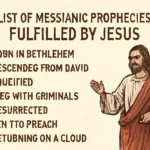
Fulfillment of Scripture: Jesus’ death is presented as the fulfillment of long-awaited biblical prophecies, tying his life and death to the grand narrative of God’s redemptive plan.
Judicial reversal for believers: In Christ, the righteous consequences of sin are answered within the person and work of Jesus, ensuring believers’ standing before God.
Victory over spiritual powers: The cross is portrayed as a decisive blow to the powers that hold sway over humanity, liberating captives and disarming hostile forces.
Hope of resurrection glory: The crucifixion is inseparably linked to the promise of resurrection, aligning Jesus’ own vindication with the future hope of all believers.
Fulfilled covenant promises: The death of Jesus is cast as the climactic fulfillment of God’s covenant faithfulness, ensuring that his promises ellaborate across generations.
Invitation to a renewed creation: The cross points toward a renewed heavens and earth where God dwells with his people in unbroken fellowship.
50 Reasons Jesus Came to Die: Thematic Group 4 — Practical Implications for Believers
The cross is not only a doctrinal claim; it has practical consequences for how people live, worship, and engage the world. These items focus on transformation, service, and mission that stem from Jesus’ death.
Missional impetus: The cross sends believers outward with the message of grace, inviting others to participate in the community and life of faith that Jesus began.
Countercultural love: Because the cross demonstrates radical love, followers are called to embody costly love in a world prone to fear and division.
Humility and service: The pattern of Jesus’ self-giving life becomes the model for leadership and service within communities of faith.
Healing of wounds: In light of the cross, believers are called to pursue healing—personal, relational, and communal—by confessing sins, seeking reconciliation, and offering forgiveness.
Ethical renewal: The resurrection power released through the cross fuels a transformed ethic, shaping how believers work, parent, and steward resources.
Hope in suffering: The cross reframes suffering as a context in which faith can mature, persists in hope, and bears witness to God’s faithfulness.
Joy amid trials: The cross anchors a unique joy that persists even in hardship, grounded in the certainty of God’s presence and promise.
Worship as response: The cross invites a life of worship—thanksgiving, praise, and reverence that orient every moment toward God’s glory.
Peaceful resilience: The cross equips believers to navigate conflict with mercy, seeking reconciliation rather than vengeance.
Fruit of the Spirit: The cross sustains a life characterized by love, joy, peace, patience, kindness, and faithfulness as evidence of transformation.
50 Reasons Jesus Came to Die: Thematic Group 5 — Hope, Assurance, and Future Fulfillment
The final group centers on the enduring hope that flows from the cross. These reasons look toward the consummation of God’s plan, the final vindication of Jesus, and the ultimate transformation of all things.
Enduring Hope and Consummation
Assurance of salvation: Believers gain a confident assurance that their sins are forgiven and their future is secure in Christ’s finished work.
Hope of eternal life: The cross anchors the Christian hope of eternal life with God, not as a mere wish but as a sure expectation grounded in Jesus’ victory.
Vindication of Jesus: The death and resurrection together testify to Jesus’ identity and mission, ensuring his message stands vindicated before the world and the universe.
Security of God’s love: The cross demonstrates the immeasurable extent of God’s love, a love that reserves no good thing from those who belong to him.
New creation reality: The cross points forward to a future era in which God dwells with humanity in a renewed creation, free from tears, pain, and death.
Justice and mercy together: The cross embodies a balance where divine justice is satisfied and divine mercy is extended, ensuring integrity in God’s governance of the world.
Global mission expansion: The cross empowers the church to make disciples of all nations, crossing language, culture, and barrier with the gospel’s transformative power.
Inclusion in the people of God: The cross invites all peoples into one people—the church—creating a diverse, reconciled community bound by grace.
Continued spiritual companionship: The cross guarantees ongoing Spirit-led friendship with God, enabling believers to hear, discern, and respond to divine guidance.
Everlasting worship: The cross culminates in eternal worship where beings from every tribe and tongue proclaim the worth of the Lamb who was slain.
Conclusion: What the 50 Reasons Teach Us About Faith
The fifty reasons for Jesus’ death, when taken together, reveal a multifaceted act that touches every layer of reality: divine justice, human guilt, relational restoration, cosmic renewal, and daily discipleship. Rather than presenting an abstract doctrine, the cross invites a living response—trust in Christ, repentance where needed, a renewed commitment to love and serve, and a hopeful gaze toward God’s promised future. Readers are encouraged to see the cross as the singular event that makes sense of the Bible’s narrative arc: God’s good design for humanity, thwarted by sin, restored by the life, death, and resurrection of Jesus, and advanced through the ongoing work of the Spirit in the church. In this sense, the cross is not merely a historical event; it is the living center of Christian existence—shaping belief, ethics, worship, and mission for today and for the age to come.








Leave a Reply