Introduction to the Fifth Commandment: Meaning and Modern Relevance
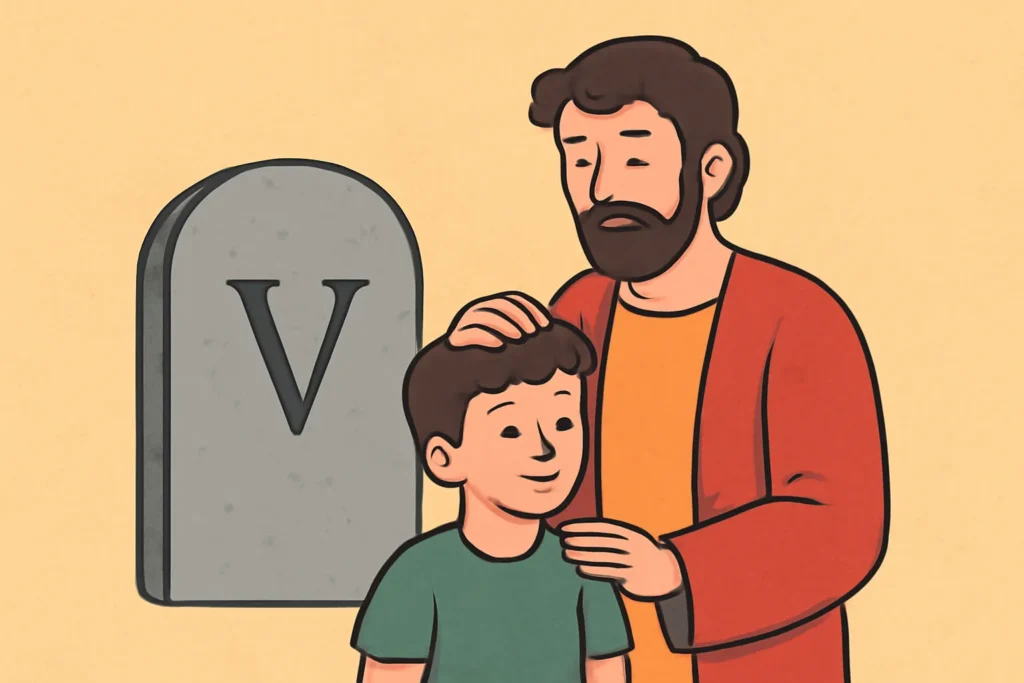
The Fifth Commandment—often stated in the form “Honor your father and your mother”—ranks among the oldest moral directives that shape family life, social order, and personal character across civilizations. In many traditions, this commandment establishes a basic expectation for intergenerational relations: to show respect, gratitude, and care for one’s parents as they fulfilled roles as teachers, providers, and stewards of family legacy. Yet the scope and application of the fifth commandment have never been limited to a single, static interpretation. Across time and among diverse cultures, the fifth commandment has evolved into a broader conversation about honor, duty, reciprocity, and the obligations that bind a community.
This article undertakes a thorough exploration of the meaning and modern relevance of the 5th commandment, sometimes described as the 5th commandment or the Fifth Commandment. We will trace its textual roots, examine how it has been understood in different faith traditions, and consider how it operates in contemporary domestic life, public policy, and ethical discourse. In doing so, we will use variants of the phrase to reflect the semantic breadth of the topic: the fifth commandment, the 5th commandment, the Fifth Commandment, and related expressions that capture its many facets.
What does the Fifth Commandment require?
At its core, the fifth commandment calls for respect and honor toward one’s parents. But “honor” can be a multi-layered concept, encompassing gratitude, reverence, support, and fidelity to family bonds. The precise demands can vary depending on tradition, circumstance, and the ethical framework one adopts. In many readings, the commandment is understood to require:
Respect and gratitude for the sacrifices, care, and guidance provided by parents and elders.
Support and care—especially in old age or during illness—when possible and reasonable, balancing obligations with personal means and other duties.
Honest communication and fidelity to the family’s values and memory, preserving trust across generations.
Recognition of authority within moral boundaries—understanding that parental guidance is not a license to violate other moral duties or to endorse harm.
Preservation of relationship—nurturing a durable bond that can adapt as roles and life circumstances shift (e.g., becoming caregivers, mentors, or advisors in adulthood).
The language of the fifth commandment has historically been connected to the broader biblical ethic of family order, which many cultures associate with stability, social cohesion, and transmission of values. Yet the practical implications—how one demonstrates honor in real life—are complex. In the modern era, the Fifth Commandment is often reframed beyond a simple directive to obey parents in childhood. It becomes a living principle that interacts with justice, consent, personal autonomy, and the evolving needs of aging populations. The discussion that follows expands on these ideas, showing how a timeless commandment remains relevant as family structures, economic realities, and social norms change.
Historical and theological background
Origins in the Hebrew Bible
The sourcing of the fifth commandment lies in the Hebrew Bible, specifically in the Decalogue delivered to Moses on Mount Sinai. In its original context, this commandment established a social framework for the newly forming Israelite community: the generations would recognize and honor those who came before them, sustain them when needed, and preserve the integrity of familial and communal life. The phrase itself points toward a filial duty that is both personal and communal in character. In many Jewish interpretive traditions, this directive is linked to the maintenance of family continuity, the transmission of religious law (the Torah), and the shaping of moral character in youth.
While the literal language focuses on parents, Jewish commentators increasingly interpret the commandment as extending to elders and to the broader ecosystem of family authority that contributes to social order. In this sense, the fifth commandment can be read as a call to honor the generations that sustain a culture and the collective wisdom that flows from age, experience, and tradition.
Development in Christian tradition
In Christian thought, the fifth commandment takes on additional layers of interpretation. The early church recognized it as a foundational principle for healthy family life, but it also situated it within larger ethical frameworks about love, justice, and community care. In Catholic theology, for example, the commandment is linked to the virtue of filial piety and is seen as a building block for other moral duties: respect for parents is not a mere courtesy but a form of love that helps form responsible citizens and faithful believers.
Protestant reformers reframed parts of the moral law to emphasize personal conscience and responsibility, often highlighting that divine command does not justify uncritical obedience if a parental request contradicted higher ethical obligations or God’s larger law. In both traditions, the central idea remains: honoring parents is about recognizing the debt of gratitude, the value of family bonds, and the responsibilities that come with adulthood—care for the vulnerable, truthfulness, and a life shaped by intergenerational trust.
Interpretations across traditions: Judaism, Christianity, and secular perspectives
Judaism
In Judaism, the fifth commandment often underscores not only respect but also a duty to support and protect one’s parents as they age. The concept of honor in Hebrew is deep and multifaceted, including acts of service, hospitality, and the responsible handling of family resources. The value of honoring one’s parents is tied to the broader covenantal ethics that govern family life as a microcosm of the divine-human relationship.
Christianity
Christian interpretations frequently connect the Fifth Commandment to Jesus’ teaching about love, service, and humility. While it recognizes the rightful authority of parental guidance, Christian readers also emphasize Jesus’ call to love God above all and to love one’s neighbor as oneself. Therefore, the fifth commandment can be read as cultivating a form of love that translates into care, patience, and support for parents, while also respecting the newcomer—children who are called to bear witness to the values they have learned.
Secular and interfaith perspectives
Beyond the specific religious traditions, many secular ethical frameworks interpret the fifth commandment as a principle for the dignity of family life. Interfaith dialogues often emphasize respect for parental figures as a keystone of social stability, while also recognizing that modern societies must support families through policies that ease caregiving burdens, protect elder rights, and promote intergenerational solidarity. In this light, the 5th commandment transcends doctrinal boundaries, becoming a shared value about respect, responsibility, and communal care.
Modern relevance: applying the Fifth Commandment today
The question of how the fifth commandment translates into contemporary life is both practical and philosophical. It invites families to navigate questions of autonomy, care, and respect in a world of shifting roles, diversified households, and evolving social institutions. In today’s contexts, the fifth commandment invites concrete actions: listening with patience, providing material and emotional support, and preserving family heritage and memory. It also asks communities to reflect on how their laws and policies can honor older generations without coercing individual choice or undermining human dignity.
Family life and relational dynamics
In households around the world, the fifth commandment often appears as a daily ethic of mutual respect. This may include small acts of kindness, such as helping with daily chores, sharing meals, or offering companionship to aging relatives. It may also involve larger decisions about living arrangements, healthcare, and financial planning. As adults, children must balance gratitude and obligation to parents with the realities of their own families, careers, and personal needs. The modern interpretation recognizes that honor is not blind obedience but a mature commitment to caring for those who formed our earliest sense of security.
Care for aging parents and elder care policy
One of the most pressing modern applications of the fifth commandment concerns elder care. With aging populations in many countries, families often shoulder the primary responsibility for caregiving, while public systems provide varying degrees of support. The ethical question becomes how to uphold the principle of honoring parents while maintaining personal health, economic stability, and dignity for the aging. Societal policies—such as paid family leave, caregiver tax credits, accessible healthcare, and robust long-term care infrastructure—are ways in which a community translates the spirit of the fifth commandment into practical, just governance.
Education, mentoring, and intergenerational solidarity
The fifth commandment also speaks to education and mentorship. When elders share stories, wisdom, and cultural traditions, they grant younger generations a sense of identity and continuity. Schools, religious communities, and civic organizations can reinforce this transmission by creating spaces where young people learn from older members in respectful and reciprocal ways. In this sense, honoring parents expands to honoring mentors and elders who contribute to a community’s moral and intellectual life.
Work—duty, respect, and boundaries
Even in professional settings, the spirit of the fifth commandment can inform workplace ethics: showing respect for colleagues who are parents or who care for elderly relatives, recognizing the human dignity of everyone in the office, and balancing obligations with compassion. While career ambitions and competitive goals may clash with caregiving duties, a culture that honors the family commitments of its workers tends to foster loyalty, well-being, and long-term productivity.
Variations of the commandment and practical applications
Different phrasings and their implications
The expression the fifth commandment can appear in various forms: “Honor your father and your mother”, the Fifth Commandment, or simply the 5th commandment. Each formulation emphasizes a slightly different emphasis—familial duty, sacred law, or communal ethics. The semantic breadth of the phrase allows religious readers, philosophers, and policymakers to discuss honor in both narrow and broad senses: it can mean obedience in childhood, gratitude and care in adulthood, or a respectful regard for the generations that shaped a person’s world.
Honor without coercion: boundaries and consent
A critical modern insight about the fifth commandment is its compatibility with personal autonomy and safety. The commandment does not authorize harm or exploitation, and interpreters emphasize that honor should never justify enduring abuse, coercion, or moral injury. In healthy families, honoring parents means engaging with them in truthful dialogue, setting boundaries when necessary, and seeking outside help when family dynamics become unsafe. This nuanced approach preserves the virtue of respect while protecting the well-being of all involved.
Emotional and spiritual dimensions of honor
Beyond behavior, the fifth commandment invites an inner orientation—the cultivation of gratitude, humility, and fidelity to one’s lineage and values. In this sense, honor is not merely about external acts but about a posture of living in a way that honors the sacrifices and gifts received from parents and ancestors. When embedded in a community, this inward virtue can nurture mutual respect, reconciliation, and intergenerational trust.
Common misconceptions and boundaries of the Fifth Commandment in the modern world
Misconception: The fifth commandment requires unwavering obedience to parents at all times.
Reality: Most traditional interpretations allow for reasoned discernment. If a parental request would lead to harm or contradict higher moral duties, individuals are encouraged to respond with respect while prioritizing safety and conscience.
Misconception: Honoring parents means suppressing one’s own identity or life choices.
Reality: Healthy honor includes recognizing personal autonomy, developing one’s own moral voice, and maintaining honesty in relationships.
Misconception: The commandment applies only within biological families, not in adoptive or chosen kinship.
Reality: The ethical spirit of honoring those who raise, mentor, and care for us can extend to adoptive parents, guardians, and elders in the broader community who fulfill leadership and supportive roles.
Misconception: Modern social services render the commandment moot.
Reality: Public and private support systems often complement, but do not replace, the moral call to care for elders. A just society works to relieve undue burden on families while preserving the dignity of aging and vulnerable persons.
Conclusion: The Fifth Commandment in contemporary society
The fifth commandment remains a living moral landmark that invites continuous reflection. In its most enduring clarity, this directive teaches that respect, care, and gratitude toward parents and elders are foundational to healthy families and resilient communities. It invites a balance between generational gratitude and adult autonomy, between personal integrity and familial responsibility. As societies evolve, the practical outworking of the fifth commandment involves:
Strengthening intergenerational relationships through dialogue, shared activities, and mutual support.
Expanding elder care resources and policy frameworks that honor aging with dignity.
Encouraging cross-generational learning—stories, wisdom, and experience—that enrich the next generation.
Upholding ethical boundaries to ensure that honor does not become a justification for harm or coercion.
Promoting a balanced sense of widely shared responsibility—where families, communities, and institutions collaborate to sustain the vulnerable.
In the modern world, the 5th commandment is not a relic of ancient law but a dynamic ethical principle. It asks each generation to consider what it means to honor, to care, and to build a community where the bonds of family are strengthened, the memory of those who came before is preserved, and the next generation inherits a wiser and more humane world. Whether you approach this topic from a religious, philosophical, or civic angle, the enduring task remains: to cultivate mutual respect and compassionate duty across the generations.










Leave a Reply