All Bible Prophecies: A Complete Guide to Biblical Predictions
All Bible Prophecies: A Complete Guide to Biblical Predictions
All Bible Prophecies: A Complete Guide to Biblical Predictions
Prophecy is a central theme in both the Old Testament and the New Testament, weaving together history, theology, and eschatology. A robust study of biblical prophecy helps readers understand how God speaks, how the unfolding plan of salvation is revealed across genres, and how the expectations of ancient audiences meet the events of their own time and ours. This guide offers an extensive overview of the landscape of biblical prophecies, their categories, major themes, methods of fulfillment, and the interpretive frameworks scholars use to read them today. It aims to be a practical, accessible resource for students, pastors, teachers, and curious readers.
In biblical terms, prophecy denotes a message that God communicates to humanity through human agents. The biblical languages reflect a broad sense of communication—through nabi (the prophet as a spokesman), visions and dreams, voices in the night, oracles proclaimed in public. Important features emerge across the prophetic literature:
Divine origin: the message claims to come from the Lord, not from human invention.
Necessity and urgency: the message often calls for timely response—repentance, fidelity, or moral reform.
Specific content: many prophecies name people, places, dates, or events with precision that can be historically verified.
Textual variety: prophecy appears as oracles, visions, narrations, poems, parables, and apocalyptic visions.
Fulfillment and testing: a core concern is whether the prophecy is fulfilled, whether the test of a true prophet is met, and how fulfillment reveals God’s character.
Because prophecy spans centuries, cultures, and literary genres, it is helpful to categorize and approach it with careful hermeneutics. The remainder of this guide surveys the major types of prophecy, the principal sources, how fulfillment works, and how modern readers can study these texts responsibly.
Categories of biblical prophecies
Biblical prophecies can be organized into broad categories that reflect their content, audience, and purpose. Each category contains multiple subtypes and well-known examples.
Predictive prophecies about individuals and events
These are prophecies that point to specific persons, places, or moments in history. They often function as markers in a larger divine story. Examples include predictions about a coming king, a suffering servant, or a future exodus. Predictive prophecies can be literal, symbolic, or a combination of both, depending on the context and genre.
Messianic prophecies
These are prophecies that anticipate the Messiah, the anointed one who fulfills God’s promises to Israel and the nations. They address the nature, lineage, birthplace, suffering, death, and ultimate victory of the coming Savior. Notable strands include:
Descended from David and seated on his throne (2 Samuel 7; Isaiah 9:6-7)
Suffering and atoning death for sins (Isaiah 52–53; 1 Peter 2:24)
Ruler over all nations and the maker of an everlasting kingdom (Daniel 7; Luke 1:32-33)
Prophecies about nations and kingdoms
Often called oracles against the nations, these prophecies pronounce judgment and commentary on geopolitical powers—Egypt, Assyria, Babylon, Tyre, Edom, and others—while also pointing toward God’s universal purposes. They show that God’s sovereignty extends beyond Israel to the entire world and that the rise and fall of empires are used to shape his redemptive plan.
Prophecies concerning Israel, the church, and the new covenant
These prophecies address Israel’s unique calling, the future restoration of the nation, and the expanding inclusion of the Gentiles into God’s people. They also include promises of a renewed relationship with God, a restored land, and a new, enduring covenant that transcends the old ritual system (Jeremiah 31:31-34; Ezekiel 36-37; Hebrews 8:6-13).
Apocalyptic and visionary prophecies
Found in Daniel and Revelation, among others, these texts employ dramatic imagery—beasts, horns, seals, bowls, trumpets, and cosmic signs—to reveal cosmic conflict, divine judgment, and the ultimate defeat of evil. They often integrate symbolism to communicate truths across cultures and eras.
Old Testament prophetic voices and their message
The Old Testament contains a broad spectrum of prophetic literature, from the towering voices of Isaiah and Jeremiah to the shorter, episodic messages of the twelve Minor Prophets (Hosea through Malachi). Each book contributes to a cohesive narrative about God’s holiness, human responsibility, judgment, mercy, and the hope of restoration.
Major prophets
Isaiah: Messages of judgment and comfort, the suffering servant, and the coming of a glorious future king.
Jeremiah: Calls for repentance, a new covenant, and the anticipation of eventual restoration despite present crisis.
Ezekiel: Visions of glory and exile, symbolic acts, and the promise of national restoration and a new temple.
Daniel: Adventures in exile that include apocalyptic visions and prophecies about kingdoms and the end of time.
Minor prophets
The twelve prophetic books—Hosea, Joel, Amos, Obadiah, Jonah, Micah, Nahum, Habakkuk, Zephaniah, Haggai, Zechariah, and Malachi—address injustice, spiritual compromise, social concerns, and the hope of a future day when God’s justice will prevail.
New Testament fulfillment and continuity
In the New Testament, prophecies are interpreted in relation to Jesus and the church. The gospel writers frequently show Jesus as the fulfillment of Old Testament prophecies, while the apostolic writings extend prophetic language to the mission of the church and the eschatological expectation of Christ’s return.
Jesus as the fulfillment of messianic prophecy
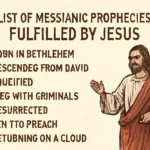
Numerous passages are presented as fulfillment events or motifs in Jesus’ life, death, and resurrection. The Gospels repeatedly note how Jesus’ birth, ministry, death, and resurrection align with earlier predictions. For example, the Gospel writers tie Jesus’ birth to Micah’s prophecy about Bethlehem, and they interpret his suffering in light of Isaiah 53.
The New Testament contains prophecies about the church, the spread of the gospel to the nations, and the culmination of history. The epistles encourage believers to be discerning and to test prophetic messages against the gospel of Christ (1 Corinthians 14; 1 Thessalonians 5). The book of Revelation presents a distinct, highly symbolic prophetic perspective on the final defeat of evil and the establishment of God’s eternal kingdom.
How prophecy works: types of fulfillment
Scholars distinguish several modes by which prophecies come to pass. These modes help readers interpret the text and understand the relationship between prophecy and history.
Direct fulfillment
Some prophecies appear to be fulfilled in a straightforward, literal way within a relatively short time frame. For instance, a prophecy about a ruler’s decree or a specific event in a historical time window can be checked against historical records or biblical narratives.
Prophecy often involves a type (a person or event that foreshadows a greater fulfillment) and an antitype (the fulfilling reality that comes later). The typological approach reads earlier events or persons as symbolic previews of later, greater fulfillments in the life of Christ or in the church.
Partial fulfillment with later completion
Some prophecies are fulfilled in stages: elements come to pass early, while other aspects await a future time. This pattern appears in prophecies about national restoration, the rebuilding of the temple, or ongoing spiritual realities in the church.
Symbolic and spiritual fulfillment
Not all prophecies are fulfilled in a narrow, literal sense. Some begin to be realized in spiritual or symbolic terms—such as the expansion of God’s kingdom through the church, or the universal invitation of the gospel to all nations—before a grand historical consummation.
Hermeneutical approaches to prophecy
Readers today approach prophecy with one of several broad interpretive frameworks. Each framework has strengths and weaknesses, and many readers hold elements of multiple approaches.
Futurist interpretation
The futurist view holds that a large portion of prophetic scripture, especially in Daniel and Revelation, refers to events that will occur in a future period just before and after the return of Christ. This approach emphasizes a literal future chronology and end-time scenarios.
Preterist interpretation
The preterist view argues that most prophecies were fulfilled in the first century, particularly in the events surrounding the destruction of Jerusalem in 70 CE and the early Christian movement. Proponents stress the historical and literary contexts of the texts and interpret apocalyptic imagery as contemporaneous symbolism.
Historicist interpretation
The historicist perspective reads prophecy as unfolding progressively through the course of history from biblical times to the present. It often views major world events and reforms as parts of a divine timeline, with significant milestones tied to eras such as the Roman Empire, the Reformation, or globalization.
Idealist (spiritual) interpretation
The idealist approach treats prophecy as timeless spiritual principles rather than concrete events in history. It emphasizes universal patterns of good and evil, moral truths, and the ongoing struggle between God’s rule and human rebellion, applicable across ages.
Key themes and motifs in biblical prophecy
While the genres and voices differ, several enduring themes recur throughout biblical prophecy. Recognizing these motifs helps readers discern meaning across texts and eras.
Judgment and mercy: God’s justice against oppression and sin, balanced by compassion and restoration for the repentant.
Covenant faithfulness: The ongoing relationship between God and his people, including promises to Israel and the church.
Restoration and new creation: The hope of return from exile, the rebuilding of worship, and the ultimate renewal of all things.
Messiah and the suffering servant: The paradox of divine kingship through humble, sacrificial service.
Universal sovereignty: God’s plan extends beyond Israel to all nations, inviting peoples from every tongue and tribe to worship him.
Hope amid crisis: Prophecy often speaks into exile, danger, or moral decline with a counter-narrative of divine perseverance and future glory.
Notable fulfilled and debated prophecies
Readers often assess prophecies by how they are fulfilled in history or in the life of Jesus. Here are some representative examples, noting that interpretations can vary among traditions and scholars.
Fulfilled prophecies commonly cited
Cyrus’s decree: Isaiah 44:28–45:1 speaks of Cyrus by name as the one who would facilitate the return from exile; this is widely considered a fulfilled prophecy in the events of 538 BCE when Cyrus issued the decree enabling the rebuilding of Jerusalem and the temple (Ezra 1).
Bethlehem as the birthplace of the Messiah: Micah 5:2 predicts the Messiah’s birth in Bethlehem; Matthew 2:1–6 and Luke 2:4–7 describe Jesus’ birth in Bethlehem, aligning with the prophecy.
The Suffering Servant: Isaiah 52:13–53:12 depicts a figure who suffers for others’ sins; Christians see this as fulfilled in the passion and crucifixion of Jesus (e.g., 1 Peter 2:24).
Daniel’s timeline and kingdoms: Daniel 2 and 7 present a sequence of kingdoms culminating in God’s eternal kingdom, interpreted by many as fulfilled in the first-century emergence of the Christian church and Jesus’ kingship, with ongoing implications for eschatology.
Prophecies with ongoing or debated fulfillment
Destruction of Jerusalem: Jesus predicted the destruction of the temple (Matthew 24; Luke 21). The event occurred in 70 CE under Roman rule, which many scholars view as a fulfillment of Jesus’ prophecy in a historical sense.
Gog and Magog: Ezekiel 38–39 and Revelation 20:7–10 describe future eschatological enemies; interpretations vary widely—from historical to symbolic to future events yet to occur.
Israel’s regathering and national restoration: Prophecies about national restoration are read differently across Christian and Jewish traditions. Some see partial foreshadowing in post-biblical return and modern events, while others anticipate a more comprehensive future fulfillment in a renewed land and people.
The Bible itself provides criteria for evaluating prophetic claims. Two classic tests are the Deuteronomic test and the apostolic standard in the New Testament.
Deuteronomy 18:20–22: A true prophet speaks in harmony with God’s revelation; if the prediction does not come to pass, the prophet is to be considered false.
1 John 4:1: Believers should test spirits to see whether they are from God, acknowledging that not every spirit is from God.
Consistency with Christ: In the New Testament, prophecies are to be aligned with the person and work of Jesus and the gospel message of repentance, faith, and love.
Ethical fruit: A true prophecy leaves people closer to God, promotes justice and mercy, and is consistent with God’s character as revealed in Scripture.
Prophecy study in practice: how to approach biblical prophecies
Engaging with prophetic literature requires careful reading, cross-reference checks, and healthy interpretive humility. Here are practical steps to study biblical prophecies thoughtfully:
Identify genre: Determine whether a passage is narrative prophecy, apocalyptic vision, or prophetic oracle. Genre shapes interpretation and literary cues.
Context is king: Read verses within their immediate context (chapter and book) and within the broader biblical narrative (canon-wide themes).
Consider historical setting: Recognize the original audience, their concerns (exile, oppression, kingship), and the literary devices used by the author.
Compare multiple texts: Cross-reference prophecies that discuss similar themes (e.g., the Messiah in Isaiah, Micah, Psalms) to build a cohesive understanding.
Be wary of over-allegorizing: While symbolism is common, many passages have concrete historical or doctrinal meanings that deserve careful attention.
Balance future hope with present ethics: Prophecy often calls for current repentance and faithfulness while pointing toward future fulfillment.
Historical overview: a timeline of prophetic activity
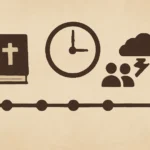
To grasp the scope of biblical prophecy, it helps to think in terms of a broad arc—from the formation of Israel as a people of God to the present church and beyond. Here is a simplified timeline emphasizing prophetic events and themes:
Ancient Near Eastern context: Prophetic voices emerge within Israel’s surrounding cultures, shaping expectations about divine justice and sovereignty.
Prophets in the monarchy: Isaiah, Jeremiah, Hosea, Amos, and others speak during times of political upheaval, exile, and spiritual crisis.
Exile and return: Prophetic messages shape the community during exile and anticipate restoration, culminating in events like Cyrus’s decree (as interpreted from Isaiah’s prophecies).
Intertestamental and New Testament era: Apocalyptic and messianic expectations intensify as Judaism grapples with empire and the arrival of Jesus.
Early church and apostolic fulfillment: Jesus’ life and teaching demonstrate fulfillment of many messianic expectations; the church receives prophetic contributions through the Spirit (Acts and the epistles).
Patristic and medieval to modern readings: Prophecy continues to be interpreted in light of doctrinal developments, scientific advances, and historical events.
Frequently asked questions about biblical prophecy
Readers often have questions about the nature, scope, and interpretation of prophecy. Here are concise answers to common concerns:
Are all prophecies about future events? Not necessarily. Some prophecies predict distant events, some describe moral and spiritual realities, and others foreshadow reality through types and symbols. Context determines how to read a given passage.
Can prophecy be conditional? Yes. Some prophecies hinge on human response—repentance, faith, and obedience can alter the predicted outcome in some cases.
What about false prophets? The Bible cautions against false prophets and offers criteria for discerning truth. The fruit of a true prophetic message should align with God’s character and the gospel of Christ.
Is prophecy still valid today? Many traditions affirm ongoing prophetic gifts in the church, while others emphasize personal prophecy, exhortation, and discernment as part of the Spirit’s work. The core is discernment and alignment with the biblical witness.
Conclusion: embracing a comprehensive view of biblical prophecy
Biblical prophecy covers a broad spectrum—from concrete predictions about kings and nations to visionary images of cosmic renewal and the coming kingdom. A holistic approach recognizes:
The divine origin and purpose of prophecy as a means of revealing God’s plans and inviting human response.
The diverse genres within prophetic literature—narrative, poetry, oracles, and apocalyptic visions—that require careful genre-awareness.
The various channels through which prophecy speaks—historical events, messianic expectations, judgments against nations, promises of restoration, and eschatological prophecies.
The importance of careful interpretation—using context, cross-references, language, and the overarching testimony of Scripture to discern meaning rather than imposing a modern agenda on ancient texts.
The aim of prophecy to lead readers toward repentance, faith, and worship, while offering hope for a future restoration and the ultimate renewal of all things.
Whether approached as history, theology, or literary art, biblical prophecy remains a dynamic conversation about God’s purposes for the world. It challenges readers to listen, discern, and live in light of the promises God has spoken—promises that center on the person and work of Christ, the unity of God’s people, and the ultimate fulfillment of all things in the new creation.
For further study, consider exploring the following cross-references and themes across the biblical canon:
Messianic prophecies across Isaiah, Micah, Psalm 22, and other writings; their fulfillment in the life of Jesus (Gospels and Epistles).
Prophetic oracles against nations in Isaiah, Jeremiah, Ezekiel, and the minor prophets; underlying themes of justice and mercy.
Apocalyptic literature in Daniel and Revelation; symbolic imagery and its interpretive frameworks.
The formation and renewal of covenants: Abrahamic, Mosaic, Davidic, and the new covenant in Jeremiah 31 and Hebrews 8.









Leave a Reply