Christ Returns: Signs, Prophecies, and What It Means Today
Christ Returns: Signs, Prophecies, and What It Means Today
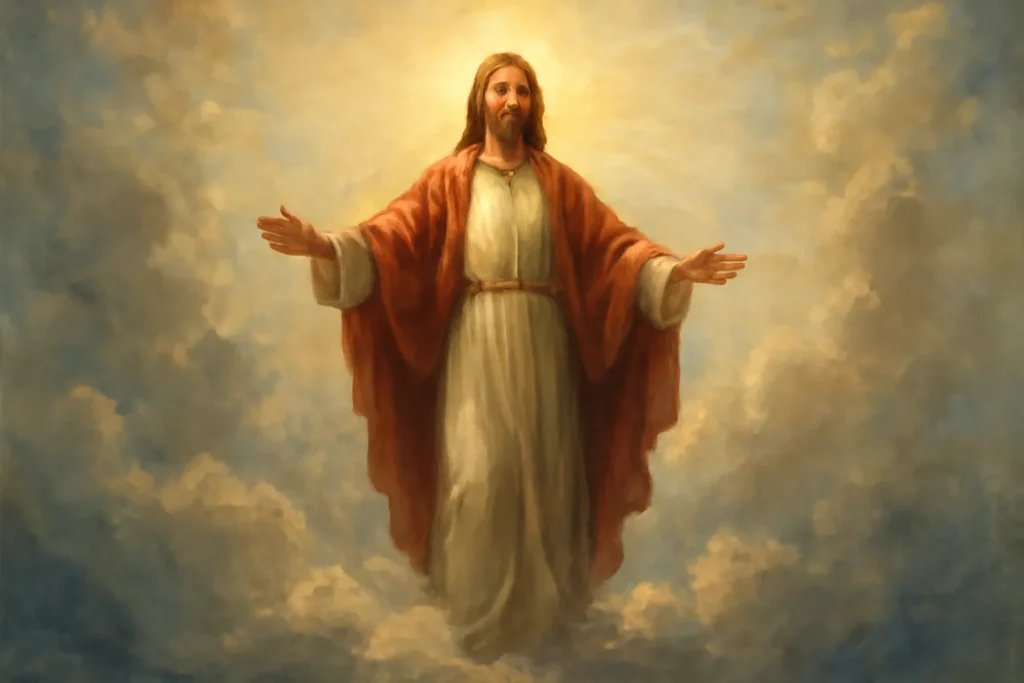
Across Christian communities and over two millennia, the topic of Christ’s return has been a focal point of faith, hope, and debate. The idea that Jesus will come again—often called the Parousia, the Second Coming, or the Advent of the Messiah—asks big questions: What will happen when he returns? How should believers live in light of that expectation? What signs might precede this event, and how have different Christian traditions understood those signs? This article surveys the concept of Christ returning, its biblical and historical roots, the major interpretive frameworks, and what the expectation means for Christians today. It aims to be informative and balanced, recognizing the diversity of views while offering a coherent guide to the conversation about the end times.
What the term “Christ Returns” means across Christian traditions
Christ’s return is not a single, monolithic doctrine; it is a living idea that shows up differently in Catholic, Orthodox, and Protestant churches, as well as in historic and contemporary movements within Christianity. At the core, however, is a conviction that Jesus of Nazareth will come back in glory, inaugurating the fulfillment of God’s promises. The language varies, but the underlying expectation remains a renewed, decisive intervention by God in history.
Parousia (Greek: παρουσία): literally “presence” or “arrival.” In the New Testament, the Parousia denotes the visible, public coming of Christ to judge the world and establish God’s Kingdom in its fullness.
Second Coming or Second Advent: common terms in Western Christianity that underscore the reversal of the current age and the dawning of eternal righteousness.
Advent (Latin: adventus): used especially in Western churches to describe the season of anticipation leading up to Christ’s return, emphasizing preparation and watchfulness.
Day of the Lord: a biblical phrase that often connotes a time of judgment and salvation when God acts decisively in history.
Messianic return: in Jewish and Christian conversations, the idea of the Messiah’s coming is a shared frame, though Jesus is identified as that Messiah within Christian belief.
Different traditions emphasize different aspects of the event. Some highlight the glory and judgment of Christ’s return, others stress the rescue of the faithful from suffering, and others focus on the renewal of creation and the defeat of evil. Across this spectrum, the unifying idea is that history is moving toward a decisive divine intervention that redefines the meaning of life, justice, and humanity’s destiny.
Many Christians look to biblical passages that describe signs that may precede Christ’s return. These signs are widely distributed across the Gospels, the letters of Paul, and prophetic literature. Interpreting them is complex, because traditions differ on whether these signs are already fulfilled in part, ongoing, or still to come in a future era. What follows is a broad, representative overview of the kinds of signs discussed in Scripture and in subsequent interpretation.
Biblical signs commonly cited
Wars, famines, and natural disasters: in passages such as Matthew 24, Jesus speaks of wars, rumors of wars, famines, earthquakes, and other upheavals as precursors to the end. For many readers, these are signs of the brokenness of the present age and the approaching restoration rather than a map for precise timing.
False prophets and deception: Jesus warns that many will come in his name, claiming to be the Messiah or bearing his message, which calls for discernment and adherence to truth.
The spread of the gospel to all nations: one of the clearer signals in the Gospel of Matthew is the global proclamation of the good news as a harbinger of the final era.
Tribulation and persecution: Paul and Jesus both acknowledge that the church may endure hardship before the culmination of history, while offering assurance of God’s ultimate victory.
Cosmic signs: some texts describe sun, moon, and celestial disturbances as signs accompanying the dramatic intervention of God in history.
The role of Israel and Jerusalem: in many interpretations, the fate of Jerusalem and the state of Israel are linked to prophetic expectations about the end times.
The restoration of justice and the defeat of evil: the Parousia is pictured as the moment when righteousness triumphs over wickedness and God’s reign is established in fullness.
It is important to note that many Christian scholars caution against attempts to fix precise dates or to read every current event as a sign. The biblical emphasis often centers on watchfulness, faithful living, and hope in the face of uncertainty, rather than a calendar-driven forecast.
Cultural and liturgical resonances of signs
Liturgical seasons: seasons like Advent serve as spiritual reminders to expect Christ’s coming, balancing hope with ethical living in the present world.
Pastoral application: signs are used as catalysts for prayer, repentance, and renewed mission—calling believers to live with integrity, generosity, and courage.
Ethical implications: eschatological expectations often motivate care for the vulnerable, stewardship of creation, and pursuit of justice as a reflection of God’s coming Kingdom.
Prophecies and theological frameworks
Christian thought about Christ’s return is structured by a network of prophecies, interpretations, and doctrinal traditions. These frameworks shape how communities read Scripture, teach about the end times, and practice faith in daily life.
Biblical prophecies and their interpretive challenges
The New Testament contains prophecies and expectations about the Messiah’s return, but biblical authors used diverse literary styles and historical contexts. Some passages describe a future, public event; others speak of ongoing fulfillment within the church age; still others draw on Old Testament imagery to reveal a broader trajectory of salvation history. Interpreting these texts involves questions such as:
What is the timeline, if any, for the return, and how should believers handle timing debates?
Are certain prophecies already fulfilled in the first century (preterist readings), or do they point to a future, literal reign (premillennial, postmillennial, or amillennial readings)?
How should we relate signs, tribulation, and the Gospel’s proclamation to the ongoing mission of the church?
Across traditions, a recurring pattern is to harmonize biblical expectations with a robust invocation to virtue, prayer, and mission, rather than to cultivate fear or speculative obsession.
Historical and early church perspectives
Early Christian writers wrestled with how to understand Jesus’ return in light of a global mission and persecution. Figures such as Irenaeus and Justin Martyr emphasized the certainty of Christ’s victory and the eventual restoration of all things, while also acknowledging the mystery surrounding the exact timing. The patristic era produced a spectrum of views about the millennium, judgment, and the order of events, laying the groundwork for later theological schools.
Modern interpretive frameworks
Premillennialism: this view holds that Christ will return before a literal thousand-year earthly reign. It often emphasizes a distinct earthly reign, a visible triumph over evil, and a future sequence including a rejected gospel to the nations, a tribulation period, and a public judgment.
Amillennialism: not denying a form of ongoing heavenly rule, this approach sees the “thousand years” as symbolic of the present age in which Christ reigns spiritually from heaven through the Spirit and the church. The end-times events are real but not necessarily a literal, future chain of cataclysmic events.
Postmillennialism: this perspective envisions a present era gradually led by the Gospel toward a period of Christianized society before Christ’s return, with the expectation of a climactic fulfillment rather than an immediate, sudden disruption.
Preterism: many prophecies are understood as having largely been fulfilled in the first centuries, particularly in relation to the destruction of Jerusalem in 70 CE, with the “end” already entering history in unexpected ways.
Historical and Futurist readings: some traditions blend historical events with futurist expectations, seeking to understand how past, present, and future signs interconnect.
These frameworks are not merely academic; they influence preaching, worship, and how communities mobilize for service, mission, and care for the vulnerable in the present age.
The belief in Christ’s impending return is not only about speculation but also about formation—how faith shapes character, community, and daily living. Across the spectrum, the expectation of the Parousia calls Christians to live with vigilance, hope, and responsibility.
Ethical and spiritual implications
Watchfulness and prayer: the call to be spiritually alert encourages disciplines such as prayer, study of Scripture, and humility before God.
Holiness and integrity: if the end is near or if God’s rule is arriving, personal character matters—honesty, generosity, and compassion become priorities.
Hope amidst suffering: the return of Christ is often framed as the ultimate defeat of evil, offering consolation to the afflicted and a motive to endure hardship with courage.
Justice, mercy, and mercy: many communities emphasize social justice as a lived expression of the Kingdom coming into fullness, aligning faith with acts of mercy and advocacy for the vulnerable.
Community life and mission
Shared worship and ritual: liturgical calendars, catechesis, and communal discernment help believers orient themselves toward God’s future while serving the present age.
Evangelism and service: the expectation of Christ’s return often inspires mission—sharing the gospel and demonstrating love through service, hospitality, and relief work.
Ethical decision-making: debates about economic justice, environmental stewardship, and social ethics are often informed by eschatological hopes and concerns.
Eschatology and everyday life
For many Christians, eschatology is less about predicting the exact moment of Christ’s return and more about how to live faithfully in the meantime. Practices such as robust prayer life, regular Bible study, hospitality, generosity to the poor, and advocacy for peace and justice are considered ways to embody the coming Kingdom now, while trusting that God’s purposes will fully unfold in the future.
Because eschatology deals with the end of things, it inevitably becomes a field of controversy. Different schools of thought emphasize different interpretations of the same passages, and debates often center on questions of timing, sequence, and symbolism.
Millennial views
Amillennialism emphasizes the spiritual reign of Christ from heaven in the present, with the “thousand years” representing a symbolic, long period rather than a literal future century-long reign.
Premillennialism holds that Christ will return before a literal thousand-year reign on earth, often involving a precursory tribulation and a visible, triumphantsecond coming.
Postmillennialism expects the world to gradually improve under the influence of the gospel, culminating in Christ’s return after a long era of righteousness.
These positions influence how believers interpret current events, how they engage with culture, and how they understand God’s sovereignty in history.
Predictions and the problem of dates
Across Christian history, many predictions about exact dates have proven false. The temptation to know the precise moment has led to disappointment, sensationalism, and at times divisions within churches.
Most traditions emphasize the instruction that no one knows the day or hour (Matthew 24:36), encouraging Christians to focus on faithful living instead of calendar-driven forecasts.
Healthy eschatology, then, prioritizes spiritual readiness, ethical living, and hopeful anticipation rather than speculative certainty.
Interfaith and global perspectives
Christ’s return is a topic with wide resonance in many religious and secular conversations. Understanding these perspectives helps clarify where Christian eschatology intersects with broader beliefs about history, destiny, and the meaning of life.
In Judaism, the coming of the Messiah is a central hope for the future, but Christians interpret Jesus as having fulfilled many messianic expectations in a way that reorients the end-time scenario. This divergence shapes a long history of dialogue and disagreement about prophecy, restoration, and divine timing.
In Christian thought, the Jewish expectation informs much of the language about Israel, Jerusalem, and the coming era when God’s people will experience renewed blessing and justice.
Islam’s view of Jesus
In Islam, Jesus (Isa) is a revered prophet who will return before the Day of Judgment to restore justice and to defeat falsehood. This return is not framed in the same theological terms as Christian eschatology, but it represents a shared sense that a dramatic divine intervention will occur in history.
Christians and Muslims thus share a distinctive moment of expectation around Jesus’ return, even as they differ in the theological interpretation of who Jesus is and what his final act will entail.
Other religious and secular perspectives
Other faiths and secular thinkers engage with eschatological ideas in various ways—some focusing on the moral clarity a coming day of judgment might bring, others emphasizing social justice and accountability in the present world. While not all traditions anticipate a personal return of Christ, many share a common interest in how humanity responds to suffering, conflict, and the need for hope in the face of uncertainty.
How to study and discern
Given the complexity and diversity of views, Christians who study Christ’s return are encouraged to pursue careful, responsible methods of interpretation. A balanced approach helps guard against both fear-driven fatalism and overly speculative sensationalism.
Reading strategies
Context matters: read the biblical texts in their historical, cultural, and literary contexts to avoid oversimplified readings.
Compare translations: consult multiple translations and footnotes to understand how key terms are rendered and how they carry nuance.
Survey the whole canon: integrate what the Gospels, the Pauline letters, and the prophetic/apocalyptic literature say about God’s plan and Jesus’ role.
Attend to tradition: study how early church teachers, creeds, and confessions understood the end times, and how those understandings have shaped later theology.
Hermeneutical approaches
Devotional/homiletic approach: centers on spiritual formation, worship, and moral instruction rather than predicting events.
Historical-critical method: analyzes the sources, genres, and historical circumstances of the texts to illuminate their original meaning.
Systematic theology: seeks coherent doctrines about God, creation, revelation, and eschatology, integrating end-times language with broader faith commitments.
Pastoral discernment: invites communities to apply eschatological hope to current needs, justice work, and peacemaking in tangible ways.
Conclusion: hope, vigilance, and responsibility
The conversation about Christ’s return—whether spoken of as the Parousia, the Second Coming, or the Advent of the Messiah—remains a powerful catechism of hope for Christians. It invites believers to live with hopeful vigilance, to work for justice and mercy in the present age, and to center their lives on the values of the Kingdom of God. While interpretations vary on the precise sequence of events, the essential witness remains common: God will act decisively in history, Jesus Christ will be revealed in glory, and the faithful will inherit a renewed creation where righteousness dwells.
In today’s world, where news cycles can feel chaotic and moral questions pressing, the message of Christ’s return offers both a horizon and a compass. It is a reminder that life is more than the present moment, that suffering will not have the last word, and that faithful communities are invited to partner with God in bringing light, love, and justice into the world. Whether one reads the signs as imminent, symbolic, or ongoing within the Church’s mission, the enduring call is the same: live in faith, hope, and love, bearing witness to the coming Kingdom as you await the return of Christ with steadfast trust and compassionate action.
For further study, consider exploring how different denominations articulate their eschatology, how the biblical texts on the Parousia interweave with themes of judgment and mercy, and how the church today can translate ancient prophecies into present-day witness that honors God and serves neighbor.







Leave a Reply