Origins of the hymn: John Newton and the life that shaped a hymn
The phrase Amazing Grace Newton points to a work that sits at the crossroads of biography, theology, and enduring
poetry. The hymn commonly known as Amazing Grace is a text whose origins are inseparable from the extraordinary life
of its author, John Newton. Newton’s early years were shaped by a world of commerce and sea travel, a life tangled in
the slave trade, and a dramatic spiritual turning point that would later yield one of the most recognizable expressions of evangelical
grace in the English-speaking world. The fused story of amazing grace newton is not merely biographical; it is a narrative about
transformation, repentance, and the conviction that a generous and unmerited gift—grace—can alter a person’s trajectory forever.
To understand the origins of this gracious hymn—sometimes rendered as Amazing Grace Newton or simply as the classic
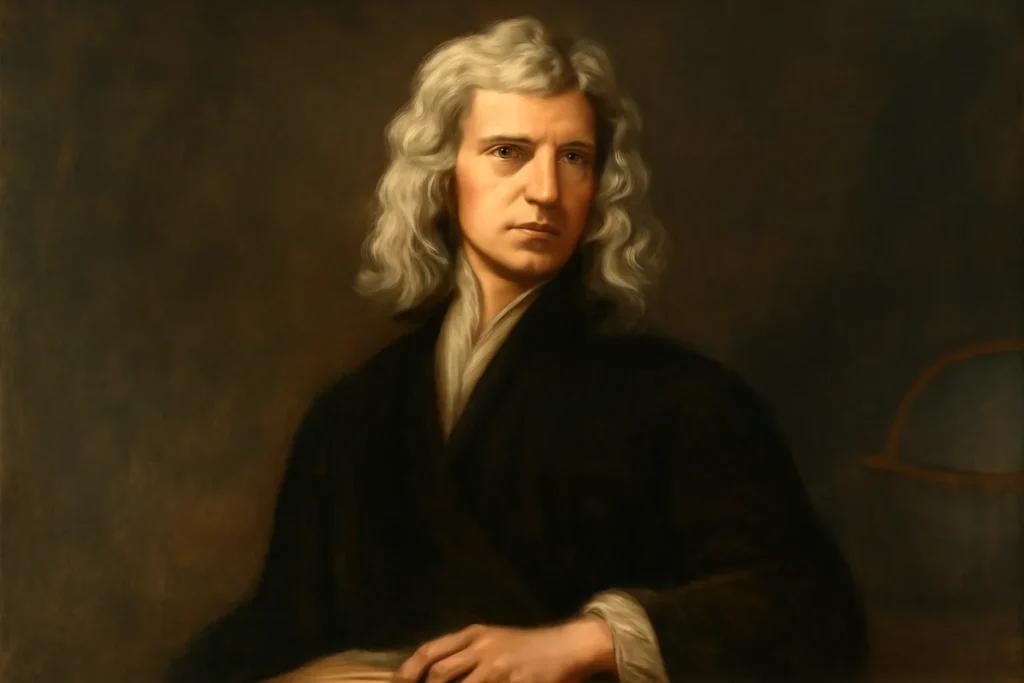
poem by Newton—one must begin with the man himself. John Newton (1725–1807) began his career in a milieu where the currents of
commerce, empire, and religious awakening collided. He took to sea at a young age and for many years was involved in the slave trade,
a fact Newton would later describe with penitence and resolve. The arc of his life—between the moral reckoning of a master mariner and the
pastoral vocation he would pursue in his later years—maps precisely onto the themes that populate Amazing Grace.
The early seeds of the hymn we now know as Amazing Grace begin in the mid-18th century, but the poem
that would become a staple in hymnals did not appear as a single, standalone piece at first. Newton composed a number of spiritual
verses in the wake of his conversion, but it was during the late 1760s and into the 1770s that the material that would be
collected into Olney Hymns with his collaborator William Cowper began to crystallize. The text that would become amazing grace newton—the words that begin with “Amazing grace! How sweet the sound, That saved a wretch like me”—was
ultimately included in the 1779 volume, a collection that paired Newton’s poetry with Cowper’s devotional sensibilities. This
collaboration—when seen through the lens of amazing grace newton as a phrase—highlights how the hymn emerged from a
shared project that sought to bring powerful, biblically rooted reflection into Christian congregational life.
The emergence of Amazing Grace within the broader project of Olney Hymns is essential to understand
its enduring appeal. The collection was designed for congregational singing, for devotional use in households, and for personal
meditation. The text’s theological core—a reckoning with sin, a recognition of grace as a saving force, and a call to grateful
living—gave it a universality that would outstrip many of its contemporaries. The phrase Amazing Grace Newton thus
serves as a shorthand for the origin story: a hymn born from a life reoriented by grace, and written for communal prayer and praise.
Publication and the Olney Hymns: how the hymn found its form
The publication history of Amazing Grace is intertwined with the Olney Hymns project. In 1772, Newton’s
spiritual journey—made intimate in private journaling and public preaching—found its lyrical voice. It was around this time that
he drafted verses that would eventually be paired with biblical reflections in the Olney volume. Although the exact dating of the first
draft of the hymn’s key stanza varies among scholars, the line “That saved a wretch like me” signals a trajectory of conversion,
repentance, and transformation that Newton wished to articulate to his readers and listeners.
1772 marks a commonly cited time for the development of the core ideas that would become Amazing Grace.
1779 is the year of the first widely distributed publication of the Olney Hymns collection, which
incorporated Newton’s texts alongside Cowper’s devotional poetry.
The hymn appears in later hymnals with varying stanza counts. The original lay-out typically involved multiple stanzas that
have since been shortened in common use, though some versions retain six or more stanzas in scholarly or historical editions.
In terms of musical setting, amazing grace newton is closely tied to a tune known as New Britain, a melody that
became the standard companion to this text in English-speaking congregations. The pairing of Newton’s words with New Britain
helped to propel the hymn into public life, where it would be sung in churches, mission halls, and revival meetings across the
Atlantic world. It is worth noting that the text’s meter—common metre (8.6.8.6)—allows for a range of tunes, which is why
this hymn has traveled so widely with different melodies. Still, New Britain remains the most recognizable pairing
for the English-speaking world, and that association is a central part of what makes Amazing Grace so easily
identifiable.
The historical arc from Amazing Grace in its earliest form to the American revival and global worship life
demonstrates how a single poem could become a vessel for a set of convictions about grace, salvation, and human transformation. The
phrase amazing grace newton thus points not only to a lyric but to a lineage: a hymn that grew out of 18th-century Britain
and found new life in the United States and beyond, where it would be embraced by diverse denominations and communities facing
social and spiritual change.
Meaning and theology: what the hymn says about grace, salvation, and the human condition
At the heart of Amazing Grace is a theological articulation of grace as a divine gift—unwarranted, transformative, and
inexhaustible. The text moves from a personal confession of ruin to a confident witness of redemption. In reading Amazing Grace,
one encounters a concise catechesis on how faith functions within Christian life. The language is simple, but its implications are rich,
and it has made the hymn a staple in catechesis, pulpit ministry, and personal devotion.
The core theological themes
Grace as prevenient and transformative: The hymn emphasizes grace that goes before human effort, enabling
belief and repentance rather than merely rewarding it after the fact.
Salvation as a gift, not a debt: The idea that salvation is freely given by God’s mercy, rather than earned by good works.
Recognition of sin and wretchedness: The term wretch (as in “saved a wretch like me”) communicates humility
before a holy God and a honest acknowledgement of moral fault.
Found sight and opened eyes: The lines “I once was lost, but now am found; was blind, but now I see” describe a
progress from spiritual blindness to recognition of divine kindness and guidance.
Transformation that leads to gratitude and worship: The closing stanzas urge ongoing devotion, perseverance
in faith, and a life shaped by grace rather than by fear or pride.
The poem’s economy of language allows it to be read both as a personal testimony and as a distilled theological statement. For many
readers and singers, the phrase amazing grace becomes a shorthand for the paradox of mercy: something given freely,
something that changes a person from the inside out. When we consider Amazing Grace within the broader tradition of amazing grace newton material, we see how the hymn operates on multiple levels—private conviction, public proclamation,
and communal worship.
Historical resonances
The hymn’s theology resonates particularly with Protestant evangelical concerns about salvation, assurance, and the ongoing process
of sanctification. Yet the text’s imagery—the sound of grace, the saved wretch, the gift of sight—has carried beyond strict doctrinal
boundaries. In many contexts, amazing grace newton has functioned as a bridge between doctrinal emphasis and
experiential faith, inviting people from different backgrounds to encounter grace as a real and present reality.
Music, tune, and the reception of the hymn across cultures
While the textual origins of Amazing Grace lie with John Newton, its musical life is shaped by a
union with a melody that could carry it into a variety of settings. The most common pairing—New Britain—is a tune whose
plain, singable character invites congregational participation. The relationship between the Amazing Grace text
and New Britain illustrates how a hymn can gain traction not merely through poetic merit but through practical
usability in worship.
New Britain and other tunes
The tune New Britain is the standard pairing for many traditional hymnals. Its rhythm and cadence fit the common
metre of Newton’s text, which helps singers maintain accessibility even across generations.
In various denominational traditions, amazing grace newton has been sung to other melodies as well, including
spirituals, folk tunes, and modern worship arrangements. This flexibility has helped the hymn endure in different cultural
contexts.
The song’s adaptability has contributed to its presence in secular performances, film scores, and public memorials, where
the imagery of grace and redemption speaks beyond church walls.
The musical life of the hymn also reveals how amazing grace newton has cross-pollinated with social and cultural
movements. In abolitionist circles and reformist circles, the hymn’s themes of grace and transformation provided a moral
vocabulary for critique and hope. The idea that grace can redeem not only individual souls but also collective histories has
made Amazing Grace a poetic instrument for public memory.
Historical and cultural impact: from 18th-century hymnody to modern memory
The reception of Amazing Grace has unfolded in waves. From its 18th-century origins in the Olney Hymns to its
late-20th-century and 21st-century ubiquity in film, concert stages, and social campaigns, the hymn has functioned as a living piece
of spiritual memory. The marriage of Newton’s text with a singable tune allowed the poem to travel far beyond the walls of
Anglican chapels, becoming a shared cultural touchstone in many English-speaking cultures and beyond.
Abolition and social conscience
Newton’s later advocacy against the slave trade and his moral trajectory contributed to a broader sense that grace is
transformative not only personally but also socially.
The hymn’s refrain-like structure and memorable imagery helped its adoption in reformist contexts, where the language
of grace and redemption could be used to articulate moral aspirations and commitments to justice.
Modern worship and popular culture
Today, amazing grace newton is sung in churches across denominations—from liturgical settings to evangelical gatherings—
and continues to appear in movies, television, and popular performances. The hymn’s message of forgiveness and renewed purpose
resonates in moments of triumph and grief alike, giving it a kind of universal appeal. Its presence in popular culture often
introduces broader audiences to Newton’s life story and the historical context that produced this enduring text.
Translations and global reach
Because its core message is framed in simple, accessible language, Amazing Grace has been translated into many
languages, preserving the central motif of grace as a life-changing gift. The theological core—grace revealed in the person and
work of God, experienced in repentance and faith—translates across cultures, even as idioms and musical choices adapt to local
languages and musical traditions.
Textual variants, authorship questions, and the hymn’s lasting authority
Over the centuries, scholars and readers have explored questions surrounding the authorship, dating, and textual variants of Amazing Grace. While the John Newton connection is widely accepted, other details—such as the
precise date of the first drafts, the number of original stanzas, and the influence of William Cowper on the final
published form—have been debated. The result is a dynamic understanding of amazing grace newton as a living text that
has evolved with each generation’s needs.
Authorship and collaboration
Newton is the primary author of the hymn’s text. His biographical story informs the theological and emotional color of the piece.
William Cowper’s role in editing and shaping the surrounding Olney Hymns helped present the broader spiritual message in a way
that would be accessible in both intimate and communal settings.
Some modern editions reflect additional revisions or harmonizations by later editors, but the core text remains attributed to
Newton and captured in the Olney tradition.
Variations and canonical status
Because the hymn exists in many editions, there are differences in stanza order, the number of stanzas, and the presence or
absence of certain lines.
The central phrases—such as “Amazing grace”, “saved a wretch like me”, and “I once was lost, but now am found”—
remain recognizable across variants, contributing to a shared vocabulary of grace.
The enduring authority of Amazing Grace comes not from a single publication date but from a persistent capacity
to speak to human experience—the sense of loss, the hope of redemption, and the gratitude that follows a recognition of grace.
The phrase amazing grace newton serves as a reminder that the hymn’s authority rests on the life that inspired it as well as
the biblical truth it proclaims: grace is a present, transformative force for individuals and communities alike.
Conclusion: the timeless message of grace in a changing world
The story of Amazing Grace—and its enduring association with John Newton—is a testament to how a single
hymn can travel through time while staying rooted in an ancient message. The line between biography and theology blurs in the hymn
’s narrative arc: a person who once stood in bondage to the limits of his era finds release in grace, and that grace becomes the
catalyst for a lifelong vocation of faith, mercy, and activism.
In the end, the phrase amazing grace newton captures more than a title; it captures a story of conversion, a doctrine of
salvation by grace, and a communal invitation to live in gratitude for mercy received. The hymn’s journey—from a 1779 publication in the
Olney Hymns to its status as a global spiritual refrain—illustrates how a poem can become a vessel for faith that transcends time and
place. Whether sung in a quiet chapel, a revival meeting, or a concert hall, Amazing Grace remains a living
articulation of transformation: that grace—unearned, unending, and ever-present—continues to rescue, redeem, and renew.
For anyone exploring the roots of Amazing Grace or the broader history of evangelical hymnody, the careful study of amazing grace newton invites a deeper appreciation of how one man’s life and one verse’s appeal can shape a tradition for
generations to come.









Leave a Reply