Amazing Grace Notes Piano: Master the Classic Hymn on Piano
Amazing Grace Notes Piano: Master the Classic Hymn on Piano
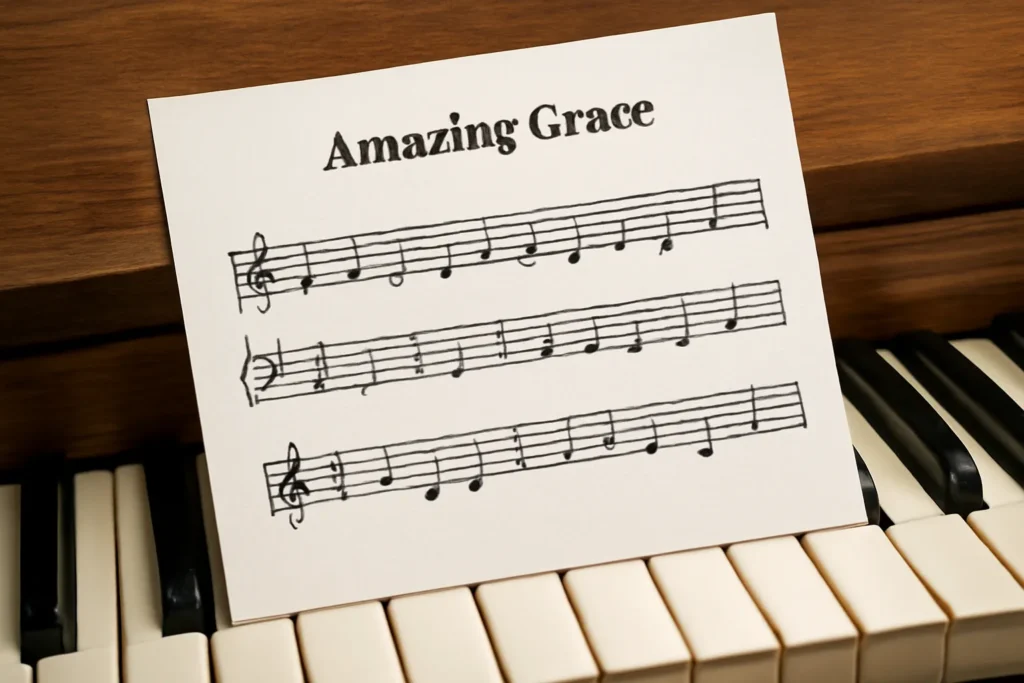
Amazing Grace Notes Piano is more than just learning to press the right keys at the right time. It is an invitation to explore how grace notes—small, delicate embellishments—can transform a beloved hymn into a living, singing performance at the piano. This article is a comprehensive guide designed for players at multiple levels who want to understand the theory, technique, and expressive possibilities behind Amazing Grace on the piano. Whether you’re aiming for a reverent, traditional rendering or a more lush, contemporary arrangement, the key concepts described here will help you master the classic hymn with thoughtful ornamentation, precise rhythm, and musical sensitivity.
The hymn Amazing Grace has resonated with listeners for generations because of its universal themes of redemption, hope, and spiritual reflection. When the melody is moved to the piano, the instrument becomes a canvas for expression. The piano version typically places a clear, singing melody in the right hand while the left hand supports with steady harmonies or arpeggios. The addition of grace notes and careful phrasing can turn a straightforward accompaniment into a small musical story—one that breathes and swells with the text.
In piano pedagogy, this hymn is often used as a gateway to understanding how ornaments function in a musical line. It provides an excellent context for practicing touch, articulation, and phrasing, all of which are essential to performing the piece with warmth and clarity. The goal is not to overwhelm the melody with flourishes, but to weave grace notes in a way that supports the text and the emotional arc of the music.
Understanding grace notes and ornamentation
To approach amazing grace notes piano effectively, you first need a solid understanding of what grace notes are and how they function rhythmically. Grace notes are nonessential notes that ornament the principal note. They are written or implied as quick, short notes that “grace” the main beat, creating a momentary rush or anticipation toward the main pitch.
Grace notes types: acciaccaturas and appoggiaturas
The two primary forms you’ll encounter are:
Acciaccatura: A very short grace note that is usually played as quickly as possible before the main note. It often has a small slash through its stem in sheet music, signaling a fast, crushed ornament.
Appoggiatura: A longer grace note that takes a portion of the main note’s value. It lands on the beat slightly ahead of the main note and requires careful timing to avoid rushing the melody.
On the piano, you can realize acciaccaturas by quickly lifting a finger to play the grace note just before the main melody note, almost as a “hammer-on” flourish. Appoggiaturas are executed with a bit more hold, but still quickly, so that the principal note remains clearly heard.
Integrating grace notes into Amazing Grace
In a tasteful rendition of Amazing Grace, grace notes should feel natural and expressive rather than flashy. Consider these guiding principles:
Support the melody first: Grace notes should enhance the lyric and the flow of the tune, not obscure the main pitch.
Keep rhythmic clarity: Even though you add ornamentation, the underlying beat must stay consistent so the hymn retains its traditional character.
Voice leading: Use grace notes to connect scale steps smoothly, especially when the melody moves up or down by step.
Dynamic shaping: Subtle crescendi and diminuendi around the grace notes can amplify emotion without sacrificing legato.
Essential techniques for mastering the hymn with grace
The process of mastering the Amazing Grace notes piano rests on a solid foundation of technique. Below are essential elements to develop, from basic touch to refined phrasing.
Rhythmic accuracy and tempo
Start with a comfortable tempo. A reflective hymn is often played around 60–72 BPM, but you can adjust to your audience and space. The critical aspect is consistency. A metronome helps you internalize the pulse so that your grace notes land precisely before the main notes.
The right hand typically carries the melody. Practice the melody in isolation at a slow tempo, focusing on even articulation and smooth slurs. Then introduce grace notes sparingly, beginning with one or two per phrase. Expect the first pass to feel unfamiliar, especially when learning how to place the grace notes just before the main notes.
Left-hand accompaniment patterns
The left hand provides harmonic support. Common patterns include:
Simple root-position triads in steady quarter-note bass notes to anchor the harmony
Broken-chord arpeggios that outline the I–IV–V–I progression
Alberti-like patterns where a rolling bass line syncs with the melody
Coordinating the left hand with the right is where many players find the hymn breathes with life. The goal is to maintain a smooth, connected texture even when adding articulate grace notes in the right hand.
Articulation and touch
The piano language of amazing grace notes piano relies on thoughtful articulation. Use a legato touch for the sustained melody, while the grace notes themselves can be played with a lighter, more fleeting attack. The balance between a singing line and delicate ornaments is crucial for a reverent, soulful sound.
Pedal usage can enhance the piano’s singing quality if used judiciously. Consider:
Maintaining a clear legato in the melody with partial pedal to avoid blurring the line
Using pedal in the left-hand accompaniment at cadence points to sustain harmonies without muddying the grace notes
Resetting the pedal before a new phrase to preserve clarity
Key signatures, transposition, and tonal choices
The hymn Amazing Grace can be effectively played in several keys. The choice of key affects the ease of playing grace notes, the timbre of the piano in different registers, and the reach required by the left-hand patterns. Below are practical considerations for tonal choices and transpositions.
Choosing a comfortable starting key
For most pianists, starting in C major or G major is a good default. These keys are friendly on the left-hand, provide open-hand positions, and allow the melody to sit naturally above the accompaniment. If you perform for a vocal/choral setting, you might transpose to fit the singer’s range, always keeping the ornamentation intelligible.
Transposition strategies
When you transpose, keep the relative motion of the melody and harmony intact. Grace notes must still lead into the main notes clearly. A practical approach is:
Transpose the accompaniment first (left-hand patterns), ensuring the rhythm remains intact
Translate the melody to the new key with attention to how the grace notes adapt to scale steps in the new key
Adjust fingering to preserve smooth motion between notes, particularly around leaps or repeated tones
Harmonic guidance for multiple keys
In most keys, the hymn follows a straightforward I–V–vi–IV-like progression in the verse, with cadences that create a sense of resolution. When you add grace notes, aim to keep the underlying harmonic rhythm steady even as the ornaments color the melody. In a simple setting, the harmony could be summarized as:
A well-crafted left-hand part supports the right-hand melody while leaving space for grace notes to sparkle in the upper register. Here are several effective patterns:
Steady bass with arpeggios: Play the root in the bass on each measure and fill the middle register with light arpeggiated patterns that outline the chord.
Broken chords: Break the triads into three-note patterns (e.g., C–E–G) and repeat to maintain a gentle drive.
Alternating bass: Alternate between the root and the fifth to create a subtle, pulsing accompaniment that leaves room for the grace notes.
Regardless of the chosen pattern, ensure that your left hand remains calm and steady. A consistent accompaniment helps the right-hand grace notes register as intentional embellishments rather than stray fills.
Practice plan: Steps to master Amazing Grace notes piano
A structured practice routine helps you progress steadily toward a polished performance. Use this plan as a flexible framework that you can adapt to your level and available practice time.
Phase 1: Core melody and harmony (weeks 1–2)
Learn the melody by itself, with the right hand, at a slow tempo
Establish a simple left-hand accompaniment pattern that supports the melody
Ensure steady tempo with a metronome at a comfortable speed
Phase 2: Introduction of grace notes (weeks 3–4)
Introduce one acciaccatura per phrase early in the right hand
Practice timing so the grace note lands just before the main note
Keep the left-hand pattern consistent while the right hand adds ornamentation
Phase 3: Expanding ornamentation (weeks 5–6)
Add a second grace note per phrase in select spots
Experiment with appoggiaturas to vary the color, paying close attention to rhythm
Refine articulation: light touch for grace notes, legato for the main melody
Phase 4: Expression and performance readiness (weeks 7–8)
Practice with dynamic shaping and a consistent tempo
Record yourself to critique tempo stability and phrasing
Prepare a performance version—select how many grace notes to use and where—for different contexts
Variations of Amazing Grace notes piano: styles and arrangements
There are many legitimate and musical ways to present Amazing Grace on the piano. Here are several variations you can explore, each emphasizing different aspects of ornamentation, texture, and mood.
Traditional reverent arrangement
In the traditional approach, the melody remains clear and unhurried, with gentle, restrained grace notes. The left hand provides steady support with simple bass notes or quiet arpeggios. Dynamics are subtle, and the tempo is moderate to slow. This version aims to honor the hymn’s spiritual roots and is ideal for church services or contemplative listening.
Romanticized, lush texture
A romantic arrangement layers rich harmonic color and broader use of pedal. The right-hand melody may employ longer, expressive phrases with occasional extended grace-note turns. The left hand often uses wide arpeggios and sustained chords to create a singing texture. This version works well in recital settings where a reflective, emotionally resonant interpretation is prized.
Contemporary, simplified approach
For players who want a lighter touch or a more modern sound, a contemporary arrangement can use simplified left-hand figures and crisp, quick grace notes. The tempo can be slightly brisker, and the articulation can be more pronounced, offering a clear, modern statement of the hymn without losing its core essence.
Jazz-influenced variation
A jazz-flavored version might reinterpret the harmony with extended chords (for example, seventh chords and color tones) while preserving the hymn’s recognizable melody. Grace notes can be used as delicate turn figures before important notes, and the rhythm might include subtle swing or rubato in places. This approach requires careful control to keep the piece grounded in its hymn origin while exploring new color.
Transposing to multiple keys for different singers or venues demonstrates the flexibility of Amazing Grace. In each key, you may adjust the amount and placement of grace notes to match the scale steps and the natural fingering of the hand. Transpositions keep the same harmonic skeleton but invite you to rethink position, fingering, and tone color.
Here are practical tips to ensure your Amazing Grace notes piano performance is expressive, accurate, and musical.
Start slow and gradually increase tempo as accuracy improves
Count the beats aloud during practice to anchor the grace notes before the main notes
Record and listen back to monitor balance between melody and accompaniment
Practice hands separately before combining, then slowly integrate with both hands
Use a metronome with subdivisions to train precise placement of grace notes
Pay attention to the text’s cadence and phrasing to align musical tension with meaning
Common pitfalls and how to avoid them
Even experienced pianists encounter challenges when adding grace notes to Amazing Grace. Here are common issues and simple solutions.
Rhythmic imbalance: If grace notes land too early or late, slow down and count carefully; practice with a subdivision like eighth-note or sixteenth-note pulses
Overcrowded texture: Limit the number of grace notes per phrase; in many versions, one well-placed grace note is more effective than several
Lack of legato: Ensure the melody remains connected by practicing smooth finger legato in the right hand and a relaxed left hand
Pedal blur: Use pedal sparingly; in sensitive passages, reset the pedal for each new phrase
Inconsistent dynamics: Plan a dynamic arc—soft onset, peak in the middle phrases, then a gentle decrescendo toward the end
Listening and learning resources
A well-rounded learning process includes listening to varied interpretations of Amazing Grace and studying recordings to understand how different artists approach grace notes and phrasing. Consider the following resources:
Recordings of traditional and modern hymn arrangements to compare tempo, dynamics, and ornament usage
Educational videos that demonstrate how to execute acciaccaturas and appoggiaturas on piano
Method books focused on piano ornamentation and hymn arrangements
Software tools or metronome apps that offer subdivision counting and tempo control
Putting it all together: a sample practice outline
If you’d like a concrete plan to begin applying the concepts described, here is a compact 4-week practice outline to guide your journey toward a polished Amazing Grace with tasteful grace notes.
Week 1: Learn the melody and basic left-hand accompaniment in isolation; practice at a slow tempo with a metronome
Week 2: Introduce one acciaccatura per phrase; ensure proper placement and gradual dynamics
Week 3: Add a second grace note in selective spots; refine touch and articulation in the melody
Week 4: Combine hands, work on pedaling and phrasing, and perform with a final, consistent tempo
Conclusion: why grace notes matter in Amazing Grace on the piano
The beauty of Amazing Grace notes piano lies in the balance between structure and spontaneity. The hymn’s timeless message blends with the piano’s ability to sustain, color, and shape sound. By understanding grace notes, mastering the underlying rhythm, and practicing expressive phrasing, you can render a performance that honors the tradition while revealing your own musical voice.
Whether you choose a traditional reverent treatment or a more contemporary or lush interpretation, the essential tools remain the same: clear melody, supportive accompaniment, precise articulation, and thoughtful ornamentation. Remember that the most memorable performances embrace simplicity, clarity, and emotional truth. In this spirit, Amazing Grace becomes not only a hymn to be played but a living musical experience to be shared.






Leave a Reply