Introduction: What the And Now I Lay Me Down to Sleep Prayer Is
The And Now I Lay Me Down to Sleep prayer is one of the most recognizable
and enduring bedtime prayers in the English-speaking world. It is a short, spoken ritual
that many families have used for generations to mark the end of the day, invite calm, and
entrust a child’s night to a higher protection. You may see it written in various forms—sometimes
beginning with the words “Now I lay me down to sleep” and other times with a
drifting wording like “And now I lay me down to sleep”. The essence, however,
remains the same: a quiet moment of closing one day and requesting safety, peace, and guidance
through the night.
This article explores origins, meaning, and how to say it
in contemporary life. It will present the traditional form, common modern variations, and practical
guidance for families who want to adapt the prayer for diverse beliefs, ages, and settings.
Throughout, you will see repeated emphasis on the core ideas: protection, grace, gratitude, and family well-being.
Origins and historical context
The precise origins of the And Now I Lay Me Down to Sleep prayer are not tied to a single author or a single
religious institution. It is best understood as a traditional children’s bedtime prayer that emerged
within English-speaking Protestant and Christian households in North America, and likely earlier in some form in
Europe. Over time, the lines became part of a shared cultural repertoire—one that people carried from home
to home, generation to generation—until it appeared in print and later on in schoolrooms and church nurseries.
Historians and religious scholars note a common pattern: short, intimate invocations at bedtime, asking God
to watch over the sleeper, protect them through the night, and safeguard their soul. Because so many families
recited it aloud, the prayer traveled well beyond its original locale. In public memory, it feels quintessentially
American, but it has resonances in broader Christian traditions where the themes of safety, surrender, and trust
appear in lullabies, psalms, and nighttime prayers around the world.
The most frequently cited version remains a compact form—a rule of thumb for family prayer at the end of
the day. Yet the wording has always been flexible. Communities altered lines to reflect language shifts, theological
emphasis, or a desire to make the prayer more inclusive. In other words, the prayer has a life beyond any single
edition or anecdote: it adapts as families adapt.
Meaning and themes: what the prayer communicates
At first glance, the And Now I Lay Me Down to Sleep prayer may seem extremely simple. But the short
lines carry several meaningful themes that resonate with children and adults alike.
Protection at night: A primary concern is safety during hours when a child is asleep and vulnerable. The idea is that a higher power keeps watch during hours of darkness.
Trust in a higher care: Repeating a quiet dependence—“I pray the Lord my soul to keep” or similar phrases—helps cultivate trust and security.
Conscience and memory: The prayer often invites reflection on responsibility, humility, and the hope to wake restored, mindful, and ready for the new day.
Family and community: Many variants expand the focus beyond the individual to include family members, loved ones, and the broader circle of care surrounding a child.
Gratitude and discernment: Even in a succinct form, the prayer signals gratitude for the day and a request for guidance in the night and beyond.
The core idea can be summarized in a few phrases: a nightly pause, a petition for safety, and a quiet
acknowledgment that life continues beyond the moment—into sleep, into morning, and into the day to come.
The language can feel old-fashioned to some readers, yet many people find its cadence soothing and its rhythm
comforting for bedtime routines.
Text and variants: traditional wording and modern adaptations
Because there is no single authoritative version, you will encounter several common forms of the prayer.
Below are representative examples and notes about how they differ. For clarity, you will see bolded terms
used to highlight key phrases.
Traditional text (classic form)
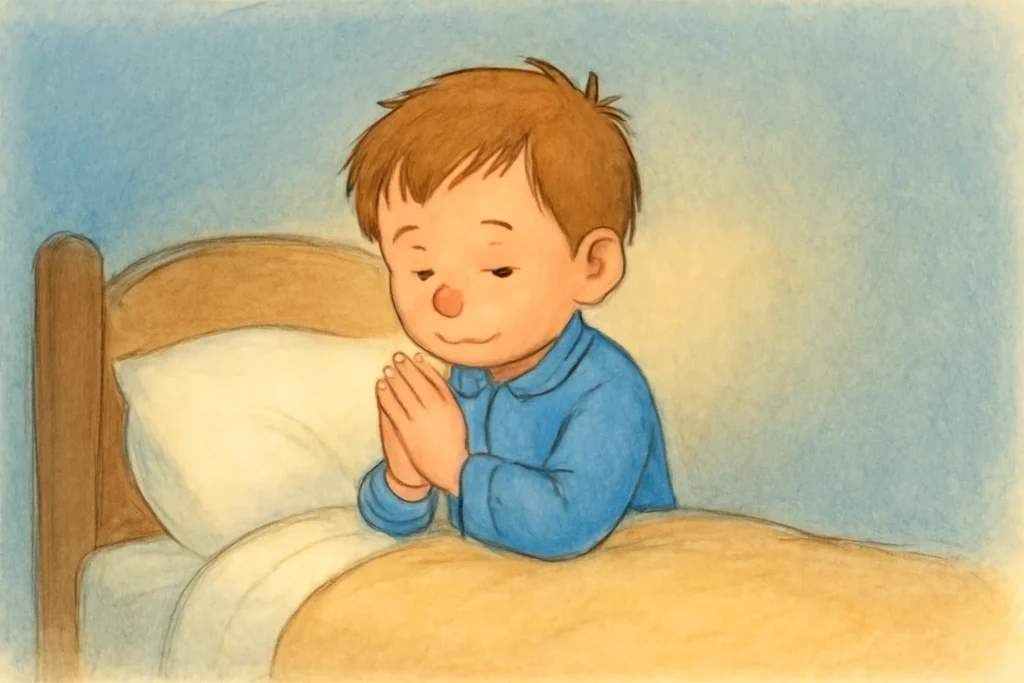
Now I lay me down to sleep,
I pray the Lord my soul to keep;
If I should die before I wake,
I pray the Lord my soul to take.
In many households, this version is recited as-is or with minor, age-appropriate pauses for small children.
The two central promises are the protection of the soul and the fearless trust that
the night will not disturb ultimate safety.
Modernized or softened variants
Some families prefer gentle, less explicit language for younger children or for settings where death imagery
is uncomfortable. A contemporary version might substitute safer or more inclusive language while preserving
the overall sentiment.
Now I lay me down to sleep, I pray the Lord to keep me safe tonight.
And if I should die before I wake, guide my heart through the night and bless the ones I love.
Now I lay me down to sleep, I pray the Lord my soul to keep.
If I should wake tomorrow, watch over me and help me do good by others.
Inclusive and family-centered variants
Some families adjust the prayer to include siblings, parents, or guardians, and to reflect a non-denominational or
interfaith approach. In these versions, the emphasis shifts from a single line about the soul to a broader sense of
care and protection for the entire household.
Now I lay me down to sleep and may my family rest in peace tonight. If I should wake, may we
all be guided with kindness, and may love surround us.
And now I lay me down to sleep, watch over my family, protect our home, and help me live
with compassion and patience tomorrow.
Two commonly cited variations about the soul and protection
It is common to encounter slight shifts in verbs and emphasis:
Keep vs take: Some versions say “to keep” my soul, others say “to take”.
Who is kept safe: Some forms invoke the soul, others extend the request to the entire person or family.
Who is asked to hear: Some versions address the Lord, others speak more generally of a higher power or a guardian.
These subtle changes reflect different theological emphases, cultural contexts, and personal preferences.
The key, again, is the intention behind the words: a bedtime moment of safety, care, and hope.
If you want to introduce the prayer to a child or to your household, here are practical steps to make the moment
meaningful, not mechanical.
Set a calm time and place: A quiet bedroom, a soft bedside lamp, and a moment with no rushing helps the prayer become a
ritual rather than a hurried recitation.
Choose a version that fits your beliefs: Whether you opt for the traditional wording, a modernized version, or a family-affirming variant,
ensure it aligns with your values and language that your child can understand.
Speak slowly and lovingly: A gentle cadence—short breaths between lines—can help a child absorb the meaning and feel secure.
Include a personal touch: Consider adding a line that names a blessing for someone in the family or a specific intention for the night.
Incorporate gesture or routine: A hand on the child’s forehead, a kiss goodnight, or a soft brush of the bedcovers can reinforce the ritual.
Adapt as needed for age: For toddlers, you may simply say fragments or focus on “sleep” and “safety.” For older children, you can discuss the meaning of each line together.
Sample steps for a gentle bedtime routine
Close the day with a moment of gratitude—name one thing you are thankful for.
Recite a short version of the prayer, then pause for a breath or two.
Offer a blessing or a wish for the child and for the family.
End with a moment of quiet, perhaps a soft “goodnight.”
Some families pair the prayer with a brief reading from a devotional or a child-friendly Bible story. Others
keep the bedtime moment strictly about rest and trust. The key is to maintain consistency and to keep the
practice meaningful rather than rigid.
Why people choose to keep or modify the prayer
There are thoughtful reasons to retain the traditional wording or to adjust it. For some, the classic lines evoke
cherished memories of their own childhood, a sense of continuity with generations past, and a shared cultural
experience. For others, the language may feel antiquated or the death imagery troubling for a child to hear at a tender age.
In contemporary families, the practice often becomes a flexible ritual rather than a fixed liturgy.
The ability to adapt makes the tradition accessible to a broad audience. A modern, inclusive variation can maintain
the sense of night-time calm while aligning with secular households, interfaith families, or people who prefer less
explicit references to death. The underlying intention—safety, care, and gratitude—can be preserved even when
specific phrasing shifts.
Variations in religious and secular contexts
Religious households: May keep the prayer within a devotional framework, sometimes with a short blessing for family members.
Sectarian or interfaith homes: Adaptations may use neutral language like “may we all find peace tonight” or “may we rest in safety.”
Schaning away from religious content: Some families opt for secular lullabies or gratitude prayers that focus on rest, safety, and well-being without explicit reference to a deity.
Common questions about the And Now I Lay Me Down to Sleep prayer
If you are exploring this prayer for the first time or considering how to incorporate it into your family’s nightly routine,
you may have questions. Here are answers to a few frequently asked questions.
Q: Is this prayer in the public domain?
Yes. The traditional wording is widely regarded as public domain and has circulated in print for many decades. Because
there are many variants, you can freely adapt the text to fit your family’s beliefs and language preferences.
Q: What does the line about death mean for a child?
For many, the line “If I should die before I wake” is a serious but comforting reminder of mortality and trust in
divine care. Others prefer to soften or reinterpret that line. If the imagery feels heavy, you can use a variant like
“If I should wake in the night” or replace it with a line focusing on safety and guidance without explicit death imagery.
Q: Can I add personal prayers or names?
Absolutely. Many families personalize the prayer by adding the names of family members, friends, or caretakers. You
can modify a line to include specific intentions while preserving the overall cadence and tone.
Both options work well. Some families prefer a spoken, shared moment that builds closeness; others opt for a brief moment
of private reflection. The choice depends on the child’s temperament and the family’s routines.
Q: How can I use this prayer in a secular or non-religious household?
You can keep the structure of a calm, nightly blessing, and replace deity-focused language with a secular focus on safety,
rest, and well-being. Phrases like “May I sleep in safety” or “Wishing for a peaceful night and a mindful tomorrow”
can preserve the ritual’s spirit without religious language.
Practical tips for parents, guardians, and caregivers
If you are guiding a child through this bedtime practice, here are concrete tips to make the experience nurturing and
sustainable.
Consistency matters: Try to recite the prayer at roughly the same time each night to build a comforting routine.
Be mindful of the child’s mood: If a child is anxious, you may add a line about safety and reassurance, or extend the routine with a gentle hug.
Let the child participate: Encourage the child to say a line, even if only a few words, to reinforce agency and engagement.
Respect beliefs: If your family includes members with different beliefs, consider a neutral version or a rotating set of prayers that celebrate diversity.
Integrate other soothing practices: Combine the prayer with breathing exercises, a favorite lullaby, or a brief story to transition to sleep.
Document what works: If you are adapting the prayer, note which lines resonate with your child and evolve the text over time accordingly.
The And Now I Lay Me Down to Sleep prayer, in any of its many forms, remains a simple, intimate ritual
that marks the daily transition from activity to rest. Its enduring appeal lies in its ability to be both
deeply personal and widely adaptable. Whether you recite the traditional verse, offer a modernized version,
or tailor a line to your family’s unique beliefs, the practice can cultivate a sense of security, connection, and hope for tomorrow.
In a world that moves quickly and often feels overwhelming, a small moment of quiet before sleep can be
a powerful anchor. The prayer’s pauses, its refrains, and its gentle cadence create a moment for reflection
and a shared sense of care. If you choose to adopt or adapt this ritual, you may find that the act of
saying it together becomes a cherished memory for children and caregivers alike—one that endures as a
meaningful tradition across generations.
Note: The language in this article emphasizes the meaning and practice of the prayer rather than endorsing any single theological position. The goal is to provide a thorough, practical guide to understanding And Now I Lay Me Down to Sleep—in all its variants—and to support readers who wish to incorporate or adapt this bedtime tradition in a respectful, thoughtful way.









Leave a Reply