Have you ever wondered how the Bible can speak about both human guilt and a holy God who still welcomes people back? The biblical idea of atonement addresses that question. In simple terms, atonement describes how the damage caused by sin is dealt with so that people can be forgiven, cleansed, and restored to fellowship with God.
The Bible presents atonement through several connected images: covering sin, removing impurity, bearing judgment, paying a debt, reconciling enemies, and restoring a broken relationship. These images develop from Israel’s sacrifices and worship in the Old Testament to the New Testament’s explanation of Jesus’ death and resurrection.
Atonement does not mean that God ignores wrongdoing or pretends that sin does not matter. It means that God provides a way for sin to be addressed while extending mercy and reconciliation. For Christians, the fullest expression of that provision is found in the life, death, and resurrection of Jesus Christ.
The English word atonement is commonly associated with the idea of being made “at one,” or brought back into unity. That phrase helps explain the relational side of the biblical concept, although the Bible uses several different words and images rather than one single definition.
In the Old Testament, atonement is often connected with the Hebrew verb kippēr. Depending on the context, it can describe making atonement, purging impurity, covering wrongdoing, or making reconciliation. The word appears especially often in passages about sacrifices, priests, the altar, and the Day of Atonement.
In the New Testament, atonement is explained through words such as forgiveness, redemption, reconciliation, cleansing, justification, and sacrifice. The writers do not reduce Jesus’ work to one picture. Instead, they use multiple images to show what his death and resurrection accomplish.
Forgiveness: guilt is released rather than held against the offender.
Cleansing: sin and defilement are removed so a person can approach God.
Reconciliation: a hostile or broken relationship is restored.
Redemption: a person is rescued or set free at a cost.
Justification: God declares the sinner righteous through faith in Christ.
Sacrifice: a life is offered in connection with sin, worship, and restored fellowship.
These terms overlap, but they are not interchangeable in every passage. Atonement is a broad biblical theme that includes the way God deals with sin and brings people back into right relationship with him.
Core idea: Biblical atonement is not merely an emotional apology or a symbolic gesture. It is God’s provision for dealing with sin, cleansing guilt, and restoring communion with him.
How Old Testament sacrifices portray atonement
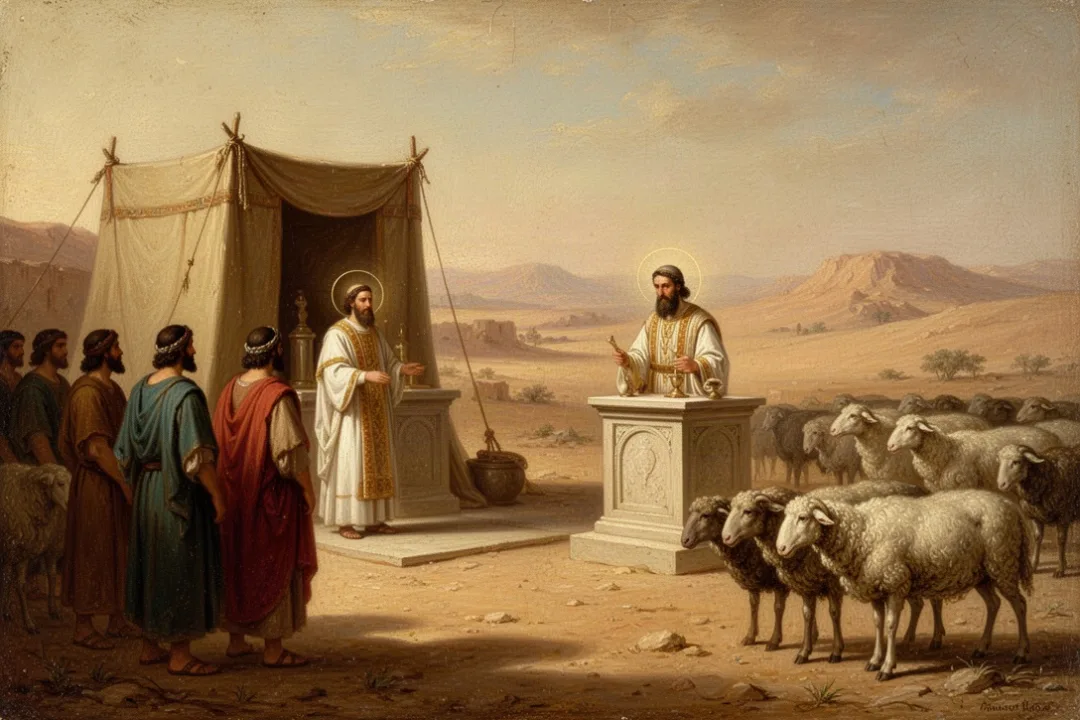
The sacrificial system given to Israel provides the Bible’s earliest sustained picture of atonement. Instructions in Leviticus describe offerings for different situations, including worship, thanksgiving, unintentional sin, ritual impurity, and offenses that harmed other people. These sacrifices taught that sin disrupts fellowship with God and that restoration requires God’s appointed means.
Leviticus 17:11 connects blood with life and describes it as given on the altar to make atonement. In the biblical world, blood represented the life of the creature. The sacrificial animal was not simply a payment in the modern financial sense; its life was offered in a sacred setting as part of God’s provision for cleansing and reconciliation.
The sacrificial laws also show that atonement was not only about private feelings of regret. Sin affected the worshiper, the community, the sanctuary, and the covenant relationship. Atonement addressed these dimensions through confession, sacrifice, priestly ministry, restitution, and renewed obedience.
Sin offerings and guilt offerings
The sin offering, described especially in Leviticus 4, dealt with particular forms of wrongdoing and impurity. The required offering varied according to the person’s role and circumstances. This structure showed that sin had serious consequences while also making room for God’s mercy.
The guilt offering, discussed in Leviticus 5 and 6, was associated with certain offenses against holy things or other people. In cases involving material harm, the offender was also required to provide restitution. Sacrifice did not give someone permission to keep what had been stolen or damaged. Worship and practical repair belonged together.
That point matters for understanding biblical atonement. A person could not treat religious ritual as a substitute for repentance and responsibility. The prophets repeatedly criticized worshippers who brought offerings while exploiting the poor, practicing violence, or refusing justice. Isaiah 1, Jeremiah 7, Amos 5, and Micah 6 all connect acceptable worship with ethical faithfulness.
The Day of Atonement in Leviticus 16
The most concentrated Old Testament description of atonement appears in Leviticus 16, the chapter describing the Day of Atonement, also called Yom Kippur. On this day, the high priest performed special rites for himself, his household, the people of Israel, the sanctuary, and the altar.
Unlike ordinary daily offerings, this ceremony addressed the accumulated uncleanness and rebellion associated with Israel’s life before God. The high priest entered the Most Holy Place under strict instructions, with incense, sacrificial blood, and garments associated with humility and priestly service.
Two goats played different roles in the ceremony. One was sacrificed, and its blood was used in the purification rites. Over the other, the high priest confessed Israel’s iniquities and symbolically placed them on the goat before it was sent away into the wilderness. Leviticus 16 presents this as a vivid picture of sin being carried away from the community.
The ritual communicates two complementary truths. Sin must be dealt with before a holy God, and God provides a way for the people’s defilement to be removed. Atonement therefore involves both purification and removal, not merely the cancellation of a record.
The Day of Atonement also emphasizes the limits of the old system. It had to be repeated, and it depended on priests, animals, sacred spaces, and detailed rituals. The ceremony offered genuine covenantal cleansing within Israel’s worship, while the New Testament presents Jesus as the one who fulfills and surpasses these patterns.
How the Bible connects atonement with Jesus
The New Testament identifies Jesus with several Old Testament atonement themes. He is presented as the Passover lamb, the obedient servant who bears sin, the high priest who represents his people, and the sacrificial offering that establishes the new covenant. No single image explains everything, but together they describe the scope of his saving work.
Jesus’ death is not presented as an accidental tragedy separated from his mission. In the Gospels, he speaks of giving his life for others, and the Last Supper accounts connect his death with covenant, forgiveness, and his poured-out blood. These passages interpret the cross as a purposeful act of self-giving.
Jesus as the sacrificial offering
John’s Gospel uses sacrificial language when John the Baptist identifies Jesus as the Lamb of God in John 1:29. The statement points to Jesus as the one who deals with the world’s sin. First Corinthians 5:7 also connects Christ with Passover imagery, while 1 Peter 1:18-19 describes his blood as more valuable than that of a flawless sacrificial animal.
Hebrews develops the comparison between Jesus and the priestly system at length. Hebrews 9 and 10 explain that animal sacrifices were repeated and could not finally accomplish what Jesus accomplishes. Jesus offers himself once for all, enters God’s presence as the true high priest, and establishes lasting access to God.
This does not mean the Old Testament sacrifices were pointless. They formed the symbolic and theological framework through which the first Christians understood the cross. They taught Israel about holiness, guilt, substitution, cleansing, priesthood, and fellowship. The New Testament claims that these patterns find their decisive fulfillment in Christ.
Jesus bearing sin and judgment
Several New Testament passages describe Jesus as bearing sin or suffering on behalf of sinners. Second Corinthians 5:21 says that God dealt with sin through Christ so that believers could receive righteousness in him. First Peter 2:24 connects Jesus’ suffering with the bearing of sins and a transformed life. These passages support the idea that Jesus acts for others and in their place.
Romans 3:21-26 presents Jesus’ death as God’s appointed means of dealing with sin while demonstrating divine justice. The passage holds together two truths that people sometimes separate: God is just, and God is also the one who justifies those who trust in Jesus.
This is why biblical atonement should not be described as God reluctantly becoming merciful. The New Testament consistently presents the Father, Son, and Holy Spirit as acting together in salvation. God sends the Son, the Son willingly gives himself, and the Spirit applies God’s saving work to believers.
Jesus bringing reconciliation
The New Testament also describes atonement as reconciliation. Romans 5:10 says that people who were enemies of God are reconciled through the death of his Son. Second Corinthians 5:18-20 presents reconciliation as God’s work in Christ and then gives believers a ministry of announcing that restored relationship.
Reconciliation does not suggest that God was morally wrong and needed to apologize to humanity. Rather, human sin creates alienation, and God takes the initiative to remove the barrier. Through Christ, those who were separated from God can be welcomed into peace with him.
Read the New Testament images together: The cross can be understood as sacrifice, substitution, victory, redemption, purification, justification, and reconciliation. These images complement one another rather than forcing every passage into one explanation.
What different atonement theories emphasize
Throughout Christian history, theologians have described Christ’s atoning work in several ways. The Bible itself uses more than one image, so Christian explanations often emphasize different aspects while sharing the central claim that Jesus saves through his death and resurrection.
Substitution: Jesus acts on behalf of sinners and bears what sin deserves, allowing them to receive forgiveness and righteousness.
Sacrificial fulfillment: Jesus fulfills the Old Testament pattern of sacrifice and priestly mediation through the offering of his own life.
Victory over evil: Through the cross and resurrection, Christ defeats the powers of sin, death, and the devil. This theme is often called Christus Victor.
Ransom and redemption: Jesus frees people from slavery to sin and death at great cost. The ransom image appears in passages such as Mark 10:45, though the New Testament does not always identify a recipient of the ransom.
Moral transformation: The cross reveals God’s love and calls people to repentance, faith, and a new pattern of life.
Representative obedience: Jesus succeeds where humanity has failed, living faithfully and becoming the source of a renewed human existence.
These approaches should be handled carefully. For example, Scripture clearly teaches that Jesus dies for sinners, but Christians debate how best to explain the relationship between divine justice, substitution, love, and judgment. Some traditions place greater weight on penal substitution, while others focus more strongly on victory over evil, healing, moral transformation, or participation in Christ.
A responsible reading avoids claiming that one metaphor exhausts the whole Bible. Atonement is a large theme, and the biblical writers use language from the courtroom, the temple, the battlefield, the marketplace, the family, and the covenant. Each image clarifies something that the others may leave in the background.
What atonement changes for people who trust God
Biblical atonement is not only an explanation of what happened at the cross. It also describes the new standing and new life available to those who respond to God with faith and repentance. The result is not merely relief from punishment but restored access, a clean conscience, a new identity, and a changed relationship with God.
Forgiveness removes the burden of guilt
Forgiveness means that God does not continue to count forgiven sin against the person who has been reconciled to him. Psalm 32 portrays the blessing of having sin forgiven, and the New Testament repeatedly connects forgiveness with faith in Christ. Forgiveness does not erase the earthly effects of every action, but it restores the sinner’s relationship with God.
Cleansing restores access to God
The Bible often describes sin as defilement and salvation as cleansing. First John 1:7-9 connects walking in the light, confession, forgiveness, and cleansing. This language speaks to the shame and contamination people experience when they recognize their wrongdoing. God’s response is not merely a legal declaration; he also purifies and renews.
Justification gives a new standing
Paul’s letters use the language of justification to describe God declaring sinners righteous through faith. Romans and Galatians make clear that this standing is not earned by observing the law as a way of establishing one’s own merit. It rests on God’s grace and Christ’s faithfulness, received through faith.
Reconciliation creates a new community
Atonement also affects relationships among people. Ephesians 2 describes Christ breaking down the dividing wall between Jews and Gentiles and creating one reconciled people. The cross therefore challenges prejudice, hostility, and social exclusion. Those who receive reconciliation with God are called to practice forgiveness, truth, justice, and peace with others.
Freedom leads to a different way of life
Grace is not permission to continue treating sin as harmless. Romans 6 connects union with Christ’s death and resurrection to freedom from sin’s rule. Titus 2:11-14 describes grace as training believers to reject ungodliness and live self-controlled, upright, and devoted lives.
This means that biblical atonement includes both pardon and transformation. A person does not earn reconciliation by becoming perfect, but genuine reconciliation produces a growing desire to live faithfully. Repentance is not a payment made to buy forgiveness; it is the honest turning of a person who has received mercy.
How to read atonement passages responsibly
When you encounter a passage about atonement, begin by asking what problem the passage is addressing. Is it guilt, ritual impurity, slavery, hostility, death, accusation, shame, or separation from God? Identifying the problem helps you understand why the writer uses a particular image.
Read the surrounding passage. A verse about sacrifice or forgiveness should be interpreted within its paragraph, chapter, and book.
Identify the biblical setting. Leviticus, the prophets, the Gospels, Paul’s letters, and Hebrews use different vocabulary and address different audiences.
Observe the image being used. Ask whether the passage emphasizes a sacrifice, a courtroom declaration, a ransom, a victory, a cleansing, or a restored relationship.
Connect the passage to the larger story. Compare the New Testament’s treatment of Jesus with the Old Testament’s themes of covenant, priesthood, sacrifice, and deliverance.
Keep justice and mercy together. Biblical forgiveness does not trivialize evil, and biblical justice is not presented as opposed to God’s compassion.
Ask how the passage calls for a response. The appropriate response may include faith, repentance, worship, gratitude, obedience, reconciliation, or care for others.
Some difficult questions remain. People ask how substitution relates to God’s love, how divine justice differs from human revenge, and how atonement reaches those who have never heard the gospel. Christians have offered different answers, and not every question receives the same level of explanation in Scripture.
The clearest biblical claims remain central: sin is serious, God takes the initiative to save, Jesus gives himself for sinners, death does not have the final word, and reconciliation with God leads to a renewed life. Those claims give atonement its moral seriousness and its hope.
The Bible’s account of atonement therefore moves from the altar to the cross, from the removal of impurity to the forgiveness of sins, and from estrangement to peace with God. It is both God’s answer to human rebellion and the foundation for a restored community marked by mercy, holiness, and faithful love.
Frequently asked questions
Does atonement mean that God punished Jesus instead of people?
Many Christian traditions understand the cross as substitution, meaning Jesus bears the consequences of sin on behalf of sinners. Other traditions place greater emphasis on Christ’s victory over evil, sacrificial self-giving, healing, or moral transformation. The New Testament uses several images, so the central claim is broader than one theory: Jesus gives himself to deal with sin and bring people back to God.
What is the difference between atonement and forgiveness?
Forgiveness is God’s release of a person from the guilt of sin. Atonement is the larger work through which sin is addressed and reconciliation becomes possible. In biblical teaching, atonement includes sacrifice, cleansing, justice, mercy, forgiveness, and restored fellowship. Forgiveness is therefore one important result of atonement rather than a complete definition of the term.
Was atonement possible before Jesus?
The Old Testament describes atonement through sacrifices, priestly ministry, repentance, and God’s covenant mercy. These practices provided real ritual and covenantal cleansing for Israel, but the New Testament presents them as anticipatory patterns fulfilled in Jesus. Christians understand Christ’s death as the decisive and lasting atoning work to which the earlier sacrifices pointed.
How should atonement affect daily Christian life?
Atonement should produce gratitude, humility, repentance, and confidence before God rather than pride or fear-driven religious performance. It also calls Christians to forgive others, pursue justice, repair harm where possible, and resist treating sin casually. Because reconciliation with God creates a reconciled community, faith in Christ should affect both private conduct and relationships with other people.







Leave a Reply