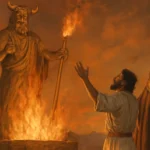
What is Baal? Definition, Etymology, and Core Meaning
The word Baal originates from ancient Semitic languages and functions as a title rather than a single proper name. In Hebrew, the term is often translated as “lord” or “master”, and it carries the sense of authority, ownership, or rulership. In many biblical contexts, Baal appears as a generic title applied to various deities or elevated beings believed to exercise power over nature, fertility, or earthly affairs. In other words, Baal can mean lord as a descriptor, and it can also function as the proper name of a specific deity when paired with other elements such as a place or attribute (for example, Baal-Peor or Baal-Berith).
This dual function—a common title and a constellation of regional deities—creates a nuanced picture. Scholars distinguish between the literary use of Baal as a generic label and the portrayal of distinct cults identified specifically as “Baal” worship. In some biblical passages, the word seems to refer to a local god associated with a particular city or territory, while in others it denotes a broader religious system linked with polytheistic practices opposed by the authors of the Hebrew Bible.
Throughout biblical literature, the phrase “Baal” stands at the intersection of religion, politics, and culture in the ancient Near East. The same term can appear in discussions about idolatry, prophetic critique, and the covenant relationship between Yahweh and Israel. A careful reading of the texts shows how the concept of Ba’al is both a linguistic label and a window into the religious world of the ancient Israelites and their neighbors.
Origins and Cultural Context: Where Baal Fits in the Ancient World
To understand Baal in the Bible, it helps to situate the term within its broader ancient Near Eastern milieu. The worship of Baal was part of a wider pattern of polytheistic and fertility-oriented religion among Canaanite and Phoenician populations. In these cultures, the storm and fertility god was seen as a powerful caretaker of crops, livestock, and irrigation—precisely the concerns of agrarian communities. In some traditions, this deity was portrayed as a dynamic counterpart to the supreme high god (often associated with the title El in the broader Semitic pantheon). In others, Baal’s role was defined more locally, tied to a city, a hill sanctuary, or a fixed ritual site.
The biblical writers frequently present Baal worship as a rival faith to the worship of Yahweh. This rivalry is more than a theological disagreement; it represents a clash of political loyalties, social practices, and cultic institutions. The presence of Baal cults in border regions and border towns helps explain why Israelite communities encountered and sometimes integrated or resisted Baal-related practices. The biblical authors often portray Baal as a false god or an idolatrous power that competes with the exclusive worship demanded by the covenant.
Baal in the Hebrew Bible: Names, References, and Thematic Roles
The biblical corpus contains a number of references to Baal, as well as a number of specific deities whose names begin with Ba’al or include the root in a descriptive title. A few prominent examples illustrate the spectrum:
Baal-Peor (Numbers 25): the cult at the Moabite/Edomite frontier associated with sexual rites and the warning against foreign religious influence that leads to plague among the people.
Baal-Berith (Judges 9): a cultic title “lord of the covenant” connected to a local sanctuary and a story about Abimelech and the city’s political fate.
Baal-zebub or Beelzebub (2 Kings 1): “lord of the flies,” a god worshiped in Ekron; in the narrative, the prophet Elijah challenges the power of this deity and its cultic authority.
In narrative highlights like Mount Carmel (1 Kings 18), the confrontation between Elijah and the prophets of Baal dramatizes a contest between competing claims about who is worthy to be called Lord or Master.
In addition to these named examples, the term appears frequently as a generic title in place-names and personal names, signaling a cultural habit of invoking Ba’al as a marker of divine association. The biblical authors sometimes use the term polemically—calling out specific Baal cults and describing their rituals in order to argue for strict fidelity to Yahweh. In other contexts, the term functions within the text as a neutral label that requires careful exegesis to distinguish between a local deity called Baal and the rhetorical construction of idolatrous religion.
Key Passages and Thematic Significance: What the Bible Teaches about Baal
The Bible presents several core themes connected to Baal that recur across books and genres:
Idolatry and the seduction of foreign cults: Baal worship is frequently framed as a violation of the covenant and a lure away from exclusive Yahweh worship.
Prophetic critique and reformulation of faith: Prophets challenge the legitimacy of Baal as a divine power and call for repentance and fidelity to Yahweh.
Worship vs. power: The Baal cult is often depicted as an organized religious system embedded in political life, sanctuary economies, and ritual acts that parallel – and oppose – the worship of Yahweh.
Evidence of pluralism within ancient communities: The biblical text sometimes preserves mentions of Baal alongside other deities, offering scholars a window into how diverse belief systems coexisted in antiquity.
The Elijah ordeal on Mount Carmel (1 Kings 18) remains a paradigmatic narrative in which the power of the true God is demonstrated against the prophets of Baal. The dramatic scene—where Yahweh answers with fire from heaven—serves as a foundational moment in biblical theology for establishing that the God of Israel is the supreme deity over all others, including Baal. Across the prophetic books, similar confrontations emphasize a move toward the exclusive worship of Yahweh and Zion-centered worship as part of the covenantal identity.
The term Baal in the biblical corpus is more than a proper name; it is a vehicle for exploring several theological questions. The concept raises issues about sovereignty, divine revelation, and the nature of religious fidelity. In the prophetic critique, Baal worship is portrayed as a form of political religion that blends ritual practice with local power structures. The prophets often insist that true worship is not merely about ritual correctness but about allegiance to the covenant and trust in Yahweh’s purposes for justice, mercy, and righteousness.
Theologically, the distinction between Baal and Yahweh helps explain certain biblical patterns:
Yahweh’s character as creator and sustainer stands in contrast to Baal’s portrayal as a local power dependent on weather and fertility cycles.
The biblical writers emphasize economic and social dimensions of worship, showing how temple rites and religious festivals intersect with agricultural cycles, land ownership, and communal identity.
There is a developing sense of ethical monotheism in which fidelity to the covenant entails moral consequences for the community, not merely correct ritual performance.
The biblical story places Baal within the broader arc of Israelite history as a recurring temptation and a measure of the people’s resilience or vulnerability. Several episodes illustrate how communities inhabited paradoxical spaces between monotheistic calling and polytheistic habit. For example:
The Baal-Peor episode underscores the danger of foreign religious influence infiltrating Israel and provoking divine judgment.
The Judges era shows how some regional leaders navigated alliances with Baal-based cults as part of political strategy, sometimes leading to social fragmentation and crisis.
The Elijah and Elisha narratives reflect a sustained critique of Baal worship as a rival system asserting control over civic life, agriculture, and ritual space.
Together, these elements contribute to a broader biblical message about fidelity, communal identity, and the call to worship that transcends local cults. The figure of Baal thus functions as a foil to Yahweh, enabling a sharper articulation of the biblical vision of a people defined not by allegiance to multiple local lords but by exclusive loyalty to the God of the covenant.
Scholarly discussion often centers on whether Baal represents a single, unified deity or a generic designation used for many local gods. The answer remains nuanced:
In some passages, Ba’al seems to refer to a specific cultic figure with a known cultic complex, such as the god worshiped in Ekron (leading to the Beelzebub tradition).
In other contexts, Ba’al functions as a title applicable to several local deities tied to different places and functions—often with distinctive rituals and partnerships (for example, Baal-Berith and Baal-Peor).
From a historical-linguistic perspective, the root meaning “lord” or “owner” supports the interpretation that Baal was initially a royal or cultic honorific used across cultures, later becoming a proper name for specific sacred figures in particular regions.
This layered understanding helps explain why biblical authors sometimes refer to Baal with a definite article or a compound name, while in other places the term stands alone as a generic expression of power. The distinction matters for interpretation, exegesis, and historical reconstruction of ancient worship patterns.
Archaeology and inscriptions provide complementary evidence about Baal worship beyond the biblical text. The religious landscape of the Canaanite and Phoenician worlds includes shrines, ritual implements, and inscriptions that attest to the veneration of deities whose titles align with Baal as a “lord” or “master.” The presence of Baal-themed cultic spaces—often located at high places, city gates, or temple precincts—aligns with the biblical depictions of Baal worship as an organized system with chapels, sacrifices, and seasonal rites.
For scholars, the archaeological record helps illuminate:
The relationship between Baal worship and agricultural calendars, weather patterns, and seasonal fertility rites.
The interplay of political power and religion, where city-state rulers used Baal-influenced cults to legitimize authority.
The linguistic and textual diffusion of the Baal tradition across different languages and cultures in the ancient Levant.
The name Beelzebub (often translated as “lord of the flies”) in the biblical corpus is a notable case where a Baal-related deity becomes a central figure in a polemical dialogue. In 2 Kings 1, the king’s delegation seeks guidance from the god of Ekron, and the narrative uses the term Baal-zebub to describe a rival deity. The portrayal is polemical, emphasizing the superiority of Yahweh over foreign powers. The transformation of Baal-related figures into a symbol for political or spiritual opposition demonstrates how the biblical authors used Baal imagery to advance theological and moral arguments.
Another notable linguistic thread concerns places and names that invoke Ba’al as a sign of a person’s or a city’s religious orientation. In some traditions, names that include Ba’al convey a sense of belonging to or allegiance with a local deity, while in others they reflect a broader cultural milieu in which Baal worship was integrated into everyday life.
Contemporary scholars approach the topic of Baal with a blend of historical-critical methods, linguistic analysis, and literary interpretation. Some key debates include:
Monotheism vs. Monolatry: How strictly did the Israelite community worship Yahweh to the exclusion of others, and to what extent did they maintain exclusive devotion while acknowledging or opposing other deities?
Textual nuance: How should readers understand the term Baal when it appears in various contexts—sometimes as a title, sometimes as a proper name, sometimes as a condemnation of a ritual practice?
Historical reality: What does the archaeological record reveal about the ubiquity and diversity of Baal-centered cults in the regions surrounding ancient Israel?
The ongoing scholarly conversation emphasizes the need to read Baal with attention to both linguistic meaning and cultural context. By doing so, readers gain a more accurate sense of how Baal worship functioned and how biblical authors framed it within their theological project.
The topic of Baal in biblical literature has lasting significance for readers who study religious evolution, sacred space, and moral decision-making. Several takeaways emerge:
Consistency in divine sovereignty: The biblical narrative repeatedly insists that Yahweh stands above all local powers, even when communities experience economic or political pressure to turn toward Baal-based worship.
Ethics of fidelity: The critique of Baal worship is not a mere accusation of ritual error; it also engages questions about the ethical life of the community—justice, mercy, and obedience to the covenant.
Religious identity formation: The Baal motif helps explain how groups define themselves in relation to neighbors and rival traditions, and how such identity formation shapes memory and tradition for generations.
In order to appreciate the poetry and prose of biblical literature, it is helpful to distinguish Baal from related terms and concepts:
El and Adonai: The biblical authorial tradition often contrasts Baal with the high god or with divine titles that emphasize sovereignty in a more universal, less localized sense.
Asherah: Frequently paired with Baal in ancient Near Eastern religion as a goddess figure in fertility cults; the Bible often condemns these pairings as contrary to exclusive devotion to Yahweh.
Beelzebub and other Beelzebul-variants: A linguistic evolution that reveals how a Baal epithet could become a stand-alone hostile referent in later texts.
For readers and scholars, the topic of Baal offers several practical insights:
Historical literacy: Understanding Baal helps readers contextualize biblical passages within the broader cultural and religious landscape of the ancient Near East.
Textual sensitivity: Recognizing when Baal is used as a title vs. a proper name can lead to more precise interpretation of verses and passages.
Thematic depth: The Baal motif enriches discussions about righteousness, covenant faithfulness, and the tension between local religious practices and exclusive worship of the God of Israel.
The bale term—properly understood as Baal—serves as more than a lexical footnote in biblical studies. It embodies a historical religious reality: adjacent peoples with flourishing cults and complex political structures, all of which intersected with the lives of Israelite communities. The biblical portrayal of Baal—often as a challenge to be overcome, sometimes as a rival to Yahweh, but always as a lens for examining worship, power, and identity—offers readers a rich field for exploring how ancient communities defined themselves in the face of competing religious visions. By paying careful attention to the etymology, the cultural backdrop, and the textual usage of Baal, readers gain a fuller understanding of biblical theology, the dynamics of idolatry and reform, and the enduring human pursuit of allegiance to a transcendent authority.

 Por Laura Jara