Background to 1 Peter: Its setting, audience, and message
Background to 1 Peter: Its setting, audience, and message
When you read 1 Peter, you may wonder why the letter speaks so often about strangers, suffering, holiness, and hope. Was it written to people facing official persecution, or to Christians who simply felt out of place in their communities? The background helps answer those questions: 1 Peter addresses believers in several Roman provinces of Asia Minor who were learning how to live faithfully while facing suspicion, social pressure, and hardship.
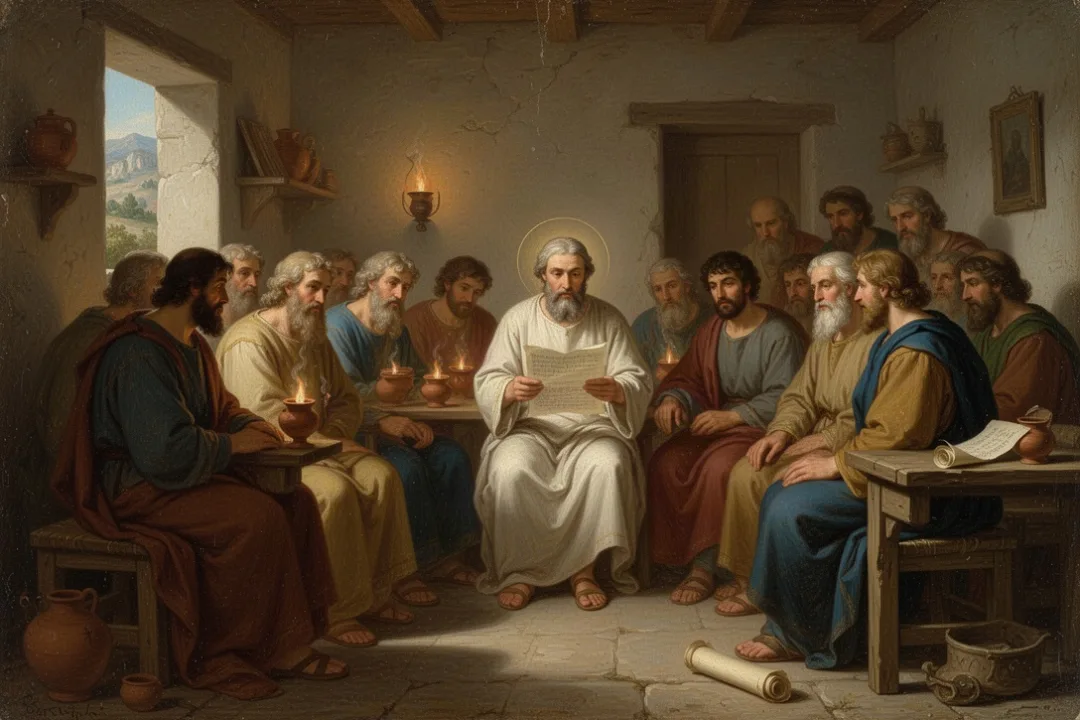
The letter presents itself as a message from Peter, an apostle of Jesus Christ, sent through Silvanus to Christians scattered across parts of modern-day Turkey. Its readers were not necessarily all refugees or people driven from their homes. The language of exile also describes their spiritual and social position: they belonged to God, yet lived among neighbors who did not share their faith.
Understanding that setting makes the letter more concrete. Its teaching about submission, honorable conduct, suffering, family life, church leadership, and hope was not abstract advice. It was guidance for ordinary Christians trying to follow Jesus in households, workplaces, neighborhoods, and civic communities where their beliefs could make them seem unusual or even threatening.
The letter identifies its author as Peter, one of Jesus’ twelve apostles and a prominent leader among the earliest Christians. The author describes himself as a witness to Christ’s sufferings and as a fellow elder, which fits the New Testament picture of Peter as a leading voice among Jesus’ disciples and the early church.
Christian tradition has consistently connected the letter with the apostle Peter. The opening greeting names him directly, and the closing section mentions Mark, a figure associated with Peter in early Christian tradition. These details support the traditional view that the letter came from Peter or from a close representative writing with his authority.
Some modern scholars question whether the apostle personally wrote the polished Greek in its present form. Peter was a Galilean fisherman, while 1 Peter uses capable and carefully organized Greek. That observation does not settle the matter. Peter could have received education, used a secretary, or dictated his ideas through a skilled co-worker. The letter specifically mentions Silvanus, who may have helped deliver or compose the message.
The date is also debated. A traditional date places 1 Peter in the early or mid-60s AD, during the final period of Peter’s life. This date fits the belief that the apostle wrote from Rome shortly before his death. Other scholars date the letter later, partly because they associate its references to suffering with a more developed period of conflict between Christians and Roman society.
The text itself does not describe a single empire-wide persecution or identify a specific government campaign. Readers appear to be experiencing hostility, insults, exclusion, and pressure, with some also facing physical or legal suffering. The background is therefore best described carefully: the communities were vulnerable and mistreated, but the letter does not provide enough information to reconstruct one uniform persecution across all the provinces named.
How to read the date: A date in the 60s explains the traditional setting, but the letter’s exact composition remains disputed. Its central message does not depend on choosing one date with absolute certainty.
Where were the recipients of 1 Peter living?
1 Peter is addressed to believers in Pontus, Galatia, Cappadocia, Asia, and Bithynia. These were Roman provinces or regional areas in Asia Minor, most of which are located in present-day Turkey. The list moves through a broad territory rather than naming one local congregation, suggesting that the letter was intended for a network of churches.
These communities lived in a world shaped by Roman administration, Greek language and culture, local customs, and long-standing religious traditions. Some cities in the region were important centers of trade and government. Others were more rural or connected to agricultural life. The recipients therefore did not all have identical experiences, but they shared the pressures of living as Christian minorities in a religiously diverse society.
The order of the provinces may reflect the route a messenger would take while circulating the letter. A carrier arriving in one part of Asia Minor could travel through the listed regions and deliver the message to connected congregations. This helps explain why 1 Peter feels like a circular letter rather than a private note to one church.
The word “scattered” is significant. It can refer to the Jewish dispersion outside the land of Israel, but 1 Peter applies exile language to Christian readers as a group. The audience may have included Jewish and Gentile believers, and scholars continue to discuss the exact makeup of the congregations. The letter’s references to their former way of life suggest that at least many readers had converted from pagan backgrounds.
What does “exiles” mean in 1 Peter?
1 Peter calls its readers exiles and temporary residents. This does not necessarily mean that they had been deported or forced to migrate. Instead, the term expresses their identity before God and their uneasy position within the surrounding culture. They live in the world, but their primary allegiance is to God’s kingdom and the new community formed through Christ.
This identity draws on the Old Testament story of God’s people living away from their homeland. The letter uses that earlier language to describe Christians as a people whose deepest citizenship and hope are not defined by current political or social circumstances. They may have homes, occupations, families, and local responsibilities, yet they understand themselves as belonging to God first.
The idea of exile also explains why the letter combines belonging and difference. Christians are not told to disappear from society or treat neighbors as enemies. They are instructed to live honorably among others so that their conduct can challenge false accusations. Their distinctiveness is meant to be visible through goodness, self-control, compassion, and loyalty to Christ.
This setting gives depth to the letter’s teaching about suffering. A person can be mistreated without being officially arrested or physically attacked. Rejection from former friends, suspicion from neighbors, economic disadvantages, public insults, and family tension can all make someone feel like an outsider. 1 Peter speaks to that broader experience of social vulnerability.
What kind of opposition did these Christians face?
The recipients appear to have been accused of wrongdoing because their new way of life differed from their former behavior. The letter refers to people who were surprised that the Christians no longer joined them in practices such as excessive drinking, reckless behavior, and pagan religious activity. That change could create resentment, especially when social relationships were built around shared customs.
In the Roman world, religion was woven into family life, civic identity, meals, festivals, and public loyalty. Refusing to participate in local religious practices could be interpreted as disrespect toward relatives, neighbors, or the gods believed to protect the community. Christians’ worship of one God and their allegiance to Jesus could therefore appear socially disruptive, even when they intended to live peacefully.
Not every pressure was religious in a narrow sense. Households depended on accepted patterns of authority, and the letter addresses wives, husbands, servants, and household conduct. Christian convictions could affect relationships between people who did not share the same faith. The advice in 1 Peter recognizes the possibility that believers would need wisdom when their religious commitment created tension at home or at work.
The letter also mentions accusations and suffering for doing what is right. These phrases suggest that the readers’ problems were not simply imaginary fears. At the same time, 1 Peter does not give a detailed account of court proceedings or name a single persecutor. Its concern is pastoral: how can believers respond when their good intentions are misunderstood and their faith brings real costs?
Social rejection: Former companions may resent Christians for no longer joining their old practices.
Verbal abuse: Believers may be mocked, insulted, or accused of harmful behavior.
Household tension: Different religious commitments can create conflict between spouses, relatives, and servants or masters.
Legal or physical danger: Some readers may face more serious suffering, although the letter does not describe one consistent legal campaign.
How Roman society shaped the letter’s advice
Roman society was highly structured by status, household authority, patronage, and public reputation. A person’s family position, citizenship, occupation, wealth, and connections affected how others treated them. Most Christians had little political power, and some were enslaved or economically dependent on others. Advice about conduct must be read against that unequal social background.
When 1 Peter urges believers to respect governing authorities, it is not offering a modern political theory. It is speaking to people who had limited influence and who could easily be portrayed as disorderly. Their public conduct mattered because a hostile neighbor or local official could interpret Christian nonconformity as a threat to social stability.
The letter’s emphasis on honorable behavior is therefore strategic as well as moral. Christians are to avoid giving legitimate grounds for accusation, pay appropriate respect, and practice good works. Their way of life should show that following Jesus does not mean rejecting every human responsibility. Yet the letter also makes clear that obedience to God remains higher than the demand to abandon Christian faith.
Household instructions should be approached with care. They reflect the social structures of the ancient world, including slavery and male-headed households, rather than presenting a direct blueprint for every modern relationship. At the same time, the letter places moral responsibility on all parties and calls believers to humility, sympathy, compassion, and mutual honor within the Christian community.
Why suffering is central to 1 Peter
Suffering is not a side topic in 1 Peter. It is the situation that gives urgency to the letter’s message about living hope. The writer does not promise that faithful Christians will avoid pain. Instead, he teaches that God can sustain them, refine their faith, and give their suffering meaning because of Christ’s own suffering and vindication.
Jesus is presented as the pattern for believers who are treated unjustly. The letter points to Christ’s willingness to suffer without retaliating and to his ultimate vindication by God. This does not mean that every form of abuse should be silently accepted. It means that Christians are not to answer hostility by becoming hostile themselves or by repaying evil with evil.
The letter also uses suffering to test the quality of faith. Like precious metal tested by fire, faith can be shown to be genuine through hardship. This image does not call suffering good in itself. It gives readers a way to understand their trials without concluding that God has abandoned them or that their faith has failed.
Hope in 1 Peter is future-oriented but not escapist. The readers expect God to judge rightly, raise the dead, preserve his people, and bring them into a lasting inheritance. That future changes how they live now. Because their identity is secure before God, they can practice patience, holiness, generosity, and courage even when their social position is insecure.
“Cast all your anxieties on him because he cares for you” is the message of 1 Peter 5:7, expressed here in paraphrase rather than a translation.
How 1 Peter connects with Israel’s Scriptures
1 Peter’s background is deeply rooted in the Old Testament and Jewish biblical language. It describes Christians as a chosen people, a holy community, and a people belonging to God. These ideas echo passages about Israel’s covenant identity while also applying them to the community gathered around Jesus.
The letter draws on themes from Exodus, the Psalms, Isaiah, Proverbs, and other parts of Scripture. Its references to a living hope, a rejected stone, a holy people, and a shepherd reflect a biblical way of understanding God’s work. These images would have been especially meaningful to readers familiar with Jewish Scripture, whether through Jewish heritage or through Christian teaching in the churches.
One important image is that of a living stone. Christ is portrayed as the foundational stone chosen by God, while believers are described as stones being built into a spiritual house. The image communicates both stability and community. Christians are not isolated individuals trying to endure alone; they belong to a people whose identity is built around Christ.
The biblical background also keeps suffering from becoming the whole story. Israel’s Scriptures repeatedly describe people who are rejected, displaced, or oppressed while still held within God’s purposes. By placing Christian suffering within that larger story, 1 Peter assures readers that their present experience does not define their ultimate status.
What “Babylon” probably means in 1 Peter
The letter closes with greetings from “Babylon.” Babylon could refer to the ancient city or region, but many interpreters understand it as a symbolic name for Rome. Jewish and Christian writings sometimes used Babylon as a code or image for an oppressive imperial power, especially because of Babylon’s role in the destruction and exile of Jerusalem.
If Rome is intended, the reference places the writer in the empire’s political center while addressing believers in distant provinces. That would fit the letter’s concern with Christians living under Roman authority and facing social pressure. It also connects the readers’ experience with the biblical pattern of God’s people living faithfully under powerful empires.
The identification is not certain. The text itself does not explicitly say “Rome,” and a literal reference to Babylon cannot be ruled out from the wording alone. Still, the symbolic interpretation has strong support from the broader Christian use of Babylon as a name for an opposing world power.
The greeting also mentions Mark, whom the writer calls a son. This may describe a close spiritual relationship rather than biological parentage. The reference has contributed to the traditional connection between Peter and Rome, although it does not by itself prove every detail about where or when the letter was written.
How the letter is organized around its historical situation
The opening chapters establish the readers’ identity before addressing their public conduct. They are described as chosen, given new birth into hope, and called to holiness. This order matters: behavior grows out of belonging. The readers do not earn God’s acceptance by performing well under pressure; they are called to live consistently with the identity God has given them.
After developing their identity, the letter turns to life among outsiders. It discusses civic responsibility, household relationships, and responses to unjust suffering. These instructions are closely connected to the accusations the readers face. Their conduct should be visibly good, but their hope should remain anchored in God rather than in public approval.
The later sections address the Christian community more directly. Believers are told to care for one another, practice hospitality, use their gifts to serve, and remain clear-minded in prayer. Elders are instructed to shepherd willingly rather than dominate the people in their care. Younger members are called to humility, and the church as a whole is urged to resist spiritual opposition.
This movement from identity to conduct to community endurance gives the letter a coherent pastoral purpose. It does not merely explain why Christians suffer. It teaches them how to remain faithful together, how to treat one another, and how to respond to the surrounding society without losing their distinct identity.
Practical tips and common mistakes when studying 1 Peter
The historical background can clarify the letter, but it should not be used to force every verse into a single reconstruction. Several reading habits help you handle the text responsibly and apply its message without ignoring its ancient setting.
Do not assume every hardship was an official persecution. The readers faced real opposition, but the letter includes social hostility and false accusations as well as possible legal danger.
Do not treat “exiles” as only a geographic description. The term primarily expresses spiritual identity and social nonconformity, not necessarily forced migration.
Read household instructions in their ancient context. The passage addresses a structured Roman household and should not be used to excuse abuse or coercive control.
Keep suffering connected to hope. 1 Peter does not glorify pain for its own sake; it points to God’s judgment, preservation, and future restoration.
Notice the communal emphasis. The letter speaks to churches, not just isolated individuals. Hospitality, service, humility, and mutual care are part of faithful endurance.
Distinguish good conduct from people-pleasing. Christians are told to live honorably, but their deepest loyalty remains with God rather than with public approval.
Compare translations and cross-references carefully. Important terms can carry several meanings, and the letter frequently echoes earlier Scripture.
A useful study method is to ask three questions of each major passage: What pressure are the readers facing? What identity does the writer give them? What response does that identity produce? For example, teaching about submission is connected to public accusations; teaching about holiness is connected to belonging to God; teaching about humility is connected to the needs of a vulnerable community.
A balanced reading: 1 Peter calls believers to faithful conduct under pressure, but it never makes cruelty virtuous or removes the responsibility of authorities, leaders, and stronger people to act justly.
Why the background still matters for readers today
Many modern readers will not share the exact conditions of the churches in Asia Minor, yet the letter’s central questions remain recognizable. How should you live when your convictions are misunderstood? How can you remain engaged with neighbors who disagree with you? What should hope look like when your circumstances are unstable?
1 Peter answers by joining public integrity with spiritual confidence. Christians are called to work for peace, show respect, care for the vulnerable, and avoid retaliatory behavior. At the same time, they are reminded that their worth is not determined by social status, popularity, or the approval of those who judge them unfairly.
The background also guards against an overly individualistic reading. The original audience was a network of households and congregations spread across a large region. Their survival depended partly on shared practices: hospitality, prayer, mutual service, truthful speech, and leadership that protected rather than exploited the community.
Read in that setting, 1 Peter becomes neither a promise of an easy life nor a command to endure every harm without help. It is a call to remain faithful, wise, and compassionate as people whose identity is grounded in God’s mercy. The letter speaks to Christians who feel exposed, displaced, or misunderstood, while directing their attention toward Christ, the community of faith, and the hope God has promised.
Frequently asked questions
Was 1 Peter written by the apostle Peter?
The letter identifies Peter as its author, and Christian tradition has long accepted that attribution. Some scholars debate whether Peter personally wrote the polished Greek or used Silvanus as a secretary or collaborator. The text itself supports a close connection with Peter, but the precise process of composition cannot be established with certainty.
Were the Christians in 1 Peter experiencing persecution under Nero?
A date in the 60s and a Roman setting are part of the traditional interpretation, but 1 Peter does not describe a single empire-wide persecution. Its readers clearly faced insults, accusations, social exclusion, and suffering, while some may have faced more serious legal consequences. The exact relationship to Nero’s persecution remains uncertain.
Were the recipients of 1 Peter Jewish or Gentile?
The churches may have included both Jewish and Gentile Christians. The letter uses Israel’s Scriptures and covenant language while also describing readers as having left behind former pagan patterns of life. Scholars differ about the audience’s exact makeup, so it is safer to view the recipients as diverse churches united by faith in Christ.
What does Babylon mean in 1 Peter?
“Babylon” may refer literally to the ancient region, but many interpreters understand it as a symbolic name for Rome. Babylon represented imperial power, opposition to God, and exile in the biblical imagination. The reference may therefore place the writer in Rome while connecting contemporary Christian pressures with the older story of God’s people under foreign empires.









Leave a Reply